







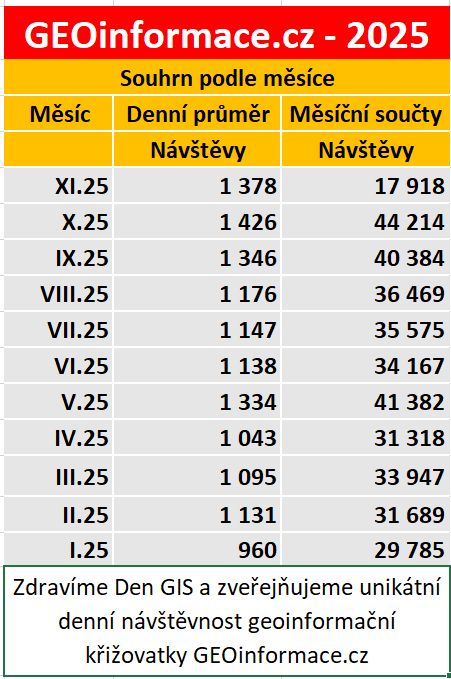






zprávy
zdroje zpráv:Zveme Vás na zítřejší komentovanou prohlídku výstavy Pavel Aretin z Ehrenfeldu: mapa mezi defenestrací a Bílou horou [Knihovna geografie, byTopic]
6.6.2019 10:30 Katedra aplikované geoinformatiky a kartografie Přf UK Výstava se uskuteční ve středu 26. 6. 2018 od 14 hodinČervnová komentovaná prohlídka výstavy Pavel Aretin z Ehrenfeldu: mapa mezi defenestrací a Bílou horou [Knihovna geografie, byTopic]
6.6.2019 10:30 Katedra aplikované geoinformatiky a kartografie Přf UKVýstava Mikuláš Klaudyán: první mapa Čech 1518 ve Frýdku-Místku [Knihovna geografie, byTopic]
6.6.2019 10:15 Katedra aplikované geoinformatiky a kartografie Přf UKDen s INSPIRE (pozvánka)
6.6.2019 9:58 GISportal.cz
CENIA, česká informační agentura životního prostředí vás zve na seminář Den s INSPIRE, který je doprovodnou akcí konference Životní prostředí – prostředí pro život. Účast na akci je zdarma po předchozí registraci. Termín: 12. 6. 2019 od 13:00 hodin Místo konání: Vzdělávací a informační centrum Floret v Průhonicích Program: 13:00–14:30 Novelizace INSPIRE legislativy v ČR Jitka […]
The post Den s INSPIRE (pozvánka) appeared first on GISportal.cz.
Otevírací doba – červenec a srpen [Knihovna geografie, byTopic]
6.6.2019 9:55 Katedra aplikované geoinformatiky a kartografie Přf UK V době od 7. 7. do 31. 8. bude otevírací doba knihovny omezenavrchní referent/rada– návrh zápisu kontrola a zplatnění
6.6.2019 9:05 ČÚZK - předpisy a opatření Katastrální úřad pro hlavní město Prahu - Katastrální pracoviště Prahavypisuje výběrové řízení na místo
vrchní referent/rada– návrh zápisu kontrola a zplatnění
vrchní referent/rada– návrh zápisu kontrola a zplatnění
6.6.2019 9:05 ČÚZK - volná místa Katastrální úřad pro hlavní město Prahu - Katastrální pracoviště Praha vypisuje výběrové řízení na místo vrchní referent/rada– návrh zápisu kontrola a zplatněnívrchní referent/rada– návrh zápisu kontrola a zplatnění
6.6.2019 9:05 ČÚZK /Urady/Katastralni-urady/Katastralni-urady/Katastralni-urad-pro-hlavni-mesto-Prahu/Uredni-deska/Oznameni-a-jina-uredni-sdeleni/Volna-mista/vrchni-referent-rada–-navrh-zapisu-kontrola-a-zplaSanjay Gangal interviews Evan McPhee, CEO, NavVis US, Inc. from NavVis at SPAR 3D conference
6.6.2019 9:00 GISCafe.com Webcasts-WebinarsDen s INSPIRE - program a poslední registrace
6.6.2019 7:00 Česká asociace pro geoinformaceDen s INSPIRE - program a poslední registrace
CENIA, česká informační agentura životního prostředí vás zve na seminář Den s INSPIRE, který je doprovodnou akcí konference Životní prostředí – prostředí pro život. Účast na akci je zdarma po předchozí registraci.
Termín: 12. 6. 2019 od 13:00 hodin
Místo konání: Vzdělávací a informační centrum Floret v
Zajímavé pracovní nabídky v geooborech v Praze a KV
6.6.2019 7:00 Česká asociace pro geoinformaceZdroj: Blogující
ARCDATA nabízí školení se slevou
6.6.2019 7:00 Česká asociace pro geoinformaceARCDATA nabízí školení se slevou
ARCDATA PRAHA, kolektivní člen CAGI, nabízí všechna školení v termínu od 1. 7. do 31. 8. 2019 s 30% slevou. Chcete-li si osvojit nové znalosti a dovednosti, využijte naší prázdninové nabídky.
Více informací o školeních naleznete na webu společnosti.
ARCDATA PRAHA, kolektivní člen CAGI, nabízí všechna školení v termínu od 1.
GIVS 2019 - zveřejněny prezentace příspěvků
6.6.2019 7:00 Česká asociace pro geoinformaceGIVS 2019 - zveřejněny prezentace příspěvků
Na webových stránkách konference Geoinformace ve veřejné správě 2019 byly zveřejněny prezentace z přednášek. Pokud jste na konferenci z jakéhokoli důvodu chyběli, nebo si chcete jen příspěvky znovu připomenout, neváhejte a navštivte konferenční web.
Na webových stránkách konference Geoinformace ve veřejné správě
AEC Next & SPAR 3D Expo & Conference Draws Nearly 1,900 Professionals for Education, Networking, and Newest AEC and 3D Technology
6.6.2019 1:10 GISCafe.com Webcasts-Webinars Nearly 1,900 professionals registered for co-located events AEC Next Technology Expo + Conference and SPAR 3D Expo & Conference 2019 which came to a …Omezení provozu Pobočky Děčín
6.6.2019 0:00 Státní pozemkový úřad Z provozních důvodů bude ve dnech 20. - 21. 6. 2019 uzavřena pobočka Děčín. V době od 8 do 15 hodin bude v provozu pouze podatelna úřadu. Dne 26. 6. 2019 bude provoz pobočky z provozních důvodů omezen, pracovníci vyřídí pouze neodkladné záležitosti. Opět bude v době od 8 do 15 hodin v provozu podatelna úřadu. Děkujeme za pochopení.Uzavření Pobočky Chomutov
6.6.2019 0:00 Státní pozemkový úřad Ve dnech 20. - 21. 6. 2018 a 28. 6. 2019 bude z provozních důvodů uzavřena pobočka Chomutov. Děkujeme za pochopení.Uzavření Pobočky Chomutov
6.6.2019 0:00 Státní pozemkový úřad Ve dnech 20. - 21. 6. 2018 a 28. 6. 2019 bude z provozních důvodů uzavřena pobočka Chomutov. Děkujeme za pochopení.Omezení provozu Pobočky Děčín
6.6.2019 0:00 Státní pozemkový úřad Z provozních důvodů bude ve dnech 20. - 21. 6. 2019 uzavřena pobočka Děčín. V době od 8 do 15 hodin bude v provozu pouze podatelna úřadu. Dne 26. 6. 2019 bude provoz pobočky z provozních důvodů omezen, pracovníci vyřídí pouze neodkladné záležitosti. Opět bude v době od 8 do 15 hodin v provozu podatelna úřadu. Děkujeme za pochopení.Uzavření Pobočky Benešov
6.6.2019 0:00 Státní pozemkový úřad Dne 20. 6. 2019 bude z provozních důvodů uzavřena pobočka Benešov. Děkujeme za pochopení.Realizovaná společná zařízení v okrese Prostějov efektivně zadržují vodu v krajině
6.6.2019 0:00 Státní pozemkový úřad Dne 30.05.2019 se uskutečnila odborná exkurze pořádaná Českomoravskou komorou pro pozemkové úpravy ve spolupráci s Pobočkou Prostějov Státního pozemkového úřadu na téma „Pozemkové úpravy a protipovodňová ochrana obcí, zadržení vody v krajině“. Exkurze se 60 účastníky proběhla v katastrech obcí Skřípov a Brodek u Konice formou pochůzky po jednotlivých opatřeních s odborným výkladem a následnou diskusí.Uzavření Pobočky Benešov
6.6.2019 0:00 Státní pozemkový úřad Dne 20. 6. 2019 bude z provozních důvodů uzavřena pobočka Benešov. Děkujeme za pochopení.Ursa and ICEYE Extend Partnership for SAR Satellite Data and Products
5.6.2019 20:59 GISCafe.com Webcasts-Webinars New Space companies join forces to make SAR data more accessible and to develop new SAR-based products and servicesITHACA, N.Y., June 5, 2019 …
V Televizních novinách na TV Nova byl rozhovor s Jakubem o nové evropské legislativě pro drony
5.6.2019 20:23 UpVision V pátečních Televizních novinách na TV Nova jsme komentovali nově schválenou evropskou legislativu pro drony.O definitivním schválení nové evropské legislativy minulý pátek jsme informovali už na stránkách Aliance pro bezpilotní letecký průmysl. V současnosti už zbývá pouze oficiální publikování v Úředním věstníku EU v následujících dnech a od té doby začne plynout roční přechodné období na implementaci těchto nových pravidel ve všech státech EU.
Zde reportáž:
https://tn.nova.cz/clanek/cesko-zavede-nova-pravidla-pro-drony-registrace-a-zkousky.html
A zde článek na iDNES:
https://www.idnes.cz/ekonomika/domaci/drony-legislativa-zkousky-registrace.A190530_165345_ekonomika_fih
Mapbox Launches Data Services to Deliver High-Quality Map Data To Customers
5.6.2019 17:29 GISCafe.com Webcasts-Webinars SAN FRANCISCO, June 05, 2019 (GLOBE NEWSWIRE) -- Today, live location and data company Mapbox opens the door on Data Services, a new line of …Esri Software Powers Location Intelligence in Microsoft’s Defense System Demonstration
5.6.2019 17:29 GISCafe.com Webcasts-Webinars ‘Tactical Edge Vehicle’ Combines GIS, Artificial Intelligence, andAugmented Reality for Field Missions
REDLANDS, Calif. — …
Kratos Receives $31.8 Million Sole Source Unmanned Aerial Target Drone Contract Award from United States Air Force
5.6.2019 17:29 GISCafe.com Webcasts-Webinars SAN DIEGO, June 05, 2019 (GLOBE NEWSWIRE) -- Kratos Defense & Security Solutions, Inc. (Nasdaq: KTOS), a leading National Security Solutions …Den s INSPIRE - poslední možnost registrace
5.6.2019 16:01 CENIA - národní geoportál INSPIRE CENIA, česká informační agentura životního prostředí vás zve na seminář Den s INSPIRE, který je doprovodnou akcí konference Životní prostředí – prostředí pro život. Účast na akci je zdarma po předchozí registraci. Termín: 12. 6. 2019 od 13:00 hodin Místo konání: Vzdělávací a informační centrum Floret v Průhonicích Program: 13:00–14:30 Novelizace INSPIRE legislativy v ČR Jitka...Konference „Životní prostředí – prostředí pro život“ a Den s INSPIRE
5.6.2019 15:53 CENIA - národní geoportál INSPIRE CENIA, česká informační agentura životního prostředí a Slovenská agentura životného prostredia vás zvou na konferenci „Životní prostředí – prostředí pro život“, která se uskuteční ve dnech 12. – 13. června 2019 ve Vzdělávacím a Kongresovém centru Floret Průhonice. Registrovat se můžete prostřednictvím registračního formuláře. Den s INSPIRE V rámci konference proběhne dne 12. 6. 2019 v...Snow hits Australia
5.6.2019 15:34 ESA Observing the Earth
Parts of the Southern Tablelands on Australia’s east coast have been hit by unexpected snow
SARA scores at football match
5.6.2019 13:58 European GNSS Agency
SARA, a GSA-funded project developing a turnkey solution for search and rescue (SAR) and surveillance operations, has been successfully tested at a recent football match. Based on the test, the economic viability of using the solution for event filming and monitoring/surveying is currently being investigated.
The SARA project is working on engineering and commercialising a tethered drone-based SAR and surveillance solution using an already existing prototype. The solution is able to guarantee continuous operations by means of a patented cable used for power supply and as a secure data link. For drone navigation and control, as well as for target identification and localisation, SARA uses high-accuracy Galileo-enabled GNSS receivers.
Successful test
The test was carried out continuously for the duration of the football match, which offered an interesting test case requiring continuous surveillance over a two-hour period. The SARA terminal was set to monitor several players, whose positions were tracked over time. The footballers were localised using a Galileo-enabled GNSS receiver installed on the drone, which provided a reference, along with a computer vision algorithm that transformed pixels into 2D geographical positions.
Watch this: SARA for Football
A profile of the positions (one per second) was created and compared with the video material. “This qualitative test revealed interesting results in terms of target identification (the right player) and localisation within the football field zone, and also in terms of the limited cost of the equipment used,” said Marco Nisi, Head of Integrated GNSS Solutions at project partner Sistematica.
“This use case is now being studied to evaluate the economic viability of using the solution to film at events and to carry out monitoring and surveillance operations,” he said.
Range of applications
Maritime SAR is the primary target market but, as the football match test has shown, the solution has potential applications in other areas. One such area is security surveillance, particularly with the aim of preventing trespassing and detecting potential threats in open spaces. Possible use cases include monitoring and surveillance of building sites and other infrastructure, and security surveillance at major sporting events.
Read this: KAUST wins GSA Special Prize at ERL Emergency Local Tournament 2019
“In particular, as a very promising side market, the SARA team is continuing to address the technological challenges and to experiment with the business model with a view to reaching the sports domain as a provider of event surveillance management solutions and livestream broadcasting,” Nisi said.
The solution will be further tested in Szczecin, Poland in September 2019, where the drone will be operated on board a vessel to simulate a maritime SAR scenario. In this case, the drone will act as a vertical pylon and will be set up in “follow the ship” mode, making it possible to survey and identify and locate targets with an extended coverage of several nautical miles.
Media note: This feature can be republished without charge provided the European GNSS Agency (GSA) is acknowledged as the source at the top or the bottom of the story. You must request permission before you use any of the photographs on the site. If you republish, we would be grateful if you could link back to the GSA website (http://www.gsa.europa.eu).
SARA scores at football match
5.6.2019 13:58 European GNSS Agency
SARA, a GSA-funded project developing a turnkey solution for search and rescue (SAR) and surveillance operations, has been successfully tested at a recent football match. Based on the test, the economic viability of using the solution for event filming and monitoring/surveying is currently being investigated.
The SARA project is working on engineering and commercialising a tethered drone-based SAR and surveillance solution using an already existing prototype. The solution is able to guarantee continuous operations by means of a patented cable used for power supply and as a secure data link. For drone navigation and control, as well as for target identification and localisation, SARA uses high-accuracy Galileo-enabled GNSS receivers.
Successful test
The test was carried out continuously for the duration of the football match, which offered an interesting test case requiring continuous surveillance over a two-hour period. The SARA terminal was set to monitor several players, whose positions were tracked over time. The footballers were localised using a Galileo-enabled GNSS receiver installed on the drone, which provided a reference, along with a computer vision algorithm that transformed pixels into 2D geographical positions.
Watch this: SARA for Football
A profile of the positions (one per second) was created and compared with the video material. “This qualitative test revealed interesting results in terms of target identification (the right player) and localisation within the football field zone, and also in terms of the limited cost of the equipment used,” said Marco Nisi, Head of Integrated GNSS Solutions at project partner Sistematica.
“This use case is now being studied) to evaluate the economic viability of using the solution to film at events and to carry out monitoring and surveillance operations,” he said.
Range of applications
Maritime SAR is the primary target market but, as the football match test has shown, the solution has potential applications in other areas. One such area is security surveillance, particularly with the aim of preventing trespassing and detecting potential threats in open spaces. Possible use cases include monitoring and surveillance of building sites and other infrastructure, and security surveillance at major sporting events.
Read this: KAUST wins GSA Special Prize at ERL Emergency Local Tournament 2019
“In particular, as a very promising side market, the SARA team is continuing to address the technological challenges and to experiment with the business model with a view to reaching the sports domain as a provider of event surveillance management solutions and livestream broadcasting,” Nisi said.
The solution will be further tested in Szczecin, Poland in September 2019, where the drone will be operated on board a vessel to simulate a maritime SAR scenario. In this case, the drone will act as a vertical pylon and will be set up in “follow the ship” mode, making it possible to survey and identify and locate targets with an extended coverage of several nautical miles.
Media note: This feature can be republished without charge provided the European GNSS Agency (GSA) is acknowledged as the source at the top or the bottom of the story. You must request permission before you use any of the photographs on the site. If you republish, we would be grateful if you could link back to the GSA website (http://www.gsa.europa.eu).
SARA scores at football match
5.6.2019 13:58 European GNSS AgencySARA, a GSA-funded project developing a turnkey solution for search and rescue (SAR) and surveillance operations, has been successfully tested at a recent football match. Based on the test, the economic viability of using the solution for event filming and monitoring/surveying is currently being investigated.
The SARA project is working on engineering and commercialising a tethered drone-based SAR and surveillance solution using an already existing prototype. The solution is able to guarantee continuous operations by means of a patented cable used for power supply and as a secure data link. For drone navigation and control, as well as for target identification and localisation, SARA uses high-accuracy Galileo-enabled GNSS receivers.
Successful test
The test was carried out continuously for the duration of the football match, which offered an interesting test case requiring continuous surveillance over a two-hour period. The SARA terminal was set to monitor several players, whose positions were tracked over time. The footballers were localised using a Galileo-enabled GNSS receiver installed on the drone, which provided a reference, along with a computer vision algorithm that transformed pixels into 2D geographical positions.
Watch this: SARA for Football
A profile of the positions (one per second) was created and compared with the video material. “This qualitative test revealed interesting results in terms of target identification (the right player) and localisation within the football field zone, and also in terms of the limited cost of the equipment used,” said Marco Nisi, Head of Integrated GNSS Solutions at project partner Sistematica.
“This use case is now being studied) to evaluate the economic viability of using the solution to film at events and to carry out monitoring and surveillance operations,” he said.
Range of applications
Maritime SAR is the primary target market but, as the football match test has shown, the solution has potential applications in other areas. One such area is security surveillance, particularly with the aim of preventing trespassing and detecting potential threats in open spaces. Possible use cases include monitoring and surveillance of building sites and other infrastructure, and security surveillance at major sporting events.
Read this: KAUST wins GSA Special Prize at ERL Emergency Local Tournament 2019
“In particular, as a very promising side market, the SARA team is continuing to address the technological challenges and to experiment with the business model with a view to reaching the sports domain as a provider of event surveillance management solutions and livestream broadcasting,” Nisi said.
The solution will be further tested in Szczecin, Poland in September 2019, where the drone will be operated on board a vessel to simulate a maritime SAR scenario. In this case, the drone will act as a vertical pylon and will be set up in “follow the ship” mode, making it possible to survey and identify and locate targets with an extended coverage of several nautical miles.
Media note: This feature can be republished without charge provided the European GNSS Agency (GSA) is acknowledged as the source at the top or the bottom of the story. You must request permission before you use any of the photographs on the site. If you republish, we would be grateful if you could link back to the GSA website (http://www.gsa.europa.eu).
Dun & Bradstreet Announces Geospatial Data Science Scholarship in Partnership with the United States Geospatial Intelligence Foundation
5.6.2019 13:25 GISCafe.com Webcasts-Webinars June 4, 2019 (San Antonio, TX) – Dun & Bradstreet today announced a partnership with the United States Geospatial Intelligence …Blue Marble Releases Service Pack 1 (SP1) for Geographic Calculator 2019 with Updates and Improvements Throughout the Application
5.6.2019 13:20 GISCafe.com Webcasts-Webinars Hallowell, Maine – June 4, 2019 – Blue Marble Geographics (bluemarblegeo.com) has released a service pack update to its coordinate …USGIF Recognizes Dr. Annette J. Krygiel with the 2019 Lundahl-Finnie Lifetime Achievement Award
5.6.2019 13:09 GISCafe.com Webcasts-Webinars Krygiel honored for decades of influential service to the GEOINT CommunitySan Antonio, Texas (June 4, 2019) — The United States Geospatial …
USGIF Announces 2019 Achievement Award Winners
5.6.2019 13:04 GISCafe.com Webcasts-Webinars Outstanding organizations and individuals recognized for contributions to the geospatial intelligence communitySan Antonio, Texas (June 4, …
Kvalita koupacích vod v sezóně 2019
5.6.2019 12:01 CENIA - národní geoportál INSPIRE Stejně jako v předchozích letech jsou na geoportálu k dispozici informace o kvalitě koupacích vod v aktuální sezóně. Do seznamu mapových kompozic přibyla kompozice "SZÚ - Kvalita koupacích vod - sezóna 2019", která bude pravidelně aktualizována každý týden po dobu celé koupací sezóny. Data jsou dostupná taktéž prostřednictvím WMS služby geoportálu na adrese...EU a ESA: Kosmický den v Bruselu – tři rady ministrů k budoucnosti kosmických aktivit v jeden den
5.6.2019 10:28 Český Kosmický PortálDne 28. května 2019 se uskutečnilo zasedání vesmírné části Rady pro konkurenceschopnost a Rada ESA na ministerské úrovni. Poprvé po 8 letech však byla tato zasedání obohacena i o jednání tzv. Rady pro vesmír (Space Council), smíšené platformy Rady EU a Rady ESA, na níž ministři členských států obou mezinárodních organizací diskutují o vzájemné spolupráci EU a ESA a o dalším směřování kosmických aktivit v Evropě. Impulzem pro obnovení Space Council je příprava nového Kosmického programu EU a potřeba užší spolupráce v návaznosti na dynamický rozvoj kosmického průmyslu a využití družicových systémů ve světě.
rada/odborný rada – právník Katastrálního úřadu pro hlavní město Prahu, Katastrální pracoviště Praha
5.6.2019 9:09 ČÚZK /Urady/Katastralni-urady/Katastralni-urady/Katastralni-urad-pro-hlavni-mesto-Prahu/Uredni-deska/Oznameni-a-jina-uredni-sdeleni/Volna-mista/rada-odborny-rada-–-pravnik-Katastralniho-uradu-prrada/odborný rada – právník Katastrálního úřadu pro hlavní město Prahu, Katastrální pracoviště Praha
5.6.2019 9:09 ČÚZK - volná místa Katastrální úřad pro hlavní město Prahu - Katastrální pracoviště Praha vypisuje výběrové řízení na místo rada/odborný rada – právník Katastrálního úřadu pro hlavní město Prahu, Katastrální pracoviště Praharada/odborný rada – právník Katastrálního úřadu pro hlavní město Prahu, Katastrální pracoviště Praha
5.6.2019 9:09 ČÚZK - předpisy a opatření Katastrální úřad pro hlavní město Prahu - Katastrální pracoviště Prahavypisuje výběrové řízení na místo
rada/odborný rada – právník Katastrálního úřadu pro hlavní město Prahu, Katastrální pracoviště Praha
Sanjay Gangal interviews Matteo Sgrenzaroli, R&D Manager from Gexcel at SPAR 3D conference
5.6.2019 9:00 GISCafe.com Webcasts-WebinarsHERON®-Verity Integration Introduces Real-Time 3D Mobile Mapping and Construction Verification
5.6.2019 9:00 GISCafe.com Webcasts-Webinars The collaboration between HERON, the latest wearable mobile scanners from Gexcel and Verity construction verification software from …uzavení pracoviště
5.6.2019 7:14 ČÚZK - předpisy a opatření Katastrální úřad pro Olomoucký kraj - Katastrální pracoviště Olomouc zveřejnil novou aktualitu: OZNÁMENÍ. V pondělí 17. června 2019 budou Katastrální úřad pro Olomoucký kraj a Katastrální pracoviště Olomouc z důvodu přerušení dodávky elektřiny UZAVŘENY.Děkujeme za pochopení.
uzavení pracoviště
5.6.2019 7:14 ČÚZK /Urady/Katastralni-urady/Katastralni-urady/Katastralni-urad-pro-Olomoucky-kraj/Katastralni-pracoviste/KP-Olomouc/O-uradu/Aktuality/uzaveni-pracovisteuzavení pracoviště
5.6.2019 7:09 ČÚZK /Urady/Katastralni-urady/Katastralni-urady/Katastralni-urad-pro-Olomoucky-kraj/O-uradu/Aktuality/uzaveni-pracovisteuzavení pracoviště
5.6.2019 7:09 ČÚZK - předpisy a opatření Katastrální úřad pro Olomoucký kraj zveřejnil novou aktualitu: OZNÁMENÍ. V pondělí 17. června 2019 budou Katastrální úřad pro Olomoucký kraj a Katastrální pracoviště Olomouc z důvodu přerušení dodávky elektřiny UZAVŘENY.Děkujeme za pochopení.
Kvalita koupacích vod v koupacích sezónách 2016-2018
5.6.2019 2:00 Cenia - Katalog metadat ČR - INSPIRE Kvalita koupacích vod v koupací sezóně v letech 2016-2018.Vricon and Cesium partner to bring users streaming 3D geodata
5.6.2019 0:49 GISCafe.com Webcasts-Webinars McLean, Virginia, June 04, 2019 (GLOBE NEWSWIRE) -- Vricon, a producer of geospatial 3D solutions, and Cesium—a complete platform for building …Připravili jsme další seminář pro studenty lednické a olomoucké fakulty
5.6.2019 0:00 Státní pozemkový úřad V průběhu dubna a května proběhl tradiční „Krajinářský workshop 2019“, kterého se zúčastnili studenti Zahradnické fakulty Mendelovy univerzity z Lednice a Přírodovědecké fakulty Univerzity Palackého v Olomouci.V letošním roce pracovalo 6 týmů po 6 studentech na krajinářských tématech v různých lokalitách (Břeclav, Dolní Věstonice, Lednice, Lomnice, Vojnice u Olomouce).
Live updates from Take That concert at the John Smith's Stadium - ExaminerLive (Google Maps)
4.6.2019 22:03 GISCafe.com Webcasts-WebinarsSanjay Gangal interviews Wayne Szametat, Director of Sales from Teledyne Optech at SPAR 3D
4.6.2019 22:03 GISCafe.com Webcasts-WebinarsA bird's-eye view of these Glendale medical offices reveals resemblance to swastikas - AZCentral (Google Maps)
4.6.2019 22:03 GISCafe.com Webcasts-WebinarsBoeing Invests in Commercial UAS Services Provider Robotic Skies
4.6.2019 17:55 GISCafe.com Webcasts-Webinars Startup manages maintenance, inspection and alteration services for global manufacturers and operators of commercial unmanned aircraft …TomTom Traffic Index: Mumbai takes Crown of ‘Most Traffic Congested City’ in World
4.6.2019 17:50 GISCafe.com Webcasts-Webinars Global congestion up – but new technology signals way forwardAMSTERDAM — (BUSINESS WIRE) — June 3, 2019 —
TomTom …
PolyExplore Announces DeepMap as a New Customer
4.6.2019 17:50 GISCafe.com Webcasts-Webinars SAN JOSE, Calif. — (BUSINESS WIRE) — June 3, 2019 —Polynesian Exploration (PolyExplore), a manufacturer of economical
…
Dassault Systèmes and Chinese GIS Software Leader SuperMap Partner to Drive New Approach to Innovation for Construction, Cities and Territories
4.6.2019 17:50 GISCafe.com Webcasts-Webinars Partners sign MoU to co-engage on smart city and largetransportation infrastructure projects to enhance collaboration, urban
…
Drone Aviation Selected by Prime Contractor for Additional $1.7 Million Award
4.6.2019 17:50 GISCafe.com Webcasts-Webinars JACKSONVILLE, FL, June 04, 2019 (GLOBE NEWSWIRE) -- Drone Aviation Holding Corp. (OTCQB: DRNE) (“Drone Aviation” or the “Company”), a …CoreLogic Reports April Home Prices Increased by 3.6% Year Over Year
4.6.2019 17:50 GISCafe.com Webcasts-Webinars Annual price growth shows the first acceleration since March 2018The HPI Forecast indicates prices will increase by 4.7% by …
Intermap Announces Two Telecom Geoint Software Contracts
4.6.2019 17:50 GISCafe.com Webcasts-Webinars DENVER, June 4, 2019 — (PRNewswire) — Intermap Technologies announced today that it signed contracts with two major telecommunication …Drone Delivery Canada Announces Commercial Agreement with Air Canada
4.6.2019 17:50 GISCafe.com Webcasts-Webinars TORONTO, June 4, 2019 — (PRNewswire) — Drone Delivery Canada Corp. (TSXV: FLT, OTC: TAKOF) (the "Company" or "DDC") is pleased to …IAI Places US$1.8 Million Order for Orbit's Airborne Audio Solution for Its "Heron TP" UAV
4.6.2019 17:50 GISCafe.com Webcasts-Webinars Orbit's Audio Management System will integrate with Heron TP's airborne satcom terminals and ground tracking systemsTEL AVIV, Israel, June 4, 2019 …
FoxFury Introduces The Rugo™ 2 Drone & Camera Light
4.6.2019 17:50 GISCafe.com Webcasts-Webinars Ultra-durable lighting tool for the on-the-go videographer, photographer, and drone pilotOCEANSIDE, Calif., June 4, 2019 — (PRNewswire) …
Ursa and HawkEye 360 Join Forces to Develop Geospatial Information Solutions
4.6.2019 17:50 GISCafe.com Webcasts-Webinars The partnership brings together space-based radar and radio frequency data analytics to advance global monitoring capabilitiesITHACA, N.Y., June 4, …
RACE
4.6.2019 16:56 ESA Observing the Earth
RACE
Access latest information on the impacts of COVID-19
RACE
4.6.2019 16:56 ESA Observing the Earth
Rapid action on coronavirus and EO
Access latest information on the impacts of COVID-19
Oznámení
4.6.2019 15:58 ČÚZK /Urady/Katastralni-urady/Katastralni-urady/Katastralni-urad-pro-Moravskoslezsky-kraj/Katastralni-pracoviste/KP-Opava/O-uradu/Aktuality/OznameniOznámení
4.6.2019 15:58 ČÚZK - předpisy a opatření Katastrální úřad pro Moravskoslezský kraj - Katastrální pracoviště Opava zveřejnil novou aktualitu:OZNÁMENÍ
Od 5. 6. 2019 lze na Katastrálním pracovišti Opava hradit veškeré správní poplatky a úplaty za výstupy z KN (mimo službu sledování změn) i prostřednictvím platebních karet.
Oznámení
4.6.2019 15:58 ČÚZK - předpisy a opatření Katastrální úřad pro Moravskoslezský kraj - Katastrální pracoviště Opava zveřejnil novou aktualitu:Od 5. 6. 2019 lze na Katastrálním pracovišti Opava hradit veškeré správní poplatky a úplaty za výstupy z KN (mimo službu sledování změn) i prostřednictvím platebních karet.
Interesantní pracovní nabídka od Vertical Images s.r.o.
4.6.2019 13:53 Blogující geomatici - FAV ZČU Firma Vertical Images s.r.o. hledá geodety, fotogrammetry, geomatiky a informatiky do svého týmu, především pro práci v oblastech 3D modelování, 3D laserového skenování, fotogrammetrie a termografie. Více informací naleznete na přiloženém obrázku .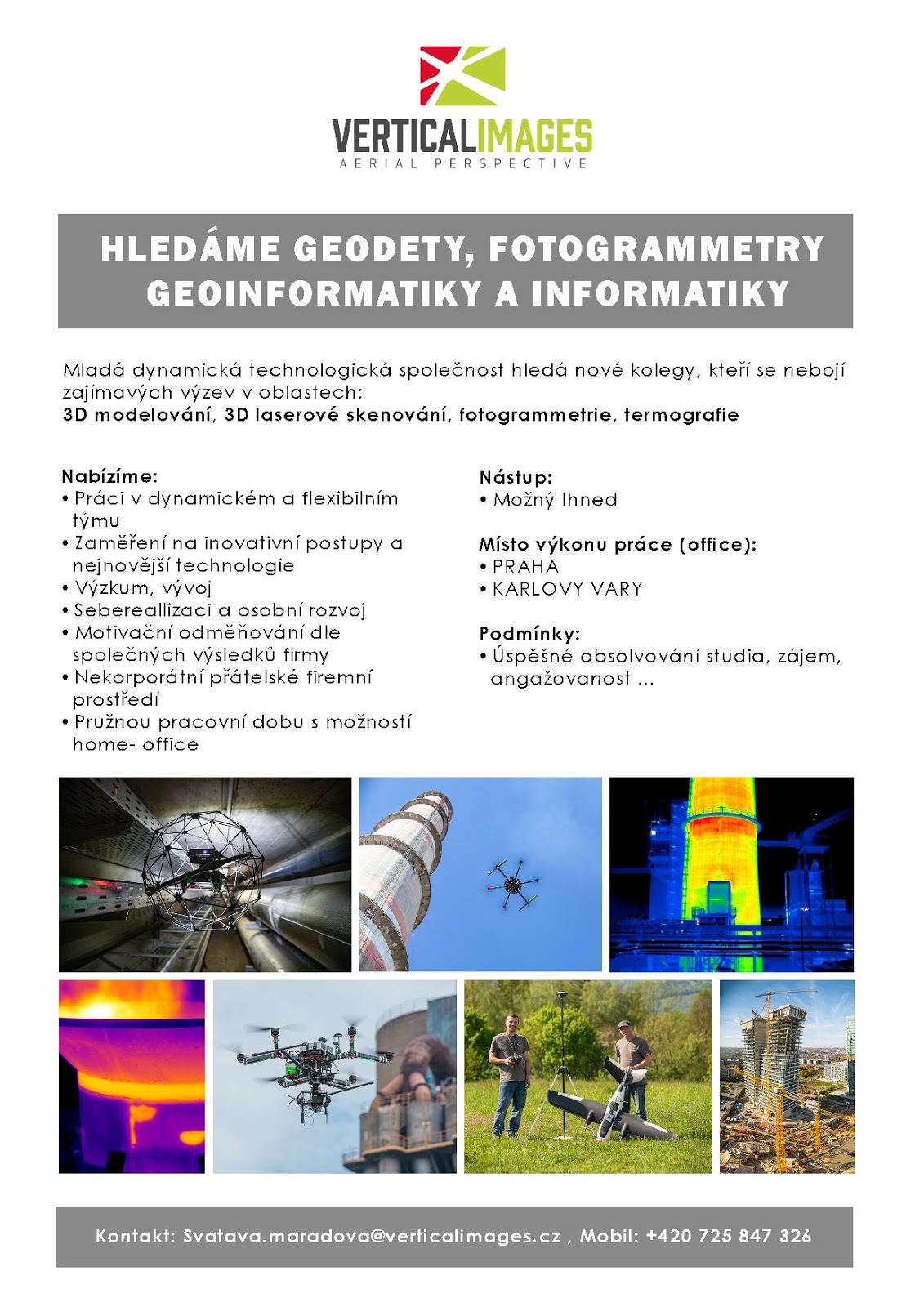
7. referent KN – právník do právního oddělení XI.
4.6.2019 13:48 ČÚZK /Urady/Katastralni-urady/Katastralni-urady/Katastralni-urad-pro-hlavni-mesto-Prahu/O-uradu/Aktuality/VR-04-06-20197. referent KN – právník do právního oddělení XI.
4.6.2019 13:48 ČÚZK - předpisy a opatření Katastrální úřad pro hlavní město Prahu zveřejnil novou aktualitu: Ředitel úřadu vyhlašuje výběrová řízení na služební místo:referent KN – právník do právního oddělení XI.
7. referent KN – právník do právního oddělení III.
4.6.2019 13:48 ČÚZK /Urady/Katastralni-urady/Katastralni-urady/Katastralni-urad-pro-hlavni-mesto-Prahu/O-uradu/Aktuality/VR-04-06-2019referent KN – právník do právního oddělení III.
4.6.2019 13:48 ČÚZK - předpisy a opatření Katastrální úřad pro hlavní město Prahu zveřejnil novou aktualitu: Ředitel úřadu vyhlašuje výběrová řízení na služební místa:referent KN – právník do právního oddělení III.
odborný referent/vrchní referent – návrh zápisu v katastru
7. referent KN – právník do právního oddělení III.
4.6.2019 13:48 ČÚZK - předpisy a opatření Katastrální úřad pro hlavní město Prahu zveřejnil novou aktualitu: Ředitel úřadu vyhlašuje výběrová řízení na služební místo:referent KN – právník do právního oddělení III.
6. referent KN – právník do právního oddělení III.
4.6.2019 13:48 ČÚZK - předpisy a opatření Katastrální úřad pro hlavní město Prahu zveřejnil novou aktualitu: Ředitel úřadu vyhlašuje výběrová řízení na služební místo:referent KN – právník do právního oddělení III.
VŘ - 04.06.2019
4.6.2019 13:48 ČÚZK /Urady/Katastralni-urady/Katastralni-urady/Katastralni-urad-pro-hlavni-mesto-Prahu/O-uradu/Aktuality/VR-04-06-2019VŘ - 04.06.2019
4.6.2019 13:48 ČÚZK - předpisy a opatření Katastrální úřad pro hlavní město Prahu zveřejnil novou aktualitu: Ředitel úřadu vyhlašuje výběrové řízení na služební místo:rada/odborný rada – interní auditor Katastrálního úřadu pro hlavní město Prahu
referent KN – právník do právního oddělení III.
4.6.2019 13:48 ČÚZK - předpisy a opatření Katastrální úřad pro hlavní město Prahu zveřejnil novou aktualitu: Ředitel úřadu vyhlašuje výběrové řízení na služební místo:referent KN – právník do právního oddělení III.
referent KN – právník do právního oddělení III.
4.6.2019 13:48 ČÚZK - předpisy a opatření Katastrální úřad pro hlavní město Prahu zveřejnil novou aktualitu: Ředitel úřadu vyhlašuje výběrová řízení na služební místo:referent KN – právník do právního oddělení III.
VŘ - 04.06.2019
4.6.2019 13:48 ČÚZK - předpisy a opatření Katastrální úřad pro hlavní město Prahu zveřejnil novou aktualitu: Ředitel úřadu vyhlašuje výběrové řízení na služební místo:rada/odborný rada – interní auditor Katastrálního úřadu pro hlavní město Prahu
referent KN – právník do právního oddělení III.
4.6.2019 13:48 ČÚZK /Urady/Katastralni-urady/Katastralni-urady/Katastralni-urad-pro-hlavni-mesto-Prahu/O-uradu/Aktuality/VR-04-06-2019referent KN – právník do právního oddělení III.
4.6.2019 13:48 ČÚZK - předpisy a opatření Katastrální úřad pro hlavní město Prahu zveřejnil novou aktualitu: Ředitel úřadu vyhlašuje výběrová řízení na služební místa:referent KN – právník do právního oddělení III.
odborný referent/vrchní referent – návrh zápisu v katastru
odborný referent/vrchní referent – návrh zápisu v katastru
4.6.2019 13:45 ČÚZK /Urady/Katastralni-urady/Katastralni-urady/Katastralni-urad-pro-hlavni-mesto-Prahu/Uredni-deska/Oznameni-a-jina-uredni-sdeleni/Volna-mista/na-samostatne-systemizovane-sluzebni-misto-rada-ododborný referent/vrchní referent – návrh zápisu v katastru
4.6.2019 13:45 ČÚZK - volná místa Katastrální úřad pro hlavní město Prahu - Katastrální pracoviště Plzeň-sever vypisuje výběrové řízení na místo odborný referent/vrchní referent – návrh zápisu v katastrurada/odborný rada – interní auditor Katastrálního úřadu pro hlavní město Prahu
4.6.2019 13:45 ČÚZK - předpisy a opatření Katastrální úřad pro hlavní město Prahuvypisuje výběrové řízení na místo
rada/odborný rada – interní auditor Katastrálního úřadu pro hlavní město Prahu
na samostatné systemizované služební místo rada/odborný rada – interní auditor
4.6.2019 13:45 ČÚZK - volná místa Katastrální úřad pro hlavní město Prahu vypisuje výběrové řízení na místo na samostatné systemizované služební místo rada/odborný rada – interní auditorodborný referent/vrchní referent – návrh zápisu v katastru
4.6.2019 13:45 ČÚZK - předpisy a opatření Katastrální úřad pro hlavní město Prahu - Katastrální pracoviště Plzeň-severvypisuje výběrové řízení na místo
odborný referent/vrchní referent – návrh zápisu v katastru
odborný referent/vrchní referent – návrh zápisu v katastru
4.6.2019 13:45 ČÚZK - volná místa Katastrální úřad pro hlavní město Prahu - Katastrální pracoviště Praha vypisuje výběrové řízení na místo odborný referent/vrchní referent – návrh zápisu v katastruna samostatné systemizované služební místo rada/odborný rada – interní auditor
4.6.2019 13:45 ČÚZK /Urady/Katastralni-urady/Katastralni-urady/Katastralni-urad-pro-hlavni-mesto-Prahu/Uredni-deska/Oznameni-a-jina-uredni-sdeleni/Volna-mista/na-samostatne-systemizovane-sluzebni-misto-rada-ododborný referent/vrchní referent – návrh zápisu v katastru
4.6.2019 13:45 ČÚZK - předpisy a opatření Katastrální úřad pro hlavní město Prahu - Katastrální pracoviště Prahavypisuje výběrové řízení na místo
odborný referent/vrchní referent – návrh zápisu v katastru
rada/odborný rada – interní auditor Katastrálního úřadu pro hlavní město Prahu
4.6.2019 13:45 ČÚZK /Urady/Katastralni-urady/Katastralni-urady/Katastralni-urad-pro-hlavni-mesto-Prahu/Uredni-deska/Oznameni-a-jina-uredni-sdeleni/Volna-mista/na-samostatne-systemizovane-sluzebni-misto-rada-odrada/odborný rada – interní auditor Katastrálního úřadu pro hlavní město Prahu
4.6.2019 13:45 ČÚZK - volná místa Katastrální úřad pro hlavní město Prahu vypisuje výběrové řízení na místo rada/odborný rada – interní auditor Katastrálního úřadu pro hlavní město PrahuRevize v k.ú. Třebušín
4.6.2019 13:35 ČÚZK - předpisy a opatření Katastrální úřad pro Ústecký kraj - Katastrální pracoviště Litoměřicezveřejnil novou aktualitu: Vážení klienti, oznamujeme Vám, že od 1.7.2019 - do 31.5.2020 bude probíhat v katastrálním území Třebušín obce Třebušín revize katastru nemovitostí. Účelem provádění revize je soulad údajů katastru nemovitostí se skutečným stavem v terénu, kdy jsou zjišťovány změny a ověřován dosavadní stav předmětu evidence katastru nemovitostí.
Revize v k.ú. Třebušín
4.6.2019 13:35 ČÚZK /Urady/Katastralni-urady/Katastralni-urady/Katastralni-urad-pro-Ustecky-kraj/Katastralni-pracoviste/KP-Litomerice/O-uradu/Aktuality/Revize-v-k-u-TrebusinRevize v k.ú. Horní Chobolice
4.6.2019 13:34 ČÚZK - předpisy a opatření Katastrální úřad pro Ústecký kraj - Katastrální pracoviště Litoměřicezveřejnil novou aktualitu: Vážení klienti, oznamujeme Vám, že od 1.7.2019 - do 31.1.2020 bude probíhat v katastrálním území Horní Chobolice obce Liběšice revize katastru nemovitostí. Účelem provádění revize je soulad údajů katastru nemovitostí se skutečným stavem v terénu, kdy jsou zjišťovány změny a ověřován dosavadní stav předmětu evidence katastru nemovitostí.
Revize v k.ú. Horní Chobolice
4.6.2019 13:34 ČÚZK /Urady/Katastralni-urady/Katastralni-urady/Katastralni-urad-pro-Ustecky-kraj/Katastralni-pracoviste/KP-Litomerice/O-uradu/Aktuality/Revize-v-k-u-Horni-ChoboliceRevize v k.ú. Vetlá
4.6.2019 13:33 ČÚZK - předpisy a opatření Katastrální úřad pro Ústecký kraj - Katastrální pracoviště Litoměřicezveřejnil novou aktualitu: Vážení klienti, oznamujeme Vám, že od 3.6.2019 - do 20.12.2019 bude probíhat v katastrálním území Vetlá obce Vrbice revize katastru nemovitostí. Účelem provádění revize je soulad údajů katastru nemovitostí se skutečným stavem v terénu, kdy jsou zjišťovány změny a ověřován dosavadní stav předmětu evidence katastru nemovitostí.
Revize v k.ú. Vetlá
4.6.2019 13:33 ČÚZK /Urady/Katastralni-urady/Katastralni-urady/Katastralni-urad-pro-Ustecky-kraj/Katastralni-pracoviste/KP-Litomerice/O-uradu/Aktuality/Revize-v-k-u-VetlaRevize v k.ú. Třebívlice
4.6.2019 13:29 ČÚZK - předpisy a opatření Katastrální úřad pro Ústecký kraj - Katastrální pracoviště Litoměřicezveřejnil novou aktualitu: Vážení klienti, oznamujeme Vám, že od 3.6.2019 - do 30.4.2020 bude probíhat v katastrálním území Třebívlice obce Třebívlice revize katastru nemovitostí. Účelem provádění revize je soulad údajů katastru nemovitostí se skutečným stavem v terénu, kdy jsou zjišťovány změny a ověřován dosavadní stav předmětu evidence katastru nemovitostí.
Revize v k.ú. Třebívlice
4.6.2019 13:29 ČÚZK /Urady/Katastralni-urady/Katastralni-urady/Katastralni-urad-pro-Ustecky-kraj/Katastralni-pracoviste/KP-Litomerice/O-uradu/Aktuality/Revize-v-k-u-TrebivliceRevize v k.ú. Hlupice
4.6.2019 13:27 ČÚZK - předpisy a opatření Katastrální úřad pro Ústecký kraj - Katastrální pracoviště Litoměřicezveřejnil novou aktualitu: Vážení klienti, oznamujeme Vám, že od 27.5.2019 - do 28.2.2020 bude probíhat v katastrálním území Hlupice obce Lovečkovice revize katastru nemovitostí. Účelem provádění revize je soulad údajů katastru nemovitostí se skutečným stavem v terénu, kdy jsou zjišťovány změny a ověřován dosavadní stav předmětu evidence katastru nemovitostí.
Revize v k.ú. Hlupice
4.6.2019 13:27 ČÚZK /Urady/Katastralni-urady/Katastralni-urady/Katastralni-urad-pro-Ustecky-kraj/Katastralni-pracoviste/KP-Litomerice/O-uradu/Aktuality/Revize-v-k-u-HlupiceRevize v k.ú. Vlastislav
4.6.2019 13:24 ČÚZK - předpisy a opatření Katastrální úřad pro Ústecký kraj - Katastrální pracoviště Litoměřicezveřejnil novou aktualitu: Vážení klienti, oznamujeme Vám, že od 15.4.2019 - do 15.11.2019 bude probíhat v katastrálním území Vlastislav obce Vlastislav revize katastru nemovitostí. Účelem provádění revize je soulad údajů katastru nemovitostí se skutečným stavem v terénu, kdy jsou zjišťovány změny a ověřován dosavadní stav předmětu evidence katastru nemovitostí.
Revize v k.ú. Vlastislav
4.6.2019 13:24 ČÚZK /Urady/Katastralni-urady/Katastralni-urady/Katastralni-urad-pro-Ustecky-kraj/Katastralni-pracoviste/KP-Litomerice/O-uradu/Aktuality/Revize-v-k-u-VlastislavRevize v k.ú. Starý Týn
4.6.2019 13:23 ČÚZK /Urady/Katastralni-urady/Katastralni-urady/Katastralni-urad-pro-Ustecky-kraj/Katastralni-pracoviste/KP-Litomerice/O-uradu/Aktuality/Revize-v-k-u-Stary-TynRevize v k.ú. Starý Týn
4.6.2019 13:23 ČÚZK - předpisy a opatření Katastrální úřad pro Ústecký kraj - Katastrální pracoviště Litoměřicezveřejnil novou aktualitu: Vážení klienti, oznamujeme Vám, že od 9.4.2019 - do 31.10.2019 bude probíhat v katastrálním území Starý Týn obce Úštěk revize katastru nemovitostí. Účelem provádění revize je soulad údajů katastru nemovitostí se skutečným stavem v terénu, kdy jsou zjišťovány změny a ověřován dosavadní stav předmětu evidence katastru nemovitostí.
Revize v k.ú. Štětí II
4.6.2019 13:21 ČÚZK - předpisy a opatření Katastrální úřad pro Ústecký kraj - Katastrální pracoviště Litoměřicezveřejnil novou aktualitu: Vážení klienti, oznamujeme Vám, že od 18.3.2019 - do 15.10.2019 bude probíhat v katastrálním území Štětí II obce Štětí revize katastru nemovitostí. Účelem provádění revize je soulad údajů katastru nemovitostí se skutečným stavem v terénu, kdy jsou zjišťovány změny a ověřován dosavadní stav předmětu evidence katastru nemovitostí.
Revize v k.ú. Štětí II
4.6.2019 13:21 ČÚZK /Urady/Katastralni-urady/Katastralni-urady/Katastralni-urad-pro-Ustecky-kraj/Katastralni-pracoviste/KP-Litomerice/O-uradu/Aktuality/Revize-v-k-u-Steti-IIRevize v k.ú. Čakovice u Radouně
4.6.2019 13:20 ČÚZK - předpisy a opatření Katastrální úřad pro Ústecký kraj - Katastrální pracoviště Litoměřicezveřejnil novou aktualitu: Vážení klienti, oznamujeme Vám, že od 18.3.2019 - do 15.10.2019 bude probíhat v katastrálním území Čakovice u Radouně obce Štětí revize katastru nemovitostí. Účelem provádění revize je soulad údajů katastru nemovitostí se skutečným stavem v terénu, kdy jsou zjišťovány změny a ověřován dosavadní stav předmětu evidence katastru nemovitostí.
Revize v k.ú. Čakovice u Radouně
4.6.2019 13:20 ČÚZK /Urady/Katastralni-urady/Katastralni-urady/Katastralni-urad-pro-Ustecky-kraj/Katastralni-pracoviste/KP-Litomerice/O-uradu/Aktuality/Revize-v-k-u-Cakovice-u-RadouneRevize v k.ú. Mladé
4.6.2019 13:19 ČÚZK - předpisy a opatření Katastrální úřad pro Ústecký kraj - Katastrální pracoviště Litoměřicezveřejnil novou aktualitu: Vážení klienti, oznamujeme Vám, že od 11.3.2019 - do 30.9.2019 bude probíhat v katastrálním území Mladé obce Liběšice revize katastru nemovitostí. Účelem provádění revize je soulad údajů katastru nemovitostí se skutečným stavem v terénu, kdy jsou zjišťovány změny a ověřován dosavadní stav předmětu evidence katastru nemovitostí.
Revize v k.ú. Mladé
4.6.2019 13:19 ČÚZK /Urady/Katastralni-urady/Katastralni-urady/Katastralni-urad-pro-Ustecky-kraj/Katastralni-pracoviste/KP-Litomerice/O-uradu/Aktuality/Revize-v-k-u-MladeZlínský kraj nově nabízí službu UtilityReport
4.6.2019 12:12 Hrdlička„Jde o elegantní, rychlý a bezplatný způsob, jak mohou občané podat žádost o vyjádření správcům inženýrských sítí a mít při tom jistotu, že na nikoho nezapomněli,“ řekl hejtman Zlínského kraje Jiří Čunek. Službu, jejímž provozovatelem je společnost HRDLIČKA spol. s r.o., doposud nabízelo na svých webových stránkách 7 měst ve Zlínském kraji a za její... View Article
The post Zlínský kraj nově nabízí službu UtilityReport appeared first on HRDLIČKA spol. s r.o. - komplexní služby v oblasti geodézie.
USGIF Announces 2019 Stu Shea Endowed Scholarship Recipient
4.6.2019 11:18 GISCafe.com Webcasts-Webinars Clark University’s Jaclyn Guz becomes second recipient of $15,000 scholarshipSan Antonio, Texas (June 3, 2019)— This morning at the …
SZÚ - Kvalita koupacích vod - sezóna 2019
4.6.2019 2:00 Cenia - Katalog metadat ČR - INSPIRE Kompozice obsahuje vrstvy s údaji o kvalitě koupacích vod v letním období roku 2019.SZÚ - Kvalita koupacích vod - sezóna 2018
4.6.2019 2:00 Cenia - Katalog metadat ČR - INSPIRE Kompozice obsahuje vrstvy s údaji o kvalitě koupacích vod v letním období roku 2018.Kvalita koupacích vod v koupacích sezónách 2016 a 2018
4.6.2019 2:00 Cenia - Katalog metadat ČR - INSPIRE Kvalita koupacích vod v koupací sezóně v letech 2016-2018.BlackSky Awarded NRO Contract for Commercial Imagery to Support U.S. Government Mission Needs
4.6.2019 1:40 GISCafe.com Webcasts-Webinars HERNDON, Va. — (BUSINESS WIRE) — June 3, 2019 —BlackSky,
a leading provider of geospatial intelligence, satellite …