









zprávy
zdroje zpráv:Odborný rada – Oddělení právních vztahů k nemovitostem
12.6.2017 13:53 ČÚZK /Urady/Katastralni-urady/Katastralni-urady/Katastralni-urad-pro-Karlovarsky-kraj/Uredni-deska/Oznameni-a-jina-uredni-sdeleni/Volna-mista/Odborny-rada-–-Oddeleni-pravnich-vztahu-k-nemovitoOdborný rada – Oddělení právních vztahů k nemovitostem
12.6.2017 13:53 ČÚZK - volná místa Katastrální úřad pro Karlovarský kraj, Katastrální pracoviště Sokolov vypisuje výběrové řízení na místo Odborný rada – Oddělení právních vztahů k nemovitostemOdborný rada – Oddělení právních vztahů k nemovitostem
12.6.2017 13:53 ČÚZK - předpisy a opatření Katastrální úřad pro Karlovarský kraj Katastrální pracoviště Sokolovvypisuje výběrové řízení na místo
Odborný rada – Oddělení právních vztahů k nemovitostem
2017
12.6.2017 13:42 ČÚZK /Urady/Zememericke-a-katastralni-inspektoraty/Zememericke-a-katastralni-inspektoraty/Zememericky-a-katastralni-inspektorat-v-Liberci/Casto-hledane-informace/Poskytovani-informaci-106-1999-Sb/Zverejneni-obsahu-informaci-poskytnutych-na-za-(1)/2017Zveřejnění obsahu informací poskytnutých na žádost dle zákona č. 106/1999 Sb. za rok 2017
12.6.2017 13:42 ČÚZK /Urady/Zememericke-a-katastralni-inspektoraty/Zememericke-a-katastralni-inspektoraty/Zememericky-a-katastralni-inspektorat-v-Liberci/Casto-hledane-informace/Poskytovani-informaci-106-1999-Sb/Zverejneni-obsahu-informaci-poskytnutych-na-za-(1)/20172017
12.6.2017 13:42 ČÚZK - předpisy a opatření Zeměměřický a katastrální inspektorát v Libercizveřejňuje obsah informace poskytnutých na žádost dle zákona č. 106/1999 Sb. za rok
2017
Zveřejnění obsahu informací poskytnutých na žádost dle zákona č. 106/1999 Sb. za rok 2017
12.6.2017 13:42 ČÚZK - předpisy a opatření Zeměměřický a katastrální inspektorát v Libercizveřejňuje obsah informace poskytnutých na žádost dle zákona č. 106/1999 Sb. za rok
2017
20170612 - volné místo - rada/odb.rada KÚ OKO II.
12.6.2017 13:37 ČÚZK - předpisy a opatření Katastrální úřad pro Ústecký kraj zveřejnil novou aktualitu: Oznámení o vyhlášení výběrového řízení na služební místo - Rada / odborný rada v oddělení OKO II. v technickém odboru na Katastrálním úřadu pro Ústecký kraj20170612 - volné místo - rada/odb.rada KÚ OKO II.
12.6.2017 13:37 ČÚZK /Urady/Katastralni-urady/Katastralni-urady/Katastralni-urad-pro-Ustecky-kraj/O-uradu/Aktuality/20170509-volne-misto-informatik-KP-Most-(4)Rada / odborný rada v oddělení OKO II. v technickém odboru na Katastrálním úřadu pro Ústecký kraj
12.6.2017 13:35 ČÚZK - volná místa Katastrální úřad pro Ústecký kraj, vypisuje výběrové řízení na místo Rada / odborný rada v oddělení OKO II. v technickém odboru na Katastrálním úřadu pro Ústecký krajRada / odborný rada v oddělení OKO II. v technickém odboru na Katastrálním úřadu pro Ústecký kraj
12.6.2017 13:35 ČÚZK - předpisy a opatření Katastrální úřad pro Ústecký krajvypisuje výběrové řízení na místo
Rada / odborný rada v oddělení OKO II. v technickém odboru na Katastrálním úřadu pro Ústecký kraj
Rada / odborný rada v oddělení OKO II. v technickém odboru na Katastrálním úřadu pro Ústecký kraj
12.6.2017 13:35 ČÚZK /Urady/Katastralni-urady/Katastralni-urady/Katastralni-urad-pro-Ustecky-kraj/Uredni-deska/Oznameni-a-jina-uredni-sdeleni/Volna-mista/Rada-odborny-rada-v-oddeleni-OKO-II-v-technickSpráva majetku obce Hodonice
12.6.2017 13:31 TopGis Obec Hodonice využívá již od loňského roku naši webovou mapovou aplikaci GisOnline. V současné době může starosta obce, všichni uvnitř úřadu i široká veřejnost využívat velké množství údajů v mapových projektech. Máme radost, že základní sadu dat – inženýrské sítě, plnou verzi měsíčně aktualizovaného katastru nemovitostí, aktuální i historické ortofotomapy celé obce a další podkladové mapy, informaceSpráva majetku obce Hodonice
12.6.2017 13:31 TopGis Obec Hodonice využívá již od loňského roku naši webovou mapovou aplikaci GisOnline.cz. V současné době může starosta obce, správci obecního majetku, úředníci i široká veřejnost využívat velké množství údajů v mapových projektech z dílny TopGis. Základní sadu dat – inženýrské sítě, plnou verzi měsíčně aktualizovaného katastru nemovitostí, aktuální i historické ortofotomapy celé obce a další podkladové mapy,Správa majetku obce Hodonice
12.6.2017 13:31 TopGis Obec Hodonice využívá již od loňského roku naši webovou mapovou aplikaci GisOnline.cz. V současné době může starosta obce, správci obecního majetku, úředníci i široká veřejnost využívat velké množství údajů v mapových projektech z dílny TopGis. Základní sadu dat – inženýrské sítě, plnou verzi měsíčně aktualizovaného katastru nemovitostí, aktuální i historické ortofotomapy celé obce a další podkladové mapy,rozhodování o povolení vkladu
12.6.2017 12:53 ČÚZK - volná místa Katastrální úřad pro Královéhradecký kraj, Katastrální pracoviště Hradec Králové vypisuje výběrové řízení na místo rozhodování o povolení vkladurozhodování o povolení vkladu
12.6.2017 12:53 ČÚZK - předpisy a opatření Katastrální úřad pro Královéhradecký kraj Katastrální pracoviště Hradec Královévypisuje výběrové řízení na místo
rozhodování o povolení vkladu
rozhodování o povolení vkladu
12.6.2017 12:53 ČÚZK /Urady/Katastralni-urady/Katastralni-urady/Katastralni-urad-pro-Kralovehradecky-kraj/Volna-mista/rozhodovani-o-povoleni-vkladu-(1)V sekci Doprava a silniční hos
12.6.2017 12:00 Jihočeský kraj V sekci Doprava a silniční hospodářství byla aktualizována mapová aplikace se zastávkami veřejné dopravy a zároveň i otevřená data v licenci CC BY-SA 4.0.V sekci byla aktualizována a
12.6.2017 12:00 Jihočeský kraj V sekci byla aktualizována a zároveň i otevřená data v licenci CC BY-SA 4.0.First Sentinel-2B images delivered by laser
12.6.2017 11:00 ESA Observing the Earth
With the Sentinel-2B satellite close to beginning its working life in orbit, this latest Copernicus satellite has linked up to Alphasat by laser, across almost 36 000 km of space, to deliver images of Earth just moments after they were captured.
20170612 Referent/ka – oddělení aktualizace popisných informací katastru nemovitostí
12.6.2017 10:50 ČÚZK - předpisy a opatření Katastrální úřad pro Středočeský kraj Katastrální pracoviště Praha-západ zveřejnil novou aktualitu: V části "Úřední deska", v sekci "Oznámení a jiná úřední sdělení" bylo vystaveno "Oznámení o vyhlášení výběrového řízení na obsazení systemizovaného místa Referent/ka – oddělení aktualizace popisných informací katastru nemovitostí"20170612 REFERENT/KA KATASTRU NEMOVITOSTÍ
12.6.2017 10:50 ČÚZK /Urady/Katastralni-urady/Katastralni-urady/Katastralni-urad-pro-Stredocesky-kraj/Katastralni-pracoviste/KP-Praha-zapad/O-uradu/Aktuality/20161013Rada-odborny-rada-–-informatik-(1)20170612 Referent/ka – oddělení aktualizace popisných informací katastru nemovitostí
12.6.2017 10:50 ČÚZK /Urady/Katastralni-urady/Katastralni-urady/Katastralni-urad-pro-Stredocesky-kraj/Katastralni-pracoviste/KP-Praha-zapad/O-uradu/Aktuality/20161013Rada-odborny-rada-–-informatik-(1)20170612 REFERENT/KA KATASTRU NEMOVITOSTÍ
12.6.2017 10:50 ČÚZK - předpisy a opatření Katastrální úřad pro Středočeský kraj Katastrální pracoviště Praha-západ zveřejnil novou aktualitu: V části "Úřední deska", v sekci "Oznámení a jiná úřední sdělení" bylo vystaveno "Oznámení o vyhlášení výběrového řízení na obsazení systemizovaného místa REFERENT/KA KATASTRU NEMOVITOSTÍ"Referent KN – pracovník podatelny
12.6.2017 10:39 ČÚZK /Urady/Katastralni-urady/Katastralni-urady/Katastralni-urad-pro-hlavni-mesto-Prahu/Uredni-deska/Oznameni-a-jina-uredni-sdeleni/Volna-mista/Referent-KN-–-pracovnik-podatelny-(2)Referent KN – pracovník podatelny
12.6.2017 10:39 ČÚZK - volná místa Katastrální úřad pro hlavní město Prahu, Katastrální pracoviště Praha vypisuje výběrové řízení na místo Referent KN – pracovník podatelnyReferent KN – pracovník podatelny
12.6.2017 10:39 ČÚZK - předpisy a opatření Katastrální úřad pro hlavní město Prahu Katastrální pracoviště Prahavypisuje výběrové řízení na místo
Referent KN – pracovník podatelny
Přerušení dodávky el. energie na KP Třinec
12.6.2017 10:28 ČÚZK - předpisy a opatření Katastrální úřad pro Moravskoslezský kraj Katastrální pracoviště Třinec Přerušení dodávky el. energie na KP TřinecZ důvodu odstávky elektřiny ze strany ČEZ Distribuce, a.s. dne 22.6.2017 od 7.00 -15.00hod bude katastrální úřad pouze přijímat podání a objednávky. Informace z katastru nemovitostí (informace k řízením V, Z, OR, OO , snímky, výpisy apod.) nebudou poskytovány.
Přerušení dodávky el. energie na KP Třinec
12.6.2017 10:28 ČÚZK /Urady/Katastralni-urady/Katastralni-urady/Katastralni-urad-pro-Moravskoslezsky-kraj/Katastralni-pracoviste/KP-Trinec/O-uradu/Aktuality/Preruseni-dodavky-el-energie-na-KP-TrinecReferent/ka – oddělení aktualizace popisných informací katastru nemovitostí
12.6.2017 10:20 ČÚZK - volná místa Katastrální úřad pro Středočeský kraj, Katastrální pracoviště Praha-západ vypisuje výběrové řízení na místo Referent/ka – oddělení aktualizace popisných informací katastru nemovitostíREFERENT/KA KATASTRU NEMOVITOSTÍ
12.6.2017 10:20 ČÚZK /Urady/Katastralni-urady/Katastralni-urady/Katastralni-urad-pro-Stredocesky-kraj/Volna-mista/REFERENT-KA-KATASTRU-NEMOVITOSTI-(2)REFERENT/KA KATASTRU NEMOVITOSTÍ
12.6.2017 10:20 ČÚZK - předpisy a opatření Katastrální úřad pro Středočeský kraj Katastrální pracoviště Praha-západvypisuje výběrové řízení na místo REFERENT/KA KATASTRU NEMOVITOSTÍ
REFERENT/KA KATASTRU NEMOVITOSTÍ
Referent/ka – oddělení aktualizace popisných informací katastru nemovitostí
12.6.2017 10:20 ČÚZK - předpisy a opatření Katastrální úřad pro Středočeský kraj Katastrální pracoviště Praha-západvypisuje výběrové řízení na místo Referent/ka – oddělení aktualizace popisných informací katastru ne
Referent/ka – oddělení aktualizace popisných informací katastru nemovitostí
Referent/ka – oddělení aktualizace popisných informací katastru nemovitostí
12.6.2017 10:20 ČÚZK /Urady/Katastralni-urady/Katastralni-urady/Katastralni-urad-pro-Stredocesky-kraj/Volna-mista/REFERENT-KA-KATASTRU-NEMOVITOSTI-(2)REFERENT/KA KATASTRU NEMOVITOSTÍ
12.6.2017 10:20 ČÚZK - volná místa Katastrální úřad pro Středočeský kraj, Katastrální pracoviště Praha-západ vypisuje výběrové řízení na místo REFERENT/KA KATASTRU NEMOVITOSTÍNově vyhlášená výběrová řízení
12.6.2017 10:10 ČÚZK - předpisy a opatření Katastrální úřad pro hlavní město Prahu Katastrální pracoviště Praha zveřejnil novou aktualitu: Nově vyhlášená výběrová řízení na sužební místa:* Referent KN – pracovník podatelny
* Vrchní referent/rada – personalista
Nově vyhlášená výběrová řízení
12.6.2017 10:10 ČÚZK - předpisy a opatření Katastrální úřad pro hlavní město Prahu Katastrální pracoviště Praha zveřejnil novou aktualitu: Nově vyhlášené výběrové řízení na sužební místo:* Referent KN – pracovník podatelny
Nově vyhlášená výběrová řízení
12.6.2017 10:10 ČÚZK - předpisy a opatření Katastrální úřad pro hlavní město Prahu Katastrální pracoviště Praha zveřejnil novou aktualitu: Nově vyhlášená výběrová řízení na sužební místa:* Referent KN – pracovník podatelny
* Vrchní referent/rada – personalista
Nově vyhlášená výběrová řízení
12.6.2017 10:10 ČÚZK /Urady/Katastralni-urady/Katastralni-urady/Katastralni-urad-pro-hlavni-mesto-Prahu/O-uradu/Aktuality/Nove-vyhlasena-vyberova-rizeni-(1)Nově vyhlášená výběrová řízení
12.6.2017 10:06 ČÚZK /Urady/Katastralni-urady/Katastralni-urady/Katastralni-urad-pro-hlavni-mesto-Prahu/O-uradu/Aktuality/Nove-vyhlasena-vyberova-rizeniPracovní místo Referent KN - návrh zápistu v katastru
12.6.2017 10:06 ČÚZK /Urady/Katastralni-urady/Katastralni-urady/Katastralni-urad-pro-hlavni-mesto-Prahu/O-uradu/Aktuality/Nove-vyhlasena-vyberova-rizeniNově vyhlášená výběrová řízení
12.6.2017 10:06 ČÚZK - předpisy a opatření Katastrální úřad pro hlavní město Prahu zveřejnil novou aktualitu: Nově vyhlášená výběrová řízení na sužební místa:* Referent KN – poskytování informací KN, nahlížení do KN
* Referent KN – obnova katastrálního operátu
Nově vyhlášená výběrová řízení
12.6.2017 10:06 ČÚZK - předpisy a opatření Katastrální úřad pro hlavní město Prahu zveřejnil novou aktualitu: Nově vyhlášená výběrová řízení na sužební místa:* Referent KN – poskytování informací KN, nahlížení do KN
* Referent KN – obnova katastrálního operátu
Pracovní místo Referent KN - návrh zápistu v katastru
12.6.2017 10:06 ČÚZK - předpisy a opatření Katastrální úřad pro hlavní město Prahu zveřejnil novou aktualitu: Nově vyhlášené výběrové řízení na pracovní pozici:* Referent KN – návrh zápisu v katastru
Pozvánka na seminář Aproximace vektorových polí - Radiálni bázové funkce
12.6.2017 9:49 Blogující geomatici - FAV ZČU Katedra informatiky a výpočetní techniky Fakulty aplikovaných věd Západočeské univerzity v Plznisi dovoluje pozvat členy akademické obce i odbornou veřejnost na přednášku
Aproximace vektorových polí, kterou přednese Ing. Michal Šmolík.
Na semináři bude popsán postup aproximace vektorových polí pomocí Radiálních bázových funkcí. Při aproximaci bude představen způsob vhodného umístění řídících bodů pro RBF aproximaci. Samotná aproximace využívá Lagrangeovy multiplikátory pro zachování přesné pozice kritických bodů ve vektorovém poli. Bude diskutováno o kvalitě výsledné aproximace a i o možném využití při kompresi vektorových dat.
Datum konání: 20. června 2017
Čas konání: 13:00
Místo konání: zasedací místnost UN 309, Technická 8, Plzeň (budova FAV)
Přednáška je pořádána v rámci semináře Centra počítačové grafiky a vizualizace
Rada/odborný rada – správce informačních a komunikačních technologií
12.6.2017 9:26 ČÚZK - volná místa Katastrální úřad pro Plzeňský kraj, vypisuje výběrové řízení na místo Rada/odborný rada – správce informačních a komunikačních technologiíRada/odborný rada – správce informačních a komunikačních technologií
12.6.2017 9:26 ČÚZK - předpisy a opatření Katastrální úřad pro Plzeňský krajvypisuje výběrové řízení na místo
Rada/odborný rada – správce informačních a komunikačních technologií
Rada/odborný rada – správce informačních a komunikačních technologií
12.6.2017 9:26 ČÚZK /Urady/Katastralni-urady/Katastralni-urady/Katastralni-urad-pro-Plzensky-kraj/Uredni-deska/Oznameni-a-jina-uredni-sdeleni/Volna-mista/Rada-odborny-rada-–-spravce-informacnich-a-komunikTEST
12.6.2017 8:45 ČÚZK - volná místa Katastrální úřad pro Královéhradecký kraj, Katastrální pracoviště Hradec Králové vypisuje výběrové řízení na místo TESTOdborný referent /vrchní referent v oddělení právních vztahů k nemovitostem Katastrálního pracoviště
12.6.2017 8:39 ČÚZK /Urady/Katastralni-urady/Katastralni-urady/Katastralni-urad-pro-Kralovehradecky-kraj/Uredni-deska/Oznameni-a-jina-uredni-sdeleni/Volna-mista/Odborny-referent-vrchni-referent-v-oddeleni-pravnOdborný referent /vrchní referent v oddělení právních vztahů k nemovitostem Katastrálního pracoviště
12.6.2017 8:39 ČÚZK - předpisy a opatření Katastrální úřad pro Královéhradecký kraj Katastrální pracoviště Hradec Královévypisuje výběrové řízení na místo
Odborný referent /vrchní referent v oddělení právních vztahů k nemovitostem Katastrálního pracoviště Hradec Králové
Odborný referent /vrchní referent v oddělení právních vztahů k nemovitostem Katastrálního pracoviště
12.6.2017 8:33 ČÚZK - volná místa Katastrální úřad pro Královéhradecký kraj, Katastrální pracoviště Hradec Králové vypisuje výběrové řízení na místo Odborný referent /vrchní referent v oddělení právních vztahů k nemovitostem Katastrálního pracovištěUpozornění
12.6.2017 7:53 ČÚZK /Urady/Katastralni-urady/Katastralni-urady/Katastralni-urad-pro-Plzensky-kraj/O-uradu/Aktuality/UpozorneniUpozornění
12.6.2017 7:53 ČÚZK - předpisy a opatření Katastrální úřad pro Plzeňský kraj zveřejnil novou aktualitu:Dne 16.6.2017 od 10:30 hod. dojde z technických důvodů k uzavření podatelny Katastrálního úřadu pro Plzeňský kraj i podatelen všech katastrálních pracovišť v jeho působnosti.
Upozornění
12.6.2017 7:53 ČÚZK - předpisy a opatření Katastrální úřad pro Plzeňský kraj zveřejnil novou aktualitu:UPOZORNĚNÍ
Dne 16.6.2017 od 10:30 hod. dojde z technických důvodů k uzavření podatelny Katastrálního úřadu pro Plzeňský kraj i podatelen všech katastrálních pracovišť v jeho působnosti.
Odborný referent v oddělení dokumentace katastru nemovitostí Katastrálního pracoviště Trutnov
12.6.2017 6:55 ČÚZK /Urady/Katastralni-urady/Katastralni-urady/Katastralni-urad-pro-Kralovehradecky-kraj/Uredni-deska/Oznameni-a-jina-uredni-sdeleni/Volna-mista/Odborny-referent-v-oddeleni-dokumentace-katast-(1)Odborný referent v oddělení dokumentace katastru nemovitostí Katastrálního pracoviště Trutnov
12.6.2017 6:55 ČÚZK - předpisy a opatření Katastrální úřad pro Královéhradecký kraj Katastrální pracoviště Trutnovvypisuje výběrové řízení na místo
Odborný referent v oddělení dokumentace katastru nemovitostí Katastrálního pracoviště Trutnov
Odborný referent v oddělení dokumentace katastru nemovitostí Katastrálního pracoviště Trutnov
12.6.2017 6:55 ČÚZK - volná místa Katastrální úřad pro Královéhradecký kraj, Katastrální pracoviště Trutnov vypisuje výběrové řízení na místo Odborný referent v oddělení dokumentace katastru nemovitostí Katastrálního pracoviště TrutnovKatastrální mapa - vektorová
12.6.2017 2:00 Cenia - Katalog metadat ČR - INSPIRE Katastrální mapa je závazným státním mapovým dílem velkého měřítka, obsahuje body polohového bodového pole, polohopis a popis. Katastrální mapa ve vektorové podobě je poskytována zdarma ve formátu DGN a obsahuje prvky Digitální katastrální mapy (DKM) a Katastrální mapy digitalizované (KMD), tedy bodová pole, budovy, další prvky mapy, hranice parcel, katastrální hranice, parcely katastru nemovitostí, prvky orientační mapy a hranice věcného břemene. Z důvodu použití formátu DGN produkt neobsahuje značky na liniích a oblouky jsou nahrazeny lomenými čárami. U vztažného bodu popisných textů a parcelních čísel dochází k posunu o vzdálenost mezi vztažným bodem textu a bodem ve středu popisného textu. Katastrální mapa ve vektorové podobě k 12. 06. 2017 pokrývá 90,64% území České republiky, t.j. 71 482,60km2. Více katastrální vyhláška č.357/2013 Sb. v platném znění.Katastrální mapa - rastrová
12.6.2017 2:00 Cenia - Katalog metadat ČR - INSPIRE Katastrální mapa je závazným státním mapovým dílem velkého měřítka, obsahuje body polohového bodového pole, polohopis a popis. Katastrální mapa v rastrové podobě je poskytována za úplatu a obsahuje analogovou mapu s kompletní kresbou. Analogová mapa pokrývá 6,88 % území České republiky, což je 5 426,88km2. Více katastrální vyhláška č.357/2013 Sb. v platném znění.Přehled zdrojů DPZ dat zdarma
11.6.2017 7:00 Česká asociace pro geoinformace Web Geoawesomeness přinesl zajímavý přehled deseti zrojů dat z dálkového průzkumu, která jsou zdarma. Třeba se vám bude některý z datových zdrojůOhlédnutí za konferencí „Mapy jsou pro každého 2017“
9.6.2017 15:10 TopGis Stalo se již tradicí, že se v první polovině června schází příznivci map, mapových portálů a aplikací na konferenci „Mapy jsou pro každého“. Ta se letos konala v srdci Vysočiny. Jaké příspěvky zazněly? Co zaujalo? A proč se zúčastnit i v příštím roce? Nebude od věci si hned v úvodu udělat drobný statistický přehled. Hlavním partnerem dvoudenního odborného setkáníOhlédnutí za konferencí „Mapy jsou pro každého 2017“
9.6.2017 15:10 TopGis Stalo se již tradicí, že se v první polovině června schází příznivci map, mapových portálů a aplikací na konferenci „Mapy jsou pro každého“. Ta se letos konala v srdci Vysočiny. Jaké příspěvky zazněly? Co zaujalo? A proč se zúčastnit i v příštím roce? Nebude od věci si hned v úvodu udělat drobný statistický přehled. Hlavním partnerem dvoudenního odborného setkáníSpace App Camp
9.6.2017 15:00 ESA Observing the Earth
Developers are invited to apply for the September 2017 Space App Camp at ESA’s establishment in Frascati, Italy. Applications will be accepted until 22 July
Space App Camp
9.6.2017 15:00 ESA Observing the EarthDevelopers are invited to apply for the September 2017 Space App Camp at ESA’s establishment in Frascati, Italy. Applications will be accepted until 24 July
V mapové aplikaci Územně pláno
9.6.2017 12:00 Jihočeský kraj V mapové aplikaci Územně plánovací dokumentace obcí byla aktualizována územně plánovací dokumentace obcí Bavorov, Bošice, Pohorovice, Soběnov, Vacov a Zliv. Nově pak byla přidána územně plánovací dokumentace obcí Planá nad Lužnicí, Radimovice u Želče, Radkov, Rataje, Ratibořské Hory, Rodná, Řemíčov, Řepeč, Smilovy Hory a Sudoměřice u Tábora.V mapové aplikaci byla aktual
9.6.2017 12:00 Jihočeský kraj V mapové aplikaci byla aktualizována územně plánovací dokumentace obcí Bavorov, Bošice, Pohorovice, Soběnov, Vacov a Zliv. Nově pak byla přidána územně plánovací dokumentace obcí Planá nad Lužnicí, Radimovice u Želče, Radkov, Rataje, Ratibořské Hory, Rodná, Řemíčov, Řepeč, Smilovy Hory a Sudoměřice u Tábora.V mapové aplikaci byla aktual
9.6.2017 12:00 Jihočeský kraj V mapové aplikaci byla aktualizována územně plánovací dokumentace obcí Bošice, Pohorovice, Soběnov, Vacov a Zliv. Nově pak byla přidána územně plánovací dokumentace obcí Planá nad Lužnicí, Radimovice u Želče, Radkov, Rataje, Ratibořské Hory, Rodná, Řemíčov, Řepeč, Smilovy Hory a Sudoměřice u Tábora.Odborný referent v oddělení dokumentace katastru nemovitostí Katastrálního pracoviště Trutnov
9.6.2017 10:57 ČÚZK /Urady/Katastralni-urady/Katastralni-urady/Katastralni-urad-pro-Kralovehradecky-kraj/Uredni-deska/Oznameni-a-jina-uredni-sdeleni/Volna-mista/Odborny-referent-v-oddeleni-dokumentace-katast-(1)Odborný referent v oddělení dokumentace katastru nemovitostí Katastrálního pracoviště Trutnov
9.6.2017 10:57 ČÚZK - předpisy a opatření Katastrální úřad pro Královéhradecký kraj Katastrální pracoviště Trutnovvypisuje výběrové řízení na místo
Odborný referent v oddělení dokumentace katastru nemovitostí Katastrálního pracoviště Trutnov
Odborný referent v oddělení dokumentace katastru nemovitostí Katastrálního pracoviště Trutnov
9.6.2017 10:57 ČÚZK - volná místa Katastrální úřad pro Královéhradecký kraj, Katastrální pracoviště Trutnov vypisuje výběrové řízení na místo Odborný referent v oddělení dokumentace katastru nemovitostí Katastrálního pracoviště TrutnovGulf of Finland
9.6.2017 10:05 ESA Observing the Earth
Earth observation image of the week: the Gulf of Finland in 'radar vision', also featured on the Earth from Space video programme
2017 CLGE Young Surveyors Prize open for submissions
9.6.2017 9:28 European GNSS Agency
The Council of European Geodetic Surveyors (CLGE) has launched the sixth edition of its Young Surveyors Prize, in which the European GNSS Agency (GSA) is again sponsoring a special prize dedicated to Galileo, EGNOS and Copernicus.
The 2017 edition of the Council of European Geodetic Surveyors’ (CLGE) Young Surveyors prize is now open for submissions. The competition offers cash prizes of EUR 1 000 and, for the third year in succession, the GSA is sponsoring a special prize for entries that show a dedicated use of Galileo, the European Geostationary Navigation Overlay Service (EGNOS) or Copernicus.
There are four prize categories in total:
- Geodesy, Topography;
- Galileo, EGNOS, Copernicus (or a combination of two or all three);
- GIS, Mapping and Cadastre;
- Engagement of students and young people.
The contest is open to all Bachelor and Masters students in the surveying sector or a related field. PhD students are not currently eligible to participate, but CLGE is considering creating a new category aimed at this group. Eligible participants should submit their papers no later than 23:00 CET on 7 August 2017.
Last year’s winner
Last year’s winning entry came from Cecile Deprez from the University of Liege in Belgium. Cecile’s idea stems from Google’s decision to give Android users access to GNSS raw measurements, a move that could bring much greater precision to mass-market applications.
Furthermore, use of the Galileo E5 signal could, in theory, bring decimetre positioning precision into Android user applications. According to Cecile’s research, in general, Galileo signals are more precise than GPS alone.
GSA Prize details
Participants interested in the GSA special prize should submit proposals that include an academic paper describing the project and how it benefits from Galileo, EGNOS or Copernicus (or a combination on two or all three of these). Although papers may be an abridged version of a more complete thesis, the paper should describe the project in full, including its financial and logistical aspects. Papers should not exceed 4 000 words, including an abstract of 300 words, and must be written in English.
Submissions will be judged by a panel of CLGE delegates representing professional, academic and related sectors. The winning entry will receive an award worth EUR 1 000 as well as a CLGE certificate during a special ceremony to be held on 27 September 2017 during the INTERGEO event in Berlin, Germany.
For more information on how to apply please click here.
Sign up to GSA Today to receive updates on the next contest.
Media note: This feature can be republished without charge provided the European GNSS Agency (GSA) is acknowledged as the source at the top or the bottom of the story. You must request permission before you use any of the photographs on the site. If you republish, we would be grateful if you could link back to the GSA website (http://www.gsa.europa.eu).
2017 CLGE Young Surveyors Prize open for submissions
9.6.2017 9:28 European GNSS AgencyThe Council of European Geodetic Surveyors (CLGE) has launched the sixth edition of its Young Surveyors Prize, in which the European GNSS Agency (GSA) is again sponsoring a special prize dedicated to Galileo, EGNOS and Copernicus.
The 2017 edition of the Council of European Geodetic Surveyors’ (CLGE) Young Surveyors prize is now open for submissions. The competition offers cash prizes of EUR 1 000 and, for the third year in succession, the GSA is sponsoring a special prize for entries that show a dedicated use of Galileo, the European Geostationary Navigation Overlay Service (EGNOS) or Copernicus.
There are four prize categories in total:
- Geodesy, Topography;
- Galileo, EGNOS, Copernicus (or a combination of two or all three);
- GIS, Mapping and Cadastre;
- Engagement of students and young people.
The contest is open to all Bachelor and Masters students in the surveying sector or a related field. PhD students are not currently eligible to participate, but CLGE is considering creating a new category aimed at this group. Eligible participants should submit their papers no later than 23:00 CET on 7 August 2017.
Last year’s winner
Last year’s winning entry came from Cecile Deprez from the University of Liege in Belgium. Cecile’s idea stems from Google’s decision to give Android users access to GNSS raw measurements, a move that could bring much greater precision to mass-market applications.
Furthermore, use of the Galileo E5 signal could, in theory, bring decimetre positioning precision into Android user applications. According to Cecile’s research, in general, Galileo signals are more precise than GPS alone.
GSA Prize details
Participants interested in the GSA special prize should submit proposals that include an academic paper describing the project and how it benefits from Galileo, EGNOS or Copernicus (or a combination on two or all three of these). Although papers may be an abridged version of a more complete thesis, the paper should describe the project in full, including its financial and logistical aspects. Papers should not exceed 4 000 words, including an abstract of 300 words, and must be written in English.
Submissions will be judged by a panel of CLGE delegates representing professional, academic and related sectors. The winning entry will receive an award worth EUR 1 000 as well as a CLGE certificate during a special ceremony to be held on 27 September 2017 during the INTERGEO event in Berlin, Germany.
For more information on how to apply please click here.
Sign up to GSA Today to receive updates on the next contest.
Media note: This feature can be republished without charge provided the European GNSS Agency (GSA) is acknowledged as the source at the top or the bottom of the story. You must request permission before you use any of the photographs on the site. If you republish, we would be grateful if you could link back to the GSA website (http://www.gsa.europa.eu).
V novém čísle časopisu Travel Digest opět několik stran našich leteckých fotek
9.6.2017 9:01 UpVision V právě vycházejícím čísle časopisu Travel Digest najdete opět několik stránek s našimi leteckými fotkami. Časopis najdete od tohoto týdne v prodeji.Více zde:
https://plus.google.com/+UpvisionCz1/posts/UswAXmDnAwb
Referent KN
8.6.2017 16:58 ČÚZK - předpisy a opatření Nově vyhlášená výběrová řízení na služební místa:Referent KN
8.6.2017 16:58 ČÚZK /Urady/Katastralni-urady/Katastralni-urady/Katastralni-urad-pro-hlavni-mesto-Prahu/O-uradu/Aktuality/Referent-KNReferent KN a vrchní referent/rada
8.6.2017 16:55 ČÚZK - předpisy a opatření Nově vyhlášená výběrová řízení na služební místa:* Referent KN – obnova katastrálního operátu
* Vrchní referent/rada – personalista
Referent KN a vrchní referent/rada
8.6.2017 16:55 ČÚZK /Urady/Katastralni-urady/Katastralni-urady/Katastralni-urad-pro-hlavni-mesto-Prahu/O-uradu/Aktuality/Referent-KN-a-vrchni-referent-radaReferent KN – pracovník podatelny
8.6.2017 16:40 ČÚZK - předpisy a opatření Katastrální úřad pro hlavní město Prahu Katastrální pracoviště Prahavypisuje výběrové řízení na místo
Referent KN – pracovník podatelny
Referent KN – pracovník podatelny
8.6.2017 16:40 ČÚZK - předpisy a opatření Zeměměřický a katastrální inspektorát v Praze Katastrální pracoviště Prahavypisuje výběrové řízení na místo
Referent KN – pracovník podatelny
Referent KN – pracovník podatelny
8.6.2017 16:40 ČÚZK - volná místa Katastrální úřad pro hlavní město Prahu, Katastrální pracoviště Praha vypisuje výběrové řízení na místo Referent KN – pracovník podatelnyReferent KN – pracovník podatelny
8.6.2017 16:40 ČÚZK - volná místa Zeměměřický a katastrální inspektorát v Praze, Katastrální pracoviště Praha vypisuje výběrové řízení na místo Referent KN – pracovník podatelnyVrchní referent/rada – personalista
8.6.2017 16:36 ČÚZK /Urady/Katastralni-urady/Katastralni-urady/Katastralni-urad-pro-hlavni-mesto-Prahu/Uredni-deska/Oznameni-a-jina-uredni-sdeleni/Volna-mista/vrchni-referent-rada-–-personalista-(1)Vrchní referent/rada – personalista
8.6.2017 16:36 ČÚZK - předpisy a opatření Katastrální úřad pro hlavní město Prahu Katastrální pracoviště Prahavypisuje výběrové řízení na místo
Vrchní referent/rada – personalista
Vrchní referent/rada – personalista
8.6.2017 16:36 ČÚZK - volná místa Katastrální úřad pro hlavní město Prahu, Katastrální pracoviště Praha vypisuje výběrové řízení na místo Vrchní referent/rada – personalistaReferent KN – obnova katastrálního operátu
8.6.2017 16:30 ČÚZK - předpisy a opatření Katastrální úřad pro hlavní město Prahu Katastrální pracoviště Prahavypisuje výběrové řízení na místo
Referent KN – obnova katastrálního operátu
Referent KN – obnova katastrálního operátu
8.6.2017 16:30 ČÚZK - předpisy a opatření Zeměměřický a katastrální inspektorát v Praze Katastrální pracoviště Prahavypisuje výběrové řízení na místo
Referent KN – obnova katastrálního operátu
Referent KN – obnova katastrálního operátu
8.6.2017 16:30 ČÚZK - volná místa Zeměměřický a katastrální inspektorát v Praze, Katastrální pracoviště Praha vypisuje výběrové řízení na místo Referent KN – obnova katastrálního operátuReferent KN – obnova katastrálního operátu
8.6.2017 16:30 ČÚZK - předpisy a opatření Zeměměřický a katastrální inspektorát v Praze Katastrální pracoviště Prahavypisuje výběrové řízení na místo
Referent KN – obnova katastrálního operátu
Referent KN – poskytování informací KN, nahlížení do KN
8.6.2017 16:27 ČÚZK - předpisy a opatření Katastrální úřad pro hlavní město Prahu Katastrální pracoviště Prahavypisuje výběrové řízení na místo
Referent KN – poskytování informací KN, nahlížení do KN
Nejnovější články z technické podpory
8.6.2017 16:08 ARCDATATým technické podpory pravidelně připravuje nejrůznější návody do sekce Tipy a triky. V posledních pěti týdnech vyšly tyto články:
- Registrace relačního datového úložiště pro Insights for ArcGIS
- Publikace hraničních vrstev pro využití v Insights for ArcGIS
- Ořez mimorámových údajů rastrů
- Jak zkopírovat číselné hodnoty z textového pole do číselného pole
- Jak otevřít mapu s příběhem na zvoleném místě
- Nastavení podtypů v souborové geodatabázi
Earth from Space
8.6.2017 14:30 ESA Observing the Earth
Join us Friday, 09 June, at 10:00 CEST for the ‘Earth from Space’ video programme
Nepotřebný majetek - různé
8.6.2017 13:48 ČÚZK /Urady/Katastralni-urady/Katastralni-urady/Katastralni-urad-pro-Liberecky-kraj/Nabidky-majetku/Nepotrebny-majetek-ruzne-(1)Nepotřebný majetek - různé
8.6.2017 13:48 ČÚZK - předpisy a opatřeníKatastrální úřad pro Liberecký kraj nabízí nepotřebný majetek k odkupu. Jedná se o
Nepotřebný majetek - různé
Nepotřebný majetek - různé
8.6.2017 13:48 ČÚZK - předpisy a opatřeníKatastrální úřad pro Liberecký kraj nabízí nepotřebný majetek k odkupu. Jedná se o
Nepotřebný majetek - různé
Okno do mokré minulosti planety Mars
8.6.2017 12:48 Český Kosmický PortálTento kráter o průměru 70 kilometrů a jeho bezprostřední okolí nabízí unikátní pohled do mokré minulosti Rudé planety.
Okno do mokré minulosti planety Mars
8.6.2017 12:48 Český Kosmický PortálTento kráter o průměru 70 kilometrů a jeho bezprostřední okolí nabízí unikátní pohled do mokré minulosti Rudé planety.
V části Zajímavé stránky (http
8.6.2017 12:00 Plzeňský kraj V části Zajímavé stránky (http://geoportal.plzensky-kraj.cz/gs/zajimave-stranky/) byl doplněn odkaz na Mapu exekucí (http://mapaexekuci.cz/) a odkaz na Genderovou mapu (http://www.genderovamapa.cz/).Z důvodu nasazování nového výd
8.6.2017 12:00 Ústecký kraj Z důvodu nasazování nového výdejního modulu budou prováděny úpravy na mapových serverech. V souvislosti s tímto může docházet k výpadkům mapových služeb a nástrojů na Geoportálu ÚK (jako je výdej a nahrávání dat). Proto žádáme, aby si registrovaní uživatelé do odvolání nežádali o data z GP a ani je nenahrávali. Děkujeme za pochopení.V části Zajímavé stránky byl d
8.6.2017 12:00 Plzeňský kraj V části Zajímavé stránky byl doplněn odkaz na Mapu exekucí, odkaz na Genderovou mapu a odkaz na Stromy pod kontrolou.V části Zajímavé stránky (http
8.6.2017 12:00 Plzeňský kraj V části Zajímavé stránky (http://geoportal.plzensky-kraj.cz/gs/zajimave-stranky/) byl doplněn odkaz na Mapu exekucí (http://mapaexekuci.cz/), odkaz na Genderovou mapu (http://www.genderovamapa.cz/) a odkaz na Stromy pod kontrolou (http://www.stromypodkontrolou.cz/).V datech územně analytických p
8.6.2017 12:00 Plzeňský kraj V datech územně analytických podkladů Plzeňského kraje byla provedena aktualizace dat o Půdních blocích a Ekologicky významných prvcích z dat LPIS od poskytovatele Ministerstvo zemědělství. Jedná se o aktualizaci volně dostupných dat z platností k 1. 6. 2017.V datech územně analytických p
8.6.2017 12:00 Plzeňský kraj V datech územně analytických podkladů Plzeňského kraje byla provedena aktualizace dat o Půdních blocích a Ekologicky významných prvcích z dat LPIS od poskytovatele Ministerstvo zemědělství (http://geoportal.plzensky-kraj.cz/gs/rss?url=http%3A%2F%2Fgeoportal.plzensky-kraj.cz%2Ftw%2Fost%2Fgp%2Fuap%2Fposkytovatele%2Findex.php%3Fframe%26ID%3D544). Jedná se o aktualizaci volně dostupných dat z platností k 1. 6. 2017.Rada/odborný rada v právním oddělení č. 1
8.6.2017 11:03 ČÚZK - předpisy a opatření Katastrální úřad pro Jihomoravský kraj Katastrální pracoviště Brno-městonabízí služební místo
Rada/odborný rada v právním oddělení č. 1
Rada/odborný rada v právním oddělení č. 1
8.6.2017 11:03 ČÚZK - volná místa Katastrální úřad pro Jihomoravský kraj, Katastrální pracoviště Brno-město vypisuje výběrové řízení na místo Rada/odborný rada v právním oddělení č. 1Rada/odborný rada v právním oddělení č. 1
8.6.2017 11:03 ČÚZK - předpisy a opatření Katastrální úřad pro Jihomoravský kraj Katastrální pracoviště Brno-městonabízí služební místo
Rada/odborný rada v právním oddělení č. 1
Rada/odborný rada v právním oddělení č. 1
8.6.2017 11:03 ČÚZK /Urady/Katastralni-urady/Katastralni-urady/Katastralni-urad-pro-Jihomoravsky-kraj/Volna-mista/Rada-odborny-rada-v-pravnim-oddeleni-c-1Eye on oceans
8.6.2017 11:00 ESA Observing the Earth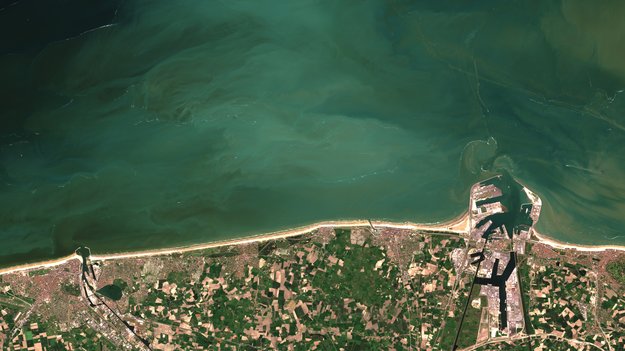
Every year, 8 June marks World Oceans Day. Satellites continue to monitor our water bodies to help us better understand and protect these natural resources
Galileo grows: two more satellites join working constellation
8.6.2017 10:42 ESA Navigation
Two further satellites have formally become part of Europe’s Galileo satnav system, broadcasting timing and navigation signals worldwide while also picking up distress calls across the planet.
Near-shore phytoplankton bloom captured from space
8.6.2017 10:28 ESA Observing the Earth
Last year, the Sentinel-2A satellite captured an intense algal bloom very close to the Belgian coast. The high-resolution capabilities of Sentinel-2’s main instrument are allowing scientists to monitor algae blooms in areas previously not possible to observe with satellites.
Mapová kompozice - ZABAGED® - WMTS
8.6.2017 2:00 Cenia - Katalog metadat ČR - INSPIRE Mapová kompozice WMC - ZABAGED® - WMTS je poskytována jako veřejná mapová aplikace nad daty ZABAGED®. Kompozice je sestavena pro prohlížení v klientu prohlížecích služeb Geoprohlížeč ČÚZK, kde lze tyto poskytovatelem přednastavené kompozice měnit pomocí funkce Změnit mapu. Základem je prohlížecí služba WMTS - ZABAGED® - stav k 25. 12. 2016, která je doplněna o další obsah pomocí těchto služeb: WMS - ZABAGED® (Výškopis-vrstevnice), WMS - Geonames, WMS - Klady mapových listů, WMS - Geografická síť WGS84, WMS - Stínovaný model reliéfu.Obsažené služby splňují technické pokyny pro INSPIRE prohlížecí služby v. 3.1 a zároveň splňují standard OGC WMS 1.1.1. a 1.3.0.Check Out Our Precision 3D Webinar Series – Being Held This June Only
8.6.2017 0:05 Carlson Software For the rest of June, webinars will be hosted on Precision 3D Topo. Check the times below and register as an attendee. About Precision 3D Topo It’s all new from Carlson — Carlson Precision 3D Topo, a drag and drop software that enables much faster design and analysis in the 3D environment than the many […]
Check Out Our Precision 3D Webinar Series – Being Held This June Only
8.6.2017 0:05 Carlson Software For the rest of June, webinars will be hosted on Precision 3D Topo. Check the times below and register as an attendee. About Precision 3D Topo It’s all new from Carlson — Carlson Precision 3D Topo, a drag and drop software that enables much faster design and analysis in the 3D environment than the many […]
Check Out Our Precision 3D Webinar Series – Being Held This June Only
8.6.2017 0:05 Carlson Software For the rest of June, webinars will be hosted on Precision 3D Topo. Check the times below and register as an attendee. About Precision 3D Topo It’s all new from Carlson — Carlson P3D, a drag and drop software that enables much faster design and analysis in the 3D environment than the many step processes […]
Oznámení o přerušení provozu na Pobočce Vsetín
8.6.2017 0:00 Státní pozemkový úřad Z důvodu plánovaného přerušení dodávky elektrické energie bude ve čtvrtek 22. 6. 2017 přerušen provoz na Pobočce Vsetín (KPÚ pro Zlínský kraj).Společnost CEDA spustila webové mapové služby CWS verze 2
7.6.2017 15:30 CEDA Maps a.s. Praha, 7. června 2017 – Společnost Central European Data Agency, a. s., oznamuje spuštění nové verze služby CEDA Web Services (CWS) ve verzi 2 s řadou nových a vylepšených funkcí.Megarozhovor s Jiřím Bradáčem v časopise Zeměměřič
7.6.2017 13:53 T-MAPYThe post Megarozhovor s Jiřím Bradáčem v časopise Zeměměřič appeared first on T-MAPY spol. s r.o..
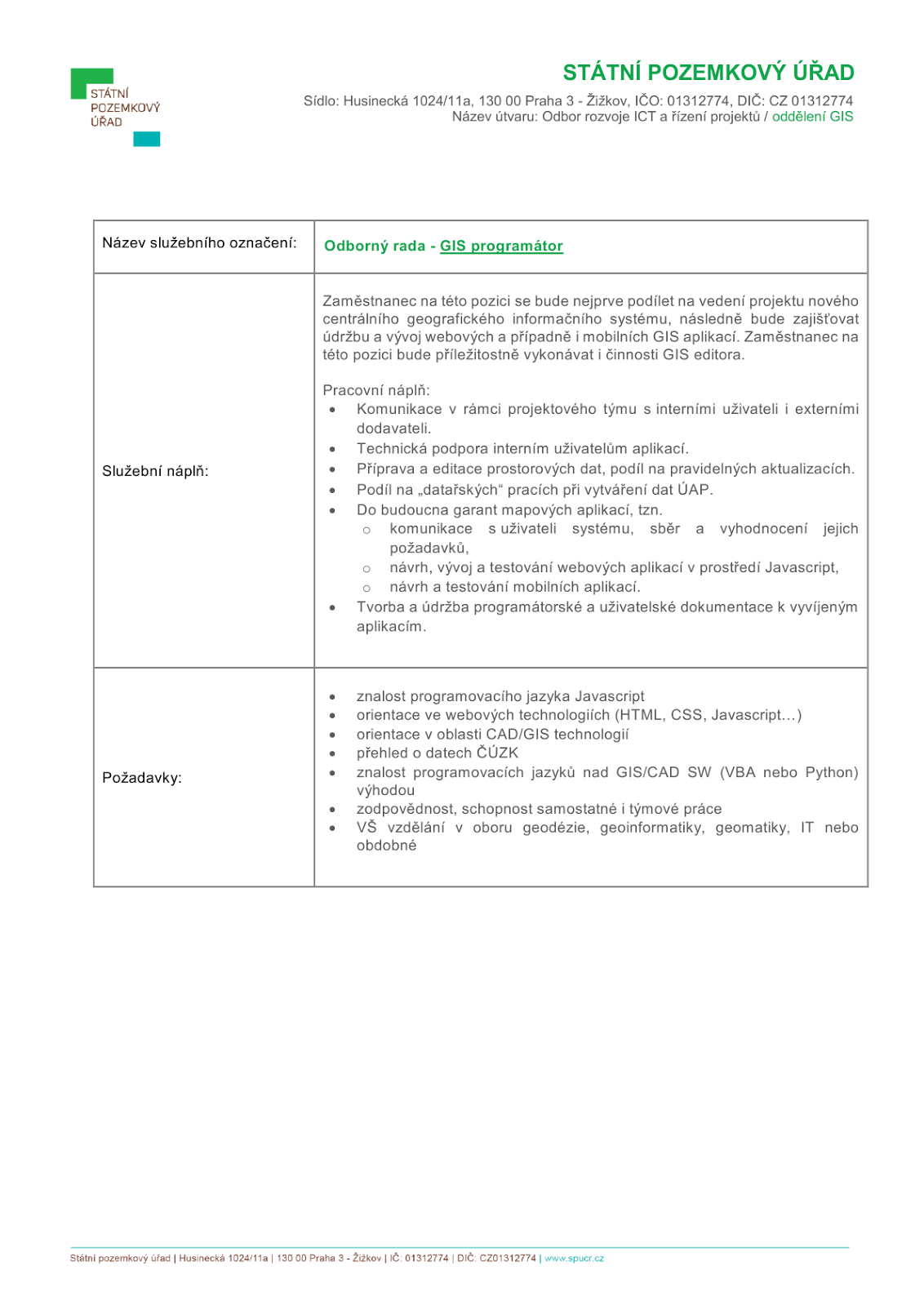
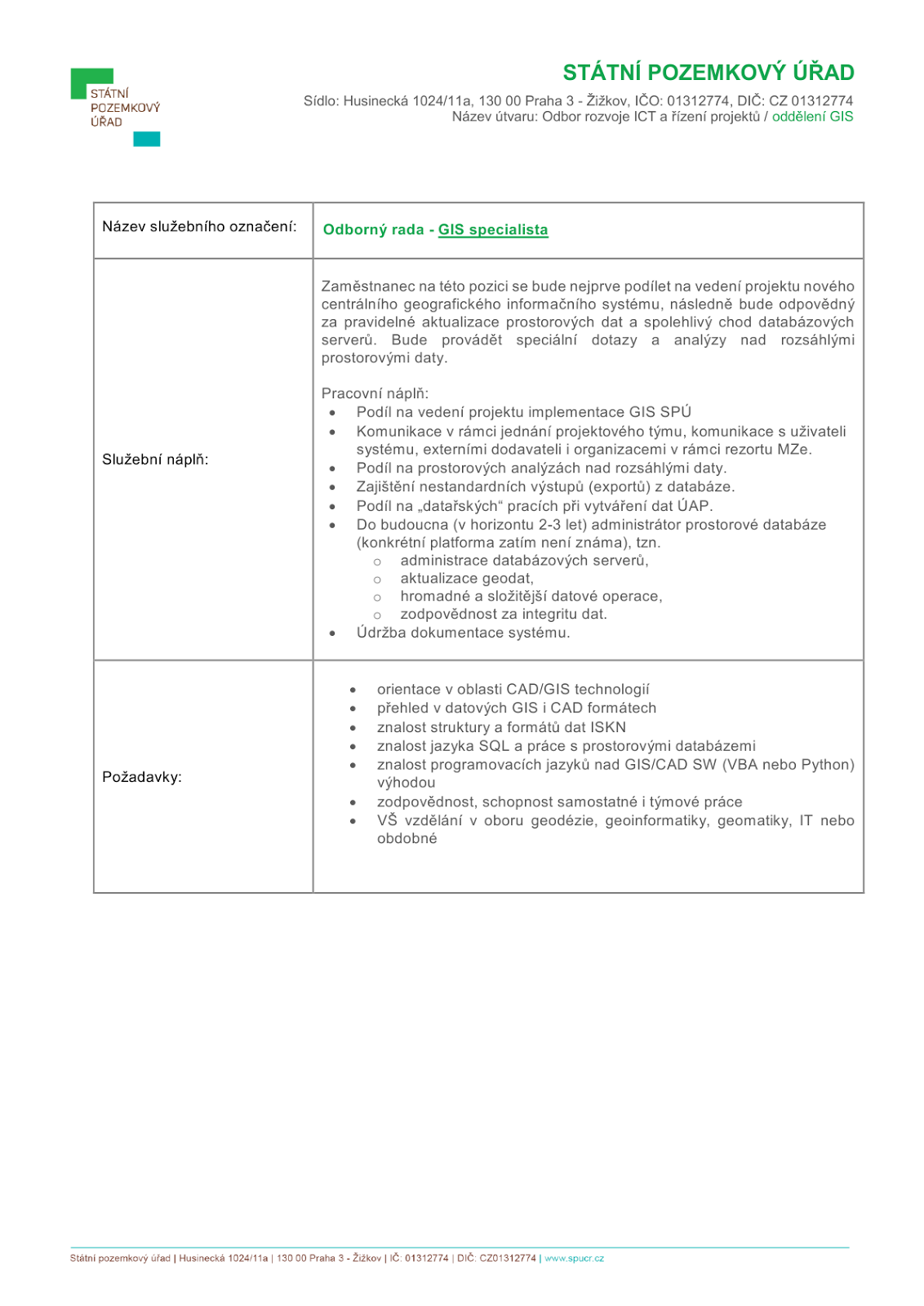
Státní pozemkový úřad vypisuje 2 služební místa na pozice v oddělení GIS
7.6.2017 13:19 Blogující geomatici - FAV ZČU