















info-ctenari_1.png

info-inzerenti_2.png


https://www.arcdata.cz/konference


Prodej knihy o historii oboru


Nabídka učebnice Inženýrské geodézie:

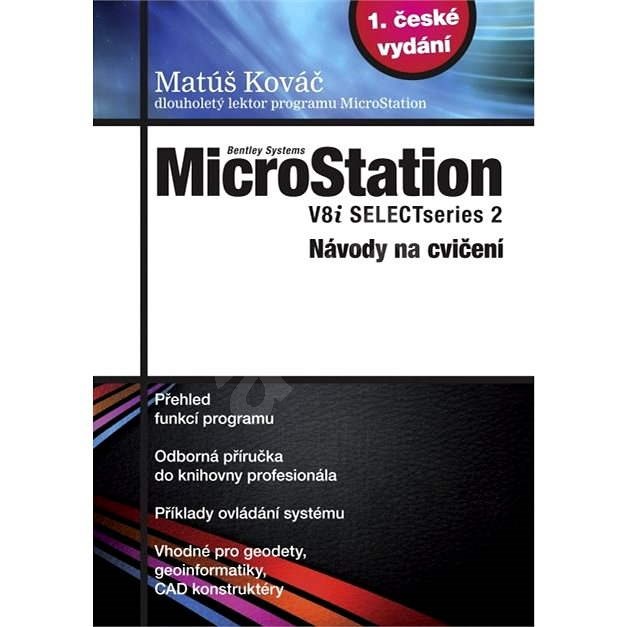
Nabídka učebnice MicroStation

otevrena-data.gif


2016-gi-fb-zememeric-5-6.jpg


Intersucho.cz


zprávy

zdroje zpráv:

14 projects selected for funding and aimed at developing EGNOS at regional airports

20.7.2016 15:35   European GNSS Agency  
Share it now!
These grants ensure that more European operators and aircraft, such as the ATR 42-600 (pictured) are able to take full advantage of EGNOS procedures.
Published: 
20 July 2016

European GNSS Agency (GSA) funds 14 projects to help foster the implementation of EGNOS-based operations and LPV-200 procedures at European airports as part of its 2015 Aviation Call for Grants.

The GSA recently announced the projects selected for funding under its 2015 Aviation Call for Grants GSA/EEX.0030/2015. This second call brought great results, with 14 projects selected for funding, starting from July and August 2016.

The funded projects are expected to foster the design, development and operational implementation of European Geostationary Navigation Overlay Service (EGNOS)-based operations, including LPV-200 (localiser performance with vertical guidance) procedures, at different European aerodromes, with an emphasis on the regional airports and heliports that general and business aviation operators depend upon.

In addition, the call also aims to support the development and installation of GPS/EGNOS-enabled avionics and grant airworthiness certification for required navigation performance approach (RNP APCH) procedures down to LPV minima and point in space (PinS), and to achieve the approval of Air Operator Certificates (AOCs) for LPV operations of aircraft already equipped with satellite-based augmentation system (SBAS) capabilities.

Specifically, the following results are expected:

  • 40 LPV procedures at 18 airports
  • 2 LPV-200 procedures at Italy’s Trento Airport
  • 15 PinS LPV procedures
  • 2 RNP 0.3 routes
  • 44 aircraft retrofitted by 9 operators
  • 4 avionics solutions (STC) development
  • 3 flight simulator-type upgrades
  • Development of EGNOS navigation and surveillance sensors for (RPAS) applications.

“These grants will ensure more European airports and more European operators are able to take full advantage of EGNOS procedures, meaning increased safety and more accessibility for everyone,” says GSA Head of Market Development GG Calini.

The total budget for the second call was EUR 6 million.

The funded projects are expected to foster the design, development and operational implementation of EGNOS-based operations, including LPV-200 procedures.

The funded projects are expected to foster the design, development and operational implementation of EGNOS-based operations, including LPV-200 procedures. (Click to enlarge)

 Increased safety


Lateral navigation (LNAV), LNAV/vertical navigation (VNAV) and LPV minima to runways 01 and  19

 Approach to runway 19 to be  designed with LPV-200  criteria


Project name Beneficiary Proposal Impact
AIRLA All Ireland LPV approach; project Irish Aviation
Authority

Significant reduction in the minima with reference to every  NPA currently published in the  Aeronautical information Publication (AIP)

Significant reduction in operational costs for airlines operating at regional (non-state) airports


LPV approach procedures at 9 state and regional airports in Ireland, with 21 procedures 


Restructure the airspace to facilitate direct RNAV arrivals (from en-route to an LPV  ‘T-BAR' type approach structure) for the planned runway in use


Increased safety


London Oxford Airport Oxford Aviation Services
Ltd


Lateral navigation (LNAV), LNAV/vertical navigation (VNAV)and LPV minima to runways 01 and 19

Approach to runway 19 to be designed with LPV-200 criteria


Primary regional and business aviation airport in the Thames Valley, identified by European Business Aviation Association (EBAA) members as a priority for LPV and operators already with LPV capabilities
Glasgow Prestwick Airport Glasgow Prestwick airport
Limited


LPV, LNAV and LNAV/VNAV to runways 21, 12 and 30

Replace, overlay and replicate the current conventional procedures


Substantially improved minima on runway 21 and a much more accurate arrival than currently provided by the non-directional beacon (NDB) or surveillance radar approach (SRA)
Cumbernauld Airport Cormack Aircraft
Services Limited
LPV on both runway ends (currently non-instrument)


Main operating base for Hebridean Air Services (LPV-capable), 2 ATOs, 2 rotorcraft operators and many private aircraft owners


GAGA GNSS approaches for general aviation AOPA UK
Helios
LPV approach procedures at 3 general aviation (GA) airports: Haverfordwest, Gloucestershire and Stapleford


Increased availability of instrument procedures for GA community

Support to training needs for instrument-rated (IR) pilots

Attract new commercial customers


London Southend and Carlisle Lake District Airports London Southend Airport company Limited
Stobart Air Limited
Implementation of LPV-200 at Southend and LPV + PinS at Carlisle


Considerable business aviation traffic, with many LPV-capable aircraft

Increased accessibility and safety compared to current NPA (Carlisle)

Attract new commercial operations based on better accessibility


ENAC Ecole Nationale de
l’aviation Civile


Retrofit of 12 BE58 aircraft with GTN650

Upgrade of 3 BE58 Flight Navigation Procedures Trainer (FNTP) II simulators

All Ecole Nationale de l'Aviation Civile (ENAC) flight instructors’ IR-ME training and operational feedback sessions to authorities, other ATOs and airlines


EGNOS adopted by one of the leading flight training organisations in Europe for professional instrument rating training

Expected total number of LPV landings on an annual basis is 6 200 in flight landings and 4 900 in simulator

Integration and promotion of LPV procedures in the ATO with the largest training fleet in Europe

Nextjet  Nextjet AB EGNOS LPV approach approved for installation in all Nextjet’s 10 Saab 340 platforms
STC development by Scandinavian Avionics


Large Scandinavian regional operator will be able to modernise and extend the flexibility of its Saab 340 operations, especially on small and remote airports

Lower cost of operation, with positive effect on customers due to reduction in delays in bad weather conditions


Svensk Pilotutbildning Svensk Pilotutbildning AB

Svensk Pilotutbildning, an ATO based at the Earth Science

Geostationary Platform (ESGP) in Sweden, plans to upgrade 3 aircraft and 2 simulators Provide PBN/EGNOS/LPV to existing IR students and other customers


ATO will make 1 250 in-flight LPV approaches on a yearly basis, within the normal training activities

Majority of training flights will be performed at the home base (ESGP) with LPV on both runway ends; nearby airports will have LPV by 2016

Equipped simulators will allow cost-effective training for students


Bristow  

Retrofit of 6 S92s and a second flight management system (FMS) to be LPV-capable

Add LPV capabilities to aircraft already equipped with one FMS that are certified for RNAV 5, RNAV 1/PRNAV and RNP APCH with LNAV minima


Major rotorcraft operator serving oil and gas (O&G) SAR and Arctic SAR.

Bases currently are Stavanger, Bergen and Hammerfest. Stavanger and Bergen have current LPV published. Bergen is currently equipped with two PinS approaches for helicopters with LNAV minima only

LPV adds such operational benefits as the possibility of fully coupled flight, potentially better minima and maybe steeper angles for further noise reduction


PIONEERS 2: Early adoption of PinS rotorcraft procedures Pildo Consulting S.L.; Austrocontrol; Christophorus; Flugrettungsverein; BMI-Flugpolizei; Norsk Luftamulanse; CHC helicopters  Rotorcraft retrofit


Maximise the operational use of EGNOS in rotorcraft operations, enabling major helicopter emergency medical services (HEMSs) and off-shore operators with LPV capabilities, and also open the potential of EGNOS towards government operations (police and military)


EGNOS in the Czech Republic GNSS centre of Excellence; z.s.p.o.; DSA A.S.; F Air, SPOL. S.R.O.; RLP CR, S.P.; Aero-Taxi OKR, A.S.

Retrofit of 13 GA aircraft, 2 rotorcraft and 2 flight simulation training devices (FSTDs) with EGNOS-enabled avionics

Introduction of EGNOS for rotorcraft operations in CZ


LPV capabilities at two industry leaders in CZ for pilot training, covering +/- 60 % of national market, and +/- 20 % of market share in Central Europe

First PinS in CZ to be used by HEMS. Other hospitals waiting for operational feedback of this procedure

First PinS at busy international airport


Aeroporto Caproni P.A.T. Nucleo; Elicotteri VVF; Aeroporto ‘Gianni; Caproni’; S.p.A.


Design and validation of approach and departures supported by SBAS serving

Trento Airport and the helipad at Cles hospital Specific point-to-point link to connect the instrument flight procedure (IFP)


Increased safety and continuity of the medical and emergency operations
REAL: RPAS EGNOS-assisted landings Pildo Consulting S.L.; Sharper Shape Ltd; EuroUSC – Italia; FADA/CATEC


Develop an EGNOS-based navigation and surveillance sensor, ready to be coupled with a generic RPAS autopilot and ground station system

Contribute to the approval of innovative RPAS operations, supported by a safety case, which in turn is supported by high levels of accuracy and integrity provided by EGNOS


Validation in two scenarios:

Scenario 1: transport for urgent medicines

Scenario 2: Operations to extinguish fires


First 2015 Aviation Call for Grants GSA/GRANT/EGNOS/03/2014 producing results

Meanwhile, the 13 projects selected as part of the first call are all currently at various stages of implementation, with some already taking positive steps towards enabling EGNOS operations, particularly as they relate to regional aviation. Among these initial achievements is an upgrade of three simulators, with one having recently entered the market and the second to follow in the coming months. Another project is well on its way to successfully retrofitting a regional aircraft, making it to be another ‘ready to fly’ with EGNOS in 2017.

Overall, the first call is on course to publish up “first package “of 15 EGNOS procedures by the end of 2016.

Media note: This feature can be republished without charge provided the European GNSS Agency (GSA) is acknowledged as the source at the top or the bottom of the story. You must request permission before you use any of the photographs on the site. If you republish, we would be grateful if you could link back to the GSA website (http://www.gsa.europa.eu).

Share it now!
These grants ensure that more European operators and aircraft, such as the ATR 42-600 (pictured) are able to take full advantage of EGNOS procedures.

14 projects selected for funding and aimed at developing EGNOS at regional airports

20.7.2016 15:35   European GNSS Agency  
Share it now!
These grants ensure that more European operators and aircraft, such as the ATR 42-600 (pictured) are able to take full advantage of EGNOS procedures.
Published: 
20 July 2016

European GNSS Agency (GSA) funds 14 projects to help foster the implementation of EGNOS-based operations and LPV-200 procedures at European airports as part of its 2015 Aviation Call for Grants.

The GSA recently announced the projects selected for funding under its 2015 Aviation Call for Grants GSA/EEX.0030/2015. This second call brought great results, with 14 projects selected for funding, starting from July and August 2016.

The funded projects are expected to foster the design, development and operational implementation of European Geostationary Navigation Overlay Service (EGNOS)-based operations, including LPV-200 (localiser performance with vertical guidance) procedures, at different European aerodromes, with an emphasis on the regional airports and heliports that general and business aviation operators depend upon.

In addition, the call also aims to support the development and installation of GPS/EGNOS-enabled avionics and grant airworthiness certification for required navigation performance approach (RNP APCH) procedures down to LPV minima and point in space (PinS), and to achieve the approval of Air Operator Certificates (AOCs) for LPV operations of aircraft already equipped with satellite-based augmentation system (SBAS) capabilities.

Specifically, the following results are expected:

  • 40 LPV procedures at 18 airports
  • 2 LPV-200 procedures at Italy’s Trento Airport
  • 15 PinS LPV procedures
  • 2 RNP 0.3 routes
  • 44 aircraft retrofitted by 9 operators
  • 4 avionics solutions (STC) development
  • 3 flight simulator-type upgrades
  • Development of EGNOS navigation and surveillance sensors for (RPAS) applications.

“These grants will ensure more European airports and more European operators are able to take full advantage of EGNOS procedures, meaning increased safety and more accessibility for everyone,” says GSA Head of Market Development GG Calini.

The total budget for the second call was EUR 6 million.

The funded projects are expected to foster the design, development and operational implementation of EGNOS-based operations, including LPV-200 procedures.

The funded projects are expected to foster the design, development and operational implementation of EGNOS-based operations, including LPV-200 procedures. (Click to enlarge)

 Increased safety


Lateral navigation (LNAV), LNAV/vertical navigation (VNAV) and LPV minima to runways 01 and  19

 Approach to runway 19 to be  designed with LPV-200  criteria


Project name Beneficiary Proposal Impact
AIRLA All Ireland LPV approach; project Irish Aviation
Authority

Significant reduction in the minima with reference to every  NPA currently published in the  Aeronautical information Publication (AIP)

Significant reduction in operational costs for airlines operating at regional (non-state) airports


LPV approach procedures at 9 state and regional airports in Ireland, with 21 procedures 


Restructure the airspace to facilitate direct RNAV arrivals (from en-route to an LPV  ‘T-BAR' type approach structure) for the planned runway in use


Increased safety


London Oxford Airport Oxford Aviation Services
Ltd


Lateral navigation (LNAV), LNAV/vertical navigation (VNAV)and LPV minima to runways 01 and 19

Approach to runway 19 to be designed with LPV-200 criteria


Primary regional and business aviation airport in the Thames Valley, identified by European Business Aviation Association (EBAA) members as a priority for LPV and operators already with LPV capabilities
Glasgow Prestwick Airport Glasgow Prestwick airport
Limited


LPV, LNAV and LNAV/VNAV to runways 21, 12 and 30

Replace, overlay and replicate the current conventional procedures


Substantially improved minima on runway 21 and a much more accurate arrival than currently provided by the non-directional beacon (NDB) or surveillance radar approach (SRA)
Cumbernauld Airport Cormack Aircraft
Services Limited
LPV on both runway ends (currently non-instrument)


Main operating base for Hebridean Air Services (LPV-capable), 2 ATOs, 2 rotorcraft operators and many private aircraft owners


GAGA GNSS approaches for general aviation AOPA UK
Helios
LPV approach procedures at 3 general aviation (GA) airports: Haverfordwest, Gloucestershire and Stapleford


Increased availability of instrument procedures for GA community

Support to training needs for instrument-rated (IR) pilots

Attract new commercial customers


London Southend and Carlisle Lake District Airports London Southend Airport company Limited
Stobart Air Limited
Implementation of LPV-200 at Southend and LPV + PinS at Carlisle


Considerable business aviation traffic, with many LPV-capable aircraft

Increased accessibility and safety compared to current NPA (Carlisle)

Attract new commercial operations based on better accessibility


ENAC Ecole Nationale de
l’aviation Civile


Retrofit of 12 BE58 aircraft with GTN650

Upgrade of 3 BE58 Flight Navigation Procedures Trainer (FNTP) II simulators

All Ecole Nationale de l'Aviation Civile (ENAC) flight instructors’ IR-ME training and operational feedback sessions to authorities, other ATOs and airlines


EGNOS adopted by one of the leading flight training organisations in Europe for professional instrument rating training

Expected total number of LPV landings on an annual basis is 6 200 in flight landings and 4 900 in simulator

Integration and promotion of LPV procedures in the ATO with the largest training fleet in Europe

Nextjet  Nextjet AB EGNOS LPV approach approved for installation in all Nextjet’s 10 Saab 340 platforms
STC development by Scandinavian Avionics


Large Scandinavian regional operator will be able to modernise and extend the flexibility of its Saab 340 operations, especially on small and remote airports

Lower cost of operation, with positive effect on customers due to reduction in delays in bad weather conditions


Svensk Pilotutbildning Svensk Pilotutbildning AB

Svensk Pilotutbildning, an ATO based at the Earth Science

Geostationary Platform (ESGP) in Sweden, plans to upgrade 3 aircraft and 2 simulators Provide PBN/EGNOS/LPV to existing IR students and other customers


ATO will make 1 250 in-flight LPV approaches on a yearly basis, within the normal training activities

Majority of training flights will be performed at the home base (ESGP) with LPV on both runway ends; nearby airports will have LPV by 2016

Equipped simulators will allow cost-effective training for students


Bristow  

Retrofit of 6 S92s and a second flight management system (FMS) to be LPV-capable

Add LPV capabilities to aircraft already equipped with one FMS that are certified for RNAV 5, RNAV 1/PRNAV and RNP APCH with LNAV minima


Major rotorcraft operator serving oil and gas (O&G) SAR and Arctic SAR.

Bases currently are Stavanger, Bergen and Hammerfest. Stavanger and Bergen have current LPV published. Bergen is currently equipped with two PinS approaches for helicopters with LNAV minima only

LPV adds such operational benefits as the possibility of fully coupled flight, potentially better minima and maybe steeper angles for further noise reduction


PIONEERS 2: Early adoption of PinS rotorcraft procedures Pildo Consulting S.L.; Austrocontrol; Christophorus; Flugrettungsverein; BMI-Flugpolizei; Norsk Luftamulanse; CHC helicopters  Rotorcraft retrofit


Maximise the operational use of EGNOS in rotorcraft operations, enabling major helicopter emergency medical services (HEMSs) and off-shore operators with LPV capabilities, and also open the potential of EGNOS towards government operations (police and military)


EGNOS in the Czech Republic GNSS centre of Excellence; z.s.p.o.; DSA A.S.; F Air, SPOL. S.R.O.; RLP CR, S.P.; Aero-Taxi OKR, A.S.

Retrofit of 13 GA aircraft, 2 rotorcraft and 2 flight simulation training devices (FSTDs) with EGNOS-enabled avionics

Introduction of EGNOS for rotorcraft operations in CZ


LPV capabilities at two industry leaders in CZ for pilot training, covering +/- 60 % of national market, and +/- 20 % of market share in Central Europe

First PinS in CZ to be used by HEMS. Other hospitals waiting for operational feedback of this procedure

First PinS at busy international airport


Aeroporto Caproni P.A.T. Nucleo; Elicotteri VVF; Aeroporto ‘Gianni; Caproni’; S.p.A.


Design and validation of approach and departures supported by SBAS serving

Trento Airport and the helipad at Cles hospital Specific point-to-point link to connect the instrument flight procedure (IFP)


Increased safety and continuity of the medical and emergency operations
REAL: RPAS EGNOS-assisted landings Pildo Consulting S.L.; Sharper Shape Ltd; EuroUSC – Italia; FADA/CATEC


Develop an EGNOS-based navigation and surveillance sensor, ready to be coupled with a generic RPAS autopilot and ground station system

Contribute to the approval of innovative RPAS operations, supported by a safety case, which in turn is supported by high levels of accuracy and integrity provided by EGNOS


Validation in two scenarios:

Scenario 1: transport for urgent medicines

Scenario 2: Operations to extinguish fires


First 2015 Aviation Call for Grants GSA/GRANT/EGNOS/03/2014 producing results

Meanwhile, the 13 projects selected as part of the first call are all currently at various stages of implementation, with some already taking positive steps towards enabling EGNOS operations, particularly as they relate to regional aviation. Among these initial achievements is an upgrade of three simulators, with one having recently entered the market and the second to follow in the coming months. Another project is well on its way to successfully retrofitting a regional aircraft, making it to be another ‘ready to fly’ with EGNOS in 2017.

Overall, the first call is on course to publish up “first package “of 15 EGNOS procedures by the end of 2016.

Media note: This feature can be republished without charge provided the European GNSS Agency (GSA) is acknowledged as the source at the top or the bottom of the story. You must request permission before you use any of the photographs on the site. If you republish, we would be grateful if you could link back to the GSA website (http://www.gsa.europa.eu).

Share it now!
These grants ensure that more European operators and aircraft, such as the ATR 42-600 (pictured) are able to take full advantage of EGNOS procedures.

14 projects selected for funding and aimed at developing EGNOS at regional airports

20.7.2016 15:35   European GNSS Agency  
Share it now!
These grants ensure that more European operators and aircraft, such as the ATR 42-600 (pictured) are able to take full advantage of EGNOS procedures.
Published: 
20 July 2016

European GNSS Agency (GSA) funds 14 projects to help foster the implementation of EGNOS-based operations and LPV-200 procedures at European airports as part of its 2015 Aviation Call for Grants.

The GSA recently announced the projects selected for funding under its 2015 Aviation Call for Grants GSA/EEX.0030/2015. This second call brought great results, with 14 projects selected for funding, starting from July and August 2016.

The funded projects are expected to foster the design, development and operational implementation of European Geostationary Navigation Overlay Service (EGNOS)-based operations, including LPV-200 (localiser performance with vertical guidance) procedures, at different European aerodromes, with an emphasis on the regional airports and heliports that general and business aviation operators depend upon.

In addition, the call also aims to support the development and installation of GPS/EGNOS-enabled avionics and grant airworthiness certification for required navigation performance approach (RNP APCH) procedures down to LPV minima and point in space (PinS), and to achieve the approval of Air Operator Certificates (AOCs) for LPV operations of aircraft already equipped with satellite-based augmentation system (SBAS) capabilities.

Specifically, the following results are expected:

  • 40 LPV procedures at 18 airports
  • 2 LPV-200 procedures at Italy’s Trento Airport
  • 15 PinS LPV procedures
  • 2 RNP 0.3 routes
  • 44 aircraft retrofitted by 9 operators
  • 4 avionics solutions (STC) development
  • 3 flight simulator-type upgrades
  • Development of EGNOS navigation and surveillance sensors for (RPAS) applications.

“These grants will ensure more European airports and more European operators are able to take full advantage of EGNOS procedures, meaning increased safety and more accessibility for everyone,” says GSA Head of Market Development GG Calini.

The total budget for the second call was EUR 6 million.

The funded projects are expected to foster the design, development and operational implementation of EGNOS-based operations, including LPV-200 procedures.

The funded projects are expected to foster the design, development and operational implementation of EGNOS-based operations, including LPV-200 procedures. (Click to enlarge)

 Increased safety


Lateral navigation (LNAV), LNAV/vertical navigation (VNAV) and LPV minima to runways 01 and  19

 Approach to runway 19 to be  designed with LPV-200  criteria


Project name Beneficiary Proposal Impact
AIRLA All Ireland LPV approach; project Irish Aviation
Authority

Significant reduction in the minima with reference to every  NPA currently published in the  Aeronautical information Publication (AIP)

Significant reduction in operational costs for airlines operating at regional (non-state) airports

LPV approach procedures at 9 state and regional airports in Ireland, with 21 procedures 


Restructure the airspace to facilitate direct RNAV arrivals (from en-route to an LPV  ‘T-BAR' type approach structure) for the planned runway in use


Increased safety


London Oxford Airport Oxford Aviation Services
Ltd


Lateral navigation (LNAV), LNAV/vertical navigation (VNAV)and LPV minima to runways 01 and 19

Approach to runway 19 to be designed with LPV-200 criteria


Primary regional and business aviation airport in the Thames Valley, identified by European Business Aviation Association (EBAA) members as a priority for LPV and operators already with LPV capabilities
Glasgow Prestwick Airport Glasgow Prestwick airport
Limited


LPV, LNAV and LNAV/VNAV to runways 21, 12 and 30

Replace, overlay and replicate the current conventional procedures


 Substantially improved minima on runway 21 and a much more accurate arrival than currently provided by the non-directional beacon (NDB) or surveillance radar approach (SRA)
Cumbernauld Airport Cormack Aircraft
Services Limited
LPV on both runway ends (currently non-instrument)


 Main operating base for Hebridean Air  Services (LPV-capable), 2 ATOs,  2 rotorcraft operators and many  private aircraft owners


GAGA GNSS approaches for general aviation AOPA UK
Helios
LPV approach procedures at 3 general aviation (GA) airports: Haverfordwest, Gloucestershire and Stapleford


 Increased availability of instrument procedures for GA community

 Support to training needs for  instrument-rated (IR) pilots

 Attract new commercial customers


London Southend and Carlisle Lake District Airports London Southend Airport company Limited
Stobart Air Limited
Implementation of LPV-200 at Southend and LPV + PinS at Carlisle


 Considerable business aviation traffic,  with many LPV-capable aircraft

 Increased accessibility and safety compared to current NPA (Carlisle)

 Attract new commercial operations based on better accessibility


ENAC Ecole Nationale de
l’aviation Civile


Retrofit of 12 BE58 aircraft with GTN650

Upgrade of 3 BE58 Flight Navigation Procedures Trainer (FNTP) II simulators

All Ecole Nationale de l'Aviation Civile (ENAC) flight instructors’ IR-ME training and operational feedback sessions to authorities, other ATOs and airlines


 EGNOS adopted by one of the leading flight training organisations in Europe for professional instrument rating training

 Expected total number of LPV landings on an annual basis is 6 200 in flight landings and 4 900 in simulator

 Integration and promotion of LPV procedures in the ATO with the  largest training fleet in Europe

Nextjet  Nextjet AB EGNOS LPV approach approved for installation in all Nextjet’s 10 Saab 340 platforms
STC development by Scandinavian Avionics


 Large Scandinavian regional operator  will be able to modernise and  extend the flexibility of its Saab 340  operations, especially on small and remote airports

 Lower cost of operation, with positive effect on customers due to reduction in delays in bad weather conditions


Svensk Pilotutbildning Svensk Pilotutbildning AB

Svensk Pilotutbildning, an ATO based at the Earth Science

Geostationary Platform (ESGP) in Sweden, plans to upgrade 3 aircraft and 2 simulators Provide PBN/EGNOS/LPV to existing IR students and other customers


 ATO will make 1 250 in-flight LPV approaches on a yearly basis, within the normal training activities

 Majority of training flights will be performed at the home base (ESGP) with LPV on both runway
 ends; nearby airports will have LPV by 2016

 Equipped simulators will allow cost-effective training for students


Bristow  

Retrofit of 6 S92s and a second flight management system (FMS) to be LPV-capable

Add LPV capabilities to aircraft already equipped with one FMS that are certified for RNAV 5, RNAV 1/PRNAV and RNP APCH with LNAV minima


 Major rotorcraft operator serving oil and gas (O&G) SAR and Arctic SAR.

 Bases currently are Stavanger, Bergen and Hammerfest. Stavanger and Bergen have current LPV published.
 Bergen is currently equipped with two PinS approaches for helicopters with LNAV minima only

 LPV adds such operational benefits as the possibility of fully coupled flight, potentially better minima and maybe steeper angles for further noise reduction


PIONEERS 2: Early adoption of PinS rotorcraft procedures Pildo Consulting S.L.; Austrocontrol; Christophorus; Flugrettungsverein; BMI-Flugpolizei; Norsk Luftamulanse; CHC helicopters  Rotorcraft retrofit  Maximise the operational use of  EGNOS in rotorcraft operations, enabling major helicopter emergency  medical services (HEMSs) and off-shore operators with LPV capabilities,  and also open the potential of EGNOS
 towards government operations (police and military)
EGNOS in the Czech Republic GNSS centre of Excellence; z.s.p.o.; DSA A.S.; F Air, SPOL. S.R.O.; RLP CR, S.P.; Aero-Taxi OKR, A.S.

Retrofit of 13 GA aircraft, 2 rotorcraft and 2 flight simulation training devices (FSTDs) with EGNOS-enabled avionics

Introduction of EGNOS for rotorcraft operations in CZ


 LPV capabilities at two industry leaders in CZ for pilot training, covering +/- 60 % of national market, and  +/- 20 % of market share in  Central Europe

 First PinS in CZ to be used by HEMS.  Other hospitals waiting for operational feedback of this procedure

 First PinS at busy international airport


Aeroporto Caproni P.A.T. Nucleo; Elicotteri VVF; Aeroporto ‘Gianni; Caproni’; S.p.A.


Design and validation of approach and departures supported by SBAS serving

Trento Airport and the helipad at Cles hospital Specific point-to-point link to connect the instrument flight procedure (IFP)


 Increased safety and continuity of the medical and emergency operations
REAL: RPAS EGNOS-assisted landings Pildo Consulting S.L.; Sharper Shape Ltd; EuroUSC – Italia; FADA/CATEC


Develop an EGNOS-based navigation and surveillance sensor, ready to be coupled with a generic RPAS autopilot and ground station system

Contribute to the approval of innovative RPAS operations, supported by a safety case, which in turn is supported by high levels of accuracy and integrity provided by EGNOS


Validation in two scenarios:

Scenario 1: transport for urgent medicines

Scenario 2: Operations to extinguish fires


First 2015 Aviation Call for Grants GSA/GRANT/EGNOS/03/2014 producing results

Meanwhile, the 13 projects selected as part of the first call are all currently at various stages of implementation, with some already taking positive steps towards enabling EGNOS operations, particularly as they relate to regional aviation. Among these initial achievements is an upgrade of three simulators, with one having recently entered the market and the second to follow in the coming months. Another project is well on its way to successfully retrofitting a regional aircraft, making it to be another ‘ready to fly’ with EGNOS in 2017.

Overall, the first call is on course to publish up “first package “of 15 EGNOS procedures by the end of 2016.

Media note: This feature can be republished without charge provided the European GNSS Agency (GSA) is acknowledged as the source at the top or the bottom of the story. You must request permission before you use any of the photographs on the site. If you republish, we would be grateful if you could link back to the GSA website (http://www.gsa.europa.eu).

Share it now!
These grants ensure that more European operators and aircraft, such as the ATR 42-600 (pictured) are able to take full advantage of EGNOS procedures.

14 projects selected for funding and aimed at developing EGNOS at regional airports

20.7.2016 15:35   European GNSS Agency  
Share it now!
ATR 42-600
Published: 
20 July 2016

European GNSS Agency (GSA) funds 14 projects to help foster the implementation of EGNOS-based operations and LPV-200 procedures at European airports as part of its 2015 Aviation Call for Grants.

The GSA recently announced the projects selected for funding under its 2015 Aviation Call for Grants GSA/EEX.0030/2015. This second call brought great results, with 14 projects selected for funding, starting from July and August 2016.

The funded projects are expected to foster the design, development and operational implementation of European Geostationary Navigation Overlay Service (EGNOS)-based operations, including LPV-200 (localiser performance with vertical guidance) procedures, at different European aerodromes, with an emphasis on the regional airports and heliports that general and business aviation operators depend upon.

In addition, the call also aims to support the development and installation of GPS/EGNOS-enabled avionics and grant airworthiness certification for required navigation performance approach (RNP APCH) procedures down to LPV minima and point in space (PinS), and to achieve the approval of Air Operator Certificates (AOCs) for LPV operations of aircraft already equipped with satellite-based augmentation system (SBAS) capabilities.

Specifically, the following results are expected:

  • 40 LPV procedures at 18 airports
  • 2 LPV-200 procedures at Italy’s Trento Airport
  • 15 PinS LPV procedures
  • 2 RNP 0.3 routes
  • 44 aircraft retrofitted by 9 operators
  • 4 avionics solutions (STC) development
  • 3 flight simulator-type upgrades
  • Development of EGNOS navigation and surveillance sensors for (RPAS) applications.

“These grants will ensure more European airports and more European operators are able to take full advantage of EGNOS procedures, meaning increased safety and more accessibility for everyone,” says GSA Head of Market Development GG Calini.

The total budget for the second call was EUR 6 million.

The funded projects are expected to foster the design, development and operational implementation of EGNOS-based operations, including LPV-200 procedures.

The funded projects are expected to foster the design, development and operational implementation of EGNOS-based operations, including LPV-200 procedures.

Project name Beneficiary Proposal Impact
AIRLA All Ireland LPV approach project Irish Aviation Authority

LPV approach procedures at 9 state and regional airports in Ireland, with 21 procedures

Restructure the airspace to facilitate direct RNAV arrivals (from en-route to an LPV ‘T-BAR’ type approach structure) for the planned runway in use

Significant reduction in the minima with reference to every NPA currently published in the Aeronautical information Publication (AIP)

Significant reduction in operational costs for airlines operating at regional (non-state) airports

Increased safety

London Oxford Airport Oxford Aviation Services Ltd

Lateral navigation (LNAV), LNAV/vertical navigation (VNAV) and LPV minima to runways 01 and 19

Approach to runway 19 to be designed with LPV-200 criteria

Primary regional and business aviation airport in the Thames Valley, identified by European Business Aviation Association (EBAA) members as a priority for LPV and operators already with LPV capabilities
Glasgow Prestwick Airport Glasgow Prestwick airport Limited

LPV, LNAV and LNAV/VNAV to runways 21, 12 and 30

Replace, overlay and replicate the current conventional procedures

Substantially improved minima on runway 21 and a much more accurate arrival than currently provided by the non-directional beacon (NDB) or surveillance radar approach (SRA)
Cumbernauld Airport Cormack Aircraft Services Limited LPV on both runway ends (currently non-instrument) Main operating base for Hebridean Air Services (LPV-capable), 2 ATOs, 2 rotorcraft operators and many private aircraft owners
GAGA GNSS approaches for general aviation AOPA UK
Helios

LPV approach procedures at 3 general aviation (GA) airports: Haverfordwest, Gloucestershire and Stapleford

Increased availability of instrument procedures for GA community

Support to training needs for instrument-rated (IR) pilots

Attract new commercial customers

London Southend and Carlisle Lake District Airports London Southend Airport company Limited
Stobart Air Limited

Implementation of LPV-200 at Southend and LPV + PinS at Carlisle

Considerable business aviation traffic, with many LPV-capable aircraft

Increased accessibility and safety compared to current NPA (Carlisle)

Attract new commercial operations based on better accessibility

ENAC Ecole Nationale de l’aviation Civile

Retrofit of 12 BE58 aircraft with GTN650

Upgrade of 3 BE58 Flight Navigation Procedures Trainer (FNTP) II simulators

All Ecole Nationale de l'Aviation Civile (ENAC) flight instructors’ IR-ME training and operational feedback sessions to authorities, other ATOs and airlines

GNOS adopted by one of the leading flight training organisations in Europe for professional instrument rating training

Expected total number of LPV landings on an annual basis is 6 200 in flight landings and 4 900 in simulator

Integration and promotion of LPV procedures in the ATO with the largest training fleet in Europe

Nextjet Nextjet AB

EGNOS LPV approach approved for installation in all Nextjet’s 10 Saab 340 platforms

STC development by Scandinavian Avionics

Large Scandinavian regional operator will be able to modernise and extend the flexibility of its Saab 340 operations, especially on small and remote airports

Lower cost of operation, with positive effect on customers due to reduction in delays in bad weather conditions

Svensk Pilotutbildning Svensk Pilotutbildning AB

Svensk Pilotutbildning, an ATO based at the Earth Science Geostationary Platform (ESGP) in Sweden, plans to upgrade 3 aircraft and 2 simulators

Provide PBN/EGNOS/LPV to existing IR students and other customers

ATO will make 1 250 in-flight LPV approaches on a yearly basis, within the normal training activities

Majority of training flights will be performed at the home base (ESGP) with LPV on both runway ends; nearby airports will have LPV by 2016

Equipped simulators will allow cost-effective training for students

Bristow  

Retrofit of 6 S92s and a second flight management system (FMS) to be LPV-capable

Add LPV capabilities to aircraft already equipped with one FMS that are certified for RNAV 5, RNAV 1/PRNAV and RNP APCH with LNAV minima

Major rotorcraft operator serving oil and gas (O&G) SAR and Arctic SAR.

Bases currently are Stavanger, Bergen and Hammerfest. Stavanger and Bergen have current LPV published. Bergen is currently equipped with two PinS approaches for helicopters with LNAV minima only

LPV adds such operational benefits as the possibility of fully coupled flight, potentially better minima and maybe steeper angles for further noise reduction

PIONEERS 2: Early adoption of PinS rotorcraft procedures Pildo Consulting S.L.
Austrocontrol
Christophorus Flugrettungsverein
BMI-Flugpolizei
Norsk Luftamulanse
CHC helicopters
Rotorcraft retrofit Maximise the operational use of EGNOS in rotorcraft operations, enabling major helicopter emergency medical services (HEMSs) and off-shore operators with LPV capabilities, and also open the potential of EGNOS towards government operations (police and military)
EGNOS in the Czech Republic GNSS centre of Excellence z.s.p.o.
DSA A.S.
F Air, SPOL. S.R.O.
RLP CR, S.P.
Aero-Taxi OKR, A.S.

Retrofit of 13 GA aircraft, 2 rotorcraft and 2 flight simulation training devices (FSTDs) with EGNOS-enabled avionics

Introduction of EGNOS for rotorcraft operations in CZ

LPV capabilities at two industry leaders in CZ for pilot training, covering +/- 60 % of national market, and +/- 20 % of market share in Central Europe

First PinS in CZ to be used by HEMS. Other hospitals waiting for operational feedback of this procedure

First PinS at busy international airport

Aeroporto Caproni P.A.T. Nucleo Elicotteri VVF
Aeroporto ‘Gianni Caproni’ S.p.A.

Design and validation of approach and departures supported by SBAS serving

Trento Airport and the helipad at Cles hospital

Specific point-to-point link to connect the instrument flight procedure (IFP)

Increased safety and continuity of the medical and emergency operations
REAL: RPAS EGNOS-assisted landings Pildo Consulting S.L.
Sharper Shape Ltd
EuroUSC – Italia
FADA/CATEC

Develop an EGNOS-based navigation and surveillance sensor, ready to be coupled with a generic RPAS autopilot and ground station system

Contribute to the approval of innovative RPAS operations, supported by a safety case, which in turn is supported by high levels of accuracy and integrity provided by EGNOS

Validation in two scenarios:

  • Scenario 1: transport for urgent medicines
  • Scenario 2: Operations to extinguish fires
 

First 2015 Aviation Call for Grants GSA/GRANT/EGNOS/03/2014 producing results

Meanwhile, the 13 projects selected as part of the first call are all currently at various stages of implementation, with some already taking positive steps towards enabling EGNOS operations, particularly as they relate to regional aviation. Among these initial achievements is an upgrade of three simulators, with one having recently entered the market and the second to follow in the coming months. Another project is well on its way to successfully retrofitting a regional aircraft, making it to be another ‘ready to fly’ with EGNOS in 2017.

Overall, the first call is on course to publish up “first package “of 15 EGNOS procedures by the end of 2016.

Media note: This feature can be republished without charge provided the European GNSS Agency (GSA) is acknowledged as the source at the top or the bottom of the story. You must request permission before you use any of the photographs on the site. If you republish, we would be grateful if you could link back to the GSA website (http://www.gsa.europa.eu).

Share it now!
ATR 42-600

14 projects selected for funding and aimed at developing EGNOS at regional airports

20.7.2016 15:35   European GNSS Agency  
Share it now!
These grants ensure that more European operators and aircraft, such as the ATR 42-600 (pictured) are able to take full advantage of EGNOS procedures.
Published: 
20 July 2016

European GNSS Agency (GSA) funds 14 projects to help foster the implementation of EGNOS-based operations and LPV-200 procedures at European airports as part of its 2015 Aviation Call for Grants.

The GSA recently announced the projects selected for funding under its 2015 Aviation Call for Grants GSA/EEX.0030/2015. This second call brought great results, with 14 projects selected for funding, starting from July and August 2016.

The funded projects are expected to foster the design, development and operational implementation of European Geostationary Navigation Overlay Service (EGNOS)-based operations, including LPV-200 (localiser performance with vertical guidance) procedures, at different European aerodromes, with an emphasis on the regional airports and heliports that general and business aviation operators depend upon.

In addition, the call also aims to support the development and installation of GPS/EGNOS-enabled avionics and grant airworthiness certification for required navigation performance approach (RNP APCH) procedures down to LPV minima and point in space (PinS), and to achieve the approval of Air Operator Certificates (AOCs) for LPV operations of aircraft already equipped with satellite-based augmentation system (SBAS) capabilities.

Specifically, the following results are expected:

  • 40 LPV procedures at 18 airports
  • 2 LPV-200 procedures at Italy’s Trento Airport
  • 15 PinS LPV procedures
  • 2 RNP 0.3 routes
  • 44 aircraft retrofitted by 9 operators
  • 4 avionics solutions (STC) development
  • 3 flight simulator-type upgrades
  • Development of EGNOS navigation and surveillance sensors for (RPAS) applications.

“These grants will ensure more European airports and more European operators are able to take full advantage of EGNOS procedures, meaning increased safety and more accessibility for everyone,” says GSA Head of Market Development GG Calini.

The total budget for the second call was EUR 6 million.

The funded projects are expected to foster the design, development and operational implementation of EGNOS-based operations, including LPV-200 procedures.

The funded projects are expected to foster the design, development and operational implementation of EGNOS-based operations, including LPV-200 procedures. (Click to enlarge)

Project name Beneficiary Proposal Impact
AIRLA All Ireland LPV approach  project  Irish Aviation
 Authority


 LPV approach procedures at 9 state and regional airports in Ireland, with 21 procedures

 Restructure the airspace to facilitate direct RNAV arrivals (from en-route to an LPV  ‘T-BAR' type approach structure) for the planned runway in use


 Significant reduction in the minima with reference to every  NPA currently published in the  Aeronautical information Publication (AIP)

 Significant reduction in operational costs for airlines operating at regional (non-state) airports

 Increased safety

London Oxford Airport  Oxford Aviation Services  Ltd


 Lateral navigation (LNAV), LNAV/vertical navigation (VNAV) and LPV minima to runways 01 and  19

 Approach to runway 19 to be  designed with LPV-200  criteria


 Primary regional and business aviation airport in the Thames Valley, identified by European Business Aviation  Association (EBAA) members as a priority for LPV and operators already with LPV capabilities
Glasgow Prestwick Airport  Glasgow Prestwick airport
  Limited


 LPV, LNAV and LNAV/VNAV to runways 21, 12 and 30

 Replace, overlay and replicate the current conventional procedures


 Substantially improved minima on runway 21 and a much more accurate arrival than currently provided by the non-directional beacon (NDB) or surveillance radar approach (SRA)
Cumbernauld Airport  Cormack Aircraft
  Services Limited
 LPV on both runway ends  (currently non-instrument)


 Main operating base for Hebridean Air  Services (LPV-capable), 2 ATOs,  2 rotorcraft operators and many  private aircraft owners


GAGA GNSS approaches for general aviation   AOPA UK
  Helios

 LPV approach procedures at 3 general aviation (GA) airports: Haverfordwest, Gloucestershire and Stapleford


 Increased availability of instrument procedures for GA community

 Support to training needs for  instrument-rated (IR) pilots

 Attract new commercial customers


London Southend and Carlisle Lake District Airports  London Southend
  Airport company
  Limited
  Stobart Air Limited

 Implementation of LPV-200 at Southend and LPV + PinS at Carlisle


 Considerable business aviation traffic,  with many LPV-capable aircraft

 Increased accessibility and safety compared to current NPA (Carlisle)

 Attract new commercial operations based on better accessibility


ENAC  Ecole Nationale de
  l’aviation Civile


 Retrofit of 12 BE58 aircraft with  GTN650

 Upgrade of 3 BE58 Flight  Navigation Procedures Trainer (FNTP) II  simulators

 All Ecole Nationale de l'Aviation Civile (ENAC) flight instructors’ IR-ME training and operational feedback sessions to authorities, other ATOs and airlines


 EGNOS adopted by one of the leading flight training organisations in Europe for professional instrument rating training

 Expected total number of LPV landings on an annual basis is 6 200 in flight landings and 4 900 in simulator

 Integration and promotion of LPV procedures in the ATO with the  largest training fleet in Europe

Nextjet  Nextjet AB

 EGNOS LPV approach approved for installation in all Nextjet’s 10 Saab 340 platforms

 STC development by  Scandinavian Avionics


 Large Scandinavian regional operator  will be able to modernise and  extend the flexibility of its Saab 340  operations, especially on small and remote airports

 Lower cost of operation, with positive effect on customers due to reduction in delays in bad weather conditions


Svensk
 Pilotutbildning
 Svensk Pilotutbildning AB

 Svensk Pilotutbildning, an ATO based at the Earth Science

Geostationary Platform (ESGP) in Sweden, plans to upgrade 3 aircraft and
 2 simulators

 Provide PBN/EGNOS/LPV to existing IR students and other customers


 ATO will make 1 250 in-flight LPV approaches on a yearly basis, within the normal training activities

 Majority of training flights will be performed at the home base (ESGP) with LPV on both runway
 ends; nearby airports will have LPV by 2016

 Equipped simulators will allow cost-effective training for students


Bristow  

 Retrofit of 6 S92s and a second flight management system (FMS) to be LPV-capable

 Add LPV capabilities to aircraft already equipped with one FMS that are certified for
 RNAV 5, RNAV 1/PRNAV and RNP APCH with LNAV minima


 Major rotorcraft operator serving oil and gas (O&G) SAR and Arctic SAR.

 Bases currently are Stavanger, Bergen and Hammerfest. Stavanger and Bergen have current LPV published.
 Bergen is currently equipped with two PinS approaches for helicopters with LNAV minima only

 LPV adds such operational benefits as the possibility of fully coupled flight, potentially better minima and maybe steeper angles for further noise reduction


PIONEERS 2: Early adoption of PinS rotorcraft procedures  Pildo Consulting S.L.
  Austrocontrol
  Christophorus
 Flugrettungsverein
  BMI-Flugpolizei
  Norsk Luftamulanse
  CHC helicopters
 Rotorcraft retrofit  Maximise the operational use of  EGNOS in rotorcraft operations, enabling major helicopter emergency  medical services (HEMSs) and off-shore operators with LPV capabilities,  and also open the potential of EGNOS
 towards government operations (police and military)
EGNOS in the Czech Republic  GNSS centre of Excellence
  z.s.p.o.
  DSA A.S.
  F Air, SPOL. S.R.O.
  RLP CR, S.P.
  Aero-Taxi OKR, A.S.

 Retrofit of 13 GA aircraft, 2 rotorcraft and 2 flight simulation training devices
 (FSTDs) with EGNOS-enabled avionics

 Introduction of EGNOS for rotorcraft operations in CZ


 LPV capabilities at two industry leaders in CZ for pilot training, covering +/- 60 % of national market, and  +/- 20 % of market share in  Central Europe

 First PinS in CZ to be used by HEMS.  Other hospitals waiting for operational feedback of this procedure

 First PinS at busy international airport


Aeroporto Caproni  P.A.T. Nucleo
 Elicotteri VVF
  Aeroporto ‘Gianni
 Caproni’  S.p.A.


 Design and validation of approach and departures supported by SBAS serving

 Trento Airport and the helipad at Cles hospital

 Specific point-to-point link to connect the instrument flight procedure (IFP)


 Increased safety and continuity of the medical and emergency operations
REAL: RPAS EGNOS-assisted landings  Pildo Consulting S.L.
  Sharper Shape Ltd
  EuroUSC – Italia
  FADA/CATEC


 Develop an EGNOS-based navigation and surveillance sensor, ready to be coupled with a generic RPAS autopilot and ground station system

 Contribute to the approval of innovative RPAS operations, supported by a safety case, which in turn is supported by high levels of accuracy and integrity provided by EGNOS

 Validation in two scenarios:

  • Scenario 1: transport for urgent medicines
  • Scenario 2: Operations to extinguish fires
     

    First 2015 Aviation Call for Grants GSA/GRANT/EGNOS/03/2014 producing results

    Meanwhile, the 13 projects selected as part of the first call are all currently at various stages of implementation, with some already taking positive steps towards enabling EGNOS operations, particularly as they relate to regional aviation. Among these initial achievements is an upgrade of three simulators, with one having recently entered the market and the second to follow in the coming months. Another project is well on its way to successfully retrofitting a regional aircraft, making it to be another ‘ready to fly’ with EGNOS in 2017.

    Overall, the first call is on course to publish up “first package “of 15 EGNOS procedures by the end of 2016.

    Media note: This feature can be republished without charge provided the European GNSS Agency (GSA) is acknowledged as the source at the top or the bottom of the story. You must request permission before you use any of the photographs on the site. If you republish, we would be grateful if you could link back to the GSA website (http://www.gsa.europa.eu).

    Share it now!
    These grants ensure that more European operators and aircraft, such as the ATR 42-600 (pictured) are able to take full advantage of EGNOS procedures.

    14 projects selected for funding and aimed at developing EGNOS at regional airports

    20.7.2016 15:35   European GNSS Agency  
    Share it now!
    These grants ensure that more European operators and aircraft, such as the ATR 42-600 (pictured) are able to take full advantage of EGNOS procedures.
    Published: 
    20 July 2016

    European GNSS Agency (GSA) funds 14 projects to help foster the implementation of EGNOS-based operations and LPV-200 procedures at European airports as part of its 2015 Aviation Call for Grants.

    The GSA recently announced the projects selected for funding under its 2015 Aviation Call for Grants GSA/EEX.0030/2015. This second call brought great results, with 14 projects selected for funding, starting from July and August 2016.

    The funded projects are expected to foster the design, development and operational implementation of European Geostationary Navigation Overlay Service (EGNOS)-based operations, including LPV-200 (localiser performance with vertical guidance) procedures, at different European aerodromes, with an emphasis on the regional airports and heliports that general and business aviation operators depend upon.

    In addition, the call also aims to support the development and installation of GPS/EGNOS-enabled avionics and grant airworthiness certification for required navigation performance approach (RNP APCH) procedures down to LPV minima and point in space (PinS), and to achieve the approval of Air Operator Certificates (AOCs) for LPV operations of aircraft already equipped with satellite-based augmentation system (SBAS) capabilities.

    Specifically, the following results are expected:

    • 40 LPV procedures at 18 airports
    • 2 LPV-200 procedures at Italy’s Trento Airport
    • 15 PinS LPV procedures
    • 2 RNP 0.3 routes
    • 44 aircraft retrofitted by 9 operators
    • 4 avionics solutions (STC) development
    • 3 flight simulator-type upgrades
    • Development of EGNOS navigation and surveillance sensors for (RPAS) applications.

    “These grants will ensure more European airports and more European operators are able to take full advantage of EGNOS procedures, meaning increased safety and more accessibility for everyone,” says GSA Head of Market Development GG Calini.

    The total budget for the second call was EUR 6 million.

    The funded projects are expected to foster the design, development and operational implementation of EGNOS-based operations, including LPV-200 procedures.

    The funded projects are expected to foster the design, development and operational implementation of EGNOS-based operations, including LPV-200 procedures. (Click to enlarge)

    Project name Beneficiary Proposal Impact
    AIRLA All Ireland LPV approach; project Irish Aviation
    Authority


     LPV approach procedures at 9 state and regional airports in Ireland, with 21 procedures

     Restructure the airspace to facilitate direct RNAV arrivals (from en-route to an LPV  ‘T-BAR' type approach structure) for the planned runway in use


     Significant reduction in the minima with reference to every  NPA currently published in the  Aeronautical information Publication (AIP)

     Significant reduction in operational costs for airlines operating at regional (non-state) airports

     Increased safety

    London Oxford Airport  Oxford Aviation Services  Ltd


     Lateral navigation (LNAV), LNAV/vertical navigation (VNAV) and LPV minima to runways 01 and  19

     Approach to runway 19 to be  designed with LPV-200  criteria


     Primary regional and business aviation airport in the Thames Valley, identified by European Business Aviation  Association (EBAA) members as a priority for LPV and operators already with LPV capabilities
    Glasgow Prestwick Airport  Glasgow Prestwick airport
      Limited


     LPV, LNAV and LNAV/VNAV to runways 21, 12 and 30

     Replace, overlay and replicate the current conventional procedures


     Substantially improved minima on runway 21 and a much more accurate arrival than currently provided by the non-directional beacon (NDB) or surveillance radar approach (SRA)
    Cumbernauld Airport  Cormack Aircraft
      Services Limited
     LPV on both runway ends  (currently non-instrument)


     Main operating base for Hebridean Air  Services (LPV-capable), 2 ATOs,  2 rotorcraft operators and many  private aircraft owners


    GAGA GNSS approaches for general aviation   AOPA UK
      Helios

     LPV approach procedures at 3 general aviation (GA) airports: Haverfordwest, Gloucestershire and Stapleford


     Increased availability of instrument procedures for GA community

     Support to training needs for  instrument-rated (IR) pilots

     Attract new commercial customers


    London Southend and Carlisle Lake District Airports  London Southend
      Airport company
      Limited
      Stobart Air Limited

     Implementation of LPV-200 at Southend and LPV + PinS at Carlisle


     Considerable business aviation traffic,  with many LPV-capable aircraft

     Increased accessibility and safety compared to current NPA (Carlisle)

     Attract new commercial operations based on better accessibility


    ENAC  Ecole Nationale de
      l’aviation Civile


     Retrofit of 12 BE58 aircraft with  GTN650

     Upgrade of 3 BE58 Flight  Navigation Procedures Trainer (FNTP) II  simulators

     All Ecole Nationale de l'Aviation Civile (ENAC) flight instructors’ IR-ME training and operational feedback sessions to authorities, other ATOs and airlines


     EGNOS adopted by one of the leading flight training organisations in Europe for professional instrument rating training

     Expected total number of LPV landings on an annual basis is 6 200 in flight landings and 4 900 in simulator

     Integration and promotion of LPV procedures in the ATO with the  largest training fleet in Europe

    Nextjet  Nextjet AB

     EGNOS LPV approach approved for installation in all Nextjet’s 10 Saab 340 platforms

     STC development by  Scandinavian Avionics


     Large Scandinavian regional operator  will be able to modernise and  extend the flexibility of its Saab 340  operations, especially on small and remote airports

     Lower cost of operation, with positive effect on customers due to reduction in delays in bad weather conditions


    Svensk
     Pilotutbildning
     Svensk Pilotutbildning AB

     Svensk Pilotutbildning, an ATO based at the Earth Science

    Geostationary Platform (ESGP) in Sweden, plans to upgrade 3 aircraft and
     2 simulators

     Provide PBN/EGNOS/LPV to existing IR students and other customers


     ATO will make 1 250 in-flight LPV approaches on a yearly basis, within the normal training activities

     Majority of training flights will be performed at the home base (ESGP) with LPV on both runway
     ends; nearby airports will have LPV by 2016

     Equipped simulators will allow cost-effective training for students


    Bristow  

     Retrofit of 6 S92s and a second flight management system (FMS) to be LPV-capable

     Add LPV capabilities to aircraft already equipped with one FMS that are certified for
     RNAV 5, RNAV 1/PRNAV and RNP APCH with LNAV minima


     Major rotorcraft operator serving oil and gas (O&G) SAR and Arctic SAR.

     Bases currently are Stavanger, Bergen and Hammerfest. Stavanger and Bergen have current LPV published.
     Bergen is currently equipped with two PinS approaches for helicopters with LNAV minima only

     LPV adds such operational benefits as the possibility of fully coupled flight, potentially better minima and maybe steeper angles for further noise reduction


    PIONEERS 2: Early adoption of PinS rotorcraft procedures  Pildo Consulting S.L.
      Austrocontrol
      Christophorus
     Flugrettungsverein
      BMI-Flugpolizei
      Norsk Luftamulanse
      CHC helicopters
     Rotorcraft retrofit  Maximise the operational use of  EGNOS in rotorcraft operations, enabling major helicopter emergency  medical services (HEMSs) and off-shore operators with LPV capabilities,  and also open the potential of EGNOS
     towards government operations (police and military)
    EGNOS in the Czech Republic  GNSS centre of Excellence
      z.s.p.o.
      DSA A.S.
      F Air, SPOL. S.R.O.
      RLP CR, S.P.
      Aero-Taxi OKR, A.S.

     Retrofit of 13 GA aircraft, 2 rotorcraft and 2 flight simulation training devices
     (FSTDs) with EGNOS-enabled avionics

     Introduction of EGNOS for rotorcraft operations in CZ


     LPV capabilities at two industry leaders in CZ for pilot training, covering +/- 60 % of national market, and  +/- 20 % of market share in  Central Europe

     First PinS in CZ to be used by HEMS.  Other hospitals waiting for operational feedback of this procedure

     First PinS at busy international airport


    Aeroporto Caproni  P.A.T. Nucleo
     Elicotteri VVF
      Aeroporto ‘Gianni
     Caproni’  S.p.A.


     Design and validation of approach and departures supported by SBAS serving

     Trento Airport and the helipad at Cles hospital

     Specific point-to-point link to connect the instrument flight procedure (IFP)


     Increased safety and continuity of the medical and emergency operations
    REAL: RPAS EGNOS-assisted landings  Pildo Consulting S.L.
      Sharper Shape Ltd
      EuroUSC – Italia
      FADA/CATEC


     Develop an EGNOS-based navigation and surveillance sensor, ready to be coupled with a generic RPAS autopilot and ground station system

     Contribute to the approval of innovative RPAS operations, supported by a safety case, which in turn is supported by high levels of accuracy and integrity provided by EGNOS

     Validation in two scenarios:

    • Scenario 1: transport for urgent medicines
    • Scenario 2: Operations to extinguish fires
       

      First 2015 Aviation Call for Grants GSA/GRANT/EGNOS/03/2014 producing results

      Meanwhile, the 13 projects selected as part of the first call are all currently at various stages of implementation, with some already taking positive steps towards enabling EGNOS operations, particularly as they relate to regional aviation. Among these initial achievements is an upgrade of three simulators, with one having recently entered the market and the second to follow in the coming months. Another project is well on its way to successfully retrofitting a regional aircraft, making it to be another ‘ready to fly’ with EGNOS in 2017.

      Overall, the first call is on course to publish up “first package “of 15 EGNOS procedures by the end of 2016.

      Media note: This feature can be republished without charge provided the European GNSS Agency (GSA) is acknowledged as the source at the top or the bottom of the story. You must request permission before you use any of the photographs on the site. If you republish, we would be grateful if you could link back to the GSA website (http://www.gsa.europa.eu).

      Share it now!
      These grants ensure that more European operators and aircraft, such as the ATR 42-600 (pictured) are able to take full advantage of EGNOS procedures.

      14 projects selected for funding and aimed at developing EGNOS at regional airports

      20.7.2016 15:35   European GNSS Agency  
      Share it now!
      These grants ensure that more European operators and aircraft, such as the ATR 42-600 (pictured) are able to take full advantage of EGNOS procedures.
      Published: 
      20 July 2016

      European GNSS Agency (GSA) funds 14 projects to help foster the implementation of EGNOS-based operations and LPV-200 procedures at European airports as part of its 2015 Aviation Call for Grants.

      The GSA recently announced the projects selected for funding under its 2015 Aviation Call for Grants GSA/EEX.0030/2015. This second call brought great results, with 14 projects selected for funding, starting from July and August 2016.

      The funded projects are expected to foster the design, development and operational implementation of European Geostationary Navigation Overlay Service (EGNOS)-based operations, including LPV-200 (localiser performance with vertical guidance) procedures, at different European aerodromes, with an emphasis on the regional airports and heliports that general and business aviation operators depend upon.

      In addition, the call also aims to support the development and installation of GPS/EGNOS-enabled avionics and grant airworthiness certification for required navigation performance approach (RNP APCH) procedures down to LPV minima and point in space (PinS), and to achieve the approval of Air Operator Certificates (AOCs) for LPV operations of aircraft already equipped with satellite-based augmentation system (SBAS) capabilities.

      Specifically, the following results are expected:

      • 40 LPV procedures at 18 airports
      • 2 LPV-200 procedures at Italy’s Trento Airport
      • 15 PinS LPV procedures
      • 2 RNP 0.3 routes
      • 44 aircraft retrofitted by 9 operators
      • 4 avionics solutions (STC) development
      • 3 flight simulator-type upgrades
      • Development of EGNOS navigation and surveillance sensors for (RPAS) applications.

      “These grants will ensure more European airports and more European operators are able to take full advantage of EGNOS procedures, meaning increased safety and more accessibility for everyone,” says GSA Head of Market Development GG Calini.

      The total budget for the second call was EUR 6 million.

      The funded projects are expected to foster the design, development and operational implementation of EGNOS-based operations, including LPV-200 procedures.

      The funded projects are expected to foster the design, development and operational implementation of EGNOS-based operations, including LPV-200 procedures. (Click to enlarge)

       Increased safety

      Project name Beneficiary Proposal Impact
      AIRLA All Ireland LPV approach; project Irish Aviation
      Authority


       Significant reduction in the minima with reference to every  NPA currently published in the  Aeronautical information Publication (AIP)

       Significant reduction in operational costs for airlines operating at regional (non-state) airports

       Increased safety

      LPV approach procedures at 9 state and regional airports in Ireland, with 21 procedures


       Restructure the airspace to facilitate direct RNAV arrivals (from en-route to an LPV  ‘T-BAR' type approach structure) for the planned runway in use


      London Oxford Airport Oxford Aviation Services
      Ltd


       Lateral navigation (LNAV), LNAV/vertical navigation (VNAV) and LPV minima to runways 01 and  19

       Approach to runway 19 to be  designed with LPV-200  criteria


       Primary regional and business aviation airport in the Thames Valley, identified by European Business Aviation  Association (EBAA) members as a priority for LPV and operators already with LPV capabilities
      Glasgow Prestwick Airport Glasgow Prestwick airport
      Limited


       LPV, LNAV and LNAV/VNAV to runways 21, 12 and 30

       Replace, overlay and replicate the current conventional procedures


       Substantially improved minima on runway 21 and a much more accurate arrival than currently provided by the non-directional beacon (NDB) or surveillance radar approach (SRA)
      Cumbernauld Airport Cormack Aircraft
      Services Limited
       LPV on both runway ends  (currently non-instrument)


       Main operating base for Hebridean Air  Services (LPV-capable), 2 ATOs,  2 rotorcraft operators and many  private aircraft owners


      GAGA GNSS approaches for general aviation AOPA UK
      Helios

       LPV approach procedures at 3 general aviation (GA) airports: Haverfordwest, Gloucestershire and Stapleford


       Increased availability of instrument procedures for GA community

       Support to training needs for  instrument-rated (IR) pilots

       Attract new commercial customers


      London Southend and Carlisle Lake District Airports  London Southend
        Airport company
        Limited
        Stobart Air Limited

       Implementation of LPV-200 at Southend and LPV + PinS at Carlisle


       Considerable business aviation traffic,  with many LPV-capable aircraft

       Increased accessibility and safety compared to current NPA (Carlisle)

       Attract new commercial operations based on better accessibility


      ENAC  Ecole Nationale de
        l’aviation Civile


       Retrofit of 12 BE58 aircraft with  GTN650

       Upgrade of 3 BE58 Flight  Navigation Procedures Trainer (FNTP) II  simulators

       All Ecole Nationale de l'Aviation Civile (ENAC) flight instructors’ IR-ME training and operational feedback sessions to authorities, other ATOs and airlines


       EGNOS adopted by one of the leading flight training organisations in Europe for professional instrument rating training

       Expected total number of LPV landings on an annual basis is 6 200 in flight landings and 4 900 in simulator

       Integration and promotion of LPV procedures in the ATO with the  largest training fleet in Europe

      Nextjet  Nextjet AB

       EGNOS LPV approach approved for installation in all Nextjet’s 10 Saab 340 platforms

       STC development by  Scandinavian Avionics


       Large Scandinavian regional operator  will be able to modernise and  extend the flexibility of its Saab 340  operations, especially on small and remote airports

       Lower cost of operation, with positive effect on customers due to reduction in delays in bad weather conditions


      Svensk Pilotutbildning  Svensk Pilotutbildning AB

       Svensk Pilotutbildning, an ATO based at the Earth Science

      Geostationary Platform (ESGP) in Sweden, plans to upgrade 3 aircraft and
       2 simulators

       Provide PBN/EGNOS/LPV to existing IR students and other customers


       ATO will make 1 250 in-flight LPV approaches on a yearly basis, within the normal training activities

       Majority of training flights will be performed at the home base (ESGP) with LPV on both runway
       ends; nearby airports will have LPV by 2016

       Equipped simulators will allow cost-effective training for students


      Bristow  

       Retrofit of 6 S92s and a second flight management system (FMS) to be LPV-capable

       Add LPV capabilities to aircraft already equipped with one FMS that are certified for
       RNAV 5, RNAV 1/PRNAV and RNP APCH with LNAV minima


       Major rotorcraft operator serving oil and gas (O&G) SAR and Arctic SAR.

       Bases currently are Stavanger, Bergen and Hammerfest. Stavanger and Bergen have current LPV published.
       Bergen is currently equipped with two PinS approaches for helicopters with LNAV minima only

       LPV adds such operational benefits as the possibility of fully coupled flight, potentially better minima and maybe steeper angles for further noise reduction


      PIONEERS 2: Early adoption of PinS rotorcraft procedures  Pildo Consulting S.L.
        Austrocontrol
        Christophorus
       Flugrettungsverein
        BMI-Flugpolizei
        Norsk Luftamulanse
        CHC helicopters
       Rotorcraft retrofit  Maximise the operational use of  EGNOS in rotorcraft operations, enabling major helicopter emergency  medical services (HEMSs) and off-shore operators with LPV capabilities,  and also open the potential of EGNOS
       towards government operations (police and military)
      EGNOS in the Czech Republic  GNSS centre of Excellence
        z.s.p.o.
        DSA A.S.
        F Air, SPOL. S.R.O.
        RLP CR, S.P.
        Aero-Taxi OKR, A.S.

       Retrofit of 13 GA aircraft, 2 rotorcraft and 2 flight simulation training devices
       (FSTDs) with EGNOS-enabled avionics

       Introduction of EGNOS for rotorcraft operations in CZ


       LPV capabilities at two industry leaders in CZ for pilot training, covering +/- 60 % of national market, and  +/- 20 % of market share in  Central Europe

       First PinS in CZ to be used by HEMS.  Other hospitals waiting for operational feedback of this procedure

       First PinS at busy international airport


      Aeroporto Caproni  P.A.T. Nucleo
       Elicotteri VVF
        Aeroporto ‘Gianni
       Caproni’  S.p.A.


       Design and validation of approach and departures supported by SBAS serving

       Trento Airport and the helipad at Cles hospital

       Specific point-to-point link to connect the instrument flight procedure (IFP)


       Increased safety and continuity of the medical and emergency operations
      REAL: RPAS EGNOS-assisted landings  Pildo Consulting S.L.
        Sharper Shape Ltd
        EuroUSC – Italia
        FADA/CATEC


       Develop an EGNOS-based navigation and surveillance sensor, ready to be coupled with a generic RPAS autopilot and ground station system

       Contribute to the approval of innovative RPAS operations, supported by a safety case, which in turn is supported by high levels of accuracy and integrity provided by EGNOS

       Validation in two scenarios:

      • Scenario 1: transport for urgent medicines
      • Scenario 2: Operations to extinguish fires
         

        First 2015 Aviation Call for Grants GSA/GRANT/EGNOS/03/2014 producing results

        Meanwhile, the 13 projects selected as part of the first call are all currently at various stages of implementation, with some already taking positive steps towards enabling EGNOS operations, particularly as they relate to regional aviation. Among these initial achievements is an upgrade of three simulators, with one having recently entered the market and the second to follow in the coming months. Another project is well on its way to successfully retrofitting a regional aircraft, making it to be another ‘ready to fly’ with EGNOS in 2017.

        Overall, the first call is on course to publish up “first package “of 15 EGNOS procedures by the end of 2016.

        Media note: This feature can be republished without charge provided the European GNSS Agency (GSA) is acknowledged as the source at the top or the bottom of the story. You must request permission before you use any of the photographs on the site. If you republish, we would be grateful if you could link back to the GSA website (http://www.gsa.europa.eu).

        Share it now!
        These grants ensure that more European operators and aircraft, such as the ATR 42-600 (pictured) are able to take full advantage of EGNOS procedures.

        14 projects selected for funding and aimed at developing EGNOS at regional airports

        20.7.2016 15:35   European GNSS Agency  
        Share it now!
        These grants ensure that more European operators and aircraft, such as the ATR 42-600 (pictured) are able to take full advantage of EGNOS procedures.
        Published: 
        20 July 2016

        European GNSS Agency (GSA) funds 14 projects to help foster the implementation of EGNOS-based operations and LPV-200 procedures at European airports as part of its 2015 Aviation Call for Grants.

        The GSA recently announced the projects selected for funding under its 2015 Aviation Call for Grants GSA/EEX.0030/2015. This second call brought great results, with 14 projects selected for funding, starting from July and August 2016.

        The funded projects are expected to foster the design, development and operational implementation of European Geostationary Navigation Overlay Service (EGNOS)-based operations, including LPV-200 (localiser performance with vertical guidance) procedures, at different European aerodromes, with an emphasis on the regional airports and heliports that general and business aviation operators depend upon.

        In addition, the call also aims to support the development and installation of GPS/EGNOS-enabled avionics and grant airworthiness certification for required navigation performance approach (RNP APCH) procedures down to LPV minima and point in space (PinS), and to achieve the approval of Air Operator Certificates (AOCs) for LPV operations of aircraft already equipped with satellite-based augmentation system (SBAS) capabilities.

        Specifically, the following results are expected:

        • 40 LPV procedures at 18 airports
        • 2 LPV-200 procedures at Italy’s Trento Airport
        • 15 PinS LPV procedures
        • 2 RNP 0.3 routes
        • 44 aircraft retrofitted by 9 operators
        • 4 avionics solutions (STC) development
        • 3 flight simulator-type upgrades
        • Development of EGNOS navigation and surveillance sensors for (RPAS) applications.

        “These grants will ensure more European airports and more European operators are able to take full advantage of EGNOS procedures, meaning increased safety and more accessibility for everyone,” says GSA Head of Market Development GG Calini.

        The total budget for the second call was EUR 6 million.

        The funded projects are expected to foster the design, development and operational implementation of EGNOS-based operations, including LPV-200 procedures.

        The funded projects are expected to foster the design, development and operational implementation of EGNOS-based operations, including LPV-200 procedures. (Click to enlarge)

         Increased safety

        Project name Beneficiary Proposal Impact
        AIRLA All Ireland LPV approach; project Irish Aviation
        Authority


         Significant reduction in the minima with reference to every  NPA currently published in the  Aeronautical information Publication (AIP)

         Significant reduction in operational costs for airlines operating at regional (non-state) airports

        LPV approach procedures at 9 state and regional airports in Ireland, with 21 procedures


         Restructure the airspace to facilitate direct RNAV arrivals (from en-route to an LPV  ‘T-BAR' type approach structure) for the planned runway in use


        London Oxford Airport Oxford Aviation Services
        Ltd


         Lateral navigation (LNAV), LNAV/vertical navigation (VNAV) and LPV minima to runways 01 and  19

         Approach to runway 19 to be  designed with LPV-200  criteria


         Primary regional and business aviation airport in the Thames Valley, identified by European Business Aviation  Association (EBAA) members as a priority for LPV and operators already with LPV capabilities
        Glasgow Prestwick Airport Glasgow Prestwick airport
        Limited


         LPV, LNAV and LNAV/VNAV to runways 21, 12 and 30

         Replace, overlay and replicate the current conventional procedures


         Substantially improved minima on runway 21 and a much more accurate arrival than currently provided by the non-directional beacon (NDB) or surveillance radar approach (SRA)
        Cumbernauld Airport Cormack Aircraft
        Services Limited
         LPV on both runway ends  (currently non-instrument)


         Main operating base for Hebridean Air  Services (LPV-capable), 2 ATOs,  2 rotorcraft operators and many  private aircraft owners


        GAGA GNSS approaches for general aviation AOPA UK
        Helios

         LPV approach procedures at 3 general aviation (GA) airports: Haverfordwest, Gloucestershire and Stapleford


         Increased availability of instrument procedures for GA community

         Support to training needs for  instrument-rated (IR) pilots

         Attract new commercial customers


        London Southend and Carlisle Lake District Airports London Southend Airport company Limited
        Stobart Air Limited

         Implementation of LPV-200 at Southend and LPV + PinS at Carlisle


         Considerable business aviation traffic,  with many LPV-capable aircraft

         Increased accessibility and safety compared to current NPA (Carlisle)

         Attract new commercial operations based on better accessibility


        ENAC  Ecole Nationale de
          l’aviation Civile


         Retrofit of 12 BE58 aircraft with  GTN650

         Upgrade of 3 BE58 Flight  Navigation Procedures Trainer (FNTP) II  simulators

         All Ecole Nationale de l'Aviation Civile (ENAC) flight instructors’ IR-ME training and operational feedback sessions to authorities, other ATOs and airlines


         EGNOS adopted by one of the leading flight training organisations in Europe for professional instrument rating training

         Expected total number of LPV landings on an annual basis is 6 200 in flight landings and 4 900 in simulator

         Integration and promotion of LPV procedures in the ATO with the  largest training fleet in Europe

        Nextjet  Nextjet AB

         EGNOS LPV approach approved for installation in all Nextjet’s 10 Saab 340 platforms

         STC development by  Scandinavian Avionics


         Large Scandinavian regional operator  will be able to modernise and  extend the flexibility of its Saab 340  operations, especially on small and remote airports

         Lower cost of operation, with positive effect on customers due to reduction in delays in bad weather conditions


        Svensk Pilotutbildning  Svensk Pilotutbildning AB

         Svensk Pilotutbildning, an ATO based at the Earth Science

        Geostationary Platform (ESGP) in Sweden, plans to upgrade 3 aircraft and
         2 simulators

         Provide PBN/EGNOS/LPV to existing IR students and other customers


         ATO will make 1 250 in-flight LPV approaches on a yearly basis, within the normal training activities

         Majority of training flights will be performed at the home base (ESGP) with LPV on both runway
         ends; nearby airports will have LPV by 2016

         Equipped simulators will allow cost-effective training for students


        Bristow  

         Retrofit of 6 S92s and a second flight management system (FMS) to be LPV-capable

         Add LPV capabilities to aircraft already equipped with one FMS that are certified for
         RNAV 5, RNAV 1/PRNAV and RNP APCH with LNAV minima


         Major rotorcraft operator serving oil and gas (O&G) SAR and Arctic SAR.

         Bases currently are Stavanger, Bergen and Hammerfest. Stavanger and Bergen have current LPV published.
         Bergen is currently equipped with two PinS approaches for helicopters with LNAV minima only

         LPV adds such operational benefits as the possibility of fully coupled flight, potentially better minima and maybe steeper angles for further noise reduction


        PIONEERS 2: Early adoption of PinS rotorcraft procedures Pildo Consulting S.L.; Austrocontrol; Christophorus; Flugrettungsverein; BMI-Flugpolizei; Norsk Luftamulanse; CHC helicopters  Rotorcraft retrofit  Maximise the operational use of  EGNOS in rotorcraft operations, enabling major helicopter emergency  medical services (HEMSs) and off-shore operators with LPV capabilities,  and also open the potential of EGNOS
         towards government operations (police and military)
        EGNOS in the Czech Republic GNSS centre of Excellence; z.s.p.o.; DSA A.S.; F Air, SPOL. S.R.O.; RLP CR, S.P.; Aero-Taxi OKR, A.S.

         Retrofit of 13 GA aircraft, 2 rotorcraft and 2 flight simulation training devices
         (FSTDs) with EGNOS-enabled avionics

         Introduction of EGNOS for rotorcraft operations in CZ


         LPV capabilities at two industry leaders in CZ for pilot training, covering +/- 60 % of national market, and  +/- 20 % of market share in  Central Europe

         First PinS in CZ to be used by HEMS.  Other hospitals waiting for operational feedback of this procedure

         First PinS at busy international airport


        Aeroporto Caproni P.A.T. Nucleo; Elicotteri VVF; Aeroporto ‘Gianni; Caproni’; S.p.A.


         Design and validation of approach and departures supported by SBAS serving

         Trento Airport and the helipad at Cles hospital

         Specific point-to-point link to connect the instrument flight procedure (IFP)


         Increased safety and continuity of the medical and emergency operations
        REAL: RPAS EGNOS-assisted landings Pildo Consulting S.L.; Sharper Shape Ltd; EuroUSC – Italia; FADA/CATEC


         Develop an EGNOS-based navigation and surveillance sensor, ready to be coupled with a generic RPAS autopilot and ground station system

         Contribute to the approval of innovative RPAS operations, supported by a safety case, which in turn is supported by high levels of accuracy and integrity provided by EGNOS

         Validation in two scenarios:

        • Scenario 1: transport for urgent medicines
        • Scenario 2: Operations to extinguish fires
           

          First 2015 Aviation Call for Grants GSA/GRANT/EGNOS/03/2014 producing results

          Meanwhile, the 13 projects selected as part of the first call are all currently at various stages of implementation, with some already taking positive steps towards enabling EGNOS operations, particularly as they relate to regional aviation. Among these initial achievements is an upgrade of three simulators, with one having recently entered the market and the second to follow in the coming months. Another project is well on its way to successfully retrofitting a regional aircraft, making it to be another ‘ready to fly’ with EGNOS in 2017.

          Overall, the first call is on course to publish up “first package “of 15 EGNOS procedures by the end of 2016.

          Media note: This feature can be republished without charge provided the European GNSS Agency (GSA) is acknowledged as the source at the top or the bottom of the story. You must request permission before you use any of the photographs on the site. If you republish, we would be grateful if you could link back to the GSA website (http://www.gsa.europa.eu).

          Share it now!
          These grants ensure that more European operators and aircraft, such as the ATR 42-600 (pictured) are able to take full advantage of EGNOS procedures.

          14 projects selected for funding and aimed at developing EGNOS at regional airports

          20.7.2016 15:35   European GNSS Agency  
          Share it now!
          These grants ensure that more European operators and aircraft, such as the ATR 42-600 (pictured) are able to take full advantage of EGNOS procedures.
          Published: 
          20 July 2016

          European GNSS Agency (GSA) funds 14 projects to help foster the implementation of EGNOS-based operations and LPV-200 procedures at European airports as part of its 2015 Aviation Call for Grants.

          The GSA recently announced the projects selected for funding under its 2015 Aviation Call for Grants GSA/EEX.0030/2015. This second call brought great results, with 14 projects selected for funding, starting from July and August 2016.

          The funded projects are expected to foster the design, development and operational implementation of European Geostationary Navigation Overlay Service (EGNOS)-based operations, including LPV-200 (localiser performance with vertical guidance) procedures, at different European aerodromes, with an emphasis on the regional airports and heliports that general and business aviation operators depend upon.

          In addition, the call also aims to support the development and installation of GPS/EGNOS-enabled avionics and grant airworthiness certification for required navigation performance approach (RNP APCH) procedures down to LPV minima and point in space (PinS), and to achieve the approval of Air Operator Certificates (AOCs) for LPV operations of aircraft already equipped with satellite-based augmentation system (SBAS) capabilities.

          Specifically, the following results are expected:

          • 40 LPV procedures at 18 airports
          • 2 LPV-200 procedures at Italy’s Trento Airport
          • 15 PinS LPV procedures
          • 2 RNP 0.3 routes
          • 44 aircraft retrofitted by 9 operators
          • 4 avionics solutions (STC) development
          • 3 flight simulator-type upgrades
          • Development of EGNOS navigation and surveillance sensors for (RPAS) applications.

          “These grants will ensure more European airports and more European operators are able to take full advantage of EGNOS procedures, meaning increased safety and more accessibility for everyone,” says GSA Head of Market Development GG Calini.

          The total budget for the second call was EUR 6 million.

          The funded projects are expected to foster the design, development and operational implementation of EGNOS-based operations, including LPV-200 procedures.

          The funded projects are expected to foster the design, development and operational implementation of EGNOS-based operations, including LPV-200 procedures. (Click to enlarge)

          Project name Beneficiary Proposal Impact
           AIRLA All Ireland LPV approach  project  Irish Aviation Authority


          LPV approach procedures at 9 state and regional airports in Ireland, with 21 procedures

          Restructure the airspace to facilitate direct RNAV arrivals (from en-route to an LPV ‘T-BAR’ type approach structure) for the planned runway in use


          Significant reduction in the minima with reference to every NPA currently published in the Aeronautical information Publication (AIP)

          Significant reduction in operational costs for airlines operating at regional (non-state) airports

          Increased safety

          London Oxford Airport  Oxford Aviation Services  Ltd


          Lateral navigation (LNAV), LNAV/vertical navigation (VNAV) and LPV minima to runways 01 and 19

          Approach to runway 19 to be designed with LPV-200 criteria


          Primary regional and business aviation airport in the Thames Valley, identified by European Business Aviation Association (EBAA) members as a priority for LPV and operators already with LPV capabilities
          Glasgow Prestwick Airport  Glasgow Prestwick airport  Limited


          LPV, LNAV and LNAV/VNAV to runways 21, 12 and 30

          Replace, overlay and replicate the current conventional procedures


          Substantially improved minima on runway 21 and a much more accurate arrival than currently provided by the non-directional beacon (NDB) or surveillance radar approach (SRA)
          Cumbernauld Airport  Cormack Aircraft Services Limited LPV on both runway ends (currently non-instrument)


          Main operating base for Hebridean Air Services (LPV-capable), 2 ATOs, 2 rotorcraft operators and many private aircraft owners


          GAGA GNSS approaches for general aviation   AOPA UK
            Helios

          LPV approach procedures at 3 general aviation (GA) airports: Haverfordwest, Gloucestershire and Stapleford


          Increased availability of instrument procedures for GA community

          Support to training needs for instrument-rated (IR) pilots

          Attract new commercial customers


          London Southend and Carlisle Lake District Airports  London Southend Airport company Limited
            Stobart Air Limited

          Implementation of LPV-200 at Southend and LPV + PinS at Carlisle


          Considerable business aviation traffic, with many LPV-capable aircraft

          Increased accessibility and safety compared to current NPA (Carlisle)

          Attract new commercial operations based on better accessibility


          ENAC  Ecole Nationale de l’aviation Civile


          Retrofit of 12 BE58 aircraft with GTN650

          Upgrade of 3 BE58 Flight Navigation Procedures Trainer (FNTP) II simulators

          All Ecole Nationale de l'Aviation Civile (ENAC) flight instructors’ IR-ME training and operational feedback sessions to authorities, other ATOs and airlines


          GNOS adopted by one of the leading flight training organisations in Europe for professional instrument rating training

          Expected total number of LPV landings on an annual basis is 6 200 in flight landings and 4 900 in simulator

          Integration and promotion of LPV procedures in the ATO with the largest training fleet in Europe

          Nextjet  Nextjet AB

          EGNOS LPV approach approved for installation in all Nextjet’s 10 Saab 340 platforms

          STC development by Scandinavian Avionics


          Large Scandinavian regional operator will be able to modernise and extend the flexibility of its Saab 340 operations, especially on small and remote airports

          Lower cost of operation, with positive effect on customers due to reduction in delays in bad weather conditions


          Svensk Pilotutbildning  Svensk Pilotutbildning AB

          Svensk Pilotutbildning, an ATO based at the Earth Science Geostationary Platform (ESGP) in Sweden, plans to upgrade 3 aircraft and 2 simulators

          Provide PBN/EGNOS/LPV to existing IR students and other customers


          ATO will make 1 250 in-flight LPV approaches on a yearly basis, within the normal training activities

          Majority of training flights will be performed at the home base (ESGP) with LPV on both runway ends; nearby airports will have LPV by 2016

          Equipped simulators will allow cost-effective training for students


          Bristow  

          Retrofit of 6 S92s and a second flight management system (FMS) to be LPV-capable

          Add LPV capabilities to aircraft already equipped with one FMS that are certified for RNAV 5, RNAV 1/PRNAV and RNP APCH with LNAV minima


          Major rotorcraft operator serving oil and gas (O&G) SAR and Arctic SAR.

          Bases currently are Stavanger, Bergen and Hammerfest. Stavanger and Bergen have current LPV published. Bergen is currently equipped with two PinS approaches for helicopters with LNAV minima only

          LPV adds such operational benefits as the possibility of fully coupled flight, potentially better minima and maybe steeper angles for further noise reduction


          PIONEERS 2: Early adoption of PinS rotorcraft procedures  Pildo Consulting S.L.
            Austrocontrol
            Christophorus          Flugrettungsverein
            BMI-Flugpolizei
            Norsk Luftamulanse
            CHC helicopters
          Rotorcraft retrofit Maximise the operational use of EGNOS in rotorcraft operations, enabling major helicopter emergency medical services (HEMSs) and off-shore operators with LPV capabilities, and also open the potential of EGNOS towards government operations (police and military)
          EGNOS in the Czech Republic  GNSS centre of Excellence z.s.p.o.
          DSA A.S.
          F Air, SPOL. S.R.O.
          RLP CR, S.P.
          Aero-Taxi OKR, A.S.

          Retrofit of 13 GA aircraft, 2 rotorcraft and 2 flight simulation training devices (FSTDs) with EGNOS-enabled avionics

          Introduction of EGNOS for rotorcraft operations in CZ


          LPV capabilities at two industry leaders in CZ for pilot training, covering +/- 60 % of national market, and +/- 20 % of market share in Central Europe

          First PinS in CZ to be used by HEMS. Other hospitals waiting for operational feedback of this procedure

          First PinS at busy international airport


          Aeroporto Caproni P.A.T. Nucleo Elicotteri VVF
          Aeroporto ‘Gianni Caproni’ S.p.A.


          Design and validation of approach and departures supported by SBAS serving

          Trento Airport and the helipad at Cles hospital

          Specific point-to-point link to connect the instrument flight procedure (IFP)


          Increased safety and continuity of the medical and emergency operations
          REAL: RPAS EGNOS-assisted landings Pildo Consulting S.L.
          Sharper Shape Ltd
          EuroUSC – Italia
          FADA/CATEC


          Develop an EGNOS-based navigation and surveillance sensor, ready to be coupled with a generic RPAS autopilot and ground station system

          Contribute to the approval of innovative RPAS operations, supported by a safety case, which in turn is supported by high levels of accuracy and integrity provided by EGNOS

          Validation in two scenarios:

          • Scenario 1: transport for urgent medicines
          • Scenario 2: Operations to extinguish fires
             

            First 2015 Aviation Call for Grants GSA/GRANT/EGNOS/03/2014 producing results

            Meanwhile, the 13 projects selected as part of the first call are all currently at various stages of implementation, with some already taking positive steps towards enabling EGNOS operations, particularly as they relate to regional aviation. Among these initial achievements is an upgrade of three simulators, with one having recently entered the market and the second to follow in the coming months. Another project is well on its way to successfully retrofitting a regional aircraft, making it to be another ‘ready to fly’ with EGNOS in 2017.

            Overall, the first call is on course to publish up “first package “of 15 EGNOS procedures by the end of 2016.

            Media note: This feature can be republished without charge provided the European GNSS Agency (GSA) is acknowledged as the source at the top or the bottom of the story. You must request permission before you use any of the photographs on the site. If you republish, we would be grateful if you could link back to the GSA website (http://www.gsa.europa.eu).

            Share it now!
            These grants ensure that more European operators and aircraft, such as the ATR 42-600 (pictured) are able to take full advantage of EGNOS procedures.

            14 projects selected for funding and aimed at developing EGNOS at regional airports

            20.7.2016 15:35   European GNSS Agency  
            Share it now!
            These grants ensure that more European operators and aircraft, such as the ATR 42-600 (pictured) are able to take full advantage of EGNOS procedures.
            Published: 
            20 July 2016

            European GNSS Agency (GSA) funds 14 projects to help foster the implementation of EGNOS-based operations and LPV-200 procedures at European airports as part of its 2015 Aviation Call for Grants.

            The GSA recently announced the projects selected for funding under its 2015 Aviation Call for Grants GSA/EEX.0030/2015. This second call brought great results, with 14 projects selected for funding, starting from July and August 2016.

            The funded projects are expected to foster the design, development and operational implementation of European Geostationary Navigation Overlay Service (EGNOS)-based operations, including LPV-200 (localiser performance with vertical guidance) procedures, at different European aerodromes, with an emphasis on the regional airports and heliports that general and business aviation operators depend upon.

            In addition, the call also aims to support the development and installation of GPS/EGNOS-enabled avionics and grant airworthiness certification for required navigation performance approach (RNP APCH) procedures down to LPV minima and point in space (PinS), and to achieve the approval of Air Operator Certificates (AOCs) for LPV operations of aircraft already equipped with satellite-based augmentation system (SBAS) capabilities.

            Specifically, the following results are expected:

            • 40 LPV procedures at 18 airports
            • 2 LPV-200 procedures at Italy’s Trento Airport
            • 15 PinS LPV procedures
            • 2 RNP 0.3 routes
            • 44 aircraft retrofitted by 9 operators
            • 4 avionics solutions (STC) development
            • 3 flight simulator-type upgrades
            • Development of EGNOS navigation and surveillance sensors for (RPAS) applications.

            “These grants will ensure more European airports and more European operators are able to take full advantage of EGNOS procedures, meaning increased safety and more accessibility for everyone,” says GSA Head of Market Development GG Calini.

            The total budget for the second call was EUR 6 million.

            The funded projects are expected to foster the design, development and operational implementation of EGNOS-based operations, including LPV-200 procedures.

            The funded projects are expected to foster the design, development and operational implementation of EGNOS-based operations, including LPV-200 procedures. (Click to enlarge)

             Increased safety


            Lateral navigation (LNAV), LNAV/vertical navigation (VNAV) and LPV minima to runways 01 and  19

             Approach to runway 19 to be  designed with LPV-200  criteria


            Project name Beneficiary Proposal Impact
            AIRLA All Ireland LPV approach; project Irish Aviation
            Authority

            Significant reduction in the minima with reference to every  NPA currently published in the  Aeronautical information Publication (AIP)

            Significant reduction in operational costs for airlines operating at regional (non-state) airports

            LPV approach procedures at 9 state and regional airports in Ireland, with 21 procedures 


            Restructure the airspace to facilitate direct RNAV arrivals (from en-route to an LPV  ‘T-BAR' type approach structure) for the planned runway in use


            Increased safety


            London Oxford Airport Oxford Aviation Services
            Ltd


            Lateral navigation (LNAV), LNAV/vertical navigation (VNAV)and LPV minima to runways 01 and 19

            Approach to runway 19 to be designed with LPV-200 criteria


             Primary regional and business aviation airport in the Thames Valley, identified by European Business Aviation  Association (EBAA) members as a priority for LPV and operators already with LPV capabilities
            Glasgow Prestwick Airport Glasgow Prestwick airport
            Limited


            LPV, LNAV and LNAV/VNAV to runways 21, 12 and 30

            Replace, overlay and replicate the current conventional procedures


             Substantially improved minima on runway 21 and a much more accurate arrival than currently provided by the non-directional beacon (NDB) or surveillance radar approach (SRA)
            Cumbernauld Airport Cormack Aircraft
            Services Limited
            LPV on both runway ends (currently non-instrument)


             Main operating base for Hebridean Air  Services (LPV-capable), 2 ATOs,  2 rotorcraft operators and many  private aircraft owners


            GAGA GNSS approaches for general aviation AOPA UK
            Helios
            LPV approach procedures at 3 general aviation (GA) airports: Haverfordwest, Gloucestershire and Stapleford


             Increased availability of instrument procedures for GA community

             Support to training needs for  instrument-rated (IR) pilots

             Attract new commercial customers


            London Southend and Carlisle Lake District Airports London Southend Airport company Limited
            Stobart Air Limited
            Implementation of LPV-200 at Southend and LPV + PinS at Carlisle


             Considerable business aviation traffic,  with many LPV-capable aircraft

             Increased accessibility and safety compared to current NPA (Carlisle)

             Attract new commercial operations based on better accessibility


            ENAC Ecole Nationale de
            l’aviation Civile


            Retrofit of 12 BE58 aircraft with GTN650

            Upgrade of 3 BE58 Flight Navigation Procedures Trainer (FNTP) II simulators

            All Ecole Nationale de l'Aviation Civile (ENAC) flight instructors’ IR-ME training and operational feedback sessions to authorities, other ATOs and airlines


             EGNOS adopted by one of the leading flight training organisations in Europe for professional instrument rating training

             Expected total number of LPV landings on an annual basis is 6 200 in flight landings and 4 900 in simulator

             Integration and promotion of LPV procedures in the ATO with the  largest training fleet in Europe

            Nextjet  Nextjet AB EGNOS LPV approach approved for installation in all Nextjet’s 10 Saab 340 platforms
            STC development by Scandinavian Avionics


             Large Scandinavian regional operator  will be able to modernise and  extend the flexibility of its Saab 340  operations, especially on small and remote airports

             Lower cost of operation, with positive effect on customers due to reduction in delays in bad weather conditions


            Svensk Pilotutbildning Svensk Pilotutbildning AB

            Svensk Pilotutbildning, an ATO based at the Earth Science

            Geostationary Platform (ESGP) in Sweden, plans to upgrade 3 aircraft and 2 simulators Provide PBN/EGNOS/LPV to existing IR students and other customers


             ATO will make 1 250 in-flight LPV approaches on a yearly basis, within the normal training activities

             Majority of training flights will be performed at the home base (ESGP) with LPV on both runway
             ends; nearby airports will have LPV by 2016

             Equipped simulators will allow cost-effective training for students


            Bristow  

            Retrofit of 6 S92s and a second flight management system (FMS) to be LPV-capable

            Add LPV capabilities to aircraft already equipped with one FMS that are certified for RNAV 5, RNAV 1/PRNAV and RNP APCH with LNAV minima


             Major rotorcraft operator serving oil and gas (O&G) SAR and Arctic SAR.

             Bases currently are Stavanger, Bergen and Hammerfest. Stavanger and Bergen have current LPV published.
             Bergen is currently equipped with two PinS approaches for helicopters with LNAV minima only

             LPV adds such operational benefits as the possibility of fully coupled flight, potentially better minima and maybe steeper angles for further noise reduction


            PIONEERS 2: Early adoption of PinS rotorcraft procedures Pildo Consulting S.L.; Austrocontrol; Christophorus; Flugrettungsverein; BMI-Flugpolizei; Norsk Luftamulanse; CHC helicopters  Rotorcraft retrofit  Maximise the operational use of  EGNOS in rotorcraft operations, enabling major helicopter emergency  medical services (HEMSs) and off-shore operators with LPV capabilities,  and also open the potential of EGNOS
             towards government operations (police and military)
            EGNOS in the Czech Republic GNSS centre of Excellence; z.s.p.o.; DSA A.S.; F Air, SPOL. S.R.O.; RLP CR, S.P.; Aero-Taxi OKR, A.S.

            Retrofit of 13 GA aircraft, 2 rotorcraft and 2 flight simulation training devices (FSTDs) with EGNOS-enabled avionics

            Introduction of EGNOS for rotorcraft operations in CZ


             LPV capabilities at two industry leaders in CZ for pilot training, covering +/- 60 % of national market, and  +/- 20 % of market share in  Central Europe

             First PinS in CZ to be used by HEMS.  Other hospitals waiting for operational feedback of this procedure

             First PinS at busy international airport


            Aeroporto Caproni P.A.T. Nucleo; Elicotteri VVF; Aeroporto ‘Gianni; Caproni’; S.p.A.


            Design and validation of approach and departures supported by SBAS serving

            Trento Airport and the helipad at Cles hospital Specific point-to-point link to connect the instrument flight procedure (IFP)


             Increased safety and continuity of the medical and emergency operations
            REAL: RPAS EGNOS-assisted landings Pildo Consulting S.L.; Sharper Shape Ltd; EuroUSC – Italia; FADA/CATEC


            Develop an EGNOS-based navigation and surveillance sensor, ready to be coupled with a generic RPAS autopilot and ground station system

            Contribute to the approval of innovative RPAS operations, supported by a safety case, which in turn is supported by high levels of accuracy and integrity provided by EGNOS


            Validation in two scenarios:

            Scenario 1: transport for urgent medicines

            Scenario 2: Operations to extinguish fires


            First 2015 Aviation Call for Grants GSA/GRANT/EGNOS/03/2014 producing results

            Meanwhile, the 13 projects selected as part of the first call are all currently at various stages of implementation, with some already taking positive steps towards enabling EGNOS operations, particularly as they relate to regional aviation. Among these initial achievements is an upgrade of three simulators, with one having recently entered the market and the second to follow in the coming months. Another project is well on its way to successfully retrofitting a regional aircraft, making it to be another ‘ready to fly’ with EGNOS in 2017.

            Overall, the first call is on course to publish up “first package “of 15 EGNOS procedures by the end of 2016.

            Media note: This feature can be republished without charge provided the European GNSS Agency (GSA) is acknowledged as the source at the top or the bottom of the story. You must request permission before you use any of the photographs on the site. If you republish, we would be grateful if you could link back to the GSA website (http://www.gsa.europa.eu).

            Share it now!
            These grants ensure that more European operators and aircraft, such as the ATR 42-600 (pictured) are able to take full advantage of EGNOS procedures.

            14 projects selected for funding and aimed at developing EGNOS at regional airports

            20.7.2016 15:35   European GNSS Agency  
            Share it now!
            These grants ensure that more European operators and aircraft, such as the ATR 42-600 (pictured) are able to take full advantage of EGNOS procedures.
            Published: 
            20 July 2016

            European GNSS Agency (GSA) funds 14 projects to help foster the implementation of EGNOS-based operations and LPV-200 procedures at European airports as part of its 2015 Aviation Call for Grants.

            The GSA recently announced the projects selected for funding under its 2015 Aviation Call for Grants GSA/EEX.0030/2015. This second call brought great results, with 14 projects selected for funding, starting from July and August 2016.

            The funded projects are expected to foster the design, development and operational implementation of European Geostationary Navigation Overlay Service (EGNOS)-based operations, including LPV-200 (localiser performance with vertical guidance) procedures, at different European aerodromes, with an emphasis on the regional airports and heliports that general and business aviation operators depend upon.

            In addition, the call also aims to support the development and installation of GPS/EGNOS-enabled avionics and grant airworthiness certification for required navigation performance approach (RNP APCH) procedures down to LPV minima and point in space (PinS), and to achieve the approval of Air Operator Certificates (AOCs) for LPV operations of aircraft already equipped with satellite-based augmentation system (SBAS) capabilities.

            Specifically, the following results are expected:

            • 40 LPV procedures at 18 airports
            • 2 LPV-200 procedures at Italy’s Trento Airport
            • 15 PinS LPV procedures
            • 2 RNP 0.3 routes
            • 44 aircraft retrofitted by 9 operators
            • 4 avionics solutions (STC) development
            • 3 flight simulator-type upgrades
            • Development of EGNOS navigation and surveillance sensors for (RPAS) applications.

            “These grants will ensure more European airports and more European operators are able to take full advantage of EGNOS procedures, meaning increased safety and more accessibility for everyone,” says GSA Head of Market Development GG Calini.

            The total budget for the second call was EUR 6 million.

            The funded projects are expected to foster the design, development and operational implementation of EGNOS-based operations, including LPV-200 procedures.

            The funded projects are expected to foster the design, development and operational implementation of EGNOS-based operations, including LPV-200 procedures. (Click to enlarge)

             Increased safety

            Project name Beneficiary Proposal Impact
            AIRLA All Ireland LPV approach; project Irish Aviation
            Authority

            Significant reduction in the minima with reference to every  NPA currently published in the  Aeronautical information Publication (AIP)

            Significant reduction in operational costs for airlines operating at regional (non-state) airports

            LPV approach procedures at 9 state and regional airports in Ireland, with 21 procedures 


            Restructure the airspace to facilitate direct RNAV arrivals (from en-route to an LPV  ‘T-BAR' type approach structure) for the planned runway in use


            Increased safety


            London Oxford Airport Oxford Aviation Services
            Ltd


            Lateral navigation (LNAV), LNAV/vertical navigation (VNAV) and LPV minima to runways 01 and  19

             Approach to runway 19 to be  designed with LPV-200  criteria


             Primary regional and business aviation airport in the Thames Valley, identified by European Business Aviation  Association (EBAA) members as a priority for LPV and operators already with LPV capabilities
            Glasgow Prestwick Airport Glasgow Prestwick airport
            Limited


             LPV, LNAV and LNAV/VNAV to runways 21, 12 and 30

             Replace, overlay and replicate the current conventional procedures


             Substantially improved minima on runway 21 and a much more accurate arrival than currently provided by the non-directional beacon (NDB) or surveillance radar approach (SRA)
            Cumbernauld Airport Cormack Aircraft
            Services Limited
             LPV on both runway ends  (currently non-instrument)


             Main operating base for Hebridean Air  Services (LPV-capable), 2 ATOs,  2 rotorcraft operators and many  private aircraft owners


            GAGA GNSS approaches for general aviation AOPA UK
            Helios

             LPV approach procedures at 3 general aviation (GA) airports: Haverfordwest, Gloucestershire and Stapleford


             Increased availability of instrument procedures for GA community

             Support to training needs for  instrument-rated (IR) pilots

             Attract new commercial customers


            London Southend and Carlisle Lake District Airports London Southend Airport company Limited
            Stobart Air Limited

             Implementation of LPV-200 at Southend and LPV + PinS at Carlisle


             Considerable business aviation traffic,  with many LPV-capable aircraft

             Increased accessibility and safety compared to current NPA (Carlisle)

             Attract new commercial operations based on better accessibility


            ENAC  Ecole Nationale de
              l’aviation Civile


             Retrofit of 12 BE58 aircraft with  GTN650

             Upgrade of 3 BE58 Flight  Navigation Procedures Trainer (FNTP) II  simulators

             All Ecole Nationale de l'Aviation Civile (ENAC) flight instructors’ IR-ME training and operational feedback sessions to authorities, other ATOs and airlines


             EGNOS adopted by one of the leading flight training organisations in Europe for professional instrument rating training

             Expected total number of LPV landings on an annual basis is 6 200 in flight landings and 4 900 in simulator

             Integration and promotion of LPV procedures in the ATO with the  largest training fleet in Europe

            Nextjet  Nextjet AB

             EGNOS LPV approach approved for installation in all Nextjet’s 10 Saab 340 platforms

             STC development by  Scandinavian Avionics


             Large Scandinavian regional operator  will be able to modernise and  extend the flexibility of its Saab 340  operations, especially on small and remote airports

             Lower cost of operation, with positive effect on customers due to reduction in delays in bad weather conditions


            Svensk Pilotutbildning  Svensk Pilotutbildning AB

             Svensk Pilotutbildning, an ATO based at the Earth Science

            Geostationary Platform (ESGP) in Sweden, plans to upgrade 3 aircraft and
             2 simulators

             Provide PBN/EGNOS/LPV to existing IR students and other customers


             ATO will make 1 250 in-flight LPV approaches on a yearly basis, within the normal training activities

             Majority of training flights will be performed at the home base (ESGP) with LPV on both runway
             ends; nearby airports will have LPV by 2016

             Equipped simulators will allow cost-effective training for students


            Bristow  

             Retrofit of 6 S92s and a second flight management system (FMS) to be LPV-capable

             Add LPV capabilities to aircraft already equipped with one FMS that are certified for
             RNAV 5, RNAV 1/PRNAV and RNP APCH with LNAV minima


             Major rotorcraft operator serving oil and gas (O&G) SAR and Arctic SAR.

             Bases currently are Stavanger, Bergen and Hammerfest. Stavanger and Bergen have current LPV published.
             Bergen is currently equipped with two PinS approaches for helicopters with LNAV minima only

             LPV adds such operational benefits as the possibility of fully coupled flight, potentially better minima and maybe steeper angles for further noise reduction


            PIONEERS 2: Early adoption of PinS rotorcraft procedures Pildo Consulting S.L.; Austrocontrol; Christophorus; Flugrettungsverein; BMI-Flugpolizei; Norsk Luftamulanse; CHC helicopters  Rotorcraft retrofit  Maximise the operational use of  EGNOS in rotorcraft operations, enabling major helicopter emergency  medical services (HEMSs) and off-shore operators with LPV capabilities,  and also open the potential of EGNOS
             towards government operations (police and military)
            EGNOS in the Czech Republic GNSS centre of Excellence; z.s.p.o.; DSA A.S.; F Air, SPOL. S.R.O.; RLP CR, S.P.; Aero-Taxi OKR, A.S.

             Retrofit of 13 GA aircraft, 2 rotorcraft and 2 flight simulation training devices
             (FSTDs) with EGNOS-enabled avionics

             Introduction of EGNOS for rotorcraft operations in CZ


             LPV capabilities at two industry leaders in CZ for pilot training, covering +/- 60 % of national market, and  +/- 20 % of market share in  Central Europe

             First PinS in CZ to be used by HEMS.  Other hospitals waiting for operational feedback of this procedure

             First PinS at busy international airport


            Aeroporto Caproni P.A.T. Nucleo; Elicotteri VVF; Aeroporto ‘Gianni; Caproni’; S.p.A.


             Design and validation of approach and departures supported by SBAS serving

             Trento Airport and the helipad at Cles hospital

             Specific point-to-point link to connect the instrument flight procedure (IFP)


             Increased safety and continuity of the medical and emergency operations
            REAL: RPAS EGNOS-assisted landings Pildo Consulting S.L.; Sharper Shape Ltd; EuroUSC – Italia; FADA/CATEC


             Develop an EGNOS-based navigation and surveillance sensor, ready to be coupled with a generic RPAS autopilot and ground station system

             Contribute to the approval of innovative RPAS operations, supported by a safety case, which in turn is supported by high levels of accuracy and integrity provided by EGNOS

             Validation in two scenarios:

            • Scenario 1: transport for urgent medicines
            • Scenario 2: Operations to extinguish fires
               

              First 2015 Aviation Call for Grants GSA/GRANT/EGNOS/03/2014 producing results

              Meanwhile, the 13 projects selected as part of the first call are all currently at various stages of implementation, with some already taking positive steps towards enabling EGNOS operations, particularly as they relate to regional aviation. Among these initial achievements is an upgrade of three simulators, with one having recently entered the market and the second to follow in the coming months. Another project is well on its way to successfully retrofitting a regional aircraft, making it to be another ‘ready to fly’ with EGNOS in 2017.

              Overall, the first call is on course to publish up “first package “of 15 EGNOS procedures by the end of 2016.

              Media note: This feature can be republished without charge provided the European GNSS Agency (GSA) is acknowledged as the source at the top or the bottom of the story. You must request permission before you use any of the photographs on the site. If you republish, we would be grateful if you could link back to the GSA website (http://www.gsa.europa.eu).

              Share it now!
              These grants ensure that more European operators and aircraft, such as the ATR 42-600 (pictured) are able to take full advantage of EGNOS procedures.

              14 projects selected for funding and aimed at developing EGNOS at regional airports

              20.7.2016 15:35   European GNSS Agency  
              Share it now!
              These grants ensure that more European operators and aircraft, such as the ATR 42-600 (pictured) are able to take full advantage of EGNOS procedures.
              Published: 
              20 July 2016

              European GNSS Agency (GSA) funds 14 projects to help foster the implementation of EGNOS-based operations and LPV-200 procedures at European airports as part of its 2015 Aviation Call for Grants.

              The GSA recently announced the projects selected for funding under its 2015 Aviation Call for Grants GSA/EEX.0030/2015. This second call brought great results, with 14 projects selected for funding, starting from July and August 2016.

              The funded projects are expected to foster the design, development and operational implementation of European Geostationary Navigation Overlay Service (EGNOS)-based operations, including LPV-200 (localiser performance with vertical guidance) procedures, at different European aerodromes, with an emphasis on the regional airports and heliports that general and business aviation operators depend upon.

              In addition, the call also aims to support the development and installation of GPS/EGNOS-enabled avionics and grant airworthiness certification for required navigation performance approach (RNP APCH) procedures down to LPV minima and point in space (PinS), and to achieve the approval of Air Operator Certificates (AOCs) for LPV operations of aircraft already equipped with satellite-based augmentation system (SBAS) capabilities.

              Specifically, the following results are expected:

              • 40 LPV procedures at 18 airports
              • 2 LPV-200 procedures at Italy’s Trento Airport
              • 15 PinS LPV procedures
              • 2 RNP 0.3 routes
              • 44 aircraft retrofitted by 9 operators
              • 4 avionics solutions (STC) development
              • 3 flight simulator-type upgrades
              • Development of EGNOS navigation and surveillance sensors for (RPAS) applications.

              “These grants will ensure more European airports and more European operators are able to take full advantage of EGNOS procedures, meaning increased safety and more accessibility for everyone,” says GSA Head of Market Development GG Calini.

              The total budget for the second call was EUR 6 million.

              The funded projects are expected to foster the design, development and operational implementation of EGNOS-based operations, including LPV-200 procedures.

              The funded projects are expected to foster the design, development and operational implementation of EGNOS-based operations, including LPV-200 procedures. (Click to enlarge)

              Project name Beneficiary Proposal Impact
               AIRLA All Ireland LPV approach  project  Irish Aviation
               Authority


               LPV approach procedures at 9 state and regional airports in Ireland, with 21 procedures

               Restructure the airspace to facilitate direct RNAV arrivals (from en-route to an LPV  ‘T-BAR' type approach structure) for the planned runway in use


               Significant reduction in the minima with reference to every  NPA currently published in the  Aeronautical information Publication (AIP)

               Significant reduction in operational costs for airlines operating at regional (non-state) airports

               Increased safety

              London Oxford Airport  Oxford Aviation Services  Ltd


               Lateral navigation (LNAV), LNAV/vertical navigation (VNAV) and LPV minima to runways 01 and  19

               Approach to runway 19 to be  designed with LPV-200  criteria


               Primary regional and business aviation airport in the Thames Valley, identified by European Business Aviation  Association (EBAA) members as a priority for LPV and operators already with LPV capabilities
              Glasgow Prestwick Airport  Glasgow Prestwick airport
                Limited


               LPV, LNAV and LNAV/VNAV to runways 21, 12 and 30

               Replace, overlay and replicate the current conventional procedures


               Substantially improved minima on runway 21 and a much more accurate arrival than currently provided by the non-directional beacon (NDB) or surveillance radar approach (SRA)
              Cumbernauld Airport  Cormack Aircraft
                Services Limited
               LPV on both runway ends  (currently non-instrument)


               Main operating base for Hebridean Air  Services (LPV-capable), 2 ATOs,  2 rotorcraft operators and many  private aircraft owners


              GAGA GNSS approaches for general aviation   AOPA UK
                Helios

               LPV approach procedures at 3 general aviation (GA) airports: Haverfordwest, Gloucestershire and Stapleford


               Increased availability of instrument procedures for GA community

               Support to training needs for  instrument-rated (IR) pilots

               Attract new commercial customers


              London Southend and Carlisle Lake District Airports  London Southend
                Airport company
                Limited
                Stobart Air Limited

               Implementation of LPV-200 at Southend and LPV + PinS at Carlisle


               Considerable business aviation traffic,  with many LPV-capable aircraft

               Increased accessibility and safety compared to current NPA (Carlisle)

               Attract new commercial operations based on better accessibility


              ENAC  Ecole Nationale de
                l’aviation Civile


               Retrofit of 12 BE58 aircraft with  GTN650

               Upgrade of 3 BE58 Flight  Navigation Procedures Trainer (FNTP) II  simulators

               All Ecole Nationale de l'Aviation Civile (ENAC) flight instructors’ IR-ME training and operational feedback sessions to authorities, other ATOs and airlines


               EGNOS adopted by one of the leading flight training organisations in Europe for professional instrument rating training

               Expected total number of LPV landings on an annual basis is 6 200 in flight landings and 4 900 in simulator

               Integration and promotion of LPV procedures in the ATO with the  largest training fleet in Europe

              Nextjet  Nextjet AB

               EGNOS LPV approach approved for installation in all Nextjet’s 10 Saab 340 platforms

               STC development by  Scandinavian Avionics


               Large Scandinavian regional operator  will be able to modernise and  extend the flexibility of its Saab 340  operations, especially on small and remote airports

               Lower cost of operation, with positive effect on customers due to reduction in delays in bad weather conditions


              Svensk
               Pilotutbildning
               Svensk Pilotutbildning AB

               Svensk Pilotutbildning, an ATO based at the Earth Science

              Geostationary Platform (ESGP) in Sweden, plans to upgrade 3 aircraft and
               2 simulators

               Provide PBN/EGNOS/LPV to existing IR students and other customers


               ATO will make 1 250 in-flight LPV approaches on a yearly basis, within the normal training activities

               Majority of training flights will be performed at the home base (ESGP) with LPV on both runway
               ends; nearby airports will have LPV by 2016

               Equipped simulators will allow cost-effective training for students


              Bristow  

               Retrofit of 6 S92s and a second flight management system (FMS) to be LPV-capable

               Add LPV capabilities to aircraft already equipped with one FMS that are certified for
               RNAV 5, RNAV 1/PRNAV and RNP APCH with LNAV minima


               Major rotorcraft operator serving oil and gas (O&G) SAR and Arctic SAR.

               Bases currently are Stavanger, Bergen and Hammerfest. Stavanger and Bergen have current LPV published.
               Bergen is currently equipped with two PinS approaches for helicopters with LNAV minima only

               LPV adds such operational benefits as the possibility of fully coupled flight, potentially better minima and maybe steeper angles for further noise reduction


              PIONEERS 2: Early adoption of PinS rotorcraft procedures  Pildo Consulting S.L.
                Austrocontrol
                Christophorus
               Flugrettungsverein
                BMI-Flugpolizei
                Norsk Luftamulanse
                CHC helicopters
               Rotorcraft retrofit  Maximise the operational use of  EGNOS in rotorcraft operations, enabling major helicopter emergency  medical services (HEMSs) and off-shore operators with LPV capabilities,  and also open the potential of EGNOS
               towards government operations (police and military)
              EGNOS in the Czech Republic  GNSS centre of Excellence
                z.s.p.o.
                DSA A.S.
                F Air, SPOL. S.R.O.
                RLP CR, S.P.
                Aero-Taxi OKR, A.S.

               Retrofit of 13 GA aircraft, 2 rotorcraft and 2 flight simulation training devices
               (FSTDs) with EGNOS-enabled avionics

               Introduction of EGNOS for rotorcraft operations in CZ


               LPV capabilities at two industry leaders in CZ for pilot training, covering +/- 60 % of national market, and  +/- 20 % of market share in  Central Europe

               First PinS in CZ to be used by HEMS.  Other hospitals waiting for operational feedback of this procedure

               First PinS at busy international airport


              Aeroporto Caproni  P.A.T. Nucleo
               Elicotteri VVF
                Aeroporto ‘Gianni
               Caproni’  S.p.A.


               Design and validation of approach and departures supported by SBAS serving

               Trento Airport and the helipad at Cles hospital

               Specific point-to-point link to connect the instrument flight procedure (IFP)


               Increased safety and continuity of the medical and emergency operations
              REAL: RPAS EGNOS-assisted landings  Pildo Consulting S.L.
                Sharper Shape Ltd
                EuroUSC – Italia
                FADA/CATEC


               Develop an EGNOS-based navigation and surveillance sensor, ready to be coupled with a generic RPAS autopilot and ground station system

               Contribute to the approval of innovative RPAS operations, supported by a safety case, which in turn is supported by high levels of accuracy and integrity provided by EGNOS

               Validation in two scenarios:

              • Scenario 1: transport for urgent medicines
              • Scenario 2: Operations to extinguish fires
                 

                First 2015 Aviation Call for Grants GSA/GRANT/EGNOS/03/2014 producing results

                Meanwhile, the 13 projects selected as part of the first call are all currently at various stages of implementation, with some already taking positive steps towards enabling EGNOS operations, particularly as they relate to regional aviation. Among these initial achievements is an upgrade of three simulators, with one having recently entered the market and the second to follow in the coming months. Another project is well on its way to successfully retrofitting a regional aircraft, making it to be another ‘ready to fly’ with EGNOS in 2017.

                Overall, the first call is on course to publish up “first package “of 15 EGNOS procedures by the end of 2016.

                Media note: This feature can be republished without charge provided the European GNSS Agency (GSA) is acknowledged as the source at the top or the bottom of the story. You must request permission before you use any of the photographs on the site. If you republish, we would be grateful if you could link back to the GSA website (http://www.gsa.europa.eu).

                Share it now!
                These grants ensure that more European operators and aircraft, such as the ATR 42-600 (pictured) are able to take full advantage of EGNOS procedures.

                14 projects selected for funding and aimed at developing EGNOS at regional airports

                20.7.2016 15:35   European GNSS Agency  
                Share it now!
                These grants ensure that more European operators and aircraft, such as the ATR 42-600 (pictured) are able to take full advantage of EGNOS procedures.
                Published: 
                20 July 2016

                European GNSS Agency (GSA) funds 14 projects to help foster the implementation of EGNOS-based operations and LPV-200 procedures at European airports as part of its 2015 Aviation Call for Grants.

                The GSA recently announced the projects selected for funding under its 2015 Aviation Call for Grants GSA/EEX.0030/2015. This second call brought great results, with 14 projects selected for funding, starting from July and August 2016.

                The funded projects are expected to foster the design, development and operational implementation of European Geostationary Navigation Overlay Service (EGNOS)-based operations, including LPV-200 (localiser performance with vertical guidance) procedures, at different European aerodromes, with an emphasis on the regional airports and heliports that general and business aviation operators depend upon.

                In addition, the call also aims to support the development and installation of GPS/EGNOS-enabled avionics and grant airworthiness certification for required navigation performance approach (RNP APCH) procedures down to LPV minima and point in space (PinS), and to achieve the approval of Air Operator Certificates (AOCs) for LPV operations of aircraft already equipped with satellite-based augmentation system (SBAS) capabilities.

                Specifically, the following results are expected:

                • 40 LPV procedures at 18 airports
                • 2 LPV-200 procedures at Italy’s Trento Airport
                • 15 PinS LPV procedures
                • 2 RNP 0.3 routes
                • 44 aircraft retrofitted by 9 operators
                • 4 avionics solutions (STC) development
                • 3 flight simulator-type upgrades
                • Development of EGNOS navigation and surveillance sensors for (RPAS) applications.

                “These grants will ensure more European airports and more European operators are able to take full advantage of EGNOS procedures, meaning increased safety and more accessibility for everyone,” says GSA Head of Market Development GG Calini.

                The total budget for the second call was EUR 6 million.

                The funded projects are expected to foster the design, development and operational implementation of EGNOS-based operations, including LPV-200 procedures.

                The funded projects are expected to foster the design, development and operational implementation of EGNOS-based operations, including LPV-200 procedures. (Click to enlarge)

                 Increased safety

                Project name Beneficiary Proposal Impact
                AIRLA All Ireland LPV approach; project Irish Aviation
                Authority


                 Significant reduction in the minima with reference to every  NPA currently published in the  Aeronautical information Publication (AIP)

                 Significant reduction in operational costs for airlines operating at regional (non-state) airports

                 Increased safety

                LPV approach procedures at 9 state and regional airports in Ireland, with 21 procedures


                 Restructure the airspace to facilitate direct RNAV arrivals (from en-route to an LPV  ‘T-BAR' type approach structure) for the planned runway in use


                London Oxford Airport  Oxford Aviation Services  Ltd


                 Lateral navigation (LNAV), LNAV/vertical navigation (VNAV) and LPV minima to runways 01 and  19

                 Approach to runway 19 to be  designed with LPV-200  criteria


                 Primary regional and business aviation airport in the Thames Valley, identified by European Business Aviation  Association (EBAA) members as a priority for LPV and operators already with LPV capabilities
                Glasgow Prestwick Airport  Glasgow Prestwick airport
                  Limited


                 LPV, LNAV and LNAV/VNAV to runways 21, 12 and 30

                 Replace, overlay and replicate the current conventional procedures


                 Substantially improved minima on runway 21 and a much more accurate arrival than currently provided by the non-directional beacon (NDB) or surveillance radar approach (SRA)
                Cumbernauld Airport  Cormack Aircraft
                  Services Limited
                 LPV on both runway ends  (currently non-instrument)


                 Main operating base for Hebridean Air  Services (LPV-capable), 2 ATOs,  2 rotorcraft operators and many  private aircraft owners


                GAGA GNSS approaches for general aviation   AOPA UK
                  Helios

                 LPV approach procedures at 3 general aviation (GA) airports: Haverfordwest, Gloucestershire and Stapleford


                 Increased availability of instrument procedures for GA community

                 Support to training needs for  instrument-rated (IR) pilots

                 Attract new commercial customers


                London Southend and Carlisle Lake District Airports  London Southend
                  Airport company
                  Limited
                  Stobart Air Limited

                 Implementation of LPV-200 at Southend and LPV + PinS at Carlisle


                 Considerable business aviation traffic,  with many LPV-capable aircraft

                 Increased accessibility and safety compared to current NPA (Carlisle)

                 Attract new commercial operations based on better accessibility


                ENAC  Ecole Nationale de
                  l’aviation Civile


                 Retrofit of 12 BE58 aircraft with  GTN650

                 Upgrade of 3 BE58 Flight  Navigation Procedures Trainer (FNTP) II  simulators

                 All Ecole Nationale de l'Aviation Civile (ENAC) flight instructors’ IR-ME training and operational feedback sessions to authorities, other ATOs and airlines


                 EGNOS adopted by one of the leading flight training organisations in Europe for professional instrument rating training

                 Expected total number of LPV landings on an annual basis is 6 200 in flight landings and 4 900 in simulator

                 Integration and promotion of LPV procedures in the ATO with the  largest training fleet in Europe

                Nextjet  Nextjet AB

                 EGNOS LPV approach approved for installation in all Nextjet’s 10 Saab 340 platforms

                 STC development by  Scandinavian Avionics


                 Large Scandinavian regional operator  will be able to modernise and  extend the flexibility of its Saab 340  operations, especially on small and remote airports

                 Lower cost of operation, with positive effect on customers due to reduction in delays in bad weather conditions


                Svensk Pilotutbildning  Svensk Pilotutbildning AB

                 Svensk Pilotutbildning, an ATO based at the Earth Science

                Geostationary Platform (ESGP) in Sweden, plans to upgrade 3 aircraft and
                 2 simulators

                 Provide PBN/EGNOS/LPV to existing IR students and other customers


                 ATO will make 1 250 in-flight LPV approaches on a yearly basis, within the normal training activities

                 Majority of training flights will be performed at the home base (ESGP) with LPV on both runway
                 ends; nearby airports will have LPV by 2016

                 Equipped simulators will allow cost-effective training for students


                Bristow  

                 Retrofit of 6 S92s and a second flight management system (FMS) to be LPV-capable

                 Add LPV capabilities to aircraft already equipped with one FMS that are certified for
                 RNAV 5, RNAV 1/PRNAV and RNP APCH with LNAV minima


                 Major rotorcraft operator serving oil and gas (O&G) SAR and Arctic SAR.

                 Bases currently are Stavanger, Bergen and Hammerfest. Stavanger and Bergen have current LPV published.
                 Bergen is currently equipped with two PinS approaches for helicopters with LNAV minima only

                 LPV adds such operational benefits as the possibility of fully coupled flight, potentially better minima and maybe steeper angles for further noise reduction


                PIONEERS 2: Early adoption of PinS rotorcraft procedures  Pildo Consulting S.L.
                  Austrocontrol
                  Christophorus
                 Flugrettungsverein
                  BMI-Flugpolizei
                  Norsk Luftamulanse
                  CHC helicopters
                 Rotorcraft retrofit  Maximise the operational use of  EGNOS in rotorcraft operations, enabling major helicopter emergency  medical services (HEMSs) and off-shore operators with LPV capabilities,  and also open the potential of EGNOS
                 towards government operations (police and military)
                EGNOS in the Czech Republic  GNSS centre of Excellence
                  z.s.p.o.
                  DSA A.S.
                  F Air, SPOL. S.R.O.
                  RLP CR, S.P.
                  Aero-Taxi OKR, A.S.

                 Retrofit of 13 GA aircraft, 2 rotorcraft and 2 flight simulation training devices
                 (FSTDs) with EGNOS-enabled avionics

                 Introduction of EGNOS for rotorcraft operations in CZ


                 LPV capabilities at two industry leaders in CZ for pilot training, covering +/- 60 % of national market, and  +/- 20 % of market share in  Central Europe

                 First PinS in CZ to be used by HEMS.  Other hospitals waiting for operational feedback of this procedure

                 First PinS at busy international airport


                Aeroporto Caproni  P.A.T. Nucleo
                 Elicotteri VVF
                  Aeroporto ‘Gianni
                 Caproni’  S.p.A.


                 Design and validation of approach and departures supported by SBAS serving

                 Trento Airport and the helipad at Cles hospital

                 Specific point-to-point link to connect the instrument flight procedure (IFP)


                 Increased safety and continuity of the medical and emergency operations
                REAL: RPAS EGNOS-assisted landings  Pildo Consulting S.L.
                  Sharper Shape Ltd
                  EuroUSC – Italia
                  FADA/CATEC


                 Develop an EGNOS-based navigation and surveillance sensor, ready to be coupled with a generic RPAS autopilot and ground station system

                 Contribute to the approval of innovative RPAS operations, supported by a safety case, which in turn is supported by high levels of accuracy and integrity provided by EGNOS

                 Validation in two scenarios:

                • Scenario 1: transport for urgent medicines
                • Scenario 2: Operations to extinguish fires
                   

                  First 2015 Aviation Call for Grants GSA/GRANT/EGNOS/03/2014 producing results

                  Meanwhile, the 13 projects selected as part of the first call are all currently at various stages of implementation, with some already taking positive steps towards enabling EGNOS operations, particularly as they relate to regional aviation. Among these initial achievements is an upgrade of three simulators, with one having recently entered the market and the second to follow in the coming months. Another project is well on its way to successfully retrofitting a regional aircraft, making it to be another ‘ready to fly’ with EGNOS in 2017.

                  Overall, the first call is on course to publish up “first package “of 15 EGNOS procedures by the end of 2016.

                  Media note: This feature can be republished without charge provided the European GNSS Agency (GSA) is acknowledged as the source at the top or the bottom of the story. You must request permission before you use any of the photographs on the site. If you republish, we would be grateful if you could link back to the GSA website (http://www.gsa.europa.eu).

                  Share it now!
                  These grants ensure that more European operators and aircraft, such as the ATR 42-600 (pictured) are able to take full advantage of EGNOS procedures.

                  14 projects selected for funding and aimed at developing EGNOS at regional airports

                  20.7.2016 15:35   European GNSS Agency  
                  Share it now!
                  These grants ensure that more European operators and aircraft, such as the ATR 42-600 (pictured) are able to take full advantage of EGNOS procedures.
                  Published: 
                  20 July 2016

                  European GNSS Agency (GSA) funds 14 projects to help foster the implementation of EGNOS-based operations and LPV-200 procedures at European airports as part of its 2015 Aviation Call for Grants.

                  The GSA recently announced the projects selected for funding under its 2015 Aviation Call for Grants GSA/EEX.0030/2015. This second call brought great results, with 14 projects selected for funding, starting from July and August 2016.

                  The funded projects are expected to foster the design, development and operational implementation of European Geostationary Navigation Overlay Service (EGNOS)-based operations, including LPV-200 (localiser performance with vertical guidance) procedures, at different European aerodromes, with an emphasis on the regional airports and heliports that general and business aviation operators depend upon.

                  In addition, the call also aims to support the development and installation of GPS/EGNOS-enabled avionics and grant airworthiness certification for required navigation performance approach (RNP APCH) procedures down to LPV minima and point in space (PinS), and to achieve the approval of Air Operator Certificates (AOCs) for LPV operations of aircraft already equipped with satellite-based augmentation system (SBAS) capabilities.

                  Specifically, the following results are expected:

                  • 40 LPV procedures at 18 airports
                  • 2 LPV-200 procedures at Italy’s Trento Airport
                  • 15 PinS LPV procedures
                  • 2 RNP 0.3 routes
                  • 44 aircraft retrofitted by 9 operators
                  • 4 avionics solutions (STC) development
                  • 3 flight simulator-type upgrades
                  • Development of EGNOS navigation and surveillance sensors for (RPAS) applications.

                  “These grants will ensure more European airports and more European operators are able to take full advantage of EGNOS procedures, meaning increased safety and more accessibility for everyone,” says GSA Head of Market Development GG Calini.

                  The total budget for the second call was EUR 6 million.

                  The funded projects are expected to foster the design, development and operational implementation of EGNOS-based operations, including LPV-200 procedures.

                  The funded projects are expected to foster the design, development and operational implementation of EGNOS-based operations, including LPV-200 procedures. (Click to enlarge)

                  Project name Beneficiary Proposal Impact
                  AIRLA All Ireland LPV approach project Irish Aviation Authority


                  LPV approach procedures at 9 state and regional airports in Ireland, with 21 procedures

                  Restructure the airspace to facilitate direct RNAV arrivals (from en-route to an LPV ‘T-BAR’ type approach structure) for the planned runway in use


                  Significant reduction in the minima with reference to every NPA currently published in the Aeronautical information Publication (AIP)

                  Significant reduction in operational costs for airlines operating at regional (non-state) airports

                  Increased safety

                  London Oxford Airport Oxford Aviation Services Ltd


                  Lateral navigation (LNAV), LNAV/vertical navigation (VNAV) and LPV minima to runways 01 and 19

                  Approach to runway 19 to be designed with LPV-200 criteria


                  Primary regional and business aviation airport in the Thames Valley, identified by European Business Aviation Association (EBAA) members as a priority for LPV and operators already with LPV capabilities
                  Glasgow Prestwick Airport Glasgow Prestwick airport Limited


                  LPV, LNAV and LNAV/VNAV to runways 21, 12 and 30

                  Replace, overlay and replicate the current conventional procedures


                  Substantially improved minima on runway 21 and a much more accurate arrival than currently provided by the non-directional beacon (NDB) or surveillance radar approach (SRA)
                  Cumbernauld Airport Cormack Aircraft Services Limited LPV on both runway ends (currently non-instrument)


                  Main operating base for Hebridean Air Services (LPV-capable), 2 ATOs, 2 rotorcraft operators and many private aircraft owners


                  GAGA GNSS approaches for general aviation AOPA UK
                  Helios

                  LPV approach procedures at 3 general aviation (GA) airports: Haverfordwest, Gloucestershire and Stapleford


                  Increased availability of instrument procedures for GA community

                  Support to training needs for instrument-rated (IR) pilots

                  Attract new commercial customers


                  London Southend and Carlisle Lake District Airports London Southend Airport company Limited
                  Stobart Air Limited

                  Implementation of LPV-200 at Southend and LPV + PinS at Carlisle


                  Considerable business aviation traffic, with many LPV-capable aircraft

                  Increased accessibility and safety compared to current NPA (Carlisle)

                  Attract new commercial operations based on better accessibility


                  ENAC Ecole Nationale de l’aviation Civile


                  Retrofit of 12 BE58 aircraft with GTN650

                  Upgrade of 3 BE58 Flight Navigation Procedures Trainer (FNTP) II simulators

                  All Ecole Nationale de l'Aviation Civile (ENAC) flight instructors’ IR-ME training and operational feedback sessions to authorities, other ATOs and airlines


                  GNOS adopted by one of the leading flight training organisations in Europe for professional instrument rating training

                  Expected total number of LPV landings on an annual basis is 6 200 in flight landings and 4 900 in simulator

                  Integration and promotion of LPV procedures in the ATO with the largest training fleet in Europe

                  Nextjet Nextjet AB

                  EGNOS LPV approach approved for installation in all Nextjet’s 10 Saab 340 platforms

                  STC development by Scandinavian Avionics


                  Large Scandinavian regional operator will be able to modernise and extend the flexibility of its Saab 340 operations, especially on small and remote airports

                  Lower cost of operation, with positive effect on customers due to reduction in delays in bad weather conditions


                  Svensk Pilotutbildning Svensk Pilotutbildning AB

                  Svensk Pilotutbildning, an ATO based at the Earth Science Geostationary Platform (ESGP) in Sweden, plans to upgrade 3 aircraft and 2 simulators

                  Provide PBN/EGNOS/LPV to existing IR students and other customers


                  ATO will make 1 250 in-flight LPV approaches on a yearly basis, within the normal training activities

                  Majority of training flights will be performed at the home base (ESGP) with LPV on both runway ends; nearby airports will have LPV by 2016

                  Equipped simulators will allow cost-effective training for students


                  Bristow  

                  Retrofit of 6 S92s and a second flight management system (FMS) to be LPV-capable

                  Add LPV capabilities to aircraft already equipped with one FMS that are certified for RNAV 5, RNAV 1/PRNAV and RNP APCH with LNAV minima


                  Major rotorcraft operator serving oil and gas (O&G) SAR and Arctic SAR.

                  Bases currently are Stavanger, Bergen and Hammerfest. Stavanger and Bergen have current LPV published. Bergen is currently equipped with two PinS approaches for helicopters with LNAV minima only

                  LPV adds such operational benefits as the possibility of fully coupled flight, potentially better minima and maybe steeper angles for further noise reduction


                  PIONEERS 2: Early adoption of PinS rotorcraft procedures Pildo Consulting S.L.
                  Austrocontrol
                  Christophorus Flugrettungsverein
                  BMI-Flugpolizei
                  Norsk Luftamulanse
                  CHC helicopters
                  Rotorcraft retrofit Maximise the operational use of EGNOS in rotorcraft operations, enabling major helicopter emergency medical services (HEMSs) and off-shore operators with LPV capabilities, and also open the potential of EGNOS towards government operations (police and military)
                  EGNOS in the Czech Republic GNSS centre of Excellence z.s.p.o.
                  DSA A.S.
                  F Air, SPOL. S.R.O.
                  RLP CR, S.P.
                  Aero-Taxi OKR, A.S.

                  Retrofit of 13 GA aircraft, 2 rotorcraft and 2 flight simulation training devices (FSTDs) with EGNOS-enabled avionics

                  Introduction of EGNOS for rotorcraft operations in CZ


                  LPV capabilities at two industry leaders in CZ for pilot training, covering +/- 60 % of national market, and +/- 20 % of market share in Central Europe

                  First PinS in CZ to be used by HEMS. Other hospitals waiting for operational feedback of this procedure

                  First PinS at busy international airport


                  Aeroporto Caproni P.A.T. Nucleo Elicotteri VVF
                  Aeroporto ‘Gianni Caproni’ S.p.A.


                  Design and validation of approach and departures supported by SBAS serving

                  Trento Airport and the helipad at Cles hospital

                  Specific point-to-point link to connect the instrument flight procedure (IFP)


                  Increased safety and continuity of the medical and emergency operations
                  REAL: RPAS EGNOS-assisted landings Pildo Consulting S.L.
                  Sharper Shape Ltd
                  EuroUSC – Italia
                  FADA/CATEC


                  Develop an EGNOS-based navigation and surveillance sensor, ready to be coupled with a generic RPAS autopilot and ground station system

                  Contribute to the approval of innovative RPAS operations, supported by a safety case, which in turn is supported by high levels of accuracy and integrity provided by EGNOS

                  Validation in two scenarios:

                  • Scenario 1: transport for urgent medicines
                  • Scenario 2: Operations to extinguish fires
                     

                    First 2015 Aviation Call for Grants GSA/GRANT/EGNOS/03/2014 producing results

                    Meanwhile, the 13 projects selected as part of the first call are all currently at various stages of implementation, with some already taking positive steps towards enabling EGNOS operations, particularly as they relate to regional aviation. Among these initial achievements is an upgrade of three simulators, with one having recently entered the market and the second to follow in the coming months. Another project is well on its way to successfully retrofitting a regional aircraft, making it to be another ‘ready to fly’ with EGNOS in 2017.

                    Overall, the first call is on course to publish up “first package “of 15 EGNOS procedures by the end of 2016.

                    Media note: This feature can be republished without charge provided the European GNSS Agency (GSA) is acknowledged as the source at the top or the bottom of the story. You must request permission before you use any of the photographs on the site. If you republish, we would be grateful if you could link back to the GSA website (http://www.gsa.europa.eu).

                    Share it now!
                    These grants ensure that more European operators and aircraft, such as the ATR 42-600 (pictured) are able to take full advantage of EGNOS procedures.

                    14 projects selected for funding and aimed at developing EGNOS at regional airports

                    20.7.2016 15:35   European GNSS Agency  
                    Share it now!
                    These grants ensure that more European operators and aircraft, such as the ATR 42-600 (pictured) are able to take full advantage of EGNOS procedures.
                    Published: 
                    20 July 2016

                    European GNSS Agency (GSA) funds 14 projects to help foster the implementation of EGNOS-based operations and LPV-200 procedures at European airports as part of its 2015 Aviation Call for Grants.

                    The GSA recently announced the projects selected for funding under its 2015 Aviation Call for Grants GSA/EEX.0030/2015. This second call brought great results, with 14 projects selected for funding, starting from July and August 2016.

                    The funded projects are expected to foster the design, development and operational implementation of European Geostationary Navigation Overlay Service (EGNOS)-based operations, including LPV-200 (localiser performance with vertical guidance) procedures, at different European aerodromes, with an emphasis on the regional airports and heliports that general and business aviation operators depend upon.

                    In addition, the call also aims to support the development and installation of GPS/EGNOS-enabled avionics and grant airworthiness certification for required navigation performance approach (RNP APCH) procedures down to LPV minima and point in space (PinS), and to achieve the approval of Air Operator Certificates (AOCs) for LPV operations of aircraft already equipped with satellite-based augmentation system (SBAS) capabilities.

                    Specifically, the following results are expected:

                    • 40 LPV procedures at 18 airports
                    • 2 LPV-200 procedures at Italy’s Trento Airport
                    • 15 PinS LPV procedures
                    • 2 RNP 0.3 routes
                    • 44 aircraft retrofitted by 9 operators
                    • 4 avionics solutions (STC) development
                    • 3 flight simulator-type upgrades
                    • Development of EGNOS navigation and surveillance sensors for (RPAS) applications.

                    “These grants will ensure more European airports and more European operators are able to take full advantage of EGNOS procedures, meaning increased safety and more accessibility for everyone,” says GSA Head of Market Development GG Calini.

                    The total budget for the second call was EUR 6 million.

                    The funded projects are expected to foster the design, development and operational implementation of EGNOS-based operations, including LPV-200 procedures.

                    The funded projects are expected to foster the design, development and operational implementation of EGNOS-based operations, including LPV-200 procedures. (Click to enlarge)

                    Project name Beneficiary Proposal Impact
                    AIRLA All Ireland LPV approach project Irish Aviation Authority

                    LPV approach procedures at 9 state and regional airports in Ireland, with 21 procedures

                    Restructure the airspace to facilitate direct RNAV arrivals (from en-route to an LPV ‘T-BAR’ type approach structure) for the planned runway in use

                    Significant reduction in the minima with reference to every NPA currently published in the Aeronautical information Publication (AIP)

                    Significant reduction in operational costs for airlines operating at regional (non-state) airports

                    Increased safety

                    London Oxford Airport Oxford Aviation Services Ltd

                    Lateral navigation (LNAV), LNAV/vertical navigation (VNAV) and LPV minima to runways 01 and 19

                    Approach to runway 19 to be designed with LPV-200 criteria

                    Primary regional and business aviation airport in the Thames Valley, identified by European Business Aviation Association (EBAA) members as a priority for LPV and operators already with LPV capabilities
                    Glasgow Prestwick Airport Glasgow Prestwick airport Limited

                    LPV, LNAV and LNAV/VNAV to runways 21, 12 and 30

                    Replace, overlay and replicate the current conventional procedures

                    Substantially improved minima on runway 21 and a much more accurate arrival than currently provided by the non-directional beacon (NDB) or surveillance radar approach (SRA)
                    Cumbernauld Airport Cormack Aircraft Services Limited LPV on both runway ends (currently non-instrument) Main operating base for Hebridean Air Services (LPV-capable), 2 ATOs, 2 rotorcraft operators and many private aircraft owners
                    GAGA GNSS approaches for general aviation AOPA UK
                    Helios

                    LPV approach procedures at 3 general aviation (GA) airports: Haverfordwest, Gloucestershire and Stapleford

                    Increased availability of instrument procedures for GA community

                    Support to training needs for instrument-rated (IR) pilots

                    Attract new commercial customers

                    London Southend and Carlisle Lake District Airports London Southend Airport company Limited
                    Stobart Air Limited

                    Implementation of LPV-200 at Southend and LPV + PinS at Carlisle

                    Considerable business aviation traffic, with many LPV-capable aircraft

                    Increased accessibility and safety compared to current NPA (Carlisle)

                    Attract new commercial operations based on better accessibility

                    ENAC Ecole Nationale de l’aviation Civile

                    Retrofit of 12 BE58 aircraft with GTN650

                    Upgrade of 3 BE58 Flight Navigation Procedures Trainer (FNTP) II simulators

                    All Ecole Nationale de l'Aviation Civile (ENAC) flight instructors’ IR-ME training and operational feedback sessions to authorities, other ATOs and airlines

                    GNOS adopted by one of the leading flight training organisations in Europe for professional instrument rating training

                    Expected total number of LPV landings on an annual basis is 6 200 in flight landings and 4 900 in simulator

                    Integration and promotion of LPV procedures in the ATO with the largest training fleet in Europe

                    Nextjet Nextjet AB

                    EGNOS LPV approach approved for installation in all Nextjet’s 10 Saab 340 platforms

                    STC development by Scandinavian Avionics

                    Large Scandinavian regional operator will be able to modernise and extend the flexibility of its Saab 340 operations, especially on small and remote airports

                    Lower cost of operation, with positive effect on customers due to reduction in delays in bad weather conditions

                    Svensk Pilotutbildning Svensk Pilotutbildning AB

                    Svensk Pilotutbildning, an ATO based at the Earth Science Geostationary Platform (ESGP) in Sweden, plans to upgrade 3 aircraft and 2 simulators

                    Provide PBN/EGNOS/LPV to existing IR students and other customers

                    ATO will make 1 250 in-flight LPV approaches on a yearly basis, within the normal training activities

                    Majority of training flights will be performed at the home base (ESGP) with LPV on both runway ends; nearby airports will have LPV by 2016

                    Equipped simulators will allow cost-effective training for students

                    Bristow  

                    Retrofit of 6 S92s and a second flight management system (FMS) to be LPV-capable

                    Add LPV capabilities to aircraft already equipped with one FMS that are certified for RNAV 5, RNAV 1/PRNAV and RNP APCH with LNAV minima

                    Major rotorcraft operator serving oil and gas (O&G) SAR and Arctic SAR.

                    Bases currently are Stavanger, Bergen and Hammerfest. Stavanger and Bergen have current LPV published. Bergen is currently equipped with two PinS approaches for helicopters with LNAV minima only

                    LPV adds such operational benefits as the possibility of fully coupled flight, potentially better minima and maybe steeper angles for further noise reduction

                    PIONEERS 2: Early adoption of PinS rotorcraft procedures Pildo Consulting S.L.
                    Austrocontrol
                    Christophorus Flugrettungsverein
                    BMI-Flugpolizei
                    Norsk Luftamulanse
                    CHC helicopters
                    Rotorcraft retrofit Maximise the operational use of EGNOS in rotorcraft operations, enabling major helicopter emergency medical services (HEMSs) and off-shore operators with LPV capabilities, and also open the potential of EGNOS towards government operations (police and military)
                    EGNOS in the Czech Republic GNSS centre of Excellence z.s.p.o.
                    DSA A.S.
                    F Air, SPOL. S.R.O.
                    RLP CR, S.P.
                    Aero-Taxi OKR, A.S.

                    Retrofit of 13 GA aircraft, 2 rotorcraft and 2 flight simulation training devices (FSTDs) with EGNOS-enabled avionics

                    Introduction of EGNOS for rotorcraft operations in CZ

                    LPV capabilities at two industry leaders in CZ for pilot training, covering +/- 60 % of national market, and +/- 20 % of market share in Central Europe

                    First PinS in CZ to be used by HEMS. Other hospitals waiting for operational feedback of this procedure

                    First PinS at busy international airport

                    Aeroporto Caproni P.A.T. Nucleo Elicotteri VVF
                    Aeroporto ‘Gianni Caproni’ S.p.A.

                    Design and validation of approach and departures supported by SBAS serving

                    Trento Airport and the helipad at Cles hospital

                    Specific point-to-point link to connect the instrument flight procedure (IFP)

                    Increased safety and continuity of the medical and emergency operations
                    REAL: RPAS EGNOS-assisted landings Pildo Consulting S.L.
                    Sharper Shape Ltd
                    EuroUSC – Italia
                    FADA/CATEC

                    Develop an EGNOS-based navigation and surveillance sensor, ready to be coupled with a generic RPAS autopilot and ground station system

                    Contribute to the approval of innovative RPAS operations, supported by a safety case, which in turn is supported by high levels of accuracy and integrity provided by EGNOS

                    Validation in two scenarios:

                    • Scenario 1: transport for urgent medicines
                    • Scenario 2: Operations to extinguish fires
                     

                    First 2015 Aviation Call for Grants GSA/GRANT/EGNOS/03/2014 producing results

                    Meanwhile, the 13 projects selected as part of the first call are all currently at various stages of implementation, with some already taking positive steps towards enabling EGNOS operations, particularly as they relate to regional aviation. Among these initial achievements is an upgrade of three simulators, with one having recently entered the market and the second to follow in the coming months. Another project is well on its way to successfully retrofitting a regional aircraft, making it to be another ‘ready to fly’ with EGNOS in 2017.

                    Overall, the first call is on course to publish up “first package “of 15 EGNOS procedures by the end of 2016.

                    Media note: This feature can be republished without charge provided the European GNSS Agency (GSA) is acknowledged as the source at the top or the bottom of the story. You must request permission before you use any of the photographs on the site. If you republish, we would be grateful if you could link back to the GSA website (http://www.gsa.europa.eu).

                    Share it now!
                    These grants ensure that more European operators and aircraft, such as the ATR 42-600 (pictured) are able to take full advantage of EGNOS procedures.

                    14 projects selected for funding and aimed at developing EGNOS at regional airports

                    20.7.2016 15:35   European GNSS Agency  
                    Share it now!
                    ATR 42-600
                    Published: 
                    20 July 2016

                    European GNSS Agency (GSA) funds 14 projects to help foster the implementation of EGNOS-based operations and LPV-200 procedures at European airports as part of its 2015 Aviation Call for Grants.

                    The GSA recently announced the projects selected for funding under its 2015 Aviation Call for Grants GSA/EEX.0030/2015. This second call brought great results, with 14 projects selected for funding, starting from July and August 2016.

                    The funded projects are expected to foster the design, development and operational implementation of European Geostationary Navigation Overlay Service (EGNOS)-based operations, including LPV-200 (localiser performance with vertical guidance) procedures, at different European aerodromes, with an emphasis on the regional airports and heliports that general and business aviation operators depend upon.

                    In addition, the call also aims to support the development and installation of GPS/EGNOS-enabled avionics and grant airworthiness certification for required navigation performance approach (RNP APCH) procedures down to LPV minima and point in space (PinS), and to achieve the approval of Air Operator Certificates (AOCs) for LPV operations of aircraft already equipped with satellite-based augmentation system (SBAS) capabilities.

                    Specifically, the following results are expected:

                    • 40 LPV procedures at 18 airports
                    • 2 LPV-200 procedures at Italy’s Trento Airport
                    • 15 PinS LPV procedures
                    • 2 RNP 0.3 routes
                    • 44 aircraft retrofitted by 9 operators
                    • 4 avionics solutions (STC) development
                    • 3 flight simulator-type upgrades
                    • Development of EGNOS navigation and surveillance sensors for (RPAS) applications.

                    “These grants will ensure more European airports and more European operators are able to take full advantage of EGNOS procedures, meaning increased safety and more accessibility for everyone,” says GSA Head of Market Development GG Calini.

                    The total budget for the second call was EUR 6 million.

                    The funded projects are expected to foster the design, development and operational implementation of EGNOS-based operations, including LPV-200 procedures.

                    The funded projects are expected to foster the design, development and operational implementation of EGNOS-based operations, including LPV-200 procedures.

                    Project name Beneficiary Proposal Impact
                    AIRLA All Ireland LPV approach project Irish Aviation Authority LPV approach procedures at 9 state and regional airports in Ireland, with 21 procedures
                    Restructure the airspace to facilitate direct RNAV arrivals (from en-route to an LPV ‘T-BAR’ type approach structure) for the planned runway in use
                    Significant reduction in the minima with reference to every NPA currently published in the Aeronautical information Publication (AIP)
                    Significant reduction in operational costs for airlines operating at regional (non-state) airports
                    Increased safety
                    London Oxford Airport Oxford Aviation Services Ltd Lateral navigation (LNAV), LNAV/vertical navigation (VNAV) and LPV minima to runways 01 and 19
                    Approach to runway 19 to be designed with LPV-200 criteria
                    Primary regional and business aviation airport in the Thames Valley, identified by European Business Aviation Association (EBAA) members as a priority for LPV and operators already with LPV capabilities
                    Glasgow Prestwick Airport Glasgow Prestwick airport Limited LPV, LNAV and LNAV/VNAV to runways 21, 12 and 30
                    Replace, overlay and replicate the current conventional procedures
                    Substantially improved minima on runway 21 and a much more accurate arrival than currently provided by the non-directional beacon (NDB) or surveillance radar approach (SRA)
                    Cumbernauld Airport Cormack Aircraft Services Limited LPV on both runway ends (currently non-instrument) Main operating base for Hebridean Air Services (LPV-capable), 2 ATOs, 2 rotorcraft operators and many private aircraft owners
                    GAGA GNSS approaches for general aviation AOPA UK
                    Helios
                    LPV approach procedures at 3 general aviation (GA) airports: Haverfordwest, Gloucestershire and Stapleford Increased availability of instrument procedures for GA community
                    Support to training needs for instrument-rated (IR) pilots
                    Attract new commercial customers
                    London Southend and Carlisle Lake District Airports London Southend Airport company Limited
                    Stobart Air Limited
                    Implementation of LPV-200 at Southend and LPV + PinS at Carlisle Considerable business aviation traffic, with many LPV-capable aircraft
                    Increased accessibility and safety compared to current NPA (Carlisle)
                    Attract new commercial operations based on better accessibility
                    ENAC Ecole Nationale de l’aviation Civile Retrofit of 12 BE58 aircraft with GTN650
                    Upgrade of 3 BE58 Flight Navigation Procedures Trainer (FNTP) II simulators
                    All Ecole Nationale de l'Aviation Civile (ENAC) flight instructors’ IR-ME training and operational feedback sessions to authorities, other ATOs and airlines
                    GNOS adopted by one of the leading flight training organisations in Europe for professional instrument rating training
                    Expected total number of LPV landings on an annual basis is 6 200 in flight landings and 4 900 in simulator
                    Integration and promotion of LPV procedures in the ATO with the largest training fleet in Europe
                    Nextjet Nextjet AB EGNOS LPV approach approved for installation in all Nextjet’s 10 Saab 340 platforms
                    STC development by Scandinavian Avionics
                    Large Scandinavian regional operator will be able to modernise and extend the flexibility of its Saab 340 operations, especially on small and remote airports
                    Lower cost of operation, with positive effect on customers due to reduction in delays in bad weather conditions
                    Svensk Pilotutbildning Svensk Pilotutbildning AB Svensk Pilotutbildning, an ATO based at the Earth Science Geostationary Platform (ESGP) in Sweden, plans to upgrade 3 aircraft and 2 simulators
                    Provide PBN/EGNOS/LPV to existing IR students and other customers
                    ATO will make 1 250 in-flight LPV approaches on a yearly basis, within the normal training activities
                    Majority of training flights will be performed at the home base (ESGP) with LPV on both runway ends; nearby airports will have LPV by 2016
                    Equipped simulators will allow cost-effective training for students
                    Bristow   Retrofit of 6 S92s and a second flight management system (FMS) to be LPV-capable
                    Add LPV capabilities to aircraft already equipped with one FMS that are certified for RNAV 5, RNAV 1/PRNAV and RNP APCH with LNAV minima
                    Major rotorcraft operator serving oil and gas (O&G) SAR and Arctic SAR.
                    Bases currently are Stavanger, Bergen and Hammerfest. Stavanger and Bergen have current LPV published. Bergen is currently equipped with two PinS approaches for helicopters with LNAV minima only
                    LPV adds such operational benefits as the possibility of fully coupled flight, potentially better minima and maybe steeper angles for further noise reduction
                    PIONEERS 2: Early adoption of PinS rotorcraft procedures Pildo Consulting S.L.
                    Austrocontrol
                    Christophorus Flugrettungsverein
                    BMI-Flugpolizei
                    Norsk Luftamulanse
                    CHC helicopters
                    Rotorcraft retrofit Maximise the operational use of EGNOS in rotorcraft operations, enabling major helicopter emergency medical services (HEMSs) and off-shore operators with LPV capabilities, and also open the potential of EGNOS towards government operations (police and military)
                    EGNOS in the Czech Republic GNSS centre of Excellence z.s.p.o.
                    DSA A.S.
                    F Air, SPOL. S.R.O.
                    RLP CR, S.P.
                    Aero-Taxi OKR, A.S.
                    Retrofit of 13 GA aircraft, 2 rotorcraft and 2 flight simulation training devices (FSTDs) with EGNOS-enabled avionics
                    Introduction of EGNOS for rotorcraft operations in CZ
                    LPV capabilities at two industry leaders in CZ for pilot training, covering +/- 60 % of national market, and +/- 20 % of market share in Central Europe
                    First PinS in CZ to be used by HEMS. Other hospitals waiting for operational feedback of this procedure
                    First PinS at busy international airport
                    Aeroporto Caproni P.A.T. Nucleo Elicotteri VVF
                    Aeroporto ‘Gianni Caproni’ S.p.A.
                    Design and validation of approach and departures supported by SBAS serving Trento Airport and the helipad at Cles hospital
                    Specific point-to-point link to connect the instrument flight procedure (IFP)
                    Increased safety and continuity of the medical and emergency operations
                    REAL: RPAS EGNOS-assisted landings Pildo Consulting S.L.
                    Sharper Shape Ltd
                    EuroUSC – Italia
                    FADA/CATEC
                    Develop an EGNOS-based navigation and surveillance sensor, ready to be coupled with a generic RPAS autopilot and ground station system
                    Contribute to the approval of innovative RPAS operations, supported by a safety case, which in turn is supported by high levels of accuracy and integrity provided by EGNOS
                    Validation in two scenarios:
                    Scenario 1: transport for urgent medicines
                    Scenario 2: Operations to extinguish fires
                     

                    First 2015 Aviation Call for Grants GSA/GRANT/EGNOS/03/2014 producing results

                    Meanwhile, the 13 projects selected as part of the first call are all currently at various stages of implementation, with some already taking positive steps towards enabling EGNOS operations, particularly as they relate to regional aviation. Among these initial achievements is an upgrade of three simulators, with one having recently entered the market and the second to follow in the coming months. Another project is well on its way to successfully retrofitting a regional aircraft, making it to be another ‘ready to fly’ with EGNOS in 2017.

                    Overall, the first call is on course to publish up “first package “of 15 EGNOS procedures by the end of 2016.

                    Media note: This feature can be republished without charge provided the European GNSS Agency (GSA) is acknowledged as the source at the top or the bottom of the story. You must request permission before you use any of the photographs on the site. If you republish, we would be grateful if you could link back to the GSA website (http://www.gsa.europa.eu).

                    Share it now!
                    ATR 42-600

                    14 projects selected for funding and aimed at developing EGNOS at regional airports

                    20.7.2016 15:35   European GNSS Agency  
                    Share it now!
                    These grants ensure that more European operators and aircraft, such as the ATR 42-600 (pictured) are able to take full advantage of EGNOS procedures.
                    Published: 
                    20 July 2016

                    European GNSS Agency (GSA) funds 14 projects to help foster the implementation of EGNOS-based operations and LPV-200 procedures at European airports as part of its 2015 Aviation Call for Grants.

                    The GSA recently announced the projects selected for funding under its 2015 Aviation Call for Grants GSA/EEX.0030/2015. This second call brought great results, with 14 projects selected for funding, starting from July and August 2016.

                    The funded projects are expected to foster the design, development and operational implementation of European Geostationary Navigation Overlay Service (EGNOS)-based operations, including LPV-200 (localiser performance with vertical guidance) procedures, at different European aerodromes, with an emphasis on the regional airports and heliports that general and business aviation operators depend upon.

                    In addition, the call also aims to support the development and installation of GPS/EGNOS-enabled avionics and grant airworthiness certification for required navigation performance approach (RNP APCH) procedures down to LPV minima and point in space (PinS), and to achieve the approval of Air Operator Certificates (AOCs) for LPV operations of aircraft already equipped with satellite-based augmentation system (SBAS) capabilities.

                    Specifically, the following results are expected:

                    • 40 LPV procedures at 18 airports
                    • 2 LPV-200 procedures at Italy’s Trento Airport
                    • 15 PinS LPV procedures
                    • 2 RNP 0.3 routes
                    • 44 aircraft retrofitted by 9 operators
                    • 4 avionics solutions (STC) development
                    • 3 flight simulator-type upgrades
                    • Development of EGNOS navigation and surveillance sensors for (RPAS) applications.

                    “These grants will ensure more European airports and more European operators are able to take full advantage of EGNOS procedures, meaning increased safety and more accessibility for everyone,” says GSA Head of Market Development GG Calini.

                    The total budget for the second call was EUR 6 million.

                    The funded projects are expected to foster the design, development and operational implementation of EGNOS-based operations, including LPV-200 procedures.

                    The funded projects are expected to foster the design, development and operational implementation of EGNOS-based operations, including LPV-200 procedures. (Click to enlarge)

                     Increased safety

                    Project name Beneficiary Proposal Impact
                    AIRLA All Ireland LPV approach; project Irish Aviation
                    Authority


                     Significant reduction in the minima with reference to every  NPA currently published in the  Aeronautical information Publication (AIP)

                     Significant reduction in operational costs for airlines operating at regional (non-state) airports

                     Increased safety

                    LPV approach procedures at 9 state and regional airports in Ireland, with 21 procedures


                     Restructure the airspace to facilitate direct RNAV arrivals (from en-route to an LPV  ‘T-BAR' type approach structure) for the planned runway in use


                    London Oxford Airport  Oxford Aviation Services  Ltd


                     Lateral navigation (LNAV), LNAV/vertical navigation (VNAV) and LPV minima to runways 01 and  19

                     Approach to runway 19 to be  designed with LPV-200  criteria


                     Primary regional and business aviation airport in the Thames Valley, identified by European Business Aviation  Association (EBAA) members as a priority for LPV and operators already with LPV capabilities
                    Glasgow Prestwick Airport  Glasgow Prestwick airport
                      Limited


                     LPV, LNAV and LNAV/VNAV to runways 21, 12 and 30

                     Replace, overlay and replicate the current conventional procedures


                     Substantially improved minima on runway 21 and a much more accurate arrival than currently provided by the non-directional beacon (NDB) or surveillance radar approach (SRA)
                    Cumbernauld Airport  Cormack Aircraft
                      Services Limited
                     LPV on both runway ends  (currently non-instrument)


                     Main operating base for Hebridean Air  Services (LPV-capable), 2 ATOs,  2 rotorcraft operators and many  private aircraft owners


                    GAGA GNSS approaches for general aviation   AOPA UK
                      Helios

                     LPV approach procedures at 3 general aviation (GA) airports: Haverfordwest, Gloucestershire and Stapleford


                     Increased availability of instrument procedures for GA community

                     Support to training needs for  instrument-rated (IR) pilots

                     Attract new commercial customers


                    London Southend and Carlisle Lake District Airports  London Southend
                      Airport company
                      Limited
                      Stobart Air Limited

                     Implementation of LPV-200 at Southend and LPV + PinS at Carlisle


                     Considerable business aviation traffic,  with many LPV-capable aircraft

                     Increased accessibility and safety compared to current NPA (Carlisle)

                     Attract new commercial operations based on better accessibility


                    ENAC  Ecole Nationale de
                      l’aviation Civile


                     Retrofit of 12 BE58 aircraft with  GTN650

                     Upgrade of 3 BE58 Flight  Navigation Procedures Trainer (FNTP) II  simulators

                     All Ecole Nationale de l'Aviation Civile (ENAC) flight instructors’ IR-ME training and operational feedback sessions to authorities, other ATOs and airlines


                     EGNOS adopted by one of the leading flight training organisations in Europe for professional instrument rating training

                     Expected total number of LPV landings on an annual basis is 6 200 in flight landings and 4 900 in simulator

                     Integration and promotion of LPV procedures in the ATO with the  largest training fleet in Europe

                    Nextjet  Nextjet AB

                     EGNOS LPV approach approved for installation in all Nextjet’s 10 Saab 340 platforms

                     STC development by  Scandinavian Avionics


                     Large Scandinavian regional operator  will be able to modernise and  extend the flexibility of its Saab 340  operations, especially on small and remote airports

                     Lower cost of operation, with positive effect on customers due to reduction in delays in bad weather conditions


                    Svensk
                     Pilotutbildning
                     Svensk Pilotutbildning AB

                     Svensk Pilotutbildning, an ATO based at the Earth Science

                    Geostationary Platform (ESGP) in Sweden, plans to upgrade 3 aircraft and
                     2 simulators

                     Provide PBN/EGNOS/LPV to existing IR students and other customers


                     ATO will make 1 250 in-flight LPV approaches on a yearly basis, within the normal training activities

                     Majority of training flights will be performed at the home base (ESGP) with LPV on both runway
                     ends; nearby airports will have LPV by 2016

                     Equipped simulators will allow cost-effective training for students


                    Bristow  

                     Retrofit of 6 S92s and a second flight management system (FMS) to be LPV-capable

                     Add LPV capabilities to aircraft already equipped with one FMS that are certified for
                     RNAV 5, RNAV 1/PRNAV and RNP APCH with LNAV minima


                     Major rotorcraft operator serving oil and gas (O&G) SAR and Arctic SAR.

                     Bases currently are Stavanger, Bergen and Hammerfest. Stavanger and Bergen have current LPV published.
                     Bergen is currently equipped with two PinS approaches for helicopters with LNAV minima only

                     LPV adds such operational benefits as the possibility of fully coupled flight, potentially better minima and maybe steeper angles for further noise reduction


                    PIONEERS 2: Early adoption of PinS rotorcraft procedures  Pildo Consulting S.L.
                      Austrocontrol
                      Christophorus
                     Flugrettungsverein
                      BMI-Flugpolizei
                      Norsk Luftamulanse
                      CHC helicopters
                     Rotorcraft retrofit  Maximise the operational use of  EGNOS in rotorcraft operations, enabling major helicopter emergency  medical services (HEMSs) and off-shore operators with LPV capabilities,  and also open the potential of EGNOS
                     towards government operations (police and military)
                    EGNOS in the Czech Republic  GNSS centre of Excellence
                      z.s.p.o.
                      DSA A.S.
                      F Air, SPOL. S.R.O.
                      RLP CR, S.P.
                      Aero-Taxi OKR, A.S.

                     Retrofit of 13 GA aircraft, 2 rotorcraft and 2 flight simulation training devices
                     (FSTDs) with EGNOS-enabled avionics

                     Introduction of EGNOS for rotorcraft operations in CZ


                     LPV capabilities at two industry leaders in CZ for pilot training, covering +/- 60 % of national market, and  +/- 20 % of market share in  Central Europe

                     First PinS in CZ to be used by HEMS.  Other hospitals waiting for operational feedback of this procedure

                     First PinS at busy international airport


                    Aeroporto Caproni  P.A.T. Nucleo
                     Elicotteri VVF
                      Aeroporto ‘Gianni
                     Caproni’  S.p.A.


                     Design and validation of approach and departures supported by SBAS serving

                     Trento Airport and the helipad at Cles hospital

                     Specific point-to-point link to connect the instrument flight procedure (IFP)


                     Increased safety and continuity of the medical and emergency operations
                    REAL: RPAS EGNOS-assisted landings  Pildo Consulting S.L.
                      Sharper Shape Ltd
                      EuroUSC – Italia
                      FADA/CATEC


                     Develop an EGNOS-based navigation and surveillance sensor, ready to be coupled with a generic RPAS autopilot and ground station system

                     Contribute to the approval of innovative RPAS operations, supported by a safety case, which in turn is supported by high levels of accuracy and integrity provided by EGNOS

                     Validation in two scenarios:

                    • Scenario 1: transport for urgent medicines
                    • Scenario 2: Operations to extinguish fires
                       

                      First 2015 Aviation Call for Grants GSA/GRANT/EGNOS/03/2014 producing results

                      Meanwhile, the 13 projects selected as part of the first call are all currently at various stages of implementation, with some already taking positive steps towards enabling EGNOS operations, particularly as they relate to regional aviation. Among these initial achievements is an upgrade of three simulators, with one having recently entered the market and the second to follow in the coming months. Another project is well on its way to successfully retrofitting a regional aircraft, making it to be another ‘ready to fly’ with EGNOS in 2017.

                      Overall, the first call is on course to publish up “first package “of 15 EGNOS procedures by the end of 2016.

                      Media note: This feature can be republished without charge provided the European GNSS Agency (GSA) is acknowledged as the source at the top or the bottom of the story. You must request permission before you use any of the photographs on the site. If you republish, we would be grateful if you could link back to the GSA website (http://www.gsa.europa.eu).

                      Share it now!
                      These grants ensure that more European operators and aircraft, such as the ATR 42-600 (pictured) are able to take full advantage of EGNOS procedures.

                      Norrköping Decision Arena

                      20.7.2016 14:18   GISportal.cz   V červnu 2016 jsem díky podpoře Norských fond absolvoval 2 týdenní stáž na Katedře Geografie Norská univerzity vědy a technologie (NTNU) v Trondheimu. Kromě společného výzkumu a seznámení se s metodami výuky jsem měl možnost se dozvědět o ...

                      V části Zajímavé stránky (http

                      20.7.2016 12:00   Plzeňský kraj   V části Zajímavé stránky (http://geoportal.plzensky-kraj.cz/gs/zajimave-stranky/) byl doplněn odkaz na Mapu a informace o aktualizaci ochranných pásem vodních zdrojů a vodárenských nádrží (http://www.dibavod.cz/ochranna-pasma) od Výzkumného ústavu vodohospodářského T.G.Masaryka, v.v.i.) a v části Mapy a stránky pro volný čas (http://geoportal.plzensky-kraj.cz/gs/mapy-pro-volny-cas/) byl doplněn odkaz na Interaktivní mapu pokrytí zemského digitálního televizního a rozhlasového vysílání na stránkách Českého telekomunikačního úřadu. (http://dtv.ctu.cz).

                      XXIII. kongres ISPRS v Praze - den osmý

                      20.7.2016 11:07   Zeměměřič   ISPRS 2016 skončilo. Na videu naleznete závěrečné shrnutí kongresu a slavnostní zakončení akce. Kam to jde Karel Vach...?

                      Včera skončil ISPRS kongres a máme zastoupení v UAS workgroup

                      20.7.2016 10:10   UpVision   Včera byl po týdnu slavnostně ukončen ISPRS kongres v Praze a další bude následovat opět za 4 roky, tentokrát ve francouzském Nice.
                      Kongres pořádaný českem byl mimořádně úspěšný, zúčastnilo se ho téměř 2400 odborníků z celého světa a do tzv. UAS workgroup (Technická komise 1), která má na starost bezpilotní letecké systémy, jejich využití, senzory atd. byl jako industry representative zvolen Jakub společně s Václavem Šafářem z VÚGTK mezi profesory z Kanady, Německa, Itálie, Maroka nebo Jižní Koreje.

                      Zde malá fotogalerie z kongresu:
                      https://plus.google.com/+UpvisionCz1/posts/KQpi7qYMhmK

                      EnviSec - výstupy z projektu

                      20.7.2016 2:00   Cenia - Katalog metadat ČR - INSPIRE   Kompozice zobrazuje výstupy projektu EnviSec "Integrované hodnovení dopadů globálních změn na environmentální bezpečnost České republiky" (VG20122015091).

                      ContextCapture Improves Quality of Reality Modeling Within Geospatial Workflows

                      19.7.2016 17:01   Bentley Systems  

                      Bentley Systems announces general access to the latest release of ContextCapture and ContextCapture Center. This release enhances the accessibility, scale, and quality of reality models that can be produced for use in BIM and geospatial workflows. Key capabilities include:

                      • New multi-resolution mesh support for third-party formats including Esri i3s, Google Earth KML, SpaceEyes3D, OSGB (OpenSceneGraph), and LODTreeExport formats.
                      • Multi-resolution mesh support for ContextCapture’s native 3MX format.
                      • A threefold increase from 30 to 100 gigapixels of imagery that can be processed with ContextCapture.

                      The expansion of multi-resolution format support enables ContextCapture to provide improved quality and performance of reality modeling data within geospatial workflows, particularly valuable for the large community of ArcGIS and other geospatial users. These users can now reduce the cost and time for reality capture and increase accessibility of reality data throughout projects and among enterprise stakeholders. 

                      The expansion in processing capacity to 100 gigapixels for ContextCapture makes it affordable and easier to produce larger models and 3D meshes with high fidelity and cm level precision, even at scales as large as entire cities (kilometer scale models).

                      “At Christopher Burke Engineering we are always innovating to deliver cutting-edge services to our clients and look to Bentley’s ContextCapture to complement our traditional survey approaches. The software allows us to very easily process hundreds of images taken by drone or hand-held digital camera into a 3D reality mesh that can then be consumed inside Bentley OpenRoads products to speed our civil engineering design work. We are eager to begin deploying this technology on a wide array of projects,” said Christopher B. Burke, Ph.D., PE, D.WRE, Dist.M. ASCE, NAC, president, Christopher B. Burke Engineering, Ltd.

                      “With this release of ContextCapture, reality meshes are now more accessible throughout ArcGIS workflows as well as Bentley’s native V8i design modeling workflows including those using OpenRoads, AECOsim, and OpenPlant. Through our advances in integrating reality models of any scale into geospatial workflows, GIS professionals, particularly those using Esri ArcGIS products, can now affordably incorporate high-fidelity models of the real world into their existing GIS datasets,” said Santanu Das, SVP, design modeling at Bentley Systems.

                      Download related images:
                      ContextCapture i3s support ArcGIS Online
                      With support for the I3S format, ContextCapture enables integration of 3D models of the real world into your ArcGIS Online data.

                      ContextCapture i3s support ArcGIS Pro
                      ArcGIS Pro users can now analyze and visualize the real world in 3D within their GIS workflows using ContextCapture-created i3S models.

                      Image Attribution: Image courtesy of Bentley Systems

                      ContextCapture Improves Quality of Reality Modeling Within Geospatial Workflows

                      19.7.2016 17:01   Bentley Systems  

                      Bentley Systems announces general access to the latest release of ContextCapture and ContextCapture Center. This release enhances the accessibility, scale, and quality of reality models that can be produced for use in BIM and geospatial workflows. Key capabilities include:

                      • New multi-resolution mesh support for third-party formats including Esri i3s, Google Earth KML, SpaceEyes3D, OSGB (OpenSceneGraph), and LODTreeExport formats.
                      • Multi-resolution mesh support for ContextCapture’s native 3MX format.
                      • A threefold increase from 30 to 100 gigapixels of imagery that can be processed with ContextCapture.

                      This expansion of multi-resolution format support enables ContextCapture to provide improved quality and performance of reality modeling data within geospatial workflows, particularly valuable for the large community of ArcGIS and other geospatial users. These users can now reduce the cost and time for reality capture and increase accessibility of reality data throughout projects and among enterprise stakeholders. 

                      The expansion in processing capacity to 100 gigapixels for ContextCapture makes it affordable and easier to produce larger models and 3D meshes with high fidelity and cm level precision, even at scales as large as entire cities (kilometer scale models).

                      “At Christopher Burke Engineering we are always innovating to deliver cutting-edge services to our clients and look to Bentley’s ContextCapture to complement our traditional survey approaches. The software allows us to very easily process hundreds of images taken by drone or hand-held digital camera into a 3D reality mesh that can then be consumed inside Bentley OpenRoads products to speed our civil engineering design work. We are eager to begin deploying this technology on a wide array of projects,” said Christopher B. Burke, Ph.D., PE, D.WRE, Dist.M. ASCE, NAC, president, Christopher B. Burke Engineering, Ltd.

                      “With this release of ContextCapture, reality meshes are now more accessible throughout ArcGIS workflows as well as Bentley’s native V8i design modeling workflows including those using OpenRoads, AECOsim, and OpenPlant. Through our advances in integrating reality models of any scale into geospatial workflows, GIS professionals, particularly those using Esri ArcGIS products, can now affordably incorporate high-fidelity models of the real world into their existing GIS datasets,” said Santanu Das, SVP, design modeling at Bentley Systems.

                      Download related images:

                      ContextCapture i3s support ArcGIS Online
                      With support for the I3S format, ContextCapture enables integration of 3D models of the real world into your ArcGIS Online data

                      ContextCapture i3s support ArcGIS Pro
                      ArcGIS Pro users can now analyze and visualize the real world in 3D within their GIS workflows using ContextCapture-created i3S models

                      For information regarding this product news alert, please contact: Christine.Byrne@Bentley.com
                      1-203-805-0432

                      ContextCapture Improves Quality of Reality Modeling Within Geospatial Workflows

                      19.7.2016 17:01   Bentley Systems  

                      Bentley Systems announces general access to the latest release of ContextCapture and ContextCapture Center. This release enhances the accessibility, scale, and quality of reality models that can be produced for use in BIM and geospatial workflows. Key capabilities include:

                      • New multi-resolution mesh support for third-party formats including Esri i3s, Google Earth KML, SpaceEyes3D, OSGB (OpenSceneGraph), and LODTreeExport formats.
                      • Multi-resolution mesh support for ContextCapture’s native 3MX format.
                      • A threefold increase from 30 to 100 gigapixels of imagery that can be processed with ContextCapture.

                      This expansion of multi-resolution format support enables ContextCapture to provide improved quality and performance of reality modeling data within geospatial workflows, particularly valuable for the large community of ArcGIS and other geospatial users. These users can now reduce the cost and time for reality capture and increase accessibility of reality data throughout projects and among enterprise stakeholders. 

                      The expansion in processing capacity to 100 gigapixels for ContextCapture makes it affordable and easier to produce larger models and 3D meshes with high fidelity and cm level precision, even at scales as large as entire cities (kilometer scale models).

                      “At Christopher Burke Engineering we are always innovating to deliver cutting-edge services to our clients and look to Bentley’s ContextCapture to complement our traditional survey approaches. The software allows us to very easily process hundreds of images taken by drone or hand-held digital camera into a 3D reality mesh that can then be consumed inside Bentley OpenRoads products to speed our civil engineering design work. We are eager to begin deploying this technology on a wide array of projects,” said Christopher B. Burke, Ph.D., PE, D.WRE, Dist.M. ASCE, NAC, president, Christopher B. Burke Engineering, Ltd.

                      “With this release of ContextCapture, reality meshes are now more accessible throughout ArcGIS workflows as well as Bentley’s native V8i design modeling workflows including those using OpenRoads, AECOsim, and OpenPlant. Through our advances in integrating reality models of any scale into geospatial workflows, GIS professionals, particularly those using Esri ArcGIS products, can now affordably incorporate high-fidelity models of the real world into their existing GIS datasets,” said Santanu Das, SVP, design modeling at Bentley Systems.

                      Download related images:

                      ContextCapture i3s support ArcGIS Online
                      With support for the I3S format, ContextCapture enables integration of 3D models of the real world into your ArcGIS Online data

                      ContextCapture i3s support ArcGIS Pro
                      ArcGIS Pro users can now analyze and visualize the real world in 3D within their GIS workflows using ContextCapture-created i3S models

                      For information regarding this product news alert, please contact: Christine.Byrne@Bentley.com
                      1-203-805-0432

                      ContextCapture Improves Quality of Reality Modeling Within Geospatial Workflows

                      19.7.2016 17:01   Bentley Systems  

                      Bentley Systems announces general access to the latest release of ContextCapture and ContextCapture Center. This release enhances the accessibility, scale, and quality of reality models that can be produced for use in BIM and geospatial workflows. Key capabilities include:

                      • New multi-resolution mesh support for third-party formats including Esri i3s, Google Earth KML, SpaceEyes3D, OSGB (OpenSceneGraph), and LODTreeExport formats.
                      • Multi-resolution mesh support for ContextCapture’s native 3MX format.
                      • A threefold increase from 30 to 100 gigapixels of imagery that can be processed with ContextCapture.

                      The expansion of multi-resolution format support enables ContextCapture to provide improved quality and performance of reality modeling data within geospatial workflows, particularly valuable for the large community of ArcGIS and other geospatial users. These users can now reduce the cost and time for reality capture and increase accessibility of reality data throughout projects and among enterprise stakeholders. 

                      The expansion in processing capacity to 100 gigapixels for ContextCapture makes it affordable and easier to produce larger models and 3D meshes with high fidelity and cm level precision, even at scales as large as entire cities (kilometer scale models).

                      “At Christopher Burke Engineering we are always innovating to deliver cutting-edge services to our clients and look to Bentley’s ContextCapture to complement our traditional survey approaches. The software allows us to very easily process hundreds of images taken by drone or hand-held digital camera into a 3D reality mesh that can then be consumed inside Bentley OpenRoads products to speed our civil engineering design work. We are eager to begin deploying this technology on a wide array of projects,” said Christopher B. Burke, Ph.D., PE, D.WRE, Dist.M. ASCE, NAC, president, Christopher B. Burke Engineering, Ltd.

                      “With this release of ContextCapture, reality meshes are now more accessible throughout ArcGIS workflows as well as Bentley’s native V8i design modeling workflows including those using OpenRoads, AECOsim, and OpenPlant. Through our advances in integrating reality models of any scale into geospatial workflows, GIS professionals, particularly those using Esri ArcGIS products, can now affordably incorporate high-fidelity models of the real world into their existing GIS datasets,” said Santanu Das, SVP, design modeling at Bentley Systems.

                      Download related images:
                      ContextCapture i3s support ArcGIS Online
                      With support for the I3S format, ContextCapture enables integration of 3D models of the real world into your ArcGIS Online data.

                      ContextCapture i3s support ArcGIS Pro
                      ArcGIS Pro users can now analyze and visualize the real world in 3D within their GIS workflows using ContextCapture-created i3S models.

                      Image Attribution: Image courtesy of Bentley Systems

                      odborný referent v oddělení právních vztahů k nemovitostem

                      19.7.2016 13:53   ČÚZK - volná místa   Katastrální úřad pro Jihomoravský kraj, Katastrální pracoviště Znojmo vypisuje výběrové řízení na místo odborný referent v oddělení právních vztahů k nemovitostem

                      odborný referent v oddělení právních vztahů k nemovitostem

                      19.7.2016 13:53   ČÚZK   /Urady/Katastralni-urady/Katastralni-urady/Katastralni-urad-pro-Jihomoravsky-kraj/Uredni-deska/Oznameni-a-jina-uredni-sdeleni/Volna-mista/odborny-referent-v-oddeleni-pravnich-vztahu-k-(2)

                      odborný referent v oddělení právních vztahů k nemovitostem

                      19.7.2016 13:53   ČÚZK - předpisy a opatření   Katastrální úřad pro Jihomoravský kraj Katastrální pracoviště Znojmo
                      vypisuje výběrové řízení na místo
                      odborný referent v oddělení právních vztahů k nemovitostem

                      odborný referent/vrchní referent v oddělení aktualizace KN č. 2

                      19.7.2016 13:45   ČÚZK - předpisy a opatření   Katastrální úřad pro Jihomoravský kraj Katastrální pracoviště Znojmo
                      vypisuje výběrové řízení na místo
                      odborný referent/vrchní referent v oddělení aktualizace KN č. 2

                      odborný referent/vrchní referent v oddělení aktualizace KN č. 2

                      19.7.2016 13:45   ČÚZK - volná místa   Katastrální úřad pro Jihomoravský kraj, Katastrální pracoviště Znojmo vypisuje výběrové řízení na místo odborný referent/vrchní referent v oddělení aktualizace KN č. 2

                      odborný referent/vrchní referent v oddělení aktualizace KN č. 2

                      19.7.2016 13:45   ČÚZK   /Urady/Katastralni-urady/Katastralni-urady/Katastralni-urad-pro-Jihomoravsky-kraj/Uredni-deska/Oznameni-a-jina-uredni-sdeleni/Volna-mista/odborny-referent-vrchni-referent-v-oddeleni-ak-(4)

                      rada/odborný rada v oddělení právních vztahů k nemovitostem

                      19.7.2016 13:40   ČÚZK - předpisy a opatření   Katastrální úřad pro Jihomoravský kraj Katastrální pracoviště Znojmo
                      vypisuje výběrové řízení na místo
                      rada/odborný rada v oddělení právních vztahů k nemovitostem

                      rada/odborný rada v oddělení právních vztahů k nemovitostem

                      19.7.2016 13:40   ČÚZK - volná místa   Katastrální úřad pro Jihomoravský kraj, Katastrální pracoviště Znojmo vypisuje výběrové řízení na místo rada/odborný rada v oddělení právních vztahů k nemovitostem

                      rada/odborný rada v oddělení právních vztahů k nemovitostem

                      19.7.2016 13:40   ČÚZK   /Urady/Katastralni-urady/Katastralni-urady/Katastralni-urad-pro-Jihomoravsky-kraj/Uredni-deska/Oznameni-a-jina-uredni-sdeleni/Volna-mista/rada-odborny-rada-v-oddeleni-pravnich-vztahu-k-nem

                      odborný referent v oddělení právních vztahů k nemovitostem

                      19.7.2016 13:34   ČÚZK   /Urady/Katastralni-urady/Katastralni-urady/Katastralni-urad-pro-Jihomoravsky-kraj/Uredni-deska/Oznameni-a-jina-uredni-sdeleni/Volna-mista/odborny-referent-v-oddeleni-pravnich-vztahu-k-(1)

                      odborný referent v oddělení právních vztahů k nemovitostem

                      19.7.2016 13:34   ČÚZK - předpisy a opatření   Katastrální úřad pro Jihomoravský kraj Katastrální pracoviště Hodonín
                      vypisuje výběrové řízení na místo
                      odborný referent v oddělení právních vztahů k nemovitostem

                      odborný referent v oddělení právních vztahů k nemovitostem

                      19.7.2016 13:34   ČÚZK - volná místa   Katastrální úřad pro Jihomoravský kraj, Katastrální pracoviště Hodonín vypisuje výběrové řízení na místo odborný referent v oddělení právních vztahů k nemovitostem

                      Na stránkách Českého statistic

                      19.7.2016 12:00   Plzeňský kraj   Na stránkách Českého statistického úřadu byl zveřejněn nový Statistický bulletin Plzeňského kraje za 1. čtvrtletí 2016 (https://www.czso.cz/csu/czso/statisticky-bulletin-plzensky-kraj-1-ctvrtleti-2016).

                      Instalace 16.6.3

                      19.7.2016 12:00    

                      Na stránkách Českého statistic

                      19.7.2016 12:00   Plzeňský kraj   Na stránkách Českého statistického úřadu byl zveřejněn nový Statistický bulletin Plzeňského kraje za 1. čtvrtletí 2016.

                      20160719-Rada/odborný rada - auditor Katastrálního úřadu pro Středočeský k

                      19.7.2016 11:34   ČÚZK - předpisy a opatření   V části "Úřední deska", v sekci "Oznámení a jiná úřední sdělení" bylo vystaveno "Oznámení o vyhlášení výběrového řízení na služební místo Rada/odborný rada - auditor Katastrálního úřadu pro Středočeský kraj"

                      20160719-Rada/odborný rada - auditor Katastrálního úřadu pro Středočeský k

                      19.7.2016 11:34   ČÚZK   /Urady/Katastralni-urady/Katastralni-urady/Katastralni-urad-pro-Stredocesky-kraj/O-uradu/Aktuality/20151202REFERENT-KA-KATASTRU-NEMOVITOSTI-praco-(3)

                      Rada/odborný rada - auditor

                      19.7.2016 11:33   ČÚZK - volná místa   Katastrální úřad pro Středočeský kraj, vypisuje výběrové řízení na místo Rada/odborný rada - auditor

                      Rada/odborný rada - auditor

                      19.7.2016 11:33   ČÚZK   /Urady/Katastralni-urady/Katastralni-urady/Katastralni-urad-pro-Stredocesky-kraj/Uredni-deska/Oznameni-a-jina-uredni-sdeleni/Volna-mista/Rada-odborny-rada-auditor

                      Rada/odborný rada - auditor

                      19.7.2016 11:33   ČÚZK - předpisy a opatření   Katastrální úřad pro Středočeský kraj
                      vypisuje výběrové řízení na místo Rada/odborný rada - auditor
                      Rada/odborný rada - auditor

                      XXIII. kongres ISPRS v Praze - den sedmý

                      19.7.2016 10:07   Zeměměřič   ...a co na to říká Google?

                      Třetí (červencový) missing maps mapathon v Praze

                      19.7.2016 8:02   GISportal.cz   Přijďte a podpořte práci Lékařů bez hranic tím, že pomůžete zmapovat místa, která jsou nejvíce ohrožena humanitárními krizemi. Akce se koná 26. července od 18:00 v prostorách K10 Coworking (mapa). Není potřeba mít předchozí zkušenosti. Veškeré nástroje jsou ...

                      Odborný referent v oddělení obnovy katastrálního operátu technického útvaru Katastrálního úřadu

                      19.7.2016 6:20   ČÚZK - předpisy a opatření   Katastrální úřad pro Královéhradecký kraj
                      vypisuje výběrové řízení na místo
                      Odborný referent v oddělení obnovy katastrálního operátu technického útvaru Katastrálního úřadu pro Královéhradecký kraj

                      Odborný referent v oddělení obnovy katastrálního operátu technického útvaru Katastrálního úřadu

                      19.7.2016 6:20   ČÚZK   /Urady/Katastralni-urady/Katastralni-urady/Katastralni-urad-pro-Kralovehradecky-kraj/Volna-mista/Odborny-referent-v-oddeleni-obnovy-katastralni-(1)

                      Odborný referent v oddělení obnovy katastrálního operátu technického útvaru Katastrálního úřadu

                      19.7.2016 6:20   ČÚZK - volná místa   Katastrální úřad pro Královéhradecký kraj, vypisuje výběrové řízení na místo Odborný referent v oddělení obnovy katastrálního operátu technického útvaru Katastrálního úřadu

                      Oslavy Střední průmyslové školy zeměměřické

                      19.7.2016 4:07   Zeměměřič   Na konci září připravuje SPŠ zeměměřická oslavu 65. výročí svého založení. Zapište si již nyní do svého diáře pátek 30. září – to proběhnou oslavy výročí školy a možná, že to bude poslední příležitost podívat se do budovy naší jediné průmyslové školy.

                      INSPIRE téma Adresy (AD)

                      19.7.2016 2:00   Cenia - Katalog metadat ČR - INSPIRE   Data odpovídají směrnici INSPIRE pro téma adresy (AD). Vychází především z projektu RÚIAN (Registr územní identifikace, adres a nemovitostí), který je součástí základních registrů České Republiky a obsahuje informace o územní identifikaci, adresách a nemovitostech. Data publikovaná v rámci INSPIRE obsahují pouze adresní místa a jejich komponenty, kterými jsou stát, obec, část obce, městský obvod v Praze (MOP), městký obvod/městská část (MO/MČ), ulice a pošta a to na území celé České Republiky. Obsahují rozvněž geometrii, která určuje definiční bod adresního místa. V datové sadě nění uvedeno 2,63%, t.j. 76236 adresních míst (k 18. 07. 2016), protože neobsahují definiční bod, podle kterého by je bylo možné prostorově určit. Více v zákoně č. 111/2009 Sb., o základních registrech a ve vyhlášce č. 359/2011 Sb., o základním registru územní identifikace, adres a nemovitostí v platných zněních a INSPIRE Data Specification on Addresses v 3.0.1 z 26.4.2010.

                      INSPIRE téma Parcely (CP)

                      19.7.2016 2:00   Cenia - Katalog metadat ČR - INSPIRE   Data odpovídají směrnici INSPIRE pro téma katastrální parcely (CP). Vychází z katastrální mapy, která je závazným státním mapovým dílem velkého měřítka, obsahuje body polohového bodového pole, polohopis a popis a může mít formu digitální mapy, analogové mapy nebo digitalizované mapy. Data publikovaná v rámci INSPIRE obsahují pouze katastrální území (pro celou Českou Republiku) a parcely a jejich hranice z území, kde je digitální mapa (k 18. 07. 2016 je to 84,63% území České republiky, t.j. 66 743,72km2). Více katastrální zákon 256/2013 Sb., katastrální vyhláška č.357/2013 Sb. v platném znění a INSPIRE Data Specification on Cadastral Parcels v 3.0.1.

                      Přírodní osy zeleně

                      19.7.2016 2:00   Cenia - Katalog metadat ČR - INSPIRE   Přírodní osy zeleně

                      INSPIRE téma Budovy (BU)

                      19.7.2016 2:00   Cenia - Katalog metadat ČR - INSPIRE   Data odpovídají směrnici INSPIRE pro téma budovy (BU). Data pochází částečně z projektu RÚIAN (Registr územní identifikace, adres a nemovitostí), který je součástí základních registrů České Republiky a obsahuje informace o územní identifikaci, adresách a nemovitostech, a částečně z ISKN (Informační systém katastru nemovistostí). Zdrojem informací o budovách v ISKN je objekt Stavba, v RÚIAN je to Stavební objekt. Většina Staveb je zároveň Stavebními objekty, ale jsou případy, kdy tomu tak není. Kromě Budov datová sada obsahuje i části budov, které jsou pro potřeby INSPIRE vyjádřeny vchody z RÚIAN. Vchody obsahují informace o počtu podlaží, technickoekonomických atributech apod. Datová sada pokrývá celé území české republiky. V datové sadě není uvedeno 2,14%, t.j. 89723 budov (k 18. 07. 2016), protože neobsahují definiční bod ani polygon. Více v zákoně č. 111/2009 Sb., o základních registrech, ve vyhlášce č. 359/2011 Sb., o základním registru územní identifikace, adres a nemovitostí v platných zněních, v zákoně 256/2013 Sb., o katastru nemovitostí, v katastrální vyhlášce č. 357/2013 Sb. v platném znění a INSPIRE Data Specification on Buildings v 3.0 z 13.12.2013.

                      Oznámení o vyhlášení výběrového řízení na služební místo odborný rada oddělení privatizace a převodů, Krajský pozemkový úřad pro Jihomoravský kraj

                      19.7.2016 0:00   Státní pozemkový úřad   Ústřední ředitelka Státního pozemkového úřadu, jako služební orgán příslušný podle § 10 odst. 1 písm. f) zákona č. 234/2014 Sb., o státní službě (dále jen „zákon“), vyhlašuje výběrové řízení.

                      Oznámení o vyhlášení výběrového řízení na služební místo odborný rada odboru personálního, oddělení řízení lidských zdrojů

                      19.7.2016 0:00   Státní pozemkový úřad   Ústřední ředitelka Státního pozemkového úřadu, jako služební orgán příslušný podle § 10 odst. 1 písm. f) zákona č. 234/2014 Sb., o státní službě (dále jen „zákon“), vyhlašuje výběrové řízení.

                      Oznámení o vyhlášení výběrového řízení na služební místo vrchní referent / rada, Pobočka Kroměříž

                      19.7.2016 0:00   Státní pozemkový úřad   Ústřední ředitelka Státního pozemkového úřadu, jako služební orgán příslušný podle § 10 odst. 1 písm. f) zákona č. 234/2014 Sb., o státní službě (dále jen „zákon“), vyhlašuje výběrové řízení.

                      Oznámení o vyhlášení výběrového řízení na služební místo rada / odborný rada, Pobočka Domažlice

                      19.7.2016 0:00   Státní pozemkový úřad   Ústřední ředitelka Státního pozemkového úřadu, jako služební orgán příslušný podle § 10 odst. 1 písm. f) zákona č. 234/2014 Sb., o státní službě (dále jen „zákon“), vyhlašuje výběrové řízení.

                      Oznámení o vyhlášení výběrového řízení na služební místo vrchní referent / rada, Pobočka Žďár nad Sázavou

                      19.7.2016 0:00   Státní pozemkový úřad   Ústřední ředitelka Státního pozemkového úřadu, jako služební orgán příslušný podle § 10 odst. 1 písm. f) zákona č. 234/2014 Sb., o státní službě (dále jen „zákon“), vyhlašuje výběrové řízení.

                      Oznámení o vyhlášení výběrového řízení na služební místo vrchní referent / rada oddělení privatizace a převodů, Krajský pozemkový úřad pro Zlínský kraj

                      19.7.2016 0:00   Státní pozemkový úřad   Ústřední ředitelka Státního pozemkového úřadu, jako služební orgán příslušný podle § 10 odst. 1 písm. f) zákona č. 234/2014 Sb., o státní službě (dále jen „zákon“), vyhlašuje výběrové řízení.

                      Státní pozemkový úřad prezentoval svoji činnost delegaci z Turecka

                      19.7.2016 0:00   Státní pozemkový úřad   Praha, 19. července 2016 – Vedení Státního pozemkového úřadu (SPÚ) přijalo zástupce tureckého katastrálního úřadu. Cílem setkání bylo zejména předání zkušeností SPÚ v oblasti realizace adaptačních opatření na změnu klimatu v procesu pozemkových úprav.

                      Oznámení o vyhlášení výběrového řízení na služební místo vrchní referent / rada, Pobočka Domažlice

                      19.7.2016 0:00   Státní pozemkový úřad   Ústřední ředitelka Státního pozemkového úřadu, jako služební orgán příslušný podle § 10 odst. 1 písm. f) zákona č. 234/2014 Sb., o státní službě (dále jen „zákon“), vyhlašuje výběrové řízení.

                      Oznámení o vyhlášení výběrového řízení na služební místo odborný referent / vrchní referent, Pobočka Jihlava

                      19.7.2016 0:00   Státní pozemkový úřad   Ústřední ředitelka Státního pozemkového úřadu, jako služební orgán příslušný podle § 10 odst. 1 písm. f) zákona č. 234/2014 Sb., o státní službě (dále jen „zákon“), vyhlašuje výběrové řízení.

                      Oznámení o vyhlášení výběrového řízení na služební místo rada / odborný rada oddělení restitucí, Krajský pozemkový úřad pro Jihočeský kraj

                      19.7.2016 0:00   Státní pozemkový úřad   Ústřední ředitelka Státního pozemkového úřadu, jako služební orgán příslušný podle § 10 odst. 1 písm. f) zákona č. 234/2014 Sb., o státní službě (dále jen „zákon“), vyhlašuje výběrové řízení.

                      West Virginia Students Win Carlson National Senior Design Competition

                      18.7.2016 23:15   Carlson Software   West Virginia University Students Take 1st Place in the 19th Annual Carlson Software National Senior Design Competition Congratulations to all of the schools that participated in the 2016 Carlson Software National Senior Mine Design Competition. Laura Nugent and Ethan Watson at West Virginia University took 1st Place. Shelby Allen, James Curl, Paul Jewell, Sam Middelstadt, Kathleen Tew, and Austin […]

                      Satellite navigation at core of future connected car systems

                      18.7.2016 15:48   European GNSS Agency  
                      Share it now!
                      Momentum is now building for autonomous vehicles, with GNSS as a key component.
                      Published: 
                      18 July 2016

                      At the joint ‘Insurance Telematics’ and ‘Connected Cars’ conference in London, vehicle manufacturers, software engineers, public authorities and many more heard how GNSS- and internet-enabled vehicles are changing the road transport landscape.

                      Major vehicle manufacturers are now delivering motor vehicles with connected services for drivers, including real-time traffic and weather reports and accident or road works warnings. More applications are on the way, and the technology systems that support them will enable the increasing number of autonomous vehicles that will soon be cruising down our roads and highways.

                      A key message from the conference was to see integrated GNSS systems as providing more than just positioning and navigation. For example, with GNSS a wide range of other key services are made possible, including:

                      • Precise navigation systems
                      • Autonomous vehicles and assisted driving
                      • Cooperative ITS
                      • Usage-based insurance schemes
                      • Road pricing and congestion charging
                      • Automated eCall distress signals
                      • Intelligent speed adaptation

                      As to the use of GNSS within the connected car, the trend is for carmakers to take a more important role within GNSS-related services. In fact, by 2020 more and more vehicles with built-in GNSS and fewer ‘nomadic devices’ like portable GNSS receivers will be coming onto the market. This trend is already being seen in prototype autonomous driving cars, where GNSS is viewed as a fundamental enabling technology.

                      Another advantage that GNSS has within the connected car is that it is complementary to and interoperable with other automotive technologies. Although today we talk about sensor-based versus connection-based solutions for a variety of vehicle services, a ‘converged solution’ seems to be the best alternative, combining the best of both approaches. By integrating sensor data and connectivity-based information operators can reduce the need for the most expensive sensors and, at the same time, save money on infrastructure. Accurate and secure GNSS will help drastically reduce costs, with a single, integrated ‘GNSS engine’ embedded within the vehicle that will provide positioning, navigation and timing for all needs – including many different applications and car functions.

                      Protecting your car from cyber attacks

                      With the advent and rapid spread of connectivity in cars, cyber security has suddenly become a major concern within the automotive industry. At a special session on cyber security, Anna Stylianou from SBD explained how new connected technologies, including those specifically aimed at increasing safety, have actually increased the attack surface available to hackers. “As vehicles become completely autonomous, they become more reliant on connected services and GNSS, and even ‘driver fall-back’ in case of error will no longer be an option,” she said. “As a result, the risks associated with hacking or GNSS jamming and spoofing will be even greater.”

                      Luckily, Galileo, which is set to launch initial services later this year, will play a key role in combating these security threats. “There is an increasing need to deliver a robust GNSS module that can provide an efficient, resilient and low-cost defence against jamming or spoofing attacks,” said GSA Deputy Head of Market Development Fiametta Diani. “Galileo will be a dual frequency service, so it will be resistant to atmospheric interference, and it will have greater resistance to multipath interference, or interference due to signal reflections off buildings and other objects, such as in urban canyons.”

                      Galileo will also have an authentication signal to detect intentional interference, such as spoofing attacks. “This authentication feature is essentially a digital signature that will be available on the E1 Open Service frequency, but also on the Commercial Service E6 frequency, which will certainly be interesting for autonomous driving,” said Diani.

                      In a key announcement, Diani cited a new independent study by Broadcom, a major international wireless and broadband company, which confirms Galileo mitigation of multipath effects. “Recent tests by Broadcom show that Galileo E1 is a better solution against multipath than GPS L1,” she said. “The strength of the Galileo signal, together with an advanced code modulation, makes Galileo better at mitigating multipath effects, especially in E5, but also in E1.”

                      Receivers that support Galileo show better performance in a multipath environment. This is because by supporting more constellations, one increases the chances of being able to select only direct line-of-sight signals. Not only that, but E1 measurements from Galileo satellites are more accurate in multipath environments than L1 measurements from GPS satellites – meaning the effect of multipath is two times smaller with Galileo E1 compared to GPS L1.

                      The authentication feature will be operational in the Open Service from 2018, at which time Galileo will be the sole and unique GNSS constellation offering such a security feature.

                      Europe in push for autonomous vehicles

                      Momentum is now building for autonomous vehicles, with GNSS as a key component, and here the European Union is delivering the policy support to back up this movement. Last April, for example, the transport ministers of all 28 EU Member States signed the ‘Amsterdam Declaration’ during an informal meeting of the Transport Council. The document lays out the specific steps necessary for the development of self-driving technologies in the EU. With this new Declaration, the European Commission and its Member States, along with the transport industry, have pledged to develop rules and regulations for autonomous vehicles – meaning Europe has a shared strategy on connected and autonomous driving.

                      This clear commitment on the part of the EU means the GSA can move forward with confidence in its support for research in this exciting new area. In fact, several ongoing research projects are already being funded by the GSA under the EU’s research framework budget, including Horizon 2020 projects , ‘Indrive’ and ‘Inlane’; many of which involve such European big-name players as TomTom, Fiat or Renault.

                      In November, a new call for proposals under the Horizon 2020 Framework Programme will be launched. The call will have a total budget of €33 million and is specifically targeting research in support of GNSS, including autonomous vehicle technologies.

                      Stay tuned to the GSA website for more information.

                      Media note: This feature can be republished without charge provided the European GNSS Agency (GSA) is acknowledged as the source at the top or the bottom of the story. You must request permission before you use any of the photographs on the site. If you republish, we would be grateful if you could link back to the GSA website (http://www.gsa.europa.eu).

                      Share it now!
                      Major vehicle manufacturers are now delivering motor vehicles with connected services for drivers, including real-time traffic and weather reports and accident or road works warnings.

                      Satellite navigation at core of future connected car systems

                      18.7.2016 15:48   European GNSS Agency  
                      Share it now!
                      Momentum is now building for autonomous vehicles, with GNSS as a key component.
                      Published: 
                      18 July 2016

                      At the joint ‘Insurance Telematics’ and ‘Connected Cars’ conference in London, vehicle manufacturers, software engineers, public authorities and many more heard how GNSS- and internet-enabled vehicles are changing the road transport landscape.

                      Major vehicle manufacturers are now delivering motor vehicles with connected services for drivers, including real-time traffic and weather reports and accident or road works warnings. More applications are on the way, and the technology systems that support them will enable the increasing number of autonomous vehicles that will soon be cruising down our roads and highways.

                      A key message from the conference was to see integrated GNSS systems as providing more than just positioning and navigation. For example, with GNSS a wide range of other key services are made possible, including:

                      • Precise navigation systems
                      • Autonomous vehicles and assisted driving
                      • Cooperative ITS
                      • Usage-based insurance schemes
                      • Road pricing and congestion charging
                      • Automated eCall distress signals
                      • Intelligent speed adaptation

                      As to the use of GNSS within the connected car, the trend is for carmakers to take a more important role within GNSS-related services. In fact, by 2020 more and more vehicles with built-in GNSS and fewer ‘nomadic devices’ like portable GNSS receivers will be coming onto the market. This trend is already being seen in prototype autonomous driving cars, where GNSS is viewed as a fundamental enabling technology.

                      Another advantage that GNSS has within the connected car is that it is complementary to and interoperable with other automotive technologies. Although today we talk about sensor-based versus connection-based solutions for a variety of vehicle services, a ‘converged solution’ seems to be the best alternative, combining the best of both approaches. By integrating sensor data and connectivity-based information operators can reduce the need for the most expensive sensors and, at the same time, save money on infrastructure. Accurate and secure GNSS will help drastically reduce costs, with a single, integrated ‘GNSS engine’ embedded within the vehicle that will provide positioning, navigation and timing for all needs – including many different applications and car functions.

                      Protecting your car from cyber attacks

                      With the advent and rapid spread of connectivity in cars, cyber security has suddenly become a major concern within the automotive industry. At a special session on cyber security, Anna Stylianou from SBD explained how new connected technologies, including those specifically aimed at increasing safety, have actually increased the attack surface available to hackers. “As vehicles become completely autonomous, they become more reliant on connected services and GNSS, and even ‘driver fall-back’ in case of error will no longer be an option,” she said. “As a result, the risks associated with hacking or GNSS jamming and spoofing will be even greater.”

                      Luckily, Galileo, which is set to launch initial services later this year, will play a key role in combating these security threats. “There is an increasing need to deliver a robust GNSS module that can provide an efficient, resilient and low-cost defence against jamming or spoofing attacks,” said GSA Deputy Head of Market Development Fiametta Diani. “Galileo will be a dual frequency service, so it will be resistant to atmospheric interference, and it will have greater resistance to multipath interference, or interference due to signal reflections off buildings and other objects, such as in urban canyons.”

                      Galileo will also have an authentication signal to detect intentional interference, such as spoofing attacks. “This authentication feature is essentially a digital signature that will be available on the E1 Open Service frequency, but also on the Commercial Service E6 frequency, which will certainly be interesting for autonomous driving,” said Diani.

                      In a key announcement, Diani cited a new independent study by Broadcom, a major international wireless and broadband company, which confirms Galileo mitigation of multipath effects. “Recent tests by Broadcom show that Galileo E1 is a better solution against multipath than GPS L1,” she said. “The strength of the Galileo signal, together with an advanced code modulation, makes Galileo better at mitigating multipath effects, especially in E5, but also in E1.”

                      Receivers that support Galileo show better performance in a multipath environment. This is because by supporting more constellations, one increases the chances of being able to select only direct line-of-sight signals. Not only that, but E1 measurements from Galileo satellites are more accurate in multipath environments than L1 measurements from GPS satellites – meaning the effect of multipath is two times smaller with Galileo E1 compared to GPS L1.

                      The authentication feature will be operational in the Open Service from 2018, at which time Galileo will be the sole and unique GNSS constellation offering such a security feature.

                      Europe in push for autonomous vehicles

                      Momentum is now building for autonomous vehicles, with GNSS as a key component, and here the European Union is delivering the policy support to back up this movement. Last April, for example, the transport ministers of all 28 EU Member States signed the ‘Amsterdam Declaration’ during an informal meeting of the Transport Council. The document lays out the specific steps necessary for the development of self-driving technologies in the EU. With this new Declaration, the European Commission and its Member States, along with the transport industry, have pledged to develop rules and regulations for autonomous vehicles – meaning Europe has a shared strategy on connected and autonomous driving.

                      This clear commitment on the part of the EU means the GSA can move forward with confidence in its support for research in this exciting new area. In fact, several ongoing research projects are already being funded by the GSA under the EU’s research framework budget, including Horizon 2020 projects , ‘Indrive’ and ‘Inlane’; many of which involve such European big-name players as TomTom, Fiat or Renault.

                      In November, a new call for proposals under the Horizon 2020 Framework Programme will be launched. The call will have a total budget of €33 million and is specifically targeting research in support of GNSS, including autonomous vehicle technologies.

                      Stay tuned to the GSA website for more information.

                      Media note: This feature can be republished without charge provided the European GNSS Agency (GSA) is acknowledged as the source at the top or the bottom of the story. You must request permission before you use any of the photographs on the site. If you republish, we would be grateful if you could link back to the GSA website (http://www.gsa.europa.eu).

                      Share it now!
                      Momentum is now building for autonomous vehicles, with GNSS as a key component, and here the European Union is delivering the policy support to back up this movement.

                      Satellite navigation at core of future connected car systems

                      18.7.2016 15:48   European GNSS Agency  
                      Share it now!
                      Momentum is now building for autonomous vehicles, with GNSS as a key component.
                      Published: 
                      18 July 2016

                      At the joint ‘Insurance Telematics’ and ‘Connected Cars’ conference in London, vehicle manufacturers, software engineers, public authorities and many more heard how GNSS- and internet-enabled vehicles are changing the road transport landscape.

                      Major vehicle manufacturers are now delivering motor vehicles with connected services for drivers, including real-time traffic and weather reports and accident or road works warnings. More applications are on the way, and the technology systems that support them will enable the increasing number of autonomous vehicles that will soon be cruising down our roads and highways.

                      A key message from the conference was to see integrated GNSS systems as providing more than just positioning and navigation. For example, with GNSS a wide range of other key services are made possible, including:

                      • Precise navigation systems
                      • Autonomous vehicles and assisted driving
                      • Cooperative ITS
                      • Usage-based insurance schemes
                      • Road pricing and congestion charging
                      • Automated eCall distress signals
                      • Intelligent speed adaptation

                      As to the use of GNSS within the connected car, the trend is for carmakers to take a more important role within GNSS-related services. In fact, by 2020 more and more vehicles with built-in GNSS and fewer ‘nomadic devices’ like portable GNSS receivers will be coming onto the market. This trend is already being seen in prototype autonomous driving cars, where GNSS is viewed as a fundamental enabling technology.

                      Another advantage that GNSS has within the connected car is that it is complementary to and interoperable with other automotive technologies. Although today we talk about sensor-based versus connection-based solutions for a variety of vehicle services, a ‘converged solution’ seems to be the best alternative, combining the best of both approaches. By integrating sensor data and connectivity-based information operators can reduce the need for the most expensive sensors and, at the same time, save money on infrastructure. Accurate and secure GNSS will help drastically reduce costs, with a single, integrated ‘GNSS engine’ embedded within the vehicle that will provide positioning, navigation and timing for all needs – including many different applications and car functions.

                      Protecting your car from cyber attacks

                      With the advent and rapid spread of connectivity in cars, cyber security has suddenly become a major concern within the automotive industry. At a special session on cyber security, Anna Stylianou from SBD explained how new connected technologies, including those specifically aimed at increasing safety, have actually increased the attack surface available to hackers. “As vehicles become completely autonomous, they become more reliant on connected services and GNSS, and even ‘driver fall-back’ in case of error will no longer be an option,” she said. “As a result, the risks associated with hacking or GNSS jamming and spoofing will be even greater.”

                      Luckily, Galileo, which is set to launch initial services later this year, will play a key role in combating these security threats. “There is an increasing need to deliver a robust GNSS module that can provide an efficient, resilient and low-cost defence against jamming or spoofing attacks,” said GSA Deputy Head of Market Development Fiametta Diani. “Galileo will be a dual frequency service, so it will be resistant to atmospheric interference, and it will have greater resistance to multipath interference, or interference due to signal reflections off buildings and other objects, such as in urban canyons.”

                      Galileo will also have an authentication signal to detect intentional interference, such as spoofing attacks. “This authentication feature is essentially a digital signature that will be available on the E1 Open Service frequency, but also on the Commercial Service E6 frequency, which will certainly be interesting for autonomous driving,” said Diani.

                      In a key announcement, Diani cited a new independent study by Broadcom, a major international wireless and broadband company, which confirms Galileo mitigation of multipath effects. “Recent tests by Broadcom show that Galileo E1 is a better solution against multipath than GPS L1,” she said. “The strength of the Galileo signal, together with an advanced code modulation, makes Galileo better at mitigating multipath effects, especially in E5, but also in E1.”

                      Receivers that support Galileo show better performance in a multipath environment. This is because by supporting more constellations, one increases the chances of being able to select only direct line-of-sight signals. Not only that, but E1 measurements from Galileo satellites are more accurate in multipath environments than L1 measurements from GPS satellites – meaning the effect of multipath is two times smaller with Galileo E1 compared to GPS L1.

                      The authentication feature will be operational in the Open Service from 2018, at which time Galileo will be the sole and unique GNSS constellation offering such a security feature.

                      Europe in push for autonomous vehicles

                      Momentum is now building for autonomous vehicles, with GNSS as a key component, and here the European Union is delivering the policy support to back up this movement. Last April, for example, the transport ministers of all 28 EU Member States signed the ‘Amsterdam Declaration’ during an informal meeting of the Transport Council. The document lays out the specific steps necessary for the development of self-driving technologies in the EU. With this new Declaration, the European Commission and its Member States, along with the transport industry, have pledged to develop rules and regulations for autonomous vehicles – meaning Europe has a shared strategy on connected and autonomous driving.

                      This clear commitment on the part of the EU means the GSA can move forward with confidence in its support for research in this exciting new area. In fact, several ongoing research projects are already being funded by the GSA under the EU’s research framework budget, including Horizon 2020 projects , ‘Indrive’ and ‘Inlane’; many of which involve such European big-name players as TomTom, Fiat or Renault.

                      In November, a new call for proposals under the Horizon 2020 Framework Programme will be launched. The call will have a total budget of €33 million and is specifically targeting research in support of GNSS, including autonomous vehicle technologies.

                      Stay tuned to the GSA website for more information.

                      Media note: This feature can be republished without charge provided the European GNSS Agency (GSA) is acknowledged as the source at the top or the bottom of the story. You must request permission before you use any of the photographs on the site. If you republish, we would be grateful if you could link back to the GSA website (http://www.gsa.europa.eu).

                      Share it now!
                      Major vehicle manufacturers are now delivering motor vehicles with connected services for drivers, including real-time traffic and weather reports and accident or road works warnings.

                      XXIII. kongres ISPRS v Praze - den pátý

                      18.7.2016 15:07   Zeměměřič   Kongres již v úterý končí. Praha se uákázala v tom nejlepším světle.

                      Upozornění na omezený provoz (18.7.2016)

                      18.7.2016 14:20   GISoft  

                      Ve dnech 19.7., 20.7. a 28.7. dojde k plánované odstávce elektrické energie. Z tohoto důvodu bude i provoz u nás omezen. Funkční bude jen jedna pevná linka 553 624 377 a nebude možné přepojovat do jednotlivých kanceláří, nepoběží FTP server, rovněž nebudou přítomni všichni pracovníci. E-mailová komunikace zůstane nedotčena.

                      odborný referent v oddělení obnovy katastrálního operátu č. 2 na Technické sekci

                      18.7.2016 14:16   ČÚZK - předpisy a opatření   Katastrální úřad pro Jihomoravský kraj
                      vypisuje výběrové řízení na místo
                      odborný referent v oddělení obnovy katastrálního operátu č. 2 na Technické sekci

                      odborný referent v oddělení obnovy katastrálního operátu č. 2 na Technické sekci

                      18.7.2016 14:16   ČÚZK - volná místa   Katastrální úřad pro Jihomoravský kraj, vypisuje výběrové řízení na místo odborný referent v oddělení obnovy katastrálního operátu č. 2 na Technické sekci

                      odborný referent v oddělení obnovy katastrálního operátu č. 2 na Technické sekci

                      18.7.2016 14:16   ČÚZK   /Urady/Katastralni-urady/Katastralni-urady/Katastralni-urad-pro-Jihomoravsky-kraj/Uredni-deska/Oznameni-a-jina-uredni-sdeleni/Volna-mista/odborny-referent-v-oddeleni-obnovy-katastralni-(2)

                      odborný referent v právním oddělení

                      18.7.2016 14:09   ČÚZK - volná místa   Katastrální úřad pro Jihomoravský kraj, Katastrální pracoviště Brno-venkov vypisuje výběrové řízení na místo odborný referent v právním oddělení

                      odborný referent v právním oddělení

                      18.7.2016 14:09   ČÚZK - předpisy a opatření   Katastrální úřad pro Jihomoravský kraj Katastrální pracoviště Brno-venkov
                      vypisuje výběrové řízení na místo
                      odborný referent v právním oddělení

                      odborný referent v právním oddělení

                      18.7.2016 14:09   ČÚZK   /Urady/Katastralni-urady/Katastralni-urady/Katastralni-urad-pro-Jihomoravsky-kraj/Uredni-deska/Oznameni-a-jina-uredni-sdeleni/Volna-mista/odborny-referent-v-pravnim-oddeleni

                      Data katastru nemovitostí byla

                      18.7.2016 12:00   Jihočeský kraj   Data katastru nemovitostí byla v mapových aplikacích i výdejním modulu aktualizována k 1. 7. 2016.

                      Chilly summer for Sentinel-2B

                      18.7.2016 10:37   ESA Observing the Earth  

                      While most of us may be looking forward to spending some time in the sunshine this summer, the Sentinel-2B satellite is being subjected to the extreme cold of space to make sure it is fit for life in orbit.

                      On-line kurz na tvorbu aplikací: Do-It-Yourself Geo Apps

                      18.7.2016 10:17   ARCDATA  

                      Již tuto středu 20. července začíná on-line vzdělávací kurz Do-It-Yourself Geo Apps, který je zaměřený na tvorbu aplikací i bez znalosti programování. Naučte se vytvářet webové i mobilní aplikace, které můžete využít při své práci nebo pro publikaci dat veřejnosti. Kurz vás také naučí, jak je možné základní aplikace upravovat a doplňovat vlastním kódem. 

                      Těšit se můžete na:

                      • 7 lekcí ve 4 týdnech výuky,
                      • video přednášky, kvízy a diskuze,
                      • Web AppBuilder a AppStudio for ArcGIS,
                      • certifikát po dokončení kurzu.

                      Přihlaste se ještě dnes, výuka začíná již ve středu 20. července.


                      20160718-GaKO-7-2016

                      18.7.2016 9:13   ČÚZK - předpisy a opatření   Aktuální číslo Geodetického a kartografického obzoru (07/2016) ke stažení zde.

                      20160718-GaKO-7-2016

                      18.7.2016 9:13   ČÚZK   /Aktuality-resort/20160718-GaKO-7-2016

                      20160718-GaKO-7-2016

                      18.7.2016 9:13   ČÚZK - předpisy a opatření   Aktuální číslo Geodetického a kartografického obzoru (07/2016) ke stažení zde.

                      20160718-GaKO-7-2016

                      18.7.2016 9:13   ČÚZK   /Aktuality-resort/2016/20160718-GaKO-7-2016

                      Mrazivé léto pro družici Sentinel-2B

                      18.7.2016 9:06   Český Kosmický Portál  

                       Zatímco většina z nás se těší na to, že letošní léto stráví někde na slunci, družice Sentinel-2B je vystavována extrémnímu chladu kosmického prostředí. A to proto, aby bylo jisté, že je připravena na tvrdou práci na oběžné dráze. 


                      Mrazivé léto pro družici Sentinel-2B

                      18.7.2016 9:06   Český Kosmický Portál  

                      Zatímco většina z nás se těší na to, že letošní léto stráví někde na slunci, družice Sentinel-2B je vystavována extrémnímu chladu kosmického prostředí. A to proto, aby bylo jisté, že je připravena na tvrdou práci na oběžné dráze.

                      Poslední příležitost přihlásit příspěvek na workshop doktorandů v Brně

                      18.7.2016 8:48   GISportal.cz   Blíží konec registrace pro účastníky s příspěvkem na letošní Workshop doktorandů. Chcete-li na Workshopu vystoupit, musíte se zaregistrovat nejpozději 31. 7. 2016. Workshop doktorandů není určen pouze pro studenty doktorského studia, ale jsou zvání i studenti magisterští či šikovní ...

                      Poslední příležitost přihlásit příspěvek na workshop doktoradů v Brně

                      18.7.2016 8:48   GISportal.cz   Blíží konec registrace pro účastníky s příspěvkem na letošní Workshop doktorandů. Chcete-li na Workshopu vystoupit, musíte se zaregistrovat nejpozději 31. 7. 2016. Workshop doktorandů není určen pouze pro studenty doktorského studia, ale jsou zvání i studenti magisterští či šikovní ...

                      Institut geoinformatiky má nový web!

                      18.7.2016 7:00   Česká asociace pro geoinformace   Ostravský Institut geoinformatiky, kolektivní člen CAGI, dal svým webovým stránkám novou podobu. Spolu s redesignem webu představili ostravští geoinformatici i nové logo svého pracoviště.
                      Zájemci o studium mají stále také možnost přihlásit se do 2. kola přijímacích

                      Katastrální mapa - rastrová

                      18.7.2016 2:00   Cenia - Katalog metadat ČR - INSPIRE   Katastrální mapa je závazným státním mapovým dílem velkého měřítka, obsahuje body polohového bodového pole, polohopis a popis. Katastrální mapa v rastrové podobě je poskytována za úplatu a obsahuje analogovou mapu s kompletní kresbou. Analogová mapa pokrývá 11,18 % území České republiky, což je 8 813,47km2. Více katastrální vyhláška č.357/2013 Sb. v platném znění.

                      Katastrální mapa - vektorová

                      18.7.2016 2:00   Cenia - Katalog metadat ČR - INSPIRE   Katastrální mapa je závazným státním mapovým dílem velkého měřítka, obsahuje body polohového bodového pole, polohopis a popis. Katastrální mapa ve vektorové podobě je poskytována zdarma ve formátu DGN a obsahuje prvky Digitální katastrální mapy (DKM) a Katastrální mapy digitalizované (KMD), tedy bodová pole, budovy, další prvky mapy, hranice parcel, katastrální hranice, parcely katastru nemovitostí, prvky orientační mapy a hranice věcného břemene. Z důvodu použití formátu DGN produkt neobsahuje značky na liniích a oblouky jsou nahrazeny lomenými čárami. U vztažného bodu popisných textů a parcelních čísel dochází k posunu o vzdálenost mezi vztažným bodem textu a bodem ve středu popisného textu. Katastrální mapa ve vektorové podobě k 18. 07. 2016 pokrývá 84,63% území České republiky, t.j. 66 743,72km2. Více katastrální vyhláška č.357/2013 Sb. v platném znění.

                      20160717 - Novinky ve verzi 2.0

                      17.7.2016 19:58   ČÚZK - předpisy a opatření   Instalace nové verze ISÚI/VDP do produkčního prostředí proběhla ve dnech 15. - 17. 7. 2016. V sekci 1. Editační agendový systém ISÚI byl publikován dokument "Novinky v ISÚI a VDP ve verzi 2.0".
                      Zveřejněno 17. 7. 2017

                      20160717 - Novinky ve verzi 2.0

                      17.7.2016 19:58   ČÚZK   /Uvod/Produkty-a-sluzby/RUIAN/RUIAN-novinky/2016/20160717-Novinky-ve-verzi-2-0

                      20160717 - Novinky ve verzi 2.0

                      17.7.2016 19:58   ČÚZK - předpisy a opatření   Instalace nové verze ISÚI/VDP do produkčního prostředí proběhla ve dnech 15. - 17. 7. 2016. V sekci 1. Editační agendový systém ISÚI byl publikován dokument "Novinky v ISÚI a VDP ve verzi 2.0".
                      Zveřejněno 17. 7. 2016

                      XXII ISPRS CONGRESS – Newsletter

                      17.7.2016 18:15   Společnost pro fotogrammetrii a dálkový průzkum  

                      Dear delegates, we would like to announce, that the General Assembly has voted for the next ISPRS Congress organizational cityand the congress will be held in NICE, France in 2020. If you want to keep up with innovations in Photogrammetry and Remote Sensing, we cordially invite you to CIPA OTTAWA 2017, Digital Workflows for Heritage Conservation Symposium. You will find all necessary information here. We kindly remind you, that we update our photo gallery and you can find the ISPRS Congress Daily here or visit ourfacebook. We wish you a pleasant stay in Prague.

                      The post XXII ISPRS CONGRESS – Newsletter appeared first on SFDP.

                      ISPRS Congress Daily – Saturday 16 July

                      16.7.2016 18:12   Společnost pro fotogrammetrii a dálkový průzkum  

                      HIGHLIGHTS:  ISPRS COUNCIL | PHOTON LIDAR | STUDENTS | DUBAI Photon Lidar Airborne Lidar has matured over the last two decades into a mapping technology routinely used for 3D modelling of urban areas, capturing boreal forests, seabed mapping and many other applications all over the world. The speed with which the laser pulses are fired continues to soar and for a number of commercial systems it has reached the impressive number of one million pulses per second. Multiple pulses in air and (full) waveform digitisation are other developments which found their way to the users in recent years. Read on… 16 Years’ Experience on the ISPRS Council (By Orhan Altan)Looking back, I have been able to carry out the priorities set at the beginning of my term. In 2000, when I was elected as Congress Director, my priority was to organise an excellent event that would be memorable in the minds of people for a long time and I can confess that I have achieved this goal, as I still meet many people around the world who thank me for the wonderful congress in 2004. Another interim goal that arose during my time as congress director was the request of young scientists to have their own programme at the congress, which resulted in the establishment of youth sessions and, after the congress, a summer school for more than 80 students. This became a sustained tradition at many ISPRS events and congresses and led to the establishment of a student consortium. […]

                      The post ISPRS Congress Daily – Saturday 16 July appeared first on SFDP.

                      XXIII. kongres ISPRS v Praze - den čtvrtý

                      16.7.2016 14:07   Zeměměřič   Jsme v polovině pražského kongresu ISPRS 2016 - sledujte páteční zprávy z programu s Chen Jun (prezident ISPRS), Lawrence Friedl, Mario Santana Quintero a Lena Halounová (ředitelka kongresu v Praze).

                      rada - řízení o údajích SGI

                      15.7.2016 13:08   ČÚZK - volná místa   Katastrální úřad pro Olomoucký kraj, Katastrální pracoviště Olomouc vypisuje výběrové řízení na místo rada - řízení o údajích SGI

                      rada - řízení o údajích SGI

                      15.7.2016 13:08   ČÚZK - předpisy a opatření   Katastrální úřad pro Olomoucký kraj Katastrální pracoviště Olomouc
                      vypisuje výběrové řízení na místo
                      rada - řízení o údajích SGI

                      rada - řízení o údajích SGI

                      15.7.2016 13:08   ČÚZK   /Urady/Katastralni-urady/Katastralni-urady/Katastralni-urad-pro-Olomoucky-kraj/Uredni-deska/Oznameni-a-jina-uredni-sdeleni/Volna-mista/rada-rizeni-o-udajich-SGI

                      odborný referent – obnova katastrálního operátu v technickém odboru Katastrálního úřadu pro Moravsko

                      15.7.2016 10:45   ČÚZK - volná místa   Katastrální úřad pro Moravskoslezský kraj, vypisuje výběrové řízení na místo odborný referent – obnova katastrálního operátu v technickém odboru Katastrálního úřadu pro Moravsko

                      odborný referent – obnova katastrálního operátu v technickém odboru Katastrálního úřadu pro Moravsko

                      15.7.2016 10:45   ČÚZK - předpisy a opatření   Katastrální úřad pro Moravskoslezský kraj
                      vypisuje výběrové řízení na místo
                      odborný referent – obnova katastrálního operátu v technickém odboru Katastrálního úřadu pro Moravskoslezský kraj

                      odborný referent – obnova katastrálního operátu v technickém odboru Katastrálního úřadu pro Moravsko

                      15.7.2016 10:45   ČÚZK   /Urady/Katastralni-urady/Katastralni-urady/Katastralni-urad-pro-Moravskoslezsky-kraj/Uredni-deska/Oznameni-a-jina-uredni-sdeleni/Volna-mista/odborny-referent-–-obnova-katastralniho-operatu-v

                      odborný rada - rozhodování o povolení vkladu

                      15.7.2016 10:45   ČÚZK   /Urady/Katastralni-urady/Katastralni-urady/Katastralni-urad-pro-Olomoucky-kraj/Uredni-deska/Oznameni-a-jina-uredni-sdeleni/Volna-mista/odborny-rada-rozhodovani-o-povoleni-vkladu

                      odborný rada - rozhodování o povolení vkladu

                      15.7.2016 10:45   ČÚZK - předpisy a opatření   Katastrální úřad pro Olomoucký kraj Katastrální pracoviště Přerov
                      vypisuje výběrové řízení na místo
                      odborný rada - rozhodování o povolení vkladu

                      odborný rada - rozhodování o povolení vkladu

                      15.7.2016 10:45   ČÚZK - volná místa   Katastrální úřad pro Olomoucký kraj, Katastrální pracoviště Přerov vypisuje výběrové řízení na místo odborný rada - rozhodování o povolení vkladu

                      XXIII. kongres ISPRS v Praze - den třetí

                      15.7.2016 10:10   Zeměměřič   Účastníci jednání mohou také shlédnout rozsáhlou výstavu firem a organizací a stovky posterů názorně dokumentujících pokroky ve fotogrammetrii, dálkovém průzkumu Země, mapování, tvorbě geografických databází a GISů i jejich aplikací v zemědělství, lesnictví, ochraně životního prostředí, územním plánování a krizovém řízení.

                      Sundarbans web

                      15.7.2016 10:00   ESA Observing the Earth  
                      Earth observation image of the week: A Sentinel-2A image of Sundarbans, Bangladesh

                      Aktualizace výstupu "Seznam adresních míst s volebními okrsky"

                      15.7.2016 9:19   ČÚZK - předpisy a opatření   V sekci Volební okrsky byl zaktualizován výstup z databáze: "Seznam adresních míst s volebními okrsky". Více zde.

                      NIKM - podkladová data

                      15.7.2016 2:00   Cenia - Katalog metadat ČR - INSPIRE   Služba zobrazuje podkladová data pro webovou mapovou aplikaci "Kontaminovaná místa" vytvořenou v rámci projektu Národní inventarizace kontaminovaných míst – 1. etapa (NIKM).

                      Earth from Space

                      14.7.2016 14:00   ESA Observing the Earth  
                      Join us Friday, 15 July, at 10:00 CEST for the ‘Earth from Space’ video programme. This week features a Sentinel-2A image of the Sundarbans, in Bangladesh

                      XXIII. kongres ISPRS v Praze - den druhý

                      14.7.2016 12:00   Zeměměřič   Na kongresu bude předneseno více než 1400 příspěvků v desítkách ústních a interaktivních sekcích. Registrace účastníků je stále otevřena. Více o kongrese naleznete na http://www.isprs2016-prague.com.

                      Od pátku 15. 7. 2016 (od 14 ho

                      14.7.2016 12:00   Plzeňský kraj   Od pátku 15. 7. 2016 (od 14 hodin) do pondělí 18. 7. 2016 (do cca. 6 hodiny) bude prováděna pravidelná údržba serverů Technologického centra Plzeňského kraje. V této době bude docházet k odstávkám jednotlivých služeb a aplikací. Děkujeme za pochopení.

                      V Praze začal XXIII. ISPRS kongres našimi leteckými záběry Hradu a lokálním partnerstvím

                      14.7.2016 11:23   UpVision   V úterý večer slavnostně začal XXIII. ISPRS (International Society for Photogrammetry and Remote Sensing) kongres v Praze, kde je Jakub členem lokálního výboru kongresu, konkrétně Technické komise TCP1 (senzory a platformy dálkového průzkumu, kam patří i UAV) z celkem 5-ti komisí.
                      Slavnostní zahájení v Kongresovém centru začalo našimi leteckými záběry Pražského hradu, včetně našeho loga jako lokálního partnera před více než 2000 odborníky na fotogrammetrii a dálkový průzkum z celého světa.
                      Samotný kongres je něco jako olympiáda v tomto oboru, koná se jednou za čtyři roky v předem volené světové metropoli. V roce 2012 to bylo v Melbourne a nyní je jedinečná příležitost jednou za život navštívit kongres v Praze.

                      Více informací zde:
                      http://www.isprs2016-prague.com/

                      Přerušení provozu DP a WSDP - 21.7.2016

                      14.7.2016 10:59   Dálkový přístup k údajům KN ČR   Oznamujeme přerušení provozu Dálkového přístupu i Webových služeb dálkového přístupu. Provoz bude přerušen ve čtvrtek 21.7.2016 od 16:30 hodin. Obnovení provozu předpokládáme cca ve 20:00 hodin. Za komplikace tímto způsobené se omlouváme a děkujeme za pochopení.

                      Přerušení provozu DP a WSDP - 21.7.2016

                      14.7.2016 10:59   ČÚZK - předpisy a opatření  
                      Oznamujeme přerušení provozu Dálkového přístupu i Webových služeb dálkového přístupu. Provoz bude přerušen ve čtvrtek 21.7.2016 od 16:30 hodin. Obnovení provozu předpokládáme cca ve 20:00 hodin. Za komplikace tímto způsobené se omlouváme a děkujeme za pochopení.

                      Přerušení provozu DP a WSDP - 21.7.2016

                      14.7.2016 10:59   ČÚZK   /Aplikace-DP-do-KN/Aplikace-DP-do-KN/Archiv-DP/142666

                      20160714-Investiční referent – vrchní referent/rada oddělení... Katastrálního úřadu pro Středočeský

                      14.7.2016 9:51   ČÚZK - předpisy a opatření   V části "Úřední deska", v sekci "Oznámení a jiná úřední sdělení" bylo vystaveno "Oznámení o vyhlášení výběrového řízení na služební místo Investiční referent – vrchní referent/rada oddělení hospodářské správy kanceláře ředitele Katastrálního úřadu pro Středočeský kraj"
                      | 1 | .. | 630 | | 632 | | 634 | .. | 705 |
                      © geoinformace.cz CMS Toolkit