









zprávy
zdroje zpráv:Bring Infrastructure Designs to Life—Bentley LumenRT Enlivens Models with Digital Nature in Real-time Visualizations
31.10.2016 1:00 Bentley SystemsBentley Systems announces the availability of Bentley LumenRT CONNECT Edition, to speed and simplify the creation of enlivened environmental context for infrastructure projects of any size. Bentley LumenRT differs from traditional offline rendering software and delivers an always-rendered immersive experience more typical of gaming environments. Built for infrastructure projects, Bentley LumenRT allows project teams to clearly communicate design and construction intent with very real and enlivened environmental context.
The rendering engine in Bentley LumenRT CONNECT Edition now provides improved smoothness when displaying scenes of any size, making it ideal for road, rail, utilities, and other large-scale projects. In addition, there are significant performance improvements when working with large models that include many instances of the same object, like railroad ties or guard rails.
Key new capabilities include:
- New traffic authoring tools that enable the rapid creation of multi-lane traffic animations with adjustable traffic densities and additional vehicle types, including articulated trains and trucks;
- Animation staging that allows individual objects to have animation paths with adjustable start and stop times, enabling specific sequences to be visualized, which is particularly useful for simulating construction sequencing;
- New tools for content creation including a content eraser brush, improved material editor, and the ability to attach sounds to individual objects;
- An updated user experience with new layer and object hierarchy tools;
- Enhanced integration with MicroStation.
Users will benefit from Bentley’s continued commitment to interoperability with newly added API integration with:
- Revit 2016 and 2017
- ArchiCAD 20
- Esri CityEngine 2016
- SketchUp 2017
- UTF8 languages
Neil Stewart, contract manager of the CH2M Fairhurst Joint Venture, said, “From the experience of our A9 Dualling project team, we have no doubt that using Bentley LumenRT and ContextCapture 3D visualization models has been a tremendous step forward in communications and stakeholder engagement. We believe these models will become the norm for major projects in the future.”
Santanu Das, SVP, design modeling with Bentley, said, “Bentley LumenRT’s real-time visualization environment, scalability, and ease of use puts the ability to clearly and compellingly communicate complex design and construction ideas within reach of virtually any AEC professional. This update builds upon these strengths with even greater performance and productivity enhancements so design teams can get visualizations done faster, and more projects can benefit from Hollywood-caliber visualizations.”
About Bentley LumenRT
Bentley LumenRT is for any infrastructure professional needing to visualize enlivened designs within a realistic environment in order to more quickly and clearly communicate winning design ideas to project stakeholders. With Bentley LumenRT you no longer have to be a computer-graphics expert in order to integrate lifelike digital nature into your simulated infrastructure designs, and create high-impact visuals for stakeholders. This revolutionary real-time visualization medium is easy for any professional in the AECO industry to use and powerful enough to produce stunningly beautiful and easily understandable visualizations nearly instantly.
About the CONNECT Edition
Introduced in 2015, and with general access to Bentley’s full portfolio of applications becoming available in 2016 and 2017, the CONNECT Edition represents Bentley’s next generation of infrastructure engineering software. CONNECT Edition provides a comprehensive modeling environment, a connected data environment, and a connected performance environment, leveraging the accessibility and computing power of the Microsoft Azure cloud, and supporting a hybrid environment that includes on-premise servers, desktop applications, and mobile apps. The CONNECT Edition extends the reach of information mobility for advancing the design, construction, and operations of infrastructure. Learn more at: CONNECT Edition.
View and Download Related Images:
- Image 1
Image 1 Caption: Bentley LumenRT now includes a variety of additional articulated vehicles like trains and trucks, which more realistically move along curved paths.
- Image 2
Image 2 Caption: Users can confidently produce visualizations of models of unprecedented scale, exceeding tens of millions of polygons.
City of Helsinki Advances 3D City Initiative with Bentley’s Reality Modeling
31.10.2016 1:00 Bentley SystemsThe City of Helsinki is mid-way through an initiative to capture the city and create a new 3D city model that is scheduled to be completed in 2017. Helsinki has a long tradition of 3D city modeling, dating back to the 1980s. Helsinki wanted to update its current 3D city model with new, innovative applications that could provide entire city modeling capabilities in order to improve its internal services, promote smart city development, and share data through an open format for citizens and other agencies. Helsinki also wanted to create a pilot portfolio to showcase the power of reality modeling in coordination with local universities to generate interest in academic organizations.
This EUR 1 million project used Bentley applications to encourage commercial research and development and public engagement. For example, the city used Bentley Map to create accurate base maps and geo-coordinate utility networks. It also used Pointools to pre-process laser scanning data, Bentley Descartes to integrate oblique, raster files, and orthophotographic images into its infrastructure workflows, and Bentley Navigator for clash detection and design reviews. Reality modeling applications the city used included ContextCapture for the entire city mesh model and Bentley LumenRT to enliven designs. Lastly, the city used ProjectWise for collaboration and managing all the data that would be uploaded to a Web portal for distribution and general access.
The unique nature of this project ensured Helsinki would share data internally and externally. External agencies requesting the 3D city model included 3D Plus and 3D GPC – a flagship, low-carbon program that looks at the benefits of 3D modeling as opposed to other methods. Helsinki is also sharing this data with the Technical University of Munich as part of its Solar Energy Potential program.
By utilizing Bentley’s reality modeling applications, the City of Helsinki has opened up its data to a host of internal and external stakeholders. This has ensured Helsinki is at the forefront of smart city initiatives, including collaboration with the Open Geospatial Consortium on smart-city programs across Europe.
Jarmo Suomisto, architect, project manager, Helsinki 3D+, said, “The advanced capabilities inherent in Bentley applications facilitated our ability to promote smart city development and improve our internal services. Using this technology allowed us to create innovative city models and make well-grounded decisions.”
View and Download Related Images:
- Image 1
Image 1 Caption: Helsinki utilizes many reality modeling products to capture the city in 3D.
- Image 2
Image 2 Caption: The scope of the project included the entire city.
Black & Veatch Transforms Project Delivery for the Energy Industry
31.10.2016 1:00 Bentley SystemsIn a multi-year plan jointly developed with Bentley, Black & Veatch’s Power and Oil and Gas businesses migrated from an in-house, proprietary plant design system to Bentley technology and transformed the company’s processes for engineering, procurement, and construction of power generation and oil and gas projects. Black & Veatch evaluated and modified current processes and procedures across all engineering disciplines and deliverables, trained professionals, and delivered the new methodology on a global scale across 10 design centers and 11 support offices in North America and Asia.
One early project success that resulted from this initiative was the Sewaren 7 power plant, now under construction in Woodbridge, New Jersey. The plant will provide 540 megawatts of power to the U.S. states of Pennsylvania, New Jersey, and Maryland using a high-efficiency, H-class combustion turbine. Black & Veatch is designing and constructing this USD 600 million power plant for the Public Service Enterprise Group (PSEG).
According to Shawn Foster, Black & Veatch commercial technology operations manager, Black & Veatch is using Bentley Navigator for cross-discipline reviews and interference management. The project team is also using AECOsim Building Designer and OpenPlant Modeler to exchange analysis data with various analysis tools including AutoPIPE. 2D data centric applications, such as OpenPlant P&ID and Bentley Instrumentation & Wiring, are being used for system design, intelligent reporting, and equipment design. This improvement allowed project professionals to access accurate, up-to-date information without the need to continuously check with other disciplines for information or to reenter information already entered in another application. It also enabled the team to create multi-discipline 3D review models for the client and collaborate around design alternatives.
Black & Veatch uses ProjectWise as the single source of truth across all projects, connecting all participants to U.S.-based or Asia-based data sources, which are established based on business lines. For the Sewaren 7 project, a single project master model (PMM) and multiple commodity master models (CMM) were created. Sharing the PMM and CMMs among disciplines allowed designers to resolve clashes collaboratively with all portions of the model. Black & Veatch also used i-models as the currency for interdisciplinary sharing and communication. Storing the i-models in ProjectWise ensured that project team members always had access to the most accurate data wherever they were in the world.
ProjectWise SDK was also used to create a hybrid environment with key internally developed databases and to share accurate equipment design information in real time among disciplines.
The Black & Veatch Power Oil & Gas businesses are now standardized on Bentley technology as its default suite of applications. The organization can more readily flow data among project phases, from estimating and conceptual design through detailed design and to construction and handover. Using Bentley’s design and collaboration technology, lean processes, and a connected data environment supports Black & Veatch’s continuous improvement efforts to eliminate waste and improve efficiency in project execution globally across all projects.
David Curry, engineering manager, Sewaren 7 Project, Black & Veatch, said, “The use of Bentley design applications on the Sewaren 7 project has allowed Black & Veatch additional opportunities to collaborate with our client during the design process to evaluate design alternatives through the use of 3D model reviews, fly through video and renderings of the project master models.”
Foster added, “Bentley’s solutions provide Black & Veatch’s Power and Oil and Gas businesses with the means to work and collaborate with clients on any size project across the globe. Any project, anywhere, any time.”
View and Download Related Images:
- Image 1
Image 1 Caption: Bentley’s solutions provide Black & Veatch’s Power and Oil and Gas businesses with the means to work and collaborate on any size project across the globe.
- Image 2
Image 2 Caption: An example of early success, Sewaren 7 Power Plant, where Black & Veatch used Bentley’s multi-discipline engineering applications to create all model data.
- Image 3
Image 3 Caption: Black & Veatch Energy portal
WaterGEMS, WaterCAD, and HAMMER Advance Modeling and Reporting Processes for Water Utilities
31.10.2016 1:00 Bentley SystemsBentley Systems announces the availability of the CONNECT Editions of WaterGEMS, WaterCAD, and HAMMER, applications used for the analysis and design of water networks. These new releases streamline specific modeling tasks and make users more productive so they can focus more on the engineering decision-making process.
Key new capabilities allow users to:
- Create and manage customized reports that automatically combine graphs, data tables, color-coded and annotated plan views, and more into a single report;
- Access tools quickly through a modernized ribbon-based user interface with built-in search to find commands more easily;
- Create AVI movies of model animations to share with others;
- Integrate with AssetWise Operational Analytics, Bentley’s tool for real-time predictive and operational analytics, for decision support;
- Run historical simulations using actual operation of pump and valve controls based on SCADA system records;
- Model turbines for energy and revenue generation;
- Include service laterals in hydraulic analysis, facilitating automatic customer load assignment.
From water loss investigations to fire protection studies, from understanding and preventing transient issues to ensuring water quality, and from energy management to emergency response, WaterGEMS, WaterCAD, and HAMMER cover every aspect of water infrastructure management.
Gregg Herrin, P.E., director of product management, Bentley Systems, said, “The CONNECT Edition releases of WaterGEMS, WaterCAD, and HAMMER continue to empower water system planners, designers, and managers with fit-for-purpose analytical and asset-performance modeling tools. With this release, the ability to automatically generate reports that combine maps, graphs, tables, and more makes it much faster for a water professional to synthetize modeling results and present them clearly to all project stakeholders. Combined with extended modeling capabilities, utilities can more easily understand their system behavior and make better-informed decisions, while reducing project time and costs.”
About WaterGEMS and WaterCAD
Engineers at utilities, municipalities, and civil engineering firms use WaterGEMS and WaterCAD for the analysis and design of water distribution systems, from automated fire flow, water quality, criticality and flushing studies to energy cost analysis, pipe renewal optimization, and genetic algorithm optimization modules for automating pipe design, calibration, water loss detection, and pump scheduling. WaterCAD is a subset of WaterGEMS.
About HAMMER
HAMMER helps engineers determine appropriate surge control strategies and reduce transients. It uses the Method of Characteristics, the benchmark standard for hydraulic transient analyses. Engineers can run both transient and steady-state (for initial condition calculation) analyses in HAMMER, and choose to use it as a stand-alone product or use it along with WaterCAD or WaterGEMS.
View and Download Related Images:
- Image 1
Image 1 Caption: Create and manage customized reports.
- Image 2
Image 2 Caption: Improved handling and display of customer service laterals and meters.
- Image 3
Image 3 Caption: Gain insight into system operations by integrating AssetWise Operational Analytics with WaterGEMS’ SCADAConnect capabilities.
Půdní mapa 1 : 1 000 000
31.10.2016 1:00 Cenia - Katalog metadat ČR - INSPIRE Půdní mapa v měřítku 1:1 000 000, sestavena Milanem Tomáškem. Součástí mapy je vrstva půdní zrnitosti.Accelerate Construction Progress and Validate System Readiness with ConstructSim Systems Completions
31.10.2016 1:00 Bentley SystemsConstruction and commissioning teams can now control project transparency and team collaboration to advance their systems completions and commissioning processes with Bentley’s ConstructSim Systems Completions. The application automates the inspections process to accelerate systems progress and validate system readiness for efficient project closeout and turnover. Web-based and mobile access enables organizations to eliminate manual data collection with automated check sheets and easily monitor, control, and automate testing and inspection workflows for real-time project status and reporting.
ConstructSim Systems Completions is now available in Early Access.
Key capabilities include:
- Streamlined and tracked commissioning progress. Users can save significant time by creating, managing, editing, and distributing system check sheets, punch list items, test packages and system certificates with the most up-to-date project information, vendor data, construction mechanical completion status, and commissioning progress.
- Managed and assigned commissioning activities in the field. Users can manage, assign, and track mechanical completion, pre-commissioning, and commissioning check sheets with digital smart forms removing manual efforts to get accurate information to and from the field.
- Mechanical completion review and commissioning status reports and dashboards. Users can monitor key performance indicators through graphical project dashboards on a project, system, sub-system, or tag level, as well as generate informative reports to plan early system walkdowns and determine where to relocate resources for early completion.
Adam Klatzkin, senior director, software development, construction, Bentley Systems, said, “Aligning construction and commissioning teams for system-driven turnover not only improves productivity but informs stakeholders with accurate project status to predict system handover down to the task level. Until now, systems completions and commissioning processes were a painstakingly, manual process. We believe this automation will change how the industry delivers projects.”
ConstructSim Systems Completions enables users to maintain a systematic completion process from construction completion, pre-commissioning, commissioning, start-up, performance testing, through to stable operations. The alignment of construction and commissioning for system-driven turnover delivers more efficient projects and safer operations.
View and Download Related Images:
- Image 1
Image 1 Caption: Useful home screen navigates users through workflow-driven completions process. Image Attribution: Image courtesy of Bentley Systems
- Image 2
Image 2 Caption: Project dashboards increase transparency with KPIs on project, systems, and tags. Image Attribution: Image courtesy of Bentley Systems
Guangzhou Metro Design Establishes BIM Processes on New Lines First Subway Loop
31.10.2016 1:00 Bentley SystemsGuangzhou Metro Design & Research Institute prepared the plans for the two-story underground ChishaJiao Station and connecting subway. When completed, this CNY 774 million project will link the ChishaJiao and Shiliugang Stations via 1.5 kilometers of track. The design team’s goal was to create 3D models and 2D drawings for each project asset using a BIM process. Guangzhou Metro Design and Research Institute prepared plans for ChishaJiao Station and its connecting subway, creating 3D models and 2D drawings directly from them for each project asset using BIM processes. Upon completion, the new line and station will include transfer platforms to radiating networks providing convenient connections for the increasing number of residents in the Zhuhai District of Guangdong.
As well as being the first station on Guangzhou Metro Line 11, ChishaJiao Station is also the first in the region to be designed using Bentley applications. Guangzhou Metro Design and Research Institute selected Bentley in order to support its BIM objectives on the project, which included improving design quality, deliverables, and efficiency in the face of an extremely short project schedule and one-year preliminary design phase. To achieve this goal, they configured a standardized workspace, established a coding system for each individual asset component, and configured ProjectWise to follow a common workflow for the metro design industry in China.
Other Bentley applications, including AECOsim Building Designer and ProStructures, helped the team successfully create 3D models of ChishaJiao Station and the proposed track interval. The results from each of the disciplines were published as i-models and combined in a unified model. Using 3D models facilitated completion of the project, saving 600 resource days of design modifications, 90 days of proofreading and reviewing workloads, and CNY 1.6 million in project costs in the process. Guangzhou Metro Design and Research Institute is planning to replicate and improve upon results while working on similar subway stations and sections in the future. According to the Institute, the BIM advancements deployed will have wide-reaching benefits for the industry at large, and that the project will be an important design reference in years to come.
Wang Jian, director of structure, Guangzhou Metro Design and Research Institute, said,
“Three-dimensional collaborative design using Bentley software has helped Guangzhou Metro Design and Research Institute improve design efficiency and quality.”
View and Download Related Images:
- Image 1
Image 1 Caption: ChishaJiao Station perspective view including cable and raceway designs. Image Attribution: Guangzhou Metro Design and Research Institute Co., Ltd.
- Image 2
Image 2 Caption: ChishaJiao Station approaches and exploded tunnel rings in perspective. Image Attribution: Guangzhou Metro Design and Research Institute Co., Ltd.
- Video
Video Caption: Guangzhou Metro - Shiliugang to ChishaJiao Section Video. Image Attribution: Guangzhou Metro Design and Research Institute Co., Ltd.
AECOM Designs the New Dholera Sustainable Smart City in India Using BIM Processes
31.10.2016 1:00 Bentley SystemsThe government of India is developing the Dholera Special Investment Region (DSIR) as part of Delhi Mumbai Industrial Corridor. This initiative is being undertaken to create a major greenfield industrial hub in the Gujarat region. The total area is 920-square-kilometers and will be developed over a period of 30 years. The government selected AECOM as the program manager responsible for implementing the entire trunk infrastructure including roads, rail, drainage, water supply, water treatment, sewerage, power and energy, gas and all communication lines using Bentley applications.
The government’s vision of the project is to create a strong economic base with a globally competitive environment and state-of-the-art infrastructure that will kick-start local commerce, enhance foreign investments, and create an area for sustainable future development. Project goals for the Dholera SIR aim to double the employment potential, triple industrial output, and quadruple exports from the region in the next five years, while meeting project deadlines and staying within budget.
For this USD 641 million project, AECOM has utilized multiple Bentley applications as it progresses through the planning, design, and construction phases. AECOM deployed ProjectWise as the connected data environment to manage the engineering design data for all project participants. ProjectWise ensures their information is accessible and, through defined workflows and rules, managed through the various phases to enable AECOM to meet project deadlines. ProjectWise acts as the hub for multi-discipline design deliverables, while adhering to the appropriate standards and regulations.
The use of Bentley applications will enable Dholera to meet green development standards, such as the LEED gold trademark of excellence. Using 3D digital engineering models to ensure maximum value across the lifecycle of the project is at the forefront of AECOM’s long-term vision. For example, Navigator helps the project team detect and resolve clashes and creates mobility in the workforce. Bentley Map ensures the accuracy of geospatial information prevalent in their engineering workflows, and the Bentley’s Haestad applications delivered hydraulic modeling for the distribution network. AECOM used OpenRoads for designing and managing road infrastructure, ensuring that roads, cycle paths and multi-purpose corridors were proposed efficiently.
As the project continues to expand and deliver against its milestones, Bentley continues to be a proud partner of AECOM and the program team.
Jagdish Salgaonkar, SVP major programs, Dholera, said, “Dholera Industrial City is not a project. It is nation building, and a prime example of a smart and sustainable city.”
View and Download Related Images:
- Image 1
Image 1 Caption: Dholera will be a smart city in the future.
- Image 2
Image 2 Caption: Detailing the land use for Dholera.
- Image 3
Image 3 Caption: Bringing designs to life with 3D modeling.
GHD’s Proactive Construction Management Delivers Successful Closure of Hazardous Toxic Dump
31.10.2016 1:00 Bentley SystemsGHD has successfully managed a challenging public safety infrastructure project for the Government of Guam—The Ordot Dump Closure. Originally built in the 1940s by the United States Military, the 50-acre dump introduced toxic leachate into the Lonfit River, which feeds into Guam’s Pago Bay. The site was also the source of significant air pollution from methane gas emissions. To close the Ordot Dump, GHD managed the construction of a network of environmental safeguards including a complete cover system, a leachate collection system, a gas flare, sewer system improvements, emergency backup generators, security fencing, and roadway improvements.
For this USD 42 million project, GHD leveraged ProjectWise EADOC, Bentley’s cloud-based construction management software to coordinate the entire project team and stakeholders—including the owner located 10 time zones away, on the other side of the International Dateline. ProjectWise EADOC enabled the team to manage, mine, and utilize an enormous amount of project data including onsite weather station logs, site video monitor imagery consisting of thousands of images a day, aerial drone photography, and CM/CQA and contractor daily reports.
The Ordot Dump project was located in remote harsh tropical environment, and the contractor filed multiple claims due to bad weather totaling 202 days. GHD evaluated the claims fairly based on the meticulous and extraordinary records that were developed, managed, and archived in ProjectWise EADOC. By leveraging this project data, GHD negotiated a time extension of 107 work days, to which the owner and contractor agreed.
GHD used ProjectWise EADOC to efficiently manage the project’s 262 submittals, 76 RFIs, 36 design clarification memos, 163 documents related to the design clarifications, 711 contractor daily production reports, 553 daily construction quality control reports, and 32 correction required notices. ProjectWise EADOC’s document module managed all project drawings, specifications, construction photographs, archaeological, environmental, and UXO (unexploded ordinance) monitoring reports. GHD estimates that ProjectWise EADOC saved its submittal and RFI manager approximately 400 resource hours, and significantly increased efficiency for the entire project team.
Paul Baron, P.E., principal/pacific business group manager, GHD, Inc., said, “EADOC provided us a broad, collaborative solution for a complex project with multiple stakeholders spread across 10 time zones, and has won us over as our go-to construct management tool.”
View and Download Related Images:
- Image 1
Image 1 Caption: An aerial view of the Ordot Dump located in Chalan Pago-Ordot municipality, United States Territory of Guam.
- Image 2
Image 2 Caption: A ground-level view of the Ordot Dump located in Chalan Pago-Ordot municipality, United States Territory of Guam.
Engineering and Construction Firms “Going Digital” to Improve Project Delivery with ProjectWise CONNECT Edition
31.10.2016 1:00 Bentley SystemsFor architecture, engineering, and construction firms active in project delivery, as well as for owner-operators, it is increasingly important to digitally share engineering models, project information, and deliverables with the entire supply chain throughout design, construction, and completions. Firms that are going digital are significantly reducing project delivery time and are gaining better insight into project performance, ensuring collaboration among project participants, streamlining design processes, and improving data quality and governance.
ProjectWise CONNECT Edition provides a connected data environment, and enables firms going digital with managed access to project information and essential project services including deliverables management, issues resolution, BIM review, and field data management.
Mike Schellhase, senior director, software development, Bentley Systems, said, “Our users are going digital. They want to share project information with secure information mobility to connect their supply chain and give project stakeholders insight into project performance. Using our digital project delivery capabilities, our users are developing repeatable best practices, improving quality deliverables and winning more work.”
Firms active in project delivery are benefitting from ProjectWise’s digital project services through:
- Virtualizing talent through global worksharing
Leveraging the best skillsets of in-house resources regardless of location and open access to new sources of talent from Value Engineering Centers leads to more cost-effective and better performing project execution models.
- Connected supply chain for automated deliverable management
Users can now manage and lower the risks involved with schedule, contractual, and legal compliance with automated review workflows. Moreover, ProjectWise’s digital project services helps users ensure their transmittal information is accurate and speeds submittals and RFIs by identifying and resolving issues quickly and ensuring quality of project deliverables.
- Connected field data management for closed-loop workflows
Field data management cloud services enable users to accelerate field collaboration with access to multiple project repositories and comprehensive document control. Users can now configure forms and report templates to ensure all tests and inspections are performed to standards and ensure consistency, speed, and coordination across all field activities such as QA/QC, daily reports, and inspections using mobile and other devices.
- Analytic driven project insights
Deliverables-based KPIs and the ability to aggregate analytics across enterprise data sources, including cost, schedule, and document controls, allow users to make strategic decisions based on project history and trends across a project, a program, or the enterprise.
ProjectWise collaboration services for digital project delivery uniquely support digital workflows that span design to construction through completions. Providing a connected data environment as a single source of information enables organizations to securely aggregate, manage, and share digital project data.
What ProjectWise CONNECT Edition Users Are Saying About Going Digital
Dillon Consulting Limited implemented ProjectWise to enable worksharing among multiple offices and to exchange contractual deliverables with the extended supply chain. Dave Widdifield, system administrator, Dillon Consulting Limited, said, “With an expectation of several thousand transmittals, ProjectWise Deliverables Management eliminated a manual process and streamlines contract management with our supply chain.”
Brent Mauti, global director, design technology, IBI Group, said, “Bentley empowered IBI Group to devise a true hybrid LAN-Cloud project collaboration solution, where we have already saved USD 30,000 in hardware, alone. Additionally, this connected environment provided us with increased productivity without having to manually conduct file transfers across offices, netting 400 hours saved!”
Rob Braun, director, Automation Systems Integration, CH2M, said, “The simplicity and ease of use of ProjectWise digital project services, such as Project Performance Dashboards, helps us monitor status of project documentation and deliverables resulting in a streamlined delivery process and improved satisfaction of our customers.”
About ProjectWise
ProjectWise is a project collaboration and content management platform that helps organizations avoid risk and stay competitive by enabling going-digital strategies for project delivery. It provides comprehensive worksharing and content management required to increase transparency throughout the project lifecycle. With ProjectWise, organizations of all sizes have the ability to integrate data, people, and process to ensure successful project delivery. Deployed in 101 countries, ProjectWise is the system of choice for 25 of the ENR Top 25 Design Firms, 44 of the ENR Top 50 Design Firms, 81 of the ENR Top 100 Design Firms, 29 of the ENR Top 50 Design-Build Firms, 249 of the Bentley Infrastructure 500 Top Owners, and the majority of U.S. state departments of transportation.
View and Download Related Images:
- Image 1
Image 1 Caption: IBI Group, Winnipeg Project, ProjectWise Design Integration and Supply Chain Worksharing
- Image 2
Image 2 Caption: Dillon Consulting Limited, City of Winnipeg and University of Manitoba, tracking contract collaboration digitally
OpenPlant Streamlines Project Delivery by Enabling Plant, Building, and Structural Designers to Coordinate Work More Effectively
31.10.2016 1:00 Bentley SystemsBentley Systems announces new innovations for OpenPlant that enhance coordination across plant, building, and structural design disciplines. Engineering, procurement, and construction (EPC) contractors and owner-operators around the world are embracing multi-discipline 3D plant design to deliver projects faster and to enable lifecycle information mobility.
OpenPlant now enables plant, building, and structural designers to reduce errors and save time through enhanced integration with ProStructures and AECOsim Building Designer. Structural components such as beams and columns can now be integrated into the 3D piping model, including their material makeup, to create a more detailed plant design. Users also have the ability to exchange steel and concrete objects between OpenPlant Modeler and ProStructures, as well as with other structural applications, with new support for Bentley’s Integrated Structural Modeling (ISM) technology.
OpenPlant Modeler gives designers the ability to quickly create common grid line definitions that are available for distribution across plant, building, and structural applications, eliminating rework. Grid lines defined in OpenPlant Modeler are available for sharing with OpenPlant Isometrics Manager to support the fast and accurate generation of isometric deliverables.
Key new capabilities include:
- Improved drawing layout with better dimensioning and label positioning;
- Automatic splitting of isometrics into multiple sheets based on different criteria;
- Support for custom components created in OpenPlant Modeler.
Greg Short, principal process engineer at Tetra Tech, said, “Using OpenPlant Isometrics Manager to auto generate the piping isometrics reduced the time it would have taken to move labels around to make the isometric clearer to read. Tetra Tech reduced its isometric generation time from three hours to one hour per isometric. With over 1,500 isometrics, this saved the client USD 250,000.”
Visvaldas Šavelskis, vice-president, energy division of SWECO Lietuva, said, “Bentley’s plant design products and integrated workflow allow us to stay at the edge of the competition, meeting the challenging schedules, while fitting within the budget.”
Santanu Das, senior vice president, design modeling, Bentley Systems, said, “Effective multi-discipline plant design coordination has never been so important with so many projects employing globally distributed teams. We are pleased that OpenPlant users around the world are addressing this need while driving down costs and increasing accuracy on their projects. OpenPlant’s ability to quickly and easily integrate building and structural design into a single plant model for the entire project advances collaboration to enable faster project delivery.”
About OpenPlant
OpenPlant provides advancements for multi-discipline engineering of plants. It is widely adopted by leading plant EPCs and owner-operators as a practical and scalable solution to comprehensively support project delivery. Through its use of iRING/ISO 15926 as an intrinsic data model, OpenPlant enables users to coordinate and share information across multiple disciplines and the infrastructure lifecycle.
Download Related Images:
- Image 1
Image 1 Caption: Through integration with ProStructures, OpenPlant Modeler users can now create and exchange steel and concrete components for detailed plant designs. Image Attribution: Image courtesy of Bentley Systems
- Image 2
Image 2 Caption: Users can quickly define common grid lines across OpenPlant Modeler and AECOsim Building Designer and share them with OpenPlant Isometrics Manager. Image Attribution: Image courtesy of Bentley Systems
Oznámení o vyhlášení výběrového řízení na služební místo vedoucí oddělení převodu majetku státu, Krajský pozemkový úřad pro Moravskoslezský kraj
31.10.2016 0:00 Státní pozemkový úřad Ústřední ředitelka Státního pozemkového úřadu, jako služební orgán příslušný podle § 10 odst. 1 písm. f) zákona č. 234/2014 Sb., o státní službě (dále jen „zákon“), vyhlašuje výběrové řízení.Oznámení o vyhlášení výběrového řízení na služební místo vedoucí oddělení převodu majetku státu, Krajský pozemkový úřad pro Pardubický kraj
31.10.2016 0:00 Státní pozemkový úřad Ústřední ředitelka Státního pozemkového úřadu, jako služební orgán příslušný podle § 10 odst. 1 písm. f) zákona č. 234/2014 Sb., o státní službě (dále jen „zákon“), vyhlašuje výběrové řízení.Oznámení o vyhlášení výběrového řízení na služební místo vedoucí oddělení převodu majetku státu, Krajský pozemkový úřad pro Plzeňský kraj
31.10.2016 0:00 Státní pozemkový úřad Ústřední ředitelka Státního pozemkového úřadu, jako služební orgán příslušný podle § 10 odst. 1 písm. f) zákona č. 234/2014 Sb., o státní službě (dále jen „zákon“), vyhlašuje výběrové řízení.Oznámení o vyhlášení výběrového řízení na služební místo vedoucí oddělení převodu majetku státu, Krajský pozemkový úřad pro Liberecký kraj
31.10.2016 0:00 Státní pozemkový úřad Ústřední ředitelka Státního pozemkového úřadu, jako služební orgán příslušný podle § 10 odst. 1 písm. f) zákona č. 234/2014 Sb., o státní službě (dále jen „zákon“), vyhlašuje výběrové řízení.Oznámení o vyhlášení výběrového řízení na služební místo vedoucí oddělení převodu majetku státu, Krajský pozemkový úřad pro Ústecký kraj
31.10.2016 0:00 Státní pozemkový úřad Ústřední ředitelka Státního pozemkového úřadu, jako služební orgán příslušný podle § 10 odst. 1 písm. f) zákona č. 234/2014 Sb., o státní službě (dále jen „zákon“), vyhlašuje výběrové řízení.Oznámení o vyhlášení výběrového řízení na služební místo vedoucí oddělení převodu majetku státu, Krajský pozemkový úřad pro Karlovarský kraj
31.10.2016 0:00 Státní pozemkový úřad Ústřední ředitelka Státního pozemkového úřadu, jako služební orgán příslušný podle § 10 odst. 1 písm. f) zákona č. 234/2014 Sb., o státní službě (dále jen „zákon“), vyhlašuje výběrové řízení.Oznámení o vyhlášení výběrového řízení na služební místo vedoucí oddělení převodu majetku státu, Krajský pozemkový úřad pro Jihočeský kraj
31.10.2016 0:00 Státní pozemkový úřad Ústřední ředitelka Státního pozemkového úřadu, jako služební orgán příslušný podle § 10 odst. 1 písm. f) zákona č. 234/2014 Sb., o státní službě (dále jen „zákon“), vyhlašuje výběrové řízení.Oznámení o vyhlášení výběrového řízení na služební místo vedoucí oddělení převodu majetku státu, Krajský pozemkový úřad pro Olomoucký kraj
31.10.2016 0:00 Státní pozemkový úřad Ústřední ředitelka Státního pozemkového úřadu, jako služební orgán příslušný podle § 10 odst. 1 písm. f) zákona č. 234/2014 Sb., o státní službě (dále jen „zákon“), vyhlašuje výběrové řízení.Oznámení o vyhlášení výběrového řízení na služební místo vedoucí oddělení převodu majetku státu, Krajský pozemkový úřad pro Kraj Vysočina
31.10.2016 0:00 Státní pozemkový úřad Ústřední ředitelka Státního pozemkového úřadu, jako služební orgán příslušný podle § 10 odst. 1 písm. f) zákona č. 234/2014 Sb., o státní službě (dále jen „zákon“), vyhlašuje výběrové řízení.Oznámení o vyhlášení výběrového řízení na služební místo vedoucí oddělení převodu majetku státu, Krajský pozemkový úřad pro Zlínský kraj
31.10.2016 0:00 Státní pozemkový úřadKeška jako propagace geomatiky
30.10.2016 20:55 Blogující geomatici - FAV ZČUSwarm reveals why satellites lose track
28.10.2016 13:29 ESA Observing the Earth
Satellite engineers have been puzzling over why GPS navigation systems on low-orbiting satellites like ESA’s Swarm sometimes black out when they fly over the equator between Africa and South America. Thanks to Swarm, it appears ‘thunderstorms’ in the ionosphere are to blame.
Keep an automatic eye on seismic zones
28.10.2016 11:01 ESA Observing the Earth
The Copernicus Sentinel-1 twin radar satellites combined with cloud computing are monitoring Europe’s earthquake zones by searching for ground shifts as small as a millimetre.
Galileo launcher on move
28.10.2016 10:51 ESA Navigation
Europe's first Ariane 5 ES Galileo variant rolled out to the Final Assembly Building of Europe's Spaceport on 26 November 2016 in preparation for its November 17 liftoff
Putorana Plateau
28.10.2016 0:00 ESA Observing the Earth
Earth observation image of the week: the snowy landscape of the Putorana Plateau in Siberia, also featured on the Earth from Space video programme
Aerial Photogrammetry and 3D Laser Scanning Methods for Creating 3D Models
27.10.2016 21:16 Bentley SystemsPress Coverage
Daily CAD Cam
Read the articleNedostupnost WSDP na zkoušku od 31.10.2016 do cca 11.11.2016
27.10.2016 14:49 Dálkový přístup k údajům KN ČR Oznamujeme, že od 31.10.2016 budou nedostupné webové služby na zkoušku. Obnovení provozu předpokládáme 11.11.2016.Za komplikace tímto způsobené se omlouváme a děkujeme za pochopení.
Nedostupnost WSDP na zkoušku od 31.10.2016 do cca 4.11.2016
27.10.2016 14:49 Dálkový přístup k údajům KN ČR Oznamujeme, že od 31.10.2016 budou nedostupné webové služby na zkoušku. Obnovení provozu předpokládáme 4.11.2016.Za komplikace tímto způsobené se omlouváme a děkujeme za pochopení.
Nedostupnost WSDP na zkoušku od 31.10.2016 do cca 4.11.2016
27.10.2016 14:49 ČÚZK /Aplikace-DP-do-KN/Aplikace-DP-do-KN/Archiv-DP/149507Nedostupnost WSDP na zkoušku od 31.10.2016 do cca 11.11.2016
27.10.2016 14:49 ČÚZK - předpisy a opatřeníOznamujeme, že od 31.10.2016 budou nedostupné webové služby na zkoušku. Obnovení provozu předpokládáme 11.11.2016.
Za komplikace tímto způsobené se omlouváme a děkujeme za pochopení.
Nedostupnost WSDP na zkoušku od 31.10.2016 do cca 11.11.2016
27.10.2016 14:49 ČÚZK /Aplikace-DP-do-KN/Aplikace-DP-do-KN/Archiv-DP/149507Nedostupnost WSDP na zkoušku od 31.10.2016 do cca 4.11.2016
27.10.2016 14:49 ČÚZK - předpisy a opatřeníOznamujeme, že od 31.10.2016 budou nedostupné webové služby na zkoušku. Obnovení provozu předpokládáme 4.11.2016.
Za komplikace tímto způsobené se omlouváme a děkujeme za pochopení.
Earth from Space
27.10.2016 14:00 ESA Observing the Earth
Join us Friday, 28 October, at 10:00 CEST for the ‘Earth from Space’ video programme. The flat-topped mountains of Russia’s Putoransky State Nature Reserve are featured in this week’s edition
ČGS – Cestovatelský úterek 1. 11. 2016 (Ladakh)
27.10.2016 10:15 Katedra geografie UP Olomouc Zveme Vás na přednášku v cyklu Cestovatelské úterkyLadakh: učitelem na střeše světa
která se uskuteční v úterý 1. listopadu 2016 od 18.30 do 20.00 na učebně LP 2005. Přednáší Hana Vrtílková (pozvánka).
ČGS – Blok expertů ESUR 2. 11. 2016
27.10.2016 10:14 Katedra geografie UP Olomouc Zveme Vás na přednášku v rámci Bloku expertů ESURAdaptace na klimatickou změnu a hlavní město Praha
která se uskuteční ve středu 2. listopadu 2016 od 15.00 do 16.30 na učebně LP 5007 Přírodovědecké fakulty UP. Přednáší Tereza Líbová (pozvánka).
Opět jsme získali 3.místo v regionálním kole mezinárodní soutěže ESNC 2016
27.10.2016 10:01 UpVision Po dvou letech jsme se opět umístili na třetím místě v regionálním Českém kole (vyhlašováno Ministerstvem dopravy) světové soutěže na využití GPS - European Satellite Navigation Competition 2016 s projektem mobilní aplikace MAIA pro všechny uživatele UAV.O MAIA více zde:
http://flymaia.com/
Byla vydána nová verze QGIS (2.18 – Las Palmas)
27.10.2016 8:18 GISportal.cz Po nepříliš stabilní verzi 2.16 (nefungovaly mimo jiné některé funkce geoprocessingu) byla vydána nová verze populárního open-source QGIS, která nese číselné označení 2.18 Las Palmas. Nová verze přináší, jak již bývá zvykem, několik drobných vylepšení, ...Detailní snímky modulu Schiaparelli a jeho pomocného hardware na Marsu
27.10.2016 6:48 Český Kosmický PortálSnímky ve vysokém rozlišení, které pořídila sonda NASA tento týden, ukazují další detaily oblasti, v níž skončil modul mise ExoMars Schiaparelli po svém průletu atmosférou Marsu dne 19. října.
Detailní snímky modulu Schiaparelli a jeho pomocného hardware na Marsu
27.10.2016 6:48 Český Kosmický PortálSnímky ve vysokém rozlišení, které pořídila sonda NASA tento týden, ukazují další detaily oblasti, v níž skončil modul mise ExoMars Schiaparelli po svém průletu atmosférou Marsu dne 19. října.
Diplomkové hodiny - motivace z Herout.net
26.10.2016 22:43 Blogující geomatici - FAV ZČU Již před časem mne Dan Beran upozornil na nový, zajímavý příspěvek na blogu herout.net. Příspěvek Diplomkové hodiny nastiňuje, jak si pro diplomku / bakalářku nastavit časový plán. Tak si jej projděte, snad vám to nebude trvat 14 dnů, jako mě vyvěšení tohoto příspěvku. A hlavně, domluvte si konzultace - je to vaše závěrečná práce ;-).Pozvánka: Úspěchy českých studentů
26.10.2016 22:19 Česká kosmická kancelář
Srdečně zveme na tiskovou konferenci České kosmické kanceláře, která shrne úspěchy českých studentů, kteří se zúčastnili řady studentských vědeckých projektů a odborných konferencí.
CSO dlouhodobě a úspěšně asistuje českým studentům při realizování jejich vědeckých a technických projektů. Podporuje jejich účast na konferencích, kongresech a studentských odborných workshopech a letních školách, organizuje přednášky, popularizační a vzdělávací akce. Organizačně zajišťuje i mezinárodní semifinále celoevropské studentské vědecké soutěže Odysseus.
Pozvánka: Úspěchy českých studentů
26.10.2016 22:19 Česká kosmická kancelářČeská kosmická kancelář pořádá tiskovou konferenci k úspěchům českých studentů ve vědeckých projektech a na odborných kongresech. Představí se studenti jak středních tak i vysokých škol. CSO dlouhodobě a úspěšně asistuje českým studentům při realizování jejich vědeckých i technických projektů a motivuje je k dalšímu studiu.
Pozvánka: Úspěchy českých studentů
26.10.2016 22:19 Česká kosmická kancelářSrdečně zveme všechny zájemce na tiskovou konferenci České kosmické kanceláře, která shrne úspěchy českých studentů, kteří se zúčastnili řady studentských vědeckých projektů a odborných konferencí.
CSO dlouhodobě a úspěšně asistuje českým studentům při realizování jejich vědeckých a technických projektů. Podporuje jejich účast na konferencích, kongresech a studentských odborných workshopech a letních školách, organizuje přednášky, popularizační a vzdělávací akce. Organizačně zajišťuje i mezinárodní semifinále celoevropské studentské vědecké soutěže Odysseus.
Track Access Services Creates Virtual 3D Models and Desktop Signal Sighting for Network Rail
26.10.2016 21:24 Bentley SystemsPress Coverage
MicroStation Connections
Read the articlePodzimní GET [OL]
26.10.2016 16:12 Katedra geografie UP Olomouc Letošní listopadové Dny geografie ohlašuje první vlaštovka, nové kolo šifrovací hry GET[OL]! Detailní info se dozvíte z plakátu, tak domlouvejte týmy a hlaste se Ondrovi Královi.Tisková zpráva Evropské komise: Nová politika Komise pro oblast kosmických aktivit klade důraz na zlepšování každodenního života lidí a na posilování konkurenceschopnosti Evropy
26.10.2016 14:46 Český Kosmický PortálS odkazem na veřejnou konzultaci, kterou EK spustila v první polovině tohoto roku, byla dnes v Bruselu schválena "Kosmická strategie pro Evropu". Kosmická strategie pro Evropu reaguje na rostoucí globální hospodářskou soutěž, větší zapojení soukromého sektoru a významné technologické změny. Komise v rámci strategie navrhuje řadu opatření, jejichž cílem je umožnit občanům plně využívat výhod, které kosmické aktivity nabízejí, vytvořit vhodné prostředí pro růst kosmických startupů, podpořit vedoucí postavení Evropy v oblasti vesmíru a zvýšit její podíl na světových kosmických trzích.
ČGS – Blok expertů ESUR 19. 10. 2016
26.10.2016 12:48 Katedra geografie UP Olomouc Zveme Vás na přednášku v rámci Bloku expertů ESURAdaptace na klimatickou změnu a hlavní město Praha
která se uskuteční ve středu 2. listopadu 2016 od 15.00 do 16.30 na učebně LP 5007 Přírodovědecké fakulty UP. Přednáší Tereza Líbová (pozvánka).
Dne 25. října 2016 proběhl v b
26.10.2016 12:00 Ústecký krajDne 25. října 2016 proběhl v budově Krajského úřadu Ústeckého kraje Seminář o datech a službách resortu zeměměřictví a katastru, na kterém přednášeli pracovníci ČÚZK.
Program semináře a všechny prezentace najdete v sekci: KE STAŽENÍ - > Seminář ČÚZK
Výzva k předložení návrhů na realizaci L-3 mise v rámci vědeckého programu ESA
26.10.2016 11:55 Český Kosmický PortálESA zveřejnila dne 25. října výzvu pro evropskou vědeckou komunitu, zaměřenou na předložení návrhu L3 mise v rámci Cosmic Vision vědeckého programu ESA. Předpokládaný start mise je naplánován na r. 2034. Tématem L3 mise je pak „Gravitační vesmír“, cílící na řešení otázek spojených s vlastní povahou gravitace, černých děr, dynamikou galaktických jader či poskytnutí informací o vzniku a vývoji binárních slunečních soustav.
Sentinel Hub wins Copernicus Masters prize
26.10.2016 10:53 ESA Observing the Earth
A cloud-based web service that allows non-expert users to browse, process and distribute large amounts of Earth observation data takes home this year’s Copernicus Masters grand prize.
Drones2GNSS takes this year’s GSA Special Prize
26.10.2016 10:19 European GNSS Agency
Taking place on eve of the declaration of Galileo Initial Services, the theme of this year’s GSA Special Prize is the most innovative application idea for Galileo Initial Services. Within this scope of the 2016 European Satellite Navigation Competition, the European GNSS Agency (GSA) sought the best ideas and applications that leverage Galileo’s Initial Services to provide new and more robust benefits to end-users.
This year’s winning project, Drones2GNSS, combines two of today’s hottest topics in global navigation satellite systems (GNSS): Galileo and unmanned aerial vehicles (UAVs). The project proposes an innovative approach to addressing a timeless problem of surveying engineers: positioning accuracy in urban canyons and vegetated areas.
“Although Galileo Initial Services are expected to enhance the accuracy of existing solutions, Drones2GNSS proposes an off-the shelf application that uses European GNSS (i.e., Galileo, EGNOS) as the primary means of positioning,” says project partner Space Geomatica’s Achilles Tripolitsiotis. “As GNSS signals are degraded in obstructed environments by skyscrapers, vegetation and geomorphology, our project proposes using drones as intermediate carriers of high precision GNSS signals that can then transfer the geolocation accuracy to the ground.”
To accomplish this, Drones2GNSS relies heavily on multi-constellation GNSS signals – which is where Galileo will make the difference. “As current constellations like GPS and GLONASS have proven inefficient in confronting the aforementioned surveying problem, the sector continues to rely on traditional surveying techniques,” says Tripolitsiotis. “However, with the launch of the Galileo era and the utilisation of the Drones2GNSS approach, we can now provide surveying engineers a cost effective, accurate and fast positioning solution.”
An idea born from experience
As engineers working for more than 15 years in various engineering, geotechnical, mining and surveying projects, the project team knew the problems of degraded positioning accuracy first-hand. “Even though the advent of GNSS positioning significantly improved the time it takes to perform classical surveying work, this is not the case when one has to work in urban canyons and/or vegetated areas,” says Tripolitsiotis. “Thus, in such obstructed environments, classic ground geodetic techniques have to be carried out to provide accurate positioning.”
It was the combination of this first-hand experience with the expertise of the project’s academic partners in UAV technology that resulted in the Drones2GNSS project. The system is comprised of a drone equipped with a highly accurate GNSS receiver, a digital camera/laser measuring system capable of retrieving the coordinates of custom made surveying poles, a prism and a target marker. The system retrieves the coordinates of a topographic pole where a known market pattern is attached via delicate GNSS and image processing.
“When applying digital target detection, real time and on-board image processing, triangulation and/or trilateration, we can guarantee the same level of accuracy down to the ground,” says Tripolitsiotis. “This will be achieved via an innovative topographic pole that, in addition to a prism and a GNSS antenna, will carry visual markers for automated detection from the UAV’s camera.”
Eyeing the market
Tripolitsiotis says he believes there’s significant market potential for Drones2GNSS, particularly with surveyors who can add the system as an add-on to their existing product line. “The current and future trend in GNSS surveying is that everyone will use UAVs as no additional capital investment is necessary, meaning there is already a market demand for systems like Drones2GNSS,” he says. “Furthermore, our project uses equipment that all surveying engineers already have and the hard/software is easily adaptable to existing solutions, meaning it can be used by a wide array of applications.”
“This GSA Special Prize means a lot to our project as it proves that when you have the passion, the vision, the knowledge and technical expertise your work will be recognised,” says Tripolitsiotis. “The prize will play a big role in helping us expand our reputation from niche markets to the wider GNSS industry and provide us the means to bring the Drones2GNSS system to market.”
As the winner of the GSA Special Prize, the Drone2GNSS project now has the opportunity to develop their idea at an incubation centre of their choice within the EU-28 for six months, with the possibility of a further six months according to progress. Furthermore, for the first time, the project will be showcased at the official Galileo Service Declaration Ceremony in Brussels, when Initial Services are announced to the world.
About the GSA Special Topic Prize
The GSA Special Topic Prize was awarded during last night’s (25 October 2016) annual European Satellite Navigation Competition (ESNC) and Copernicus Masters ceremony, Europe’s pre-eminent innovation competitions for space applications.
The 2016 edition of the ESNC again received a remarkable number of entries. Drone2GNSS’s winning idea was competing against a total of 413 entries from 40 different countries, with 150 from start-up companies and 124 entries coming from individuals. In terms of topics, the majority of entries were submitted under the Mobile Location Based Services (LBS) category, followed by Smart Moving and Safety & Security.
The annual event recognises the most outstanding applications for Copernicus and European GNSS (Galileo and EGNOS) in various categories. Since 2014, the awards ceremony has been associated with the Satellite Masters Conference, taking place this year from 25 – 27 October. The conference features plenary sessions, workshops and roundtable discussions centred on leveraging satellite-derived data and other space solutions for business and society. It is a unique marketplace for sharing ideas on space-based innovation and connecting with the world’s leading network for downstream satellite business.
Media note: This feature can be republished without charge provided the European GNSS Agency (GSA) is acknowledged as the source at the top or the bottom of the story. You must request permission before you use any of the photographs on the site. If you republish, we would be grateful if you could link back to the GSA website (http://www.gsa.europa.eu).
Program semináře Den s INSPIRE
26.10.2016 8:17 GISportal.cz Česká asociace pro geoinformace (CAGI), Český úřad zeměměřický a katastrální (ČÚZK) a Česká informační agentura životního prostředí (CENIA) zveřejnili program připravovaného semináře Den s INSPIRE, který se uskuteční naNovotného lávce v Praze v termínu 11. 11. 2016. Registrovat ...Další krok ke kosmické observatoři pro pozorování gravitačních vln
26.10.2016 6:50 Český Kosmický PortálESA zve vědce z celé Evropy, aby předložili koncepty pro třetí velkou misi v rámci jejího vědeckého programu - pro misi určenou ke studiu gravitačního vesmíru.
Další krok ke kosmické observatoři pro pozorování gravitačních vln
26.10.2016 6:50 Český Kosmický PortálESA zve vědce z celé Evropy, aby předložili koncepty pro třetí velkou misi v rámci jejího vědeckého programu - pro misi určenou ke studiu gravitačního vesmíru.
URBIS_metadata_service_aws
26.10.2016 2:00 Cenia - Katalog metadat ČR - INSPIRE Metadata service for URBIS run on AWS.Silniční konference potvrdila: VARS = moderní a chytrá řešení
26.10.2016 2:00 VARS.czCleveRA se stává standardem pro moderní a efektivní a průkaznou správu pozemních komunikací, pro řízení, rozhodování o jejich údržbě a opravách.
URBIS_metadata_service
26.10.2016 2:00 Cenia - Katalog metadat ČR - INSPIRE Metadata sluzba pro projekt URBIS.CleveRA se líbí i mimo Česko
26.10.2016 2:00 VARS.cz Společnost VARS BRNO úspěšně prezentovala projekt CleveRA na setkání odborníků ERPUG v Praze.CleveRA se líbí i mimo Česko
26.10.2016 2:00 VARS.cz
Krátkodobé uzavření pobočky v Berouně
26.10.2016 0:00 Státní pozemkový úřad Z důvodu přerušení dodávky vody bude dne 26. 10. 2016 uzavřeno pracoviště KPÚ pro Středočeský kraj - pobočka Beroun.Krátkodobé uzavření pobočky v Hradci Králové.
26.10.2016 0:00 Státní pozemkový úřad Z důvodu přerušení dodávky elektřiny a tepla bude dne 27. 10. 2016 uzavřeno pracoviště KPÚ pro Královehradecký kraj - pobočka Hradec Králové.3D skenování se ZEB-REVO v exteriérech: lesy, otevřená prostranství i antické památky
25.10.2016 17:39 mensuroLaserové skenery a systémy pro 3D mapování jsou výbornými pomocníky při inspekci, měření a přesném zachycování prostoru uvnitř budov, tunelů, dolů a dalších složitých interiérů. Jak je to ale s venkovními prostorami? V tomto příspěvku bychom vám chtěli ukázat, jak je možné se skenerem ZEB-REVO od firmy GeoSLAM přesně naskenovat a zmapovat třeba celý les, což je úkol jinými metodami […]
The post 3D skenování se ZEB-REVO v exteriérech: lesy, otevřená prostranství i antické památky appeared first on Mensuro.cz.
Rada/odborný rada - Oddělení dokumentace katastru nemovitostí
25.10.2016 15:41 ČÚZK - volná místa Katastrální úřad pro Karlovarský kraj, Katastrální pracoviště Cheb vypisuje výběrové řízení na místo Rada/odborný rada - Oddělení dokumentace katastru nemovitostíRada/odborný rada - Oddělení dokumentace katastru nemovitostí
25.10.2016 15:41 ČÚZK /Urady/Katastralni-urady/Katastralni-urady/Katastralni-urad-pro-Karlovarsky-kraj/Uredni-deska/Oznameni-a-jina-uredni-sdeleni/Volna-mista/Rada-odborny-radaRada/odborný rada - Oddělení dokumentace katastru nemovitostí
25.10.2016 15:41 ČÚZK - předpisy a opatření Katastrální úřad pro Karlovarský kraj Katastrální pracoviště Chebvypisuje výběrové řízení na místo
Rada/odborný rada - Oddělení dokumentace katastru nemovitostí
Geoseminář pro prváky
25.10.2016 13:46 Blogující geomatici - FAV ZČUPro studenty zejména prvních ročníků Geomatiky a Územního plánování pořádáme 1. 11. od 17.30 v UN 656 neformální geoseminář, na kterém se můžete dovědět něco o tom, co vás během studia čeká, jak si studium zbytečně nezkomplikovat a na co si dát pozor.
odborný referent/vrchní referent - zápisy řízení V a Z Katastrálního pracoviště Třinec, Katastrálníh
25.10.2016 12:07 ČÚZK - volná místa Katastrální úřad pro Moravskoslezský kraj, Katastrální pracoviště Třinec vypisuje výběrové řízení na místo odborný referent/vrchní referent - zápisy řízení V a Z Katastrálního pracoviště Třinec, Katastrálníhodborný referent/vrchní referent - zápisy řízení V a Z Katastrálního pracoviště Třinec, Katastrálníh
25.10.2016 12:07 ČÚZK /Urady/Katastralni-urady/Katastralni-urady/Katastralni-urad-pro-Moravskoslezsky-kraj/Uredni-deska/Oznameni-a-jina-uredni-sdeleni/Volna-mista/odborny-referent-vrchni-referent-zapisy-rizeni-(1)odborný referent/vrchní referent - zápisy řízení V a Z Katastrálního pracoviště Třinec, Katastrálníh
25.10.2016 12:07 ČÚZK - předpisy a opatření Katastrální úřad pro Moravskoslezský kraj Katastrální pracoviště Třinecvypisuje výběrové řízení na místo odborný referent/vrchní referent - zápisy řízení V a Z
odborný referent/vrchní referent - zápisy řízení V a Z Katastrálního pracoviště Třinec, Katastrálního úřadu pro Moravskoslezský kraj
rada/odborný rada – rozhodování o povolení vkladu Katastrálního pracoviště Třinec, Katastrálního úřa
25.10.2016 12:05 ČÚZK - předpisy a opatření Katastrální úřad pro Moravskoslezský kraj Katastrální pracoviště Třinecvypisuje výběrové řízení na místo rada/odborný rada – rozhodování o povolení vkladu
rada/odborný rada – rozhodování o povolení vkladu Katastrálního pracoviště Třinec, Katastrálního úřadu pro Moravskoslezský kraj
rada/odborný rada – rozhodování o povolení vkladu Katastrálního pracoviště Třinec, Katastrálního úřa
25.10.2016 12:05 ČÚZK /Urady/Katastralni-urady/Katastralni-urady/Katastralni-urad-pro-Moravskoslezsky-kraj/Uredni-deska/Oznameni-a-jina-uredni-sdeleni/Volna-mista/rada-odborny-rada-–-rozhodovani-o-povoleni-vkl-(1)rada/odborný rada – rozhodování o povolení vkladu Katastrálního pracoviště Třinec, Katastrálního úřa
25.10.2016 12:05 ČÚZK - volná místa Katastrální úřad pro Moravskoslezský kraj, Katastrální pracoviště Třinec vypisuje výběrové řízení na místo rada/odborný rada – rozhodování o povolení vkladu Katastrálního pracoviště Třinec, Katastrálního úřavrchní referent/rada – obnova katastrálního operátu Katastrálního pracoviště Třinec, Katastrálního ú
25.10.2016 12:04 ČÚZK /Urady/Katastralni-urady/Katastralni-urady/Katastralni-urad-pro-Moravskoslezsky-kraj/Uredni-deska/Oznameni-a-jina-uredni-sdeleni/Volna-mista/vrchni-referent-rada-–-obnova-katastralniho-operatvrchní referent/rada – obnova katastrálního operátu Katastrálního pracoviště Třinec, Katastrálního ú
25.10.2016 12:04 ČÚZK - volná místa Katastrální úřad pro Moravskoslezský kraj, Katastrální pracoviště Třinec vypisuje výběrové řízení na místo vrchní referent/rada – obnova katastrálního operátu Katastrálního pracoviště Třinec, Katastrálního úvrchní referent/rada – obnova katastrálního operátu Katastrálního pracoviště Třinec, Katastrálního ú
25.10.2016 12:04 ČÚZK - předpisy a opatření Katastrální úřad pro Moravskoslezský kraj Katastrální pracoviště Třinecvypisuje výběrové řízení na místo vrchní referent/rada – obnova katastrálního operátu
vrchní referent/rada – obnova katastrálního operátu Katastrálního pracoviště Třinec, Katastrálního úřadu pro Moravskoslezský kraj
odborný referent/vrchní referent – návrh zápisu v katastru Katastrálního pracoviště Třinec, Katastrá
25.10.2016 12:01 ČÚZK - předpisy a opatření Katastrální úřad pro Moravskoslezský kraj Katastrální pracoviště Třinecvypisuje výběrové řízení na místo odborný referent/vrchní referent – návrh zápisu
odborný referent/vrchní referent – návrh zápisu v katastru Katastrálního pracoviště Třinec, Katastrálního úřadu pro Moravskoslezský kraj
odborný referent/vrchní referent – návrh zápisu v katastru Katastrálního pracoviště Třinec, Katastrá
25.10.2016 12:01 ČÚZK - volná místa Katastrální úřad pro Moravskoslezský kraj, Katastrální pracoviště Třinec vypisuje výběrové řízení na místo odborný referent/vrchní referent – návrh zápisu v katastru Katastrálního pracoviště Třinec, Katastráodborný referent/vrchní referent – návrh zápisu v katastru Katastrálního pracoviště Třinec, Katastrá
25.10.2016 12:01 ČÚZK /Urady/Katastralni-urady/Katastralni-urady/Katastralni-urad-pro-Moravskoslezsky-kraj/Uredni-deska/Oznameni-a-jina-uredni-sdeleni/Volna-mista/odborny-referent-vrchni-referent-–-navrh-zapisu-vrada/odborný rada - správce informačních a komunikačních technologií Katastrálního úřadu pro Moravsk
25.10.2016 11:59 ČÚZK - předpisy a opatření Katastrální úřad pro Moravskoslezský krajvypisuje výběrové řízení na místo rada/odborný rada - správce informačních a komunikačních tech.
rada/odborný rada - správce informačních a komunikačních technologií Katastrálního úřadu pro Moravskoslezský kraj
rada/odborný rada - správce informačních a komunikačních technologií Katastrálního úřadu pro Moravsk
25.10.2016 11:59 ČÚZK /Urady/Katastralni-urady/Katastralni-urady/Katastralni-urad-pro-Moravskoslezsky-kraj/Uredni-deska/Oznameni-a-jina-uredni-sdeleni/Volna-mista/rada-odborny-rada-spravce-informacnich-a-komunikacrada/odborný rada - správce informačních a komunikačních technologií Katastrálního úřadu pro Moravsk
25.10.2016 11:59 ČÚZK - předpisy a opatření Katastrální úřad pro Moravskoslezský krajvypisuje výběrové řízení na místo
rada/odborný rada - správce informačních a komunikačních technologií Katastrálního úřadu pro Moravskoslezský kraj
rada/odborný rada - správce informačních a komunikačních technologií Katastrálního úřadu pro Moravsk
25.10.2016 11:59 ČÚZK - volná místa Katastrální úřad pro Moravskoslezský kraj, vypisuje výběrové řízení na místo rada/odborný rada - správce informačních a komunikačních technologií Katastrálního úřadu pro Moravsk20161025-VŘ Analytik - programátor
25.10.2016 7:55 ČÚZK - předpisy a opatření Oznámení o vyhlášení výběrového řízení na služební místo analytik - programátor - informace zde.20161025-VŘ Analytik - programátor
25.10.2016 7:55 ČÚZK /Aktuality-resort/2016/20161025-VR-Analytik-programator20161025-VŘ Analytik - programátor
25.10.2016 7:55 ČÚZK - předpisy a opatření Oznámení o vyhlášení výběrového řízení na služební místo analytik - programátor - informace zde.20161025-VŘ Analytik - programátor
25.10.2016 7:55 ČÚZK /Aktuality-resort/20161025-VR-Analytik-programator20161025-výběrové řízení-obecná právní agenda
25.10.2016 7:17 ČÚZK /Aktuality-resort/2016/20160526-vyberove-rizeni-obecna-pravni-agenda-(1)20161025-výběrové řízení-obecná právní agenda
25.10.2016 7:17 ČÚZK - předpisy a opatření Oznámení o vyhlášení výběrového řízení na služební místo obecná právní agenda - informace zde.20161025-výběrové řízení-obecná právní agenda
25.10.2016 7:17 ČÚZK /Aktuality-resort/20160526-vyberove-rizeni-obecna-pravni-agenda-(1)20161025-výběrové řízení-obecná právní agenda
25.10.2016 7:17 ČÚZK - předpisy a opatření Oznámení o vyhlášení výběrového řízení na služební místo obecná právní agenda - informace zde.Geologický výcvik kosmonautů na analogu Marsu
25.10.2016 7:03 Český Kosmický PortálKosmonauti ESA Luca Parmitano a Pedro Duque společně s instruktorem Matthiasem Maurerem začali druhou fázi planetárního geologického polního výcviku „Pangaea“. A to v krajině velmi podobné Marsu v oblasti Geoparque Lanzarote na Kanárských ostrovech.
Geologický výcvik kosmonautů na analogu Marsu
25.10.2016 7:03 Český Kosmický PortálKosmonauti ESA Luca Parmitano a Pedro Duque společně s instruktorem Matthiasem Maurerem začali druhou fázi planetárního geologického polního výcviku „Pangaea“. A to v krajině velmi podobné Marsu v oblasti Geoparque Lanzarote na Kanárských ostrovech.
INSPIRE téma Adresy (AD)
25.10.2016 2:00 Cenia - Katalog metadat ČR - INSPIRE Data odpovídají směrnici INSPIRE pro téma adresy (AD). Vychází především z projektu RÚIAN (Registr územní identifikace, adres a nemovitostí), který je součástí základních registrů České Republiky a obsahuje informace o územní identifikaci, adresách a nemovitostech. Data publikovaná v rámci INSPIRE obsahují pouze adresní místa a jejich komponenty, kterými jsou stát, obec, část obce, městský obvod v Praze (MOP), městký obvod/městská část (MO/MČ), ulice a pošta a to na území celé České Republiky. Obsahují rozvněž geometrii, která určuje definiční bod adresního místa. V datové sadě nění uvedeno 2,52%, t.j. 73120 adresních míst (k 24. 10. 2016), protože neobsahují definiční bod, podle kterého by je bylo možné prostorově určit. Více v zákoně č. 111/2009 Sb., o základních registrech a ve vyhlášce č. 359/2011 Sb., o základním registru územní identifikace, adres a nemovitostí v platných zněních a INSPIRE Data Specification on Addresses v 3.0.1 z 26.4.2010.INSPIRE téma Budovy (BU)
25.10.2016 2:00 Cenia - Katalog metadat ČR - INSPIRE Data odpovídají směrnici INSPIRE pro téma budovy (BU). Data pochází částečně z projektu RÚIAN (Registr územní identifikace, adres a nemovitostí), který je součástí základních registrů České Republiky a obsahuje informace o územní identifikaci, adresách a nemovitostech, a částečně z ISKN (Informační systém katastru nemovistostí). Zdrojem informací o budovách v ISKN je objekt Stavba, v RÚIAN je to Stavební objekt. Většina Staveb je zároveň Stavebními objekty, ale jsou případy, kdy tomu tak není. Kromě Budov datová sada obsahuje i části budov, které jsou pro potřeby INSPIRE vyjádřeny vchody z RÚIAN. Vchody obsahují informace o počtu podlaží, technickoekonomických atributech apod. Datová sada pokrývá celé území české republiky. V datové sadě není uvedeno 2,07%, t.j. 86978 budov (k 24. 10. 2016), protože neobsahují definiční bod ani polygon. Více v zákoně č. 111/2009 Sb., o základních registrech, ve vyhlášce č. 359/2011 Sb., o základním registru územní identifikace, adres a nemovitostí v platných zněních, v zákoně 256/2013 Sb., o katastru nemovitostí, v katastrální vyhlášce č. 357/2013 Sb. v platném znění a INSPIRE Data Specification on Buildings v 3.0 z 13.12.2013.INSPIRE téma Parcely (CP)
25.10.2016 2:00 Cenia - Katalog metadat ČR - INSPIRE Data odpovídají směrnici INSPIRE pro téma katastrální parcely (CP). Vychází z katastrální mapy, která je závazným státním mapovým dílem velkého měřítka, obsahuje body polohového bodového pole, polohopis a popis a může mít formu digitální mapy, analogové mapy nebo digitalizované mapy. Data publikovaná v rámci INSPIRE obsahují pouze katastrální území (pro celou Českou Republiku) a parcely a jejich hranice z území, kde je digitální mapa (k 24. 10. 2016 je to 86,23% území České republiky, t.j. 68 009,19km2). Více katastrální zákon 256/2013 Sb., katastrální vyhláška č.357/2013 Sb. v platném znění a INSPIRE Data Specification on Cadastral Parcels v 3.0.1.Oznámení o vyhlášení výběrového řízení na služební místo vrchní referent / rada Pobočka Teplice
25.10.2016 0:00 Státní pozemkový úřad Ústřední ředitelka Státního pozemkového úřadu, jako služební orgán příslušný podle § 10 odst. 1 písm. f) zákona č. 234/2014 Sb., o státní službě (dále jen „zákon“), vyhlašuje výběrové řízení.Oznámení o vyhlášení výběrového řízení na služební místo odborný referent / vrchní referent Pobočka Litoměřice
25.10.2016 0:00 Státní pozemkový úřad Ústřední ředitelka Státního pozemkového úřadu, jako služební orgán příslušný podle § 10 odst. 1 písm. f) zákona č. 234/2014 Sb., o státní službě (dále jen „zákon“), vyhlašuje výběrové řízení.Oznámení o vyhlášení výběrového řízení na služební místo vrchní referent / rada oddělení převodu majetku státu 2, Krajský pozemkový úřad pro Ústecký kraj
25.10.2016 0:00 Státní pozemkový úřad Ústřední ředitelka Státního pozemkového úřadu, jako služební orgán příslušný podle § 10 odst. 1 písm. f) zákona č. 234/2014 Sb., o státní službě (dále jen „zákon“), vyhlašuje výběrové řízení.Oznámení o vyhlášení výběrového řízení na služební místo odborný referent / vrchní referent Pobočka Louny
25.10.2016 0:00 Státní pozemkový úřad Ústřední ředitelka Státního pozemkového úřadu, jako služební orgán příslušný podle § 10 odst. 1 písm. f) zákona č. 234/2014 Sb., o státní službě (dále jen „zákon“), vyhlašuje výběrové řízení.Oznámení o vyhlášení výběrového řízení na služební místo vrchní referent / rada Pobočka Teplice
25.10.2016 0:00 Státní pozemkový úřad Ústřední ředitelka Státního pozemkového úřadu, jako služební orgán příslušný podle § 10 odst. 1 písm. f) zákona č. 234/2014 Sb., o státní službě (dále jen „zákon“), vyhlašuje výběrové řízení.Oznámení o vyhlášení výběrového řízení na služební místo vrchní referent / rada oddělení správy majetku státu 2, Krajský pozemkový úřad pro Ústecký kraj
25.10.2016 0:00 Státní pozemkový úřad Ústřední ředitelka Státního pozemkového úřadu, jako služební orgán příslušný podle § 10 odst. 1 písm. f) zákona č. 234/2014 Sb., o státní službě (dále jen „zákon“), vyhlašuje výběrové řízení.Oznámení o vyhlášení výběrového řízení na služební místo odborný referent / vrchní referent Pobočka Děčín
25.10.2016 0:00 Státní pozemkový úřad Ústřední ředitelka Státního pozemkového úřadu, jako služební orgán příslušný podle § 10 odst. 1 písm. f) zákona č. 234/2014 Sb., o státní službě (dále jen „zákon“), vyhlašuje výběrové řízení.Oznámení o vyhlášení výběrového řízení na služební místo vrchní referent / rada oddělení převodu majetku státu, Krajský pozemkový úřad pro Ústecký kraj
25.10.2016 0:00 Státní pozemkový úřad Ústřední ředitelka Státního pozemkového úřadu, jako služební orgán příslušný podle § 10 odst. 1 písm. f) zákona č. 234/2014 Sb., o státní službě (dále jen „zákon“), vyhlašuje výběrové řízení.Oznámení o vyhlášení výběrového řízení na služební místo vrchní referent / rada oddělení správy majetku státu, Krajský pozemkový úřad pro Ústecký kraj
25.10.2016 0:00 Státní pozemkový úřadOznámení o vyhlášení výběrového řízení na služební místo vrchní referent / rada Pobočka Chomutov
25.10.2016 0:00 Státní pozemkový úřad Ústřední ředitelka Státního pozemkového úřadu, jako služební orgán příslušný podle § 10 odst. 1 písm. f) zákona č. 234/2014 Sb., o státní službě (dále jen „zákon“), vyhlašuje výběrové řízení.Infrastructure Projects You'll See at the Be Inspired Awards
24.10.2016 21:27 Bentley SystemsPress Coverage
PUBLICATION from Short Description
Read the articleCestování po třetím kvadrantu planety (Peru, Bolívie)
24.10.2016 15:14 Blogující geomatici - FAV ZČU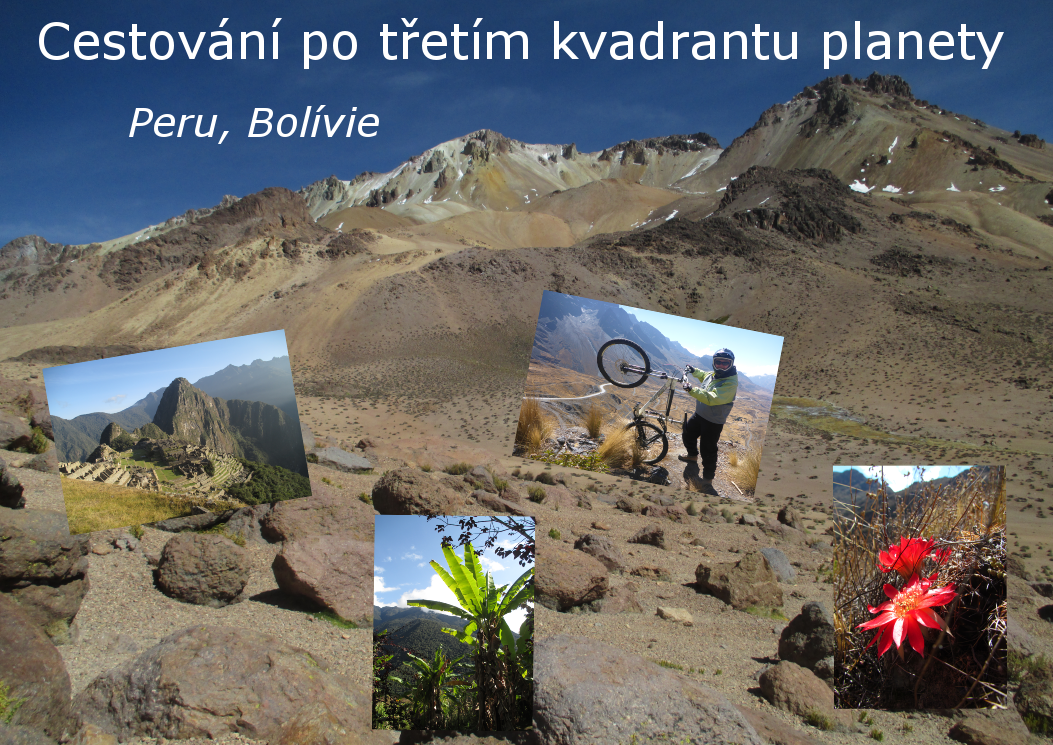
Nové chytré řešení pro Plzeň v oblasti dopravy
24.10.2016 12:28 Blogující geomatici - FAV ZČUV mapové aplikaci byla aktual
24.10.2016 12:00 Jihočeský kraj V mapové aplikaci byla aktualizována územně plánovací dokumentace obcí Roudné, Rudolfov, Římov, Sedlec, Srubec, Staré Hodějovice, Střížov a Štěpánovice. Dále pak byla přidána územně plánovací dokumentace obcí Ostrovec, Vlkov, Zálší a Zlukov.Ve všech mapových službách byl
24.10.2016 12:00 Plzeňský kraj Ve všech mapových službách byla provedena aktualizace vektorových katastrálních map (DKM, KMD, KM-D a ÚKM). Data jsou s platností k 1. 10. 2016. Stav digitalizace je k dispozici zde (http://cuzk.cz/Dokument.aspx?AKCE=META:SESTAVA:MDR004_XSLT:WEBCUZK_KRAJ:400). Pro práci s daty katastru nemovitostí je možné například využít tuto mapovou službu (http://mapy.kr-plzensky.cz/gis/katastr/). Seznam všech mapových služeb je k dispozici zde (http://geoportal.plzensky-kraj.cz/gs/vsechny-mapy/). Zároveň došlo k aktualizaci dat ve Výdejním modulu (http://geoportal.plzensky-kraj.cz/gs/vydejni-modul/).Aktualizace verze TopoL xT 10.0
24.10.2016 12:00 Topol Software Je připravena nová aktualizace verze TopoL xT 10.0.17, která je ke stažení na našich stránkách.Aktualizace verze TopoL xT 9.5
24.10.2016 12:00 Topol Software Je připravena nová aktualizace verze TopoL xT 9.5.12, která je ke stažení na našich stránkách.Aktualizace verze TopoL xT 9.5
24.10.2016 12:00 Topol Software Je připravena nová aktualizace verze TopoL xT 9.5.12, která je ke stažení na našich stránkách.V mapové aplikaci Územně pláno
24.10.2016 12:00 Jihočeský kraj V mapové aplikaci Územně plánovací dokumentace obcí byla aktualizována územně plánovací dokumentace obcí Roudné, Rudolfov, Římov, Sedlec, Srubec, Staré Hodějovice, Střížov a Štěpánovice. Dále pak byla přidána územně plánovací dokumentace obcí Ostrovec, Vlkov, Zálší a Zlukov.Data katastru nemovitostí včet
24.10.2016 12:00 Jihočeský kraj Data katastru nemovitostí včetně účelové katastrální mapy byla v mapových aplikacích i výdejním modulu aktualizována k 1. 10. 2016.Ve všech mapových službách byl
24.10.2016 12:00 Plzeňský kraj Ve všech mapových službách byla provedena aktualizace vektorových katastrálních map (DKM, KMD, KM-D a ÚKM). Data jsou s platností k 1. 10. 2016. Stav digitalizace je k dispozici zde. Pro práci s daty katastru nemovitostí je možné například využít tuto mapovou službu. Seznam všech mapových služeb je k dispozici zde. Zároveň došlo k aktualizaci dat ve Výdejním modulu.OSLAVY 25. VÝROČÍ BYLY ZAVRŠENY V BŘEVNOVSKÉM KLÁŠTEŘE
24.10.2016 11:42 HrdličkaAkcí v Břevnovském klášteře jsme zároveň symbolicky zakončili letošní oslavy jubilea společnosti a poděkovali našim zákazníkům, partnerům i zaměstnancům za dlouholetou spolupráci. Hlavním večerním představením pro hosty byl koncert české šansoniérky Radky Fišarové s kapelou. Paní Fišarová zazpívala nejen francouzské písně od Edith Piaf, ale i skladby české z vlastního repertoáru. Doprovodným programem večera pak byly prohlídky Břevnovského... View Article
The post OSLAVY 25. VÝROČÍ BYLY ZAVRŠENY V BŘEVNOVSKÉM KLÁŠTEŘE appeared first on HRDLIČKA spol. s r.o. - komplexní služby v oblasti geodézie.
Oslavy 25. výročí byly završeny v Břevnovském klášteře
24.10.2016 11:42 HrdličkaAkcí v Břevnovském klášteře jsme zároveň symbolicky zakončili letošní oslavy jubilea společnosti a poděkovali našim zákazníkům, partnerům i zaměstnancům za dlouholetou spolupráci. Hlavním večerním představením pro hosty byl koncert české šansoniérky Radky Fišarové s kapelou. Paní Fišarová zazpívala nejen francouzské písně od Edith Piaf, ale i skladby české z vlastního repertoáru. Doprovodným programem večera pak byly prohlídky Břevnovského... View Article
The post Oslavy 25. výročí byly završeny v Břevnovském klášteře appeared first on HRDLIČKA spol. s r.o. - komplexní služby v oblasti geodézie.
Oslavy 25. výročí byly završeny v Břevnovském klášteře
24.10.2016 11:42 HrdličkaAkcí v Břevnovském klášteře jsme zároveň symbolicky zakončili letošní oslavy jubilea společnosti a poděkovali našim zákazníkům, partnerům i zaměstnancům za dlouholetou spolupráci. Hlavním večerním představením pro hosty byl koncert české šansoniérky Radky Fišarové s kapelou. Paní Fišarová zazpívala nejen francouzské písně od Edith Piaf, ale i skladby české z vlastního repertoáru. Doprovodným programem večera pak byly prohlídky Břevnovského... View Article
The post Oslavy 25. výročí byly završeny v Břevnovském klášteře appeared first on HRDLIČKA spol. s r.o. - komplexní služby v oblasti geodézie.