













zprávy
zdroje zpráv:S&P CORELOGIC CASE-SHILLER INDEX DECELERATED IN JUNE
30.8.2022 18:08 GISCafe.com Webcasts-Webinars NEW YORK, Aug. 30, 2022 — (PRNewswire) — S&P Dow Jones Indices (S&P DJI) today released the latest results for the S&P …Draganfly to Unveil Three New Cutting Edge Drone Products at the Commercial UAV Expo in Las Vegas
30.8.2022 16:23 GISCafe.com Webcasts-Webinars Attendees can learn more about Draganfly’s new Heavy Lift Drone, Commander 3XL Drone and the company’s new Long Range LiDAR System at booth 238 …CompassData Inc Adopts PointMan, Enhancing Their Surveying Business Model
30.8.2022 16:23 GISCafe.com Webcasts-Webinars GRAND JUNCTION, Colo., Aug. 30, 2022 (GLOBE NEWSWIRE) -- ProStar Holdings Inc. ("ProStar®" or "the Company") (TSXV: MAPS) (OTCQX: MAPPF) (FSE: …odborný referent – obnova katastrálního operátu v oddělení aktualizace
30.8.2022 14:22 ČÚZK /Urady/Katastralni-urady/Katastralni-urady/Katastralni-urad-pro-Liberecky-kraj/Uredni-deska/Oznameni-a-jina-uredni-sdeleni/Volna-mista/odborny-referent-–-obnova-katastralniho-operatu-vodborný referent – obnova katastrálního operátu v oddělení aktualizace
30.8.2022 14:22 ČÚZK - volná místa Katastrální úřad pro Liberecký kraj - Katastrální pracoviště Liberec vypisuje výběrové řízení na místo odborný referent – obnova katastrálního operátu v oddělení aktualizaceodborný referent – obnova katastrálního operátu v oddělení aktualizace
30.8.2022 14:22 ČÚZK - předpisy a opatření Katastrální úřad pro Liberecký kraj - Katastrální pracoviště Liberecvypisuje výběrové řízení na místo
odborný referent – obnova katastrálního operátu v oddělení aktualizace
odborný/vrchní referent - obnova katastrálního operátu v oddělení aktualizace KN Katastrálního praco
30.8.2022 13:19 ČÚZK - předpisy a opatření Katastrální úřad pro Jihočeský kraj Katastrální pracoviště Jindřichův Hradecvypisuje výběrové řízení na místo
odborný/vrchní referent - obnova katastrálního operátu v oddělení aktualizace KN Katastrálního pracoviště Jindřichův Hradec (ID SM 30000210/30003834)
referent KN – návrh zápisu v katastru do PO V.
30.8.2022 12:11 ČÚZK - předpisy a opatření Katastrální úřad pro hlavní město Prahu Katastrální pracoviště Prahavypisuje výběrové řízení na místo
referent KN – návrh zápisu v katastru do PO V.
referent KN – návrh zápisu v katastru do PO V.
30.8.2022 12:11 ČÚZK /Urady/Katastralni-urady/Katastralni-urady/Katastralni-urad-pro-hlavni-mesto-Prahu/Uredni-deska/Oznameni-a-jina-uredni-sdeleni/Volna-mista/DMS/referent-KN-–-navrh-zapisu-v-katastru-do-PO-Vreferent KN – návrh zápisu v katastru do PO V.
30.8.2022 12:11 ČÚZK - volná místa Katastrální úřad pro hlavní město Prahu Katastrální pracoviště Praha vypisuje výběrové řízení na místo referent KN – návrh zápisu v katastru do PO V.20220830_Odborný / vrchní referent oddělení dokumentace KN
30.8.2022 11:29 ČÚZK - předpisy a opatření Katastrální úřad pro Středočeský kraj - Katastrální pracoviště Praha-západ Vyhlášení výběrového řízení: Odborný / vrchní referent oddělení dokumentace KN V části "Úřední deska", v sekci "Oznámení a jiná úřední sdělení" bylo vystaveno "Oznámení o vyhlášení výběrového řízení na obsazení služebního místa Odborný / vrchní referent oddělení dokumentace KN"20220830_Odborný / vrchní referent oddělení dokumentace KN
30.8.2022 11:29 ČÚZK /Urady/Katastralni-urady/Katastralni-urady/Katastralni-urad-pro-Stredocesky-kraj/Katastralni-pracoviste/KP-Praha-zapad/O-uradu/Aktuality/20210922_Odborny-referent-oddeleni-aktualizace-(4)Odborný / vrchní referent oddělení dokumentace KN
30.8.2022 11:28 ČÚZK - volná místa Katastrální úřad pro Středočeský kraj - Katastrální pracoviště Praha-západ vypisuje výběrové řízení na místo Odborný / vrchní referent oddělení dokumentace KNOdborný / vrchní referent oddělení dokumentace KN
30.8.2022 11:28 ČÚZK - volná místa Katastrální úřad pro Středočeský kraj vypisuje výběrové řízení na místo Odborný / vrchní referent oddělení dokumentace KNOdborný / vrchní referent oddělení dokumentace KN
30.8.2022 11:28 ČÚZK - předpisy a opatření Katastrální úřad pro Středočeský kraj - Katastrální pracoviště Praha-západvypisuje výběrové řízení na místo
Odborný / vrchní referent oddělení dokumentace KN
20220830_Rada / odborný rada oddělení právních vztahů k nemovitostem
30.8.2022 10:40 ČÚZK /Urady/Katastralni-urady/Katastralni-urady/Katastralni-urad-pro-Stredocesky-kraj/Katastralni-pracoviste/KP-Pribram/O-uradu/Aktuality/20210922_Odborny-referent-oddeleni-aktualizace-(5)20220830_Rada / odborný rada oddělení právních vztahů k nemovitostem
30.8.2022 10:40 ČÚZK - předpisy a opatření Katastrální úřad pro Středočeský kraj - Katastrální pracoviště Příbram Vyhlášení výběrového řízení: Rada / odborný rada oddělení právních vztahů k nemovitostem V části "Úřední deska", v sekci "Oznámení a jiná úřední sdělení" bylo vystaveno "Oznámení o vyhlášení výběrového řízení na obsazení služebního místa Rada / odborný rada oddělení právních vztahů k nemovitostem"Rada / odborný rada oddělení právních vztahů k nemovitostem
30.8.2022 10:34 ČÚZK - volná místa Katastrální úřad pro Středočeský kraj Katastrální pracoviště Příbram vypisuje výběrové řízení na místo Rada / odborný rada oddělení právních vztahů k nemovitostemRada / odborný rada oddělení právních vztahů k nemovitostem
30.8.2022 10:34 ČÚZK - předpisy a opatření Katastrální úřad pro Středočeský kraj Katastrální pracoviště Příbramvypisuje výběrové řízení na místo
Rada / odborný rada oddělení právních vztahů k nemovitostem
20220830_Vrchní referent / rada personálního oddělení Katastrálního úřadu
30.8.2022 10:23 ČÚZK /Urady/Katastralni-urady/Katastralni-urady/Katastralni-urad-pro-Stredocesky-kraj/O-uradu/Aktuality/20210922_Odborny-referent-oddeleni-aktualizace-(4)20220830_Vrchní referent / rada personálního oddělení Katastrálního úřadu
30.8.2022 10:23 ČÚZK - předpisy a opatření Katastrální úřad pro Středočeský kraj Vyhlášení výběrového řízení: Vrchní referent / rada personálního oddělení Katastrálního úřadu V části "Úřední deska", v sekci "Oznámení a jiná úřední sdělení" bylo vystaveno "Oznámení o vyhlášení výběrového řízení na obsazení služebního místa Vrchní referent / rada personálního oddělení Katastrálního úřadu"20220830_Rada / odborný rada – interní auditor Katastrálního úřadu
30.8.2022 9:55 ČÚZK - předpisy a opatření Katastrální úřad pro Středočeský kraj Vyhlášení výběrového řízení: Rada / odborný rada – interní auditor Katastrálního úřadu V části "Úřední deska", v sekci "Oznámení a jiná úřední sdělení" bylo vystaveno "Oznámení o vyhlášení výběrového řízení na obsazení služebního místa Rada / odborný rada – interní auditor Katastrálního úřadu"20220830_Rada / odborný rada – interní auditor Katastrálního úřadu
30.8.2022 9:55 ČÚZK /Urady/Katastralni-urady/Katastralni-urady/Katastralni-urad-pro-Stredocesky-kraj/O-uradu/Aktuality/20210922_Odborny-referent-oddeleni-aktualizace-(6)
Odstávka Portálu ESKN
30.8.2022 6:00
ÚGKK SR
Dňa 30.08.2022 /utorok/ bude v čase od 21:00 hod. do 24:00 hod. plánovaná technická odstávka Portálu ESKN /aktualizácia systému/. Z uvedeného dôvodu nebudú v uvedenom čase dostupné elektronické služby katastra nehnuteľností pre verejnosť. Za vzniknuté problémy sa ospravedlňujeme. #PortálESKN #od:30.08.2022@21:00 #do: 30.08.2022@24:00
Odstávka Portálu ESKN
30.8.2022 6:00
ÚGKK SR
Dňa 30.08.2022 /utorok/ bude v čase od 21:00 hod. do 24:00 hod. plánovaná technická odstávka Portálu ESKN /aktualizácia systému/. Z uvedeného dôvodu nebudú v uvedenom čase dostupné elektronické služby katastra nehnuteľností pre verejnosť. Za vzniknuté problémy sa ospravedlňujeme. #PortálESKN
Výstava Pražská předměstí: Dynamika sociálního prostředí rostoucí metropole se přesouvá na své cestě na Albertov! [Knihovna geografie, byTopic]
30.8.2022 0:00 Katedra aplikované geoinformatiky a kartografie Přf UK Zveme vás na již třetí zastávku výstavy, která je jedním z výstupů stejnojmenného tříletého projektu podpořeného v rámci programu aplikovaného výzkumu a vývoje národní a kulturní identity (NAKI II) Ministerstva kultury ČR. Výstava se věnuje proměnám sociálního prostředí okrajových částí dynamicky rostoucí metropole od období industrializace do současnosti. Výstavu můžete navštívit od 5. 9. do 5. 12. 2022.Otevírací doba knihovny v září [Knihovna geografie, byTopic]
30.8.2022 0:00 Katedra aplikované geoinformatiky a kartografie Přf UK V září má knihovna geografie otevřeno jako ve zkouškovém období (Po až St 9-18, Čt 9-12 a Pá 9-15 h).Qii.AI Strategic Alliance with Kongsberg Maritime Delivers First in the World Technology to Maritime Infrastructure Asset Inspectors
29.8.2022 20:54 GISCafe.com Webcasts-Webinars TORONTO, Aug. 29, 2022 — (PRNewswire) — Qii.AI announced today that it has entered into a strategic alliance with Kongsberg …Airspace Link Selected For Participation in FAA UTM Field Test - Providing Critical Research In Advancement Of Drone Traffic Management
29.8.2022 20:54 GISCafe.com Webcasts-Webinars DETROIT, Aug. 29, 2022 — (PRNewswire) — Airspace Link, a leading drone safety infrastructure company, is announcing its participation in …Woolpert Selected by North Central Texas Council of Governments to Provide Orthoimagery, Lidar Products and Services
29.8.2022 20:54 GISCafe.com Webcasts-Webinars DALLAS, Aug. 29, 2022 — (PRNewswire) —The contract feeds the NCTCOG Spatial Data Cooperative Program, which supports infrastructure …
How investors can shape the future of digital twins
29.8.2022 15:47 Bentley SystemsPressCoverage
New Civil Engineer, UK&I
Read the articleIIJA to Ignite Long term Changes in Water Infrastructure
29.8.2022 15:43 Bentley SystemsPressCoverage
Engineering.com, USA
Read the articleThe skills gap and how corporations can work with students to fill it
29.8.2022 15:38 Bentley SystemsPressCoverage
The School of School, USA
Read the articleSanborn Expands the Sanborn M-Map® Coverage for Autonomous Vehicles
29.8.2022 15:15 GISCafe.com Webcasts-Webinars COLORADO SPRINGS, Colo. — (BUSINESS WIRE) — August 29, 2022 —The Sanborn Map Company, Inc. (Sanborn) announces today it has …
Bentley Systems, Incorporated Declares Third Quarter 2022 Dividend
29.8.2022 11:12 Bentley SystemsBentley Systems, Incorporated (Nasdaq: BSY), the
infrastructure engineering software company, today announced that its Board of Directors
declared a $0.03 per share dividend for the third quarter of 2022.
EUSPA welcomes Shriya satellite to the Galileo family!
29.8.2022 10:45 European GNSS Agency
The Galileo satellite GSAT0224 entered into service on 29 August. The satellite is named ‘Shriya’, after a Norwegian grade school student who won the Galileo drawing competition organised by the European Commission and the Norwegian Space Agency.
The news comes after extended In-Orbit Testing that took place in January-March, followed by participation in the In-Orbit Validation (IOV) for EUSPA/ESA’s finalized testing campaign for I/NAV improvements in July and August 2022.
Having passed the initial tests, the satellite was deemed healthy and ready to join the Galileo family, and after IOV participation, it is now also ready for faster convergence improvements!
Continue to serve Galileo users around the world
The previous Galileo satellite GSAT0223 entered into service in May 2022. While the two satellites may be orbiting some 23,000 kilometres above us, their service impact will be felt right here on Earth.
In a very practical sense, these additional satellites mean that whether using a navigation device in a car or on a mobile phone, you’ll now know your exact position with even greater precision and faster positioning than before. The new satellites also mean enhanced capabilities for the wide range of applications that depend on Galileo’s accuracy, including search and rescue missions, the eCall emergency response system and precision farming methods, to name only a few.
“The addition of these satellites to the world’s most precise positioning system is part of our continuous improvement logic for our more than 3 billion users worldwide,” says EUSPA Executive Director Rodrigo da Costa. “Not only do more satellites mean more availability, more robust navigation and a better user experience, it also means more market opportunities for European businesses, SMEs and entrepreneurs.”
Milestones reached and milestones ahead
GSAT0223 and GSAT0224 were part of Galileo launch L11 on 5 December 2021. The pair is the first of a third batch of Galileo first generation satellites to reach space, with GSAT0223 filling the last empty slot in Galileo’s orbital plane B and GSAT0224 flying in an auxiliary slot B15 as defined by the Open Service SDD.
Media note: This feature can be republished without charge provided the European Union Agency for the Space Programme (EUSPA) is acknowledged as the source at the top or the bottom of the story. You must request permission before you use any of the photographs on the site. If you republish, we would be grateful if you could link back to the EUSPA website (http://www.euspa.europa.eu).
The skills gap and how corporations can work with students to fill it
29.8.2022 10:19 Bentley SystemsSexy jobs, NFT’s, and more. In this episode, Andy, Robin and Adam are joined once again by Katriona Lord-Levins, Chief Success Officer at Bentley Systems to discuss the skills gap and how corporations can work with students to fill it
The post The skills gap and how corporations can work with students to fill it appeared first on Bentley Systems | Infrastructure Engineering Software Company.IIJA to Ignite Long-term Changes in Water Infrastructure
29.8.2022 10:07 Bentley SystemsThe Infrastructure Investment and Jobs Act is a likely catalyst for a huge shift in how water infrastructure assets are managed and maintained in the United States
The post IIJA to Ignite Long-term Changes in Water Infrastructure appeared first on Bentley Systems | Infrastructure Engineering Software Company.výběrové řízení na KP Žďár nad Sázavou
29.8.2022 10:05 ČÚZK - předpisy a opatření Katastrální úřad pro Vysočinu - Katastrální pracoviště Žďár nad Sázavou zveřejnil novou aktualitu: Oznámení o vyhlášení výběrového řízení na služební místo vrchní referent/rada v oddělení aktualizace KN Katastrálního pracovišti Žďár nad Sázavou.How investors can shape the future of digital twins
29.8.2022 9:38 Bentley SystemsHow investors can shape the future of digital twins
The post How investors can shape the future of digital twins appeared first on Bentley Systems | Infrastructure Engineering Software Company.vrchní referent-rada - aktualizace KN KP Žďár nad Sázavou
29.8.2022 9:20 ČÚZK /Urady/Katastralni-urady/Katastralni-urady/Katastralni-urad-pro-Vysocinu/Uredni-deska/Oznameni-a-jina-uredni-sdeleni/Volna-mista/DMS/vrchni-referent-rada-aktualizace-KN-KP-Zdar-nadvrchní referent-rada - aktualizace KN KP Žďár nad Sázavou
29.8.2022 9:20 ČÚZK - předpisy a opatření Katastrální úřad pro Vysočinu Katastrální pracoviště Žďár nad Sázavouvypisuje výběrové řízení na místo
vrchní referent-rada - aktualizace KN KP Žďár nad Sázavou
vrchní referent-rada - aktualizace KN KP Žďár nad Sázavou
29.8.2022 9:20 ČÚZK - volná místa Katastrální úřad pro Vysočinu Katastrální pracoviště Žďár nad Sázavou vypisuje výběrové řízení na místo vrchní referent-rada - aktualizace KN KP Žďár nad SázavouDAEX Pila pro běžné formátovací pily
28.8.2022 17:45 ŠPINAR - softwareDAEX Pila pro zobrazení nářezových plánů a běžné formátovací pily s tiskem štítků
The post DAEX Pila pro běžné formátovací pily appeared first on ŠPINAR – software.
DAEX Pila pro běžné formátovací pily
28.8.2022 17:45 ŠPINAR - softwareDAEX Pila pro zobrazení nářezových plánů a běžné formátovací pily s tiskem štítků
The post DAEX Pila pro běžné formátovací pily appeared first on ŠPINAR – software.
DAEX Pila pro tablety a štítky
28.8.2022 17:45 ŠPINAR - softwareDAEX Pila pro zobrazení nářezových plánů u běžné formátovací pily s tiskem štítků
The post DAEX Pila pro tablety a štítky appeared first on ŠPINAR – software.
DAEX Pila pro nářezové plány a štítky u běžných formátovacích pil
28.8.2022 17:45 ŠPINAR - software DAEX Pila pro zobrazení nářezových plánů u běžné formátovací pily s tiskem štítkůDAEX Pila pro nářezové plány a štítky u běžných formátovacích pil
28.8.2022 17:45 ŠPINAR - softwareDAEX Pila pro zobrazení nářezových plánů u běžné formátovací pily s tiskem štítků
The post DAEX Pila pro nářezové plány a štítky u běžných formátovacích pil appeared first on ŠPINAR – software.
Efektivnější plánování, ochrana před povodněmi i podpora turismu. Nová 3D mapa Brna poslouží architektům i běžným obyvatelům (TZ)
28.8.2022 8:23 GISportal.cz
Trojrozměrné vizualizace měst dokážou výrazně zpřehlednit plánování rozvoje sídelní zástavby. Svůj vlastní 3D model si nechává připravit i Brno. Architektům, projektantům či investorům umožní jednoduší realizaci stavebních projektů, magistrát jej zase využije například při analýze krizových situací či pro podporu turismu. Plně dostupný však bude i veřejnosti. Tvorba trojrozměrné mapy je momentálně ve své třetí fázi. […]
The post Efektivnější plánování, ochrana před povodněmi i podpora turismu. Nová 3D mapa Brna poslouží architektům i běžným obyvatelům (TZ) appeared first on GISportal.cz.
Efektivnější plánování, ochrana před povodněmi i podpora turismu. Nová 3D mapa Brna poslouží architektům i běžným obyvatelům (TZ)
28.8.2022 8:23 GISportal.czTrojrozměrné vizualizace měst dokážou výrazně zpřehlednit plánování rozvoje sídelní zástavby. Svůj vlastní 3D model si nechává připravit i Brno. Architektům, projektantům či investorům umožní jednoduší realizaci stavebních projektů, magistrát jej zase využije například při analýze krizových situací či pro podporu turismu. Plně dostupný však bude i veřejnosti. Tvorba trojrozměrné mapy je momentálně ve své třetí fázi. […]
The post Efektivnější plánování, ochrana před povodněmi i podpora turismu. Nová 3D mapa Brna poslouží architektům i běžným obyvatelům (TZ) appeared first on GISportal.cz.
"Cityworks Touts Full Lifecycle Asset Management for Infrastructure" by susancomcast
27.8.2022 10:22 GISCafe.com Webcasts-WebinarsCZECHBUS letos nově doplní i veletrh SCTS – SMART CITY TRANSPORT SOLUTIONS (TZ)
27.8.2022 8:03 GISportal.cz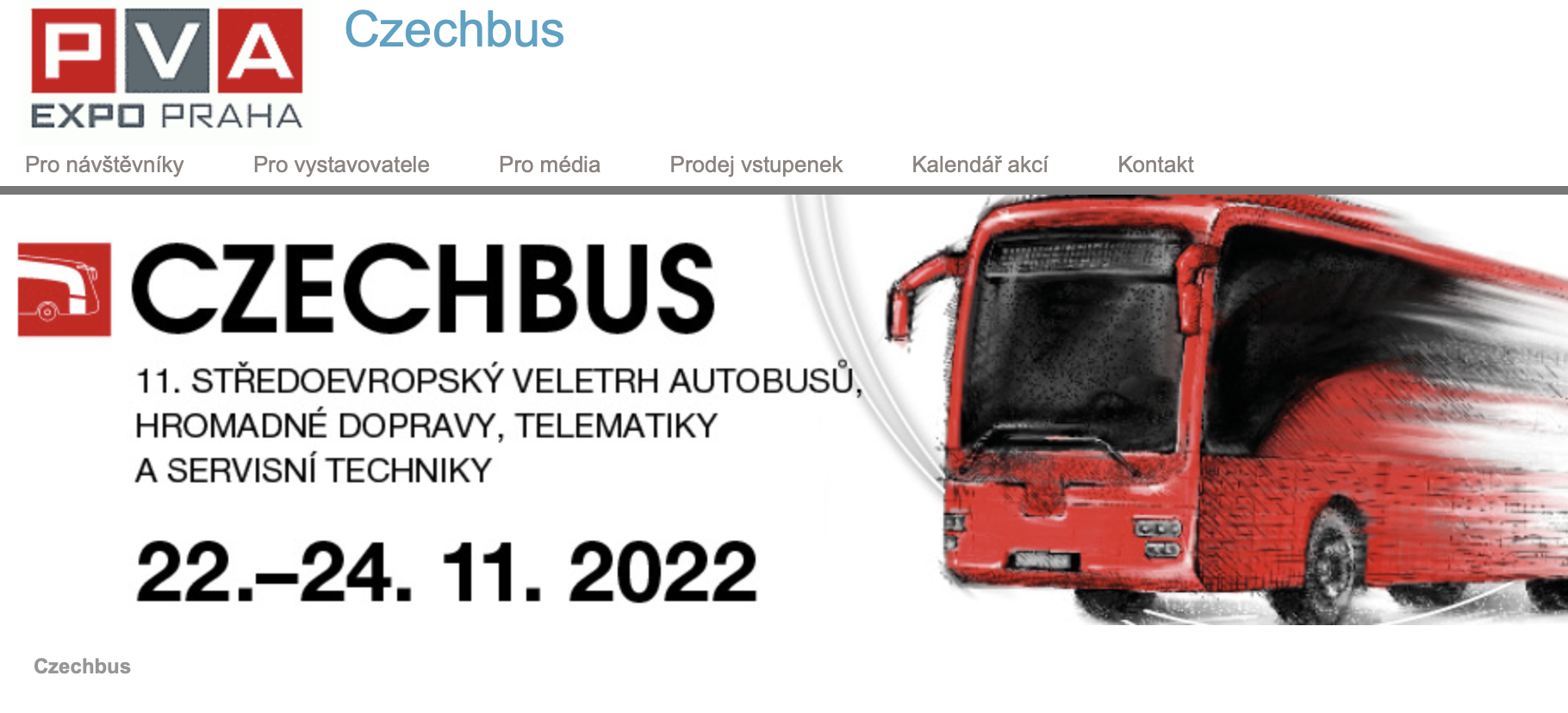
Plánovaná veletržní sezóna letošního podzimu v PVA EXPO PRAHA přinese i 11. ročník největšího středoevropského veletrhu autobusové dopravy CZECHBUS. Novinkou je souběžný veletrh SCTS – SMART CITY TRANSPORT SOLUTIONS, který se bude věnovat dopravní infrastruktuře chytrých měst. Termín konání obou akcí je 22. až 24. listopadu na nejmodernějším výstavišti v Praze, PVA EXPO PRAHA v […]
The post CZECHBUS letos nově doplní i veletrh SCTS – SMART CITY TRANSPORT SOLUTIONS (TZ) appeared first on GISportal.cz.
CZECHBUS letos nově doplní i veletrh SCTS – SMART CITY TRANSPORT SOLUTIONS (TZ)
27.8.2022 8:03 GISportal.czPlánovaná veletržní sezóna letošního podzimu v PVA EXPO PRAHA přinese i 11. ročník největšího středoevropského veletrhu autobusové dopravy CZECHBUS. Novinkou je souběžný veletrh SCTS – SMART CITY TRANSPORT SOLUTIONS, který se bude věnovat dopravní infrastruktuře chytrých měst. Termín konání obou akcí je 22. až 24. listopadu na nejmodernějším výstavišti v Praze, PVA EXPO PRAHA v […]
The post CZECHBUS letos nově doplní i veletrh SCTS – SMART CITY TRANSPORT SOLUTIONS (TZ) appeared first on GISportal.cz.
Using Copernicus data to climate-proof cities
26.8.2022 16:28 European GNSS Agency
Over half of the world’s 8 billion people live in cities, a number that is expected to increase by over 70% in the coming decades. This is concerning because, just as the world’s urban population continues to increase, so too does the world’s average temperature – setting the stage for a potential catastrophe.
That’s because with this increase in temperature comes more frequent and extreme heat events which, due to the urban heat island phenomena, make cities particularly vulnerable to the impact of climate change. It also puts urban populations at a greater risk for suffering the sweltering and potentially deadly effects of heatwaves – a fact has been abundantly clear this summer. According to the Copernicus Climate Change Service’s (C3S) July Climate Bulletin, many parts of Europe, including Spain, Portugal, France and the UK, experienced intense heat, if not record-breaking high temperatures, during the month of July.
All of this means city planners are facing a sense of urgency for finding new ways to keep cities cool. As discussed in a recent article, one potential solution is to use the data generated by C3S to reconsider the layout of cities in an effort to mitigate heat-related risks.
One company doing exactly that is ECOTEN urban comfort.
Mapping high vulnerability areas
The Prague-based company is taking a data-driven approach to designing greener, cooler and healthier cities. “By integrating science, data and technology into urban planning, we help make cities more resilient against the impact of climate change,” says ECOTEN co-founder and CEO Jiri Tencar.
Much of ECOTEN’s data comes from Earth Observation, including the Copernicus Programme. “Copernicus data is essential for measuring the urban heat vulnerability of a city as it provides high resolution information that can be uniformly obtained for any city in the world,” explains ECOTEN co-founder and CTO Sagnik Bhattacharjee.
By combining this Earth Observation data with available socio-demographic data, the company creates Urban Heat Vulnerability Maps. “These high-resolution maps provide city planners and other authorities with a real-time analysis of extreme heat vulnerability in a given urban area,” remarks Tencar. “Having ready-access to this information allows city officials to take immediate steps to protect citizens and infrastructure from a forecasted heatwave.”
Vienna maps a cooler future
In addition to helping city planners react to immediate heat threats, ECOTEN’s innovative heat mapping is also being used to mitigate future risks. For example, the company partnered with the city of Vienna to map the vulnerability of each of the city’s electoral districts.
What these maps revealed was that several heavily populated areas have an urban heat vulnerability index (UHVI) value of 0.9 on a scale where 1.0 implies a high vulnerability to an extreme heat event. The map also identified 10 ‘hot spots’, including areas with little to no green space or areas with a large concentration of young children and/or older adults, both of whom are at risk populations.
“For the first time, we have a map that shows us where cooling is urgent and allows us to take specific measures,” said Birgit Hebein, the former deputy mayor of Vienna.
City planners can now use this map, which was made possible thanks to Copernicus data, to adapt their urban planning to the realities of a warmer climate. In fact, the ECOTEN map is behind the city’s Cool Street project, an initiative that aims to turn down the heat at street level by, for example, planting more trees and reducing traffic.
Prague cools down its transport hotspots
Following the success in Austria, ECOTEN was soon contacted by the Environmental Protection Department of the City of Prague, who wanted to map the urban heat vulnerability of the city’s public transport stops. To create such a map, the company once again turned to Copernicus data, this time combining it with data on passenger wait times.
“This combination allowed us to create a tool that Prague can use to easily identify the specific areas that need attention and take steps to make these stops more comfortable for passengers,” says Bhattacharjee.
Using the ECOTEN provided heat map, the city has taken numerous steps to cool down hotspots. For example, a green lawn was planted on the roof of a tram stop, while draught-resistant plants, grasses and rock gardens have been placed across Prague. The city also installed misting devices and drinking fountains.
“The Urban Heat Vulnerability Map has already proved to be an important tool for making Prague and Vienna more resilient to climate change, and we look forward to adding more cities to this list soon,” concludes Tencar.
Other European cities confirmed this approach as being useful and efficient as ECOTEN urban comfort is now working on developing an Urban Heat Vulnerability Map of Helsinki, Finland.
Media note: This feature can be republished without charge provided the European Union Agency for the Space Programme (EUSPA) is acknowledged as the source at the top or the bottom of the story. You must request permission before you use any of the photographs on the site. If you republish, we would be grateful if you could link back to the EUSPA website (http://www.euspa.europa.eu).
VR do 13.9.2022
26.8.2022 11:24 ČÚZK - předpisy a opatření Katastrální úřad pro hlavní město Prahu - Katastrální pracoviště Praha zveřejnil novou aktualitu: VŘ na služební místo odborný referent/vrchní referent – zápis do protokolu řízení V a Z Ředitelka úřadu vyhlašuje výběrové řízení na služební místo:odborný referent/vrchní referent – zápis do protokolu řízení V a Z
VR do 13.9.2022
26.8.2022 11:24 ČÚZK /Urady/Katastralni-urady/Katastralni-urady/Katastralni-urad-pro-hlavni-mesto-Prahu/O-uradu/Aktuality/VR-do-13-9-2022VR do 6.10.2022
26.8.2022 11:13 ČÚZK - předpisy a opatření Katastrální úřad pro hlavní město Prahu - Katastrální pracoviště Praha zveřejnil novou aktualitu: VŘ na služební místo rada/odborný rada – revize katastrálního operátu Ředitelka úřadu vyhlašuje výběrové řízení na služební místo:* vrchní referent/rada – návrh zápisu, kontrola a zplatnění
*
VR do 6.10.2022
26.8.2022 11:13 ČÚZK - předpisy a opatření Katastrální úřad pro hlavní město Prahu - Katastrální pracoviště Praha zveřejnil novou aktualitu: VŘ na služební místo rada/odborný rada – revize katastrálního operátu Ředitelka úřadu vyhlašuje výběrové řízení na služební místo:rada/odborný rada – revize katastrálního operátu
VR do 6.10.2022
26.8.2022 11:13 ČÚZK - předpisy a opatření Katastrální úřad pro hlavní město Prahu - Katastrální pracoviště Praha zveřejnil novou aktualitu: VŘ na služební místo rada/odborný rada – revize katastrálního operátu Ředitelka úřadu vyhlašuje výběrové řízení na služební místo:* rada/odborný rada – revize katastrálního operátu
* odborný referent/vrchní referent – revize katastrálního operátu
VR do 25.10
26.8.2022 11:13 ČÚZK /Urady/Katastralni-urady/Katastralni-urady/Katastralni-urad-pro-hlavni-mesto-Prahu/O-uradu/Aktuality/VR-do-12-9-2022VR do 6.10.2022
26.8.2022 11:13 ČÚZK /Urady/Katastralni-urady/Katastralni-urady/Katastralni-urad-pro-hlavni-mesto-Prahu/O-uradu/Aktuality/VR-do-12-9-2022VR do 25.10
26.8.2022 11:13 ČÚZK - předpisy a opatření Katastrální úřad pro hlavní město Prahu - Katastrální pracoviště Praha zveřejnil novou aktualitu: VŘ na služební místo rada/odborný rada – revize katastrálního operátu Ředitelka úřadu vyhlašuje výběrové řízení na služební místo:* vrchní referent/rada – návrh zápisu, kontrola a zplatnění
VR do 24.02.2023
26.8.2022 11:13 ČÚZK /Urady/Katastralni-urady/Katastralni-urady/Katastralni-urad-pro-hlavni-mesto-Prahu/O-uradu/Aktuality/VR-do-12-9-2022VR do 06.04.2023
26.8.2022 11:13 ČÚZK /Urady/Katastralni-urady/Katastralni-urady/Katastralni-urad-pro-hlavni-mesto-Prahu/O-uradu/Aktuality/VR-do-12-9-2022VR do 24.02.2023
26.8.2022 11:13 ČÚZK - předpisy a opatření Katastrální úřad pro hlavní město Prahu - Katastrální pracoviště Praha zveřejnil novou aktualitu: VŘ na služební místo rada/odborný rada – revize katastrálního operátu Ředitelka úřadu vyhlašuje výběrové řízení na služební místo:* referent KN – právník do právního oddělení XI.
VR do 06.04.2023
26.8.2022 11:13 ČÚZK - předpisy a opatření Katastrální úřad pro hlavní město Prahu zveřejnil novou aktualitu: VŘ na služební místo referent/vrchní referent – informační a kontrolní pracovník Ředitelka úřadu vyhlašuje výběrové řízení na služební místo:referent/vrchní referent – informační a kontrolní pracovník
VR do 12.9.2022
26.8.2022 11:13 ČÚZK - předpisy a opatření Katastrální úřad pro hlavní město Prahu - Katastrální pracoviště Praha zveřejnil novou aktualitu: VŘ na služební místo rada/odborný rada – revize katastrálního operátu Ředitelka úřadu vyhlašuje výběrové řízení na služební místo:* rada/odborný rada – revize katastrálního operátu
* rada/odborný rada – právník
VR do 12.9.2022
26.8.2022 11:13 ČÚZK /Urady/Katastralni-urady/Katastralni-urady/Katastralni-urad-pro-hlavni-mesto-Prahu/O-uradu/Aktuality/VR-do-12-9-2022GeoKARTO 2022 – pozvánka a program
26.8.2022 10:17 GISportal.cz
Vážené kolegyne, vážení kolegovia, dovoľujeme si Vám zaslať pozvánku a program medzinárodnej konferencie GeoKARTO 2022, ktorá sa uskutoční 8. – 9. septembra 2022 v priestoroch Prírodovedeckej fakulty Univerzity Komenského v Bratislave. Konferenciu organizuje Kartografická spoločnosť SR v spolupráci s Katedrou fyzickej geografie a geoinformatiky, Prírodovedeckej fakulty UK v Bratislave a Geografickým ústavom Slovenskej akadémie vied, v. v. i. Podujatie je […]
The post GeoKARTO 2022 – pozvánka a program appeared first on GISportal.cz.
GeoKARTO 2022 – pozvánka a program
26.8.2022 10:17 GISportal.czVážené kolegyne, vážení kolegovia, dovoľujeme si Vám zaslať pozvánku a program medzinárodnej konferencie GeoKARTO 2022, ktorá sa uskutoční 8. – 9. septembra 2022 v priestoroch Prírodovedeckej fakulty Univerzity Komenského v Bratislave. Konferenciu organizuje Kartografická spoločnosť SR v spolupráci s Katedrou fyzickej geografie a geoinformatiky, Prírodovedeckej fakulty UK v Bratislave a Geografickým ústavom Slovenskej akadémie vied, v. v. i. Podujatie je […]
The post GeoKARTO 2022 – pozvánka a program appeared first on GISportal.cz.
Report: Personnel and Next Generation 911 Readiness Are the Most Significant Challenges Facing 911 Centers
26.8.2022 9:00 GISCafe.com Webcasts-Webinars STATE COLLEGE, Pa., Aug. 23, 2022 — (PRNewswire) —A new, first-of-its-kind report by Mission Critical Partners summarizes where …
New Wave is back!
26.8.2022 0:00 Geografický ústav MUThree years. One could wonder, whether it is too much or too little time. But it depends. For example, in three years – baby could be born, could learn to walk, speak and start attend kindergarten. On the other hand, stalactite according to guides in caves grows just by 3 mm in three years or continent could move by like 6 cm in that time. Therefore, answer onto question whether three years are much on little time depends on the nature of event we observe in that given time. And if we focus onto scientific conference New Wave, we could easily say, that three years are rather too much.
You may be wondering, why are so obsessed with three years? Answer is simple. It is that much time since we met for the last time, before covid-19 pandemic hit our lives and ceased future iterations of conference. But pandemic is slowly fading away from our lives and that means just one thing. It time to meet again and prepare another edition of New Wave which will be organised again in Brno in the same location as was the last time back in 2019.
Therefore open your diaries and with thick black pen mark the date 26th of August 2022, because that will be the Day D. New Wave will be back and at this point we would like to kindly invite you to Department of Geography of Faculty of Science of Masaryk University. As usual, New Wave is aiming to be international student and early careen conference and although current edition of conference doesn´t have exact strict topic, we like to present this New Wave in “reloaded” branding as we all would again have to meet in person and share our work, research, ideas and most importantly see each other.
As New Wave 2019 started this tradition, in 2022 organisers will welcome contributions from various authors not only from geography but also from other sciences connected with space such as social studies or arts. If you are wondering what kind of contributions are welcomed, the range is wide – it could be papers, posters, maps or even some other more nonorthodox forms. The main aim of conference is to share each ones ideas and researches and to make sure, everybody can enrol, New Wave is still free of charge.
So, enrol now and we are looking forward to seeing you in Brno.

New Wave is back!
26.8.2022 0:00 Geografický ústav MU
Three years. One could wonder, whether it is too much or too little time. But it depends. For example, in three years – baby could be born, could learn to walk, speak and start attend kindergarten. On the other hand, stalactite according to guides in caves grows just by 3 mm in three years or continent could move by like 6 cm in that time. Therefore, answer onto question whether three years are much on little time depends on the nature of event we observe in that given time. And if we focus onto scientific conference New Wave, we could easily say, that three years are rather too much.
You may be wondering, why are so obsessed with three years? Answer is simple. It is that much time since we met for the last time, before covid-19 pandemic hit our lives and ceased future iterations of conference. But pandemic is slowly fading away from our lives and that means just one thing. It time to meet again and prepare another edition of New Wave which will be organised again in Brno in the same location as was the last time back in 2019.
Therefore open your diaries and with thick black pen mark the date 26th of August 2022, because that will be the Day D. New Wave will be back and at this point we would like to kindly invite you to Department of Geography of Faculty of Science of Masaryk University. As usual, New Wave is aiming to be international student and early careen conference and although current edition of conference doesn´t have exact strict topic, we like to present this New Wave in “reloaded” branding as we all would again have to meet in person and share our work, research, ideas and most importantly see each other.
As New Wave 2019 started this tradition, in 2022 organisers will welcome contributions from various authors not only from geography but also from other sciences connected with space such as social studies or arts. If you are wondering what kind of contributions are welcomed, the range is wide – it could be papers, posters, maps or even some other more nonorthodox forms. The main aim of conference is to share each ones ideas and researches and to make sure, everybody can enrol, New Wave is still free of charge.
So, enrol now and we are looking forward to seeing you in Brno.
Protected: Finalists for Awards 2022
25.8.2022 17:14 buildingSMART.orgThere is no excerpt because this is a protected post.
The post Protected: Finalists for Awards 2022 appeared first on buildingSMART International.
The buildingSMART openBIM Awards Program 2022 – Finalists Announced
25.8.2022 17:14 buildingSMART.orgLondon, (August 26, 2022) buildingSMART International is delighted to share the full list of finalists for The buildingSMART openBIM Awards Program 2022. Finalists will be invited to present their project…
The post The buildingSMART openBIM Awards Program 2022 – Finalists Announced appeared first on buildingSMART International.
The buildingSMART openBIM Awards Program 2022 – Finalists Announced
25.8.2022 17:14 buildingSMART.orgLondon, (September 6, 2022) buildingSMART International is delighted to share the full list of finalists for The buildingSMART openBIM Awards Program 2022. Finalists will be invited to present their projects…
The post The buildingSMART openBIM Awards Program 2022 – Finalists Announced appeared first on buildingSMART International.
Juniper Systems Limited Introduces the All-New Mesa Pro Rugged Tablet
25.8.2022 16:08 GISCafe.com Webcasts-Webinars BIRMINGHAM, United Kingdom, Aug. 24, 2022 (GLOBE NEWSWIRE) -- Juniper Systems Limited are excited to enter the 10-inch rugged tablet market with …BlackSky Awarded $1.7M NASA Contract to Advance Earth Science Research
25.8.2022 16:08 GISCafe.com Webcasts-Webinars BlackSky’s Dynamic Monitoring to provide data for innovative research on global changeHERNDON, Va. — (BUSINESS WIRE) — August 24, 2022 …
U.S. Army Signs Cooperative Research and Development Agreement (CRADA) with HawkEye 360
25.8.2022 16:08 GISCafe.com Webcasts-Webinars HERNDON, Va., Aug. 25, 2022 — (PRNewswire) — HawkEye 360 Inc., the world's leading commercial provider of space-based radio frequency …Intermap and Lufthansa Systems Join the OneSky Future of Flight Program
25.8.2022 16:08 GISCafe.com Webcasts-Webinars DENVER, Aug. 25, 2022 — (PRNewswire) — Intermap Technologies (TSX: IMP) (OTCQX: ITMSF) ("Intermap" or the "Company"), a global leader in …Matidor and Arup announce partnership to help organizations optimize energy efficiency with smart city modeling
25.8.2022 16:08 GISCafe.com Webcasts-Webinars VANCOUVER, BC and NEW YORK, Aug. 25, 2022 — (PRNewswire) — Leading GIS project management startup Matidor.com and global built …Upozornění na neaktuální evidenci ÚPD
25.8.2022 13:10 Ústecký kraj vzhledem k zahájení provozu nové verze iLAS/iKAS je k dnešnímu dni přerušena synchronizaci záznamů v evidenci ÚPD s evidencí iLAS/iKAS. Z uvedeného důvodu již nebudou záznamy v aplikaci Evidence UPD, US aktualizovány.odborný referent – poskytování informací KN a PK, poskytování podkladů, nahlížení do KN
25.8.2022 12:50 ČÚZK - volná místa Katastrální úřad pro Olomoucký kraj Katastrální pracoviště Šumperk vypisuje výběrové řízení na místo odborný referent – poskytování informací KN a PK, poskytování podkladů, nahlížení do KNodborný referent – poskytování informací KN a PK, poskytování podkladů, nahlížení do KN
25.8.2022 12:50 ČÚZK - předpisy a opatření Katastrální úřad pro Olomoucký kraj Katastrální pracoviště Šumperkvypisuje výběrové řízení na místo
odborný referent – poskytování informací KN a PK, poskytování podkladů, nahlížení do KN
odborný referent – poskytování informací KN a PK, poskytování podkladů, nahlížení do KN
25.8.2022 12:50 ČÚZK /Urady/Katastralni-urady/Katastralni-urady/Katastralni-urad-pro-Olomoucky-kraj/Uredni-deska/Oznameni-a-jina-uredni-sdeleni/Volna-mista/DMS/odborny-referent-–-poskytovani-informaci-KN-a-PK,odborný referent/vrchní referent – obnova katastrálního operátu
25.8.2022 12:44 ČÚZK - volná místa Katastrální úřad pro Olomoucký kraj Katastrální pracoviště Jeseník vypisuje výběrové řízení na místo odborný referent/vrchní referent – obnova katastrálního operátuodborný referent/vrchní referent – obnova katastrálního operátu
25.8.2022 12:44 ČÚZK - předpisy a opatření Katastrální úřad pro Olomoucký kraj Katastrální pracoviště Jeseníkvypisuje výběrové řízení na místo
odborný referent/vrchní referent – obnova katastrálního operátu
Geodet/ka
25.8.2022 12:20 ČÚZK - volná místa Zeměměřický úřad vypisuje výběrové řízení na místo Geodet/kaGeodet/ka
25.8.2022 12:20 ČÚZK /Urady/Zememericky-urad/Uredni-deska/Oznameni-a-jina-uredni-sdeleni/Volna-mista/Geodet-ka-(3)Geodet/ka
25.8.2022 12:20 ČÚZK - předpisy a opatření Zeměměřický úřadvypisuje výběrové řízení na místo
Geodet/ka
Geodet/ka
25.8.2022 12:20 Zeměměřický úřad Zeměměřický úřadvypisuje výběrové řízení na místo
Geodet/ka
20220825_Odborný / vrchní referent oddělení obnovy (05015) katastrálního operátu č. 03110 Tech.sekce
25.8.2022 11:08 ČÚZK - předpisy a opatření Katastrální úřad pro Středočeský kraj Vyhlášení výběrového řízení: Odborný / vrchní referent oddělení obnovy (05015) katastrálního operátu č. 03110 Technické sekce Katastrálního úřadu pro Středočeský kraj V části "Úřední deska", v sekci "Oznámení a jiná úřední sdělení" bylo vystaveno "Oznámení o vyhlášení výběrového řízení na obsazení služebního místa Odborný / vrchní referent oddělení obnovy (05015) katastrálního operátu č. 03110 Technické sekce Katastrálního úřadu pro Středočeský kraj"20220825_Odborný / vrchní referent oddělení obnovy (05015) katastrálního operátu č. 03110 Tech.sekce
25.8.2022 11:08 ČÚZK /Urady/Katastralni-urady/Katastralni-urady/Katastralni-urad-pro-Stredocesky-kraj/O-uradu/Aktuality/20210922_Odborny-referent-oddeleni-aktualizace-(2)20220825_Odborný / vrchní referent oddělení obnovy (05013) katastrálního operátu č. 03110 Tech.sekce
25.8.2022 11:08 ČÚZK /Urady/Katastralni-urady/Katastralni-urady/Katastralni-urad-pro-Stredocesky-kraj/O-uradu/Aktuality/20210922_Odborny-referent-oddeleni-aktualizace-(2)Odborný / vrchní referent oddělení obnovy (05015) katastrálního operátu č. 03110 Technické sekce Kat
25.8.2022 10:48 ČÚZK - předpisy a opatření Katastrální úřad pro Středočeský kraj technická sekcevypisuje výběrové řízení na místo
Odborný / vrchní referent oddělení obnovy (05015) katastrálního operátu č. 03110 Technické sekce Katastrálního úřadu pro Středočeský kraj
Odborný / vrchní referent oddělení obnovy (05015) katastrálního operátu č. 03110 Technické sekce Kat
25.8.2022 10:48 ČÚZK - volná místa Katastrální úřad pro Středočeský kraj technická sekce vypisuje výběrové řízení na místo Odborný / vrchní referent oddělení obnovy (05015) katastrálního operátu č. 03110 Technické sekce KatOdborný / vrchní referent oddělení obnovy (05015) katastrálního operátu č. 03110 Technické sekce Kat
25.8.2022 10:48 ČÚZK /Urady/Katastralni-urady/Katastralni-urady/Katastralni-urad-pro-Stredocesky-kraj/Uredni-deska/Oznameni-a-jina-uredni-sdeleni/Volna-mista/DMS/Odborny-vrchni-referent-oddeleni-obnovy-(05015)20220825_Odborný / vrchní referent oddělení obnovy (05013) katastrálního operátu č. 03110 Tech.sekce
25.8.2022 10:42 ČÚZK - předpisy a opatření Katastrální úřad pro Středočeský kraj Vyhlášení výběrového řízení: Odborný / vrchní referent oddělení obnovy (05013) katastrálního operátu č. 03110 Technické sekce Katastrálního úřadu pro Středočeský kraj V části "Úřední deska", v sekci "Oznámení a jiná úřední sdělení" bylo vystaveno "Oznámení o vyhlášení výběrového řízení na obsazení služebního místa Odborný / vrchní referent oddělení obnovy (05013) katastrálního operátu č. 03110 Technické sekce Katastrálního úřadu pro Středočeský kraj"20220825_Odborný / vrchní referent oddělení obnovy (05013) katastrálního operátu č. 03110 Tech.sekce
25.8.2022 10:42 ČÚZK /Urady/Katastralni-urady/Katastralni-urady/Katastralni-urad-pro-Stredocesky-kraj/O-uradu/Aktuality/20210922_Odborny-referent-oddeleni-aktualizace-(1)Odborný / vrchní referent oddělení obnovy (05013) katastrálního operátu č. 03110 Technické sekce Kat
25.8.2022 10:22 ČÚZK - předpisy a opatření Katastrální úřad pro Středočeský kraj technická sekcevypisuje výběrové řízení na místo
Odborný / vrchní referent oddělení obnovy (05013) katastrálního operátu č. 03110 Technické sekce Katastrálního úřadu pro Středočeský kraj
Odborný / vrchní referent oddělení obnovy (05013) katastrálního operátu č. 03110 Technické sekce Kat
25.8.2022 10:22 ČÚZK /Urady/Katastralni-urady/Katastralni-urady/Katastralni-urad-pro-Stredocesky-kraj/Uredni-deska/Oznameni-a-jina-uredni-sdeleni/Volna-mista/DMS/Odborny-vrchni-referent-oddeleni-obnovy-(05013)Odborný / vrchní referent oddělení obnovy (05013) katastrálního operátu č. 03110 Technické sekce Kat
25.8.2022 10:22 ČÚZK - volná místa Katastrální úřad pro Středočeský kraj technická sekce vypisuje výběrové řízení na místo Odborný / vrchní referent oddělení obnovy (05013) katastrálního operátu č. 03110 Technické sekce KatOdborný referent/vrchní referent v oddělení aktualizace PI KN na Katastrálním pracovišti Brno - měst
25.8.2022 10:18 ČÚZK - volná místa Katastrální úřad pro Jihomoravský kraj Katastrální pracoviště Brno-město vypisuje výběrové řízení na místo Odborný referent/vrchní referent v oddělení aktualizace PI KN na Katastrálním pracovišti Brno - městOdborný referent/vrchní referent v oddělení aktualizace PI KN na Katastrálním pracovišti Brno - měst
25.8.2022 10:18 ČÚZK - předpisy a opatření Katastrální úřad pro Jihomoravský kraj Katastrální pracoviště Brno-městovypisuje výběrové řízení na místo
Odborný referent/vrchní referent v oddělení aktualizace PI KN na Katastrálním pracovišti Brno - město
Odborný referent/vrchní referent v oddělení aktualizace PI KN na Katastrálním pracovišti Brno - měst
25.8.2022 10:18 ČÚZK /Urady/Katastralni-urady/Katastralni-urady/Katastralni-urad-pro-Jihomoravsky-kraj/Uredni-deska/Oznameni-a-jina-uredni-sdeleni/Volna-mista/DMS/Odborny-referent-vrchni-referent-v-oddeleni-aktual20220825_Odborný referent oddělení aktualizace PI KN II.
25.8.2022 10:09 ČÚZK /Urady/Katastralni-urady/Katastralni-urady/Katastralni-urad-pro-Stredocesky-kraj/Katastralni-pracoviste/KP-Praha-vychod/O-uradu/Aktuality/20210922_Odborny-referent-oddeleni-aktualizace-(5)20220825_Odborný referent oddělení aktualizace PI KN II.
25.8.2022 10:09 ČÚZK - předpisy a opatření Katastrální úřad pro Středočeský kraj - Katastrální pracoviště Praha-východ Vyhlášení výběrového řízení: Odborný referent oddělení aktualizace PI KN II. V části "Úřední deska", v sekci "Oznámení a jiná úřední sdělení" bylo vystaveno "Oznámení o vyhlášení výběrového řízení na obsazení služebního místa Odborný referent oddělení aktualizace PI KN II. "Odborný referent oddělení aktualizace PI KN II.
25.8.2022 10:06 ČÚZK - volná místa Katastrální úřad pro Středočeský kraj Katastrální pracoviště Praha-východ vypisuje výběrové řízení na místo Odborný referent oddělení aktualizace PI KN II.Odborný referent oddělení aktualizace PI KN II.
25.8.2022 10:06 ČÚZK - předpisy a opatření Katastrální úřad pro Středočeský kraj Katastrální pracoviště Praha-východvypisuje výběrové řízení na místo
Odborný referent oddělení aktualizace PI KN II.
Interview with Becky Tamashasky, VP of Product Vision and Engineering, Cityworks, a Trimble Solution
25.8.2022 9:00 GISCafe.com Webcasts-WebinarsAUTODESK, INC. ANNOUNCES FISCAL 2023 SECOND QUARTER RESULTS
25.8.2022 0:31 GISCafe.com Webcasts-Webinars SAN FRANCISCO, Aug. 24, 2022 — (PRNewswire) — Autodesk, Inc. (NASDAQ: ADSK) today reported financial results for the second quarter of …AirMatrix Enables First Beyond Visual Line Of Sight Drone Operations Over Urban and Densely Populated Areas In North America
24.8.2022 19:50 GISCafe.com Webcasts-Webinars CALGARY, Alberta — (BUSINESS WIRE) — August 24, 2022 —IN-FLIGHT Data, one of the most experienced operators in the world of …
Unmanned Experts and Liteye Awarded $1.8m Contract from AFLCMC Armament Directorate
24.8.2022 16:39 GISCafe.com Webcasts-Webinars Centennial, Colorado, Aug. 24, 2022 (GLOBE NEWSWIRE) -- Centennial Colorado — (August 24, 2022) – Unmanned Experts Inc. and partner Liteye …Trimble and CLAAS Strategic Alliance Develops Next-Generation Precision Farming System for CLAAS Agriculture Equipment
24.8.2022 16:39 GISCafe.com Webcasts-Webinars SUNNYVALE, Calif., Aug. 24, 2022 — (PRNewswire) — As part of a strategic alliance, Trimble (NASDAQ: TRMB) and CLAAS have developed a …Nextech AR Adopting LiDAR Technology For Its Real World Metaverse Spatial Mapping Platform ‘ARway’
24.8.2022 16:39 GISCafe.com Webcasts-Webinars TORONTO — (BUSINESS WIRE) — August 24, 2022 —Nextech AR Solutions Corp. (“Nextech” or the “Company”) (OTCQB: NEXCF) (CSE: …
EagleView Announces Next Project to Help State of Wyoming Simplify Assessment with Imagery and Change Detection
24.8.2022 16:39 GISCafe.com Webcasts-Webinars BELLEVUE, Wash., Aug. 24, 2022 (GLOBE NEWSWIRE) -- EagleView, a leading technology provider of aerial imagery, data analytics and GIS solutions, …Draganfly Delivers Next Generation Medical Response Drones for Deployment to Revived Soldiers Ukraine
24.8.2022 16:39 GISCafe.com Webcasts-Webinars Draganfly’s Medical Response Drones include custom hardware and software updates expanding the connection range and enabling faster payload drops …Drought causes Yangtze to shrink
24.8.2022 10:25 ESA Observing the Earth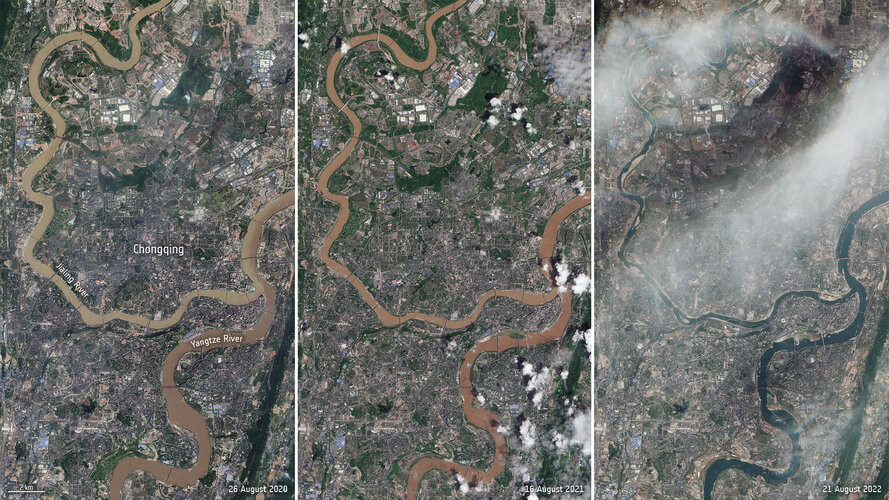 Image:
A record-breaking drought has caused parts of the Yangtze River to dry up – affecting hydropower, shipping routes and limiting drinking water supplies. Images captured by the Copernicus Sentinel-2 mission show a comparison of the Yangtze and Jialing rivers, near Chongqing, over the last three years.
Image:
A record-breaking drought has caused parts of the Yangtze River to dry up – affecting hydropower, shipping routes and limiting drinking water supplies. Images captured by the Copernicus Sentinel-2 mission show a comparison of the Yangtze and Jialing rivers, near Chongqing, over the last three years.