











zprávy
zdroje zpráv:Turistická aplikace města Ústí nad Labem
3.11.2017 7:35 Statutární město Ústí nad Labem Oddělení GIS spouští novou aplikaci pro veřejnost, která formou dynamické mapy, rozsáhlé fotodokumentace a dalšího materiálu, prezentuje zajímavá turistická místa a trasy v Ústí nad Labem a jeho okolí (celý správní obvod ORP). V aplikaci jsou v současné době dostupná tři rámcová témata – cyklus Trasy netušených krás, zajímavá vyhlídková místa a naučné stezky. Další obsah bude postupně přibývat.Oznámení o vyhlášení výběrového řízení na služební místo vrchní referent/rada, oddělení převodu majetku státu, Krajský pozemkový úřad pro Ústecký kraj I.
3.11.2017 0:00 Státní pozemkový úřad Ústřední ředitelka Státního pozemkového úřadu, jako služební orgán příslušný podle § 10 odst. 1 písm. f) zákona č. 234/2014 Sb., o státní službě (dále jen „zákon“), vyhlašuje výběrové řízení na služební místo vrchní referent/rada, oddělení převodu majetku státu, Krajský pozemkový úřad pro Ústecký kraj I.Oznámení o vyhlášení výběrového řízení na služební místo rada/odborný rada, oddělení převodu majetku státu, Krajský pozemkový úřad pro Ústecký kraj
3.11.2017 0:00 Státní pozemkový úřad Ústřední ředitelka Státního pozemkového úřadu, jako služební orgán příslušný podle § 10 odst. 1 písm. f) zákona č. 234/2014 Sb., o státní službě (dále jen „zákon“), vyhlašuje výběrové řízení na služební místo rada/odborný rada, oddělení převodu majetku státu, Krajský pozemkový úřad pro Ústecký kraj.Oznámení o vyhlášení výběrového řízení na služební místo vrchní referent/rada, oddělení převodu majetku státu, Krajský pozemkový úřad pro Ústecký kraj II.
3.11.2017 0:00 Státní pozemkový úřad Ústřední ředitelka Státního pozemkového úřadu, jako služební orgán příslušný podle § 10 odst. 1 písm. f) zákona č. 234/2014 Sb., o státní službě (dále jen „zákon“), vyhlašuje výběrové řízení na služební místo vrchní referent/rada, oddělení převodu majetku státu, Krajský pozemkový úřad pro Ústecký kraj II.Oznámení o vyhlášení výběrového řízení na služební místo vrchní referent/rada, Pobočka Jičín
3.11.2017 0:00 Státní pozemkový úřad Ústřední ředitelka Státního pozemkového úřadu, jako služební orgán příslušný podle § 10 odst. 1 písm. f) zákona č. 234/2014 Sb., o státní službě (dále jen „zákon“), vyhlašuje výběrové řízení na služební místo vrchní referent/rada, Pobočka Jičín.Motor Vulcain pro Ariane 6 se chystá na první zážeh
2.11.2017 17:05 Český Kosmický PortálDo Německa dorazil raketový motor Vulcain, aby zde byl připravený na prosincový testovací zážeh. Ten má demonstrovat nové schopnosti a technologie, které byly vyvinuté pro raketu Ariane 6.
Motor Vulcain pro Ariane 6 se chystá na první zážeh
2.11.2017 17:05 Český Kosmický PortálDo Německa dorazil raketový motor Vulcain, aby zde byl připravený na prosincový testovací zážeh. Ten má demonstrovat nové schopnosti a technologie, které byly vyvinuté pro raketu Ariane 6.
RQGIS – spojenie prostredia R a QGISu
2.11.2017 16:08 GISportal.cz Nedávno som narazil na zaujímavú stránku (jannesm), ktorá je venovaná balíku RQGIS, ktorý bol vyvinutý v softvérovom prostredí R. RQGIS umožňuje spojenie medzi prostredím R a populárnym QGISom. Balík RQGIS rozširuje štatistickú silu R o rozsiahlu geografickú funkčnosť ...American Traffic Solutions Partners with Laser Technology Inc. To Launch ATS StreetSafe
2.11.2017 15:20 GISCafe.com Webcasts-Webinars MESA, Ariz., Nov. 2, 2017 — (PRNewswire) — American Traffic Solutions (ATS) has partnered with Laser Technology Inc. (LTI) to …Microdesk Expands Services In United Kingdom And Europe As A Newly Authorized Autodesk Reseller
2.11.2017 15:19 GISCafe.com Webcasts-Webinars NEW YORK, Nov. 1, 2017 — (PRNewswire) — Microdesk announced the expansion of its services in the United Kingdom and Europe as a …Epson Launches Stunning New Line of GPS Running Watches
2.11.2017 15:18 GISCafe.com Webcasts-Webinars World Class GPS Battery Life, at a Compelling ValueLONG BEACH, Calif., Nov. 2, 2017 — (PRNewswire) — Drawing on its decades-long …
Pitney Bowes Hails Success of Harvey Nichols Partnership
2.11.2017 15:17 GISCafe.com Webcasts-Webinars Retailer’s online presence now provides shipping to 214 countries in 75 different currencies, and local payment solutionsLONDON — …
Trimble Named a Leader in 2017 Green Quadrant for Integrated Workplace Management Systems
2.11.2017 15:17 GISCafe.com Webcasts-Webinars Independent Global Research Firm Rates Trimble's Manhattan as Market-Leading for FASB and IASB Lease Accounting Compliance FunctionalitySUNNYVALE, …
Mobile Mapping Market to touch US$24.4 bn by the end of 2022 - Transparency Market Research
2.11.2017 15:16 GISCafe.com Webcasts-Webinars ALBANY, New York, Nov. 02, 2017 (GLOBE NEWSWIRE) -- The global mobile mapping market is likely to be driven at a solid 13.7% CAGR over the …Leidos Holdings, Inc. Reports Third Quarter Fiscal Year 2017 Results
2.11.2017 15:15 GISCafe.com Webcasts-Webinars -- Revenues: $2.50 billion(PRNewswire) — Leidos Holdings, Inc. (NYSE: LDOS), a FORTUNE 500® science and technology solutions …
Ovlivněte výzkum na ISS
2.11.2017 14:22 Česká kosmická kancelář
Evropská kosmická agentura vyzývá vědeckou komunitu k účasti na diskuzi o budoucím výzkumu zaměřeném na biologii rostlin v podmínkách kosmického letu. K této příležitosti uspořádá 20. listopadu 2017 jednodenní workshop, který se uskuteční ve středisku ESA ESTEC. Výstupy ovlivní chystanou výzvu na nové experimenty pro ISS.
Ovlivněte výzkum na ISS
2.11.2017 14:22 Česká kosmická kancelář
Evropská kosmická agentura vyzývá vědeckou komunitu k účasti na diskuzi o budoucím výzkumu zaměřeném na biologii rostlin v podmínkách kosmického letu. K této příležitosti uspořádá 20. listopadu 2017 workshop, který se uskuteční ve středisku ESA ESTEC. Výstupy ovlivní chystanou výzvu na nové experimenty pro ISS.
Ovlivněte výzkum na ISS
2.11.2017 14:22 Česká kosmická kancelář
Evropská kosmická agentura vyzývá vědeckou komunitu k účasti na diskuzi o budoucím výzkumu zaměřeném na biologii rostlin v podmínkách kosmického letu. K této příležitosti uspořádá 20. listopadu 2017 workshop, který se uskuteční ve středisku ESA ESTEC. Výstupy ovlivní chystanou výzvu na nové experimenty pro ISS.
Nový twiGIS na Letišti Václava Havla Praha
2.11.2017 14:00 GIS Fórum Společnost Český Aeroholding používá aplikaci twiGIS už téměř dva roky. V uplynulých týdnech byla nasazena nová verze, která kromě velkého množství drobných vylepšení přináší zejména práci s tabulkovým zobrazením dat, zobrazování připojených fotek a dokumentů, reporty atd.twiGIS je ve společnosti používán jako lehká a rychlá nadstavba systému LetGIS a je přístupný všem zaměstnancům pro rychlou navigaci po areálu či zobrazení umístění osoby odklikem z telefonního seznamu aj.


Byl aktualizován tematický obs
2.11.2017 12:00 Plzeňský kraj Byl aktualizován tematický obsah mapy zobrazující Velkochovy drůbeže, skotu a vepřů. Data jsou s platností k říjnu 2017.Byl aktualizován tematický obs
2.11.2017 12:00 Plzeňský kraj Byl aktualizován tematický obsah mapy zobrazující Velkochovy drůbeže, skotu a vepřů (http://mapy.kr-plzensky.cz/gis/velkochovy). Data jsou s platností k říjnu 2017.Wind satellite vacuum packed
2.11.2017 11:30 ESA Observing the Earth
With liftoff on the horizon, ESA’s Aeolus satellite is going through its last round of tests to make sure that this complex mission will work in orbit. Over the next month, it is sitting in a large chamber that has had all the air sucked out to simulate the vacuum of space.
Sentinel-5P timelapse
2.11.2017 10:30 ESA Observing the Earth
A look back on the preparations for the 13 October liftoff of Sentinel-5P
Vytiskněte si povrch Měsíce ve 3D
2.11.2017 9:51 GISportal.cz Máte doma nebo v práci 3D tiskárnu a rádi byste si na ní vytvořili model své oblíbené hory nebo terénu ve svém okolí? Dnes již existuje řada webových aplikací, které vám dovolí takový model uzpůsobený pro ...Airbus-built EchoStar 105/SES-11 satellite now in geostationary orbit and handed-over to customer
2.11.2017 9:27 GISCafe.com Webcasts-Webinars The dual-mission communications satellite is the 47th Eurostar E3000, and will provide Ku and C-Band capacity to Echostar and SES, …Video: Esri UC 2017: ArcGIS Enterprise—Improving Installation and Configuration
2.11.2017 8:00 GISCafe.com Webcasts-WebinarsGeofyzikální metody - kódy
2.11.2017 1:00 Cenia - Katalog metadat ČR - INSPIRE Databáze obsahuje kódovník geofyzikálních metod.Seismokarotáž
2.11.2017 1:00 Cenia - Katalog metadat ČR - INSPIRE Databáze obsahuje informace o seismokarotážních měřeních na vrtech z let 1968-1994, odměřených na území České republiky z prostředků státního rozpočtu.Oznámení o vyhlášení výběrového řízení na služební místo rada/odborný rada, Pobočka České Budějovice II.
2.11.2017 0:00 Státní pozemkový úřad Ústřední ředitelka Státního pozemkového úřadu, jako služební orgán příslušný podle § 10 odst. 1 písm. f) zákona č. 234/2014 Sb., o státní službě (dále jen „zákon“), vyhlašuje výběrové řízení na služební místo rada/odborný rada, Pobočka České Budějovice II.Oznámení o vyhlášení výběrového řízení na služební místo vrchní referent/rada oddělení správy majetku státu, Krajský pozemkový úřad pro Jihočeský kraj I.
2.11.2017 0:00 Státní pozemkový úřad Ústřední ředitelka Státního pozemkového úřadu, jako služební orgán příslušný podle § 10 odst. 1 písm. f) zákona č. 234/2014 Sb., o státní službě (dále jen „zákon“), vyhlašuje výběrové řízení na služební místo vrchní referent/rada oddělení správy majetku státu, Krajský pozemkový úřad pro Jihočeský kraj I.Oznámení o vyhlášení výběrového řízení na služební místo rada/odborný rada, Pobočka České Budějovice I.
2.11.2017 0:00 Státní pozemkový úřad Ústřední ředitelka Státního pozemkového úřadu, jako služební orgán příslušný podle § 10 odst. 1 písm. f) zákona č. 234/2014 Sb., o státní službě (dále jen „zákon“), vyhlašuje výběrové řízení na služební místo rada/odborný rada, Pobočka České Budějovice I.Oznámení o vyhlášení výběrového řízení na služební místo vrchní referent/rada oddělení správy majetku státu, Krajský pozemkový úřad pro Jihočeský kraj II.
2.11.2017 0:00 Státní pozemkový úřad Ústřední ředitelka Státního pozemkového úřadu, jako služební orgán příslušný podle § 10 odst. 1 písm. f) zákona č. 234/2014 Sb., o státní službě (dále jen „zákon“), vyhlašuje výběrové řízení na služební místo vrchní referent/rada oddělení správy majetku státu, Krajský pozemkový úřad pro Jihočeský kraj II.Transportation Security Administration Awards Leidos Prime Contract
1.11.2017 18:10 GISCafe.com Webcasts-Webinars Company to Continue to Provide Technical Support for Leidos-Designed Transportation Security Equipment Systems in Airports, TSA Warehouses, and …Pitney Bowes Announces Third Quarter 2017 Financial Results
1.11.2017 18:09 GISCafe.com Webcasts-Webinars STAMFORD, Conn. — (BUSINESS WIRE) — November 1, 2017 — Pitney Bowes Inc. (NYSE:PBI), a global technology company providing …Global GPS Receiver Market 2017-2021: Driven by Increasing Applications of Augmented Reality
1.11.2017 18:09 GISCafe.com Webcasts-Webinars DUBLIN, November 1, 2017 — (PRNewswire) —The "Global GPS Receiver Market 2017-2021" report has been added to Research and Markets' …
Velodyne LiDAR and BoE Systems Partner for Integrated UAV-Borne LiDAR in Geospatial Data Collection
1.11.2017 18:08 GISCafe.com Webcasts-Webinars BoE Systems’ LiDAR platforms leverage lightweight Velodyne 3D LiDAR sensors for safe and accurate inspections of land, work sites, and …Initial signals received from six small satellites built by SSL for Planet
1.11.2017 18:07 GISCafe.com Webcasts-Webinars PALO ALTO, CA, Nov. 1, 2017 — (PRNewswire) — SSL, a business unit of Maxar Technologies (formerly MacDonald, Dettwiler and …Autodesk Extends Invitation to Join Financial Results Conference Call
1.11.2017 18:07 GISCafe.com Webcasts-Webinars Third Quarter Fiscal 2018 Financial Results Conference Call to be Held Tuesday, November 28, 2:00 p.m. Pacific TimeSAN RAFAEL, Calif., Nov. 1, 2017 …
Boundless Opens New Headquarters in St. Louis
1.11.2017 18:06 GISCafe.com Webcasts-Webinars Open GIS Leader Puts Down Roots in St. Louis to Support the Local Geospatial Community as it Continues to Scale the Business St. Louis, MO …
New MapVida Mobile App Helps House Hunters and Travelers Explore and Compare Neighborhoods Across the Country
1.11.2017 18:06 GISCafe.com Webcasts-Webinars Neighborhood translator provides familiar context across key location characteristics to find the perfect neighborhoodDENVER, Nov. 1, 2017 — …
20171101 odborný rada v oddělení právních vztahů
1.11.2017 15:26 ČÚZK - předpisy a opatření Katastrální úřad pro Středočeský kraj - Katastrální pracoviště Kolín vypisuje výběrové řízení na místo odborný rada v oddělení právních vztahů V části "Úřední deska", v sekci "Oznámení a jiná úřední sdělení" bylo vystaveno "Oznámení o vyhlášení výběrového řízení na obsazení systemizovaného místa odborný rada v oddělení právních vztahů"20171101 odborný rada v oddělení právních vztahů
1.11.2017 15:26 ČÚZK /Urady/Katastralni-urady/Katastralni-urady/Katastralni-urad-pro-Stredocesky-kraj/Katastralni-pracoviste/KP-Kolin/O-uradu/Aktuality/20161013Rada-odborny-rada-–-informatik-(1)Inspektor
1.11.2017 13:00 ČÚZK /Urady/Zememericke-a-katastralni-inspektoraty/Zememericke-a-katastralni-inspektoraty/Zememericky-a-katastralni-inspektorat-v-Plzni/Uredni-deska/Oznameni-a-jina-uredni-sdeleni/Volna-mista/InspektorInspektor
1.11.2017 13:00 ČÚZK - volná místa Zeměměřický a katastrální inspektorát v Plzni vypisuje výběrové řízení na místo InspektorInspektor
1.11.2017 13:00 ČÚZK - předpisy a opatření Zeměměřický a katastrální inspektorát v Plznivypisuje výběrové řízení na místo
Inspektor
odborný referent – podatelna v personálním oddělení
1.11.2017 12:21 ČÚZK - předpisy a opatření Katastrální úřad pro Zlínský krajvypisuje výběrové řízení na místo odborný referent – podatelna v personálním oddělení
odborný referent – podatelna v personálním oddělení
odborný referent – podatelna v personálním oddělení
1.11.2017 12:21 ČÚZK - volná místa Katastrální úřad pro Zlínský kraj vypisuje výběrové řízení na místo odborný referent – podatelna v personálním odděleníodborný referent – podatelna v personálním oddělení
1.11.2017 12:21 ČÚZK /Urady/Katastralni-urady/Katastralni-urady/Katastralni-urad-pro-Zlinsky-kraj/Uredni-deska/Oznameni-a-jina-uredni-sdeleni/Volna-mista/odborny-referent-–-podatelna-v-personalnim-oddelenrada / odborný rada – obnova katastrálního operátu v oddělení dokumentace KN
1.11.2017 12:19 ČÚZK - předpisy a opatření Katastrální úřad pro Zlínský kraj - Katastrální pracoviště Zlínvypisuje výběrové řízení na místo rada / odborný rada – obnova katastrálního operátu v oddělení dokumentace KN
rada / odborný rada – obnova katastrálního operátu v oddělení dokumentace KN
rada / odborný rada – obnova katastrálního operátu v oddělení dokumentace KN
1.11.2017 12:19 ČÚZK - volná místa Katastrální úřad pro Zlínský kraj - Katastrální pracoviště Zlín vypisuje výběrové řízení na místo rada / odborný rada – obnova katastrálního operátu v oddělení dokumentace KNrada / odborný rada – obnova katastrálního operátu v oddělení dokumentace KN
1.11.2017 12:19 ČÚZK /Urady/Katastralni-urady/Katastralni-urady/Katastralni-urad-pro-Zlinsky-kraj/Uredni-deska/Oznameni-a-jina-uredni-sdeleni/Volna-mista/rada-odborny-rada-–-obnova-katastralniho-opera-(1)Byl aktualizován tematický obs
1.11.2017 12:00 Plzeňský kraj Byl aktualizován tematický obsah mapy zobrazující Válečné hroby a pietní místa v Plzeňském kraji. Data jsou s platností k 10/2017.Výsledky voleb do Poslanecké s
1.11.2017 12:00 Plzeňský kraj Výsledky voleb do Poslanecké sněmovny Parlamentu České republiky 2017 v mapě (http://geoportal.plzensky-kraj.cz/gs/rss?url=http%3A%2F%2Fapp.seerns.cz%2Fpublic%2Fopen%2Fnlink%2F%3Fu%3D50e719de-be08-11e2-8558-002590a1e88e%26c%3Dd0ce46af-cf65-11e2-b328-002590a1e732%26l%3D5c3c42f6-bf0a-11e7-ae1a-06d7625d9f3d%26sid%3D51943b30abaa43f0826dd47b0f807095). Mapa umožňuje zobrazení vysledků za kraje, okresy, obce a jednotlivé volební okrsky.Výsledky voleb do Poslanecké s
1.11.2017 12:00 Plzeňský kraj Výsledky voleb do Poslanecké sněmovny Parlamentu České republiky 2017 v mapě. Mapa umožňuje zobrazení vysledků za kraje, okresy, obce a jednotlivé volební okrsky.Byl aktualizován tematický obs
1.11.2017 12:00 Plzeňský kraj Byl aktualizován tematický obsah mapy zobrazující Válečné hroby a pietní místa v Plzeňském kraji (http://mapy.kr-plzensky.cz/gis/valecne_hroby). Data jsou s platností k 10/2017.Low-cost multikamerový systém na tvorbu 3D modelov (DendroPi)
1.11.2017 8:54 GISportal.cz Na Technickej univerzite vo Zvolene (Katedra hospodárskej úpravy lesov a geodézie) v súčasnosti pracujeme na vývoji multikamerového systému pre účely odvodzovania parametrov individuálnych stromov. Tento systém je schopný rekonštruovať scénu, bez toho aby musel užívateľ ovládať ...Ransomware Bad Rabbit ukazuje potřebu centrální a automatizované správy aktualizací
1.11.2017 8:14 GeoBusiness Nejnovější útok ransomware BadRabbit se maskoval jako softwarová aktualizace programu Adobe Flash Player. V geoinformatice se na spoustě geoportálů technologie Flash stále vyskytuje, proto ... Read MoreRansomware Bad Rabbit ukazuje potřebu centrální a automatizované správy aktualizací
1.11.2017 8:14 GeoBusiness Nejnovější útok ransomware BadRabbit se maskoval jako softwarová aktualizace programu Adobe Flash Player. V geoinformatice se na spoustě geoportálů technologie Flash stále vyskytuje, proto je důležité upozornit na její velkou…Ransomware Bad Rabbit ukazuje potřebu centrální a automatizované správy aktualizací
1.11.2017 8:14 GeoBusiness Nejnovější útok ransomware BadRabbit se maskoval jako softwarová aktualizace programu Adobe Flash Player. V geoinformatice se na spoustě geoportálů technologie Flash stále vyskytuje, proto ... PřečístRansomware Bad Rabbit ukazuje potřebu centrální a automatizované správy aktualizací
1.11.2017 8:14 GeoBusiness Nejnovější útok ransomware BadRabbit se maskoval jako softwarová aktualizace programu Adobe Flash Player. V geoinformatice se na spoustě geoportálů technologie Flash stále vyskytuje, proto je důležité upozornit na její velkou zranitelnost. Společnost GFI Software, která do podniků a institucí dodává bezpečnostní řešení, právě v souvislosti s ransomwarovým útokem „Bad Rabbit“ poukazuje na potřebu posílit centrální […]Video: Interview with John Allan, VP Sales & Marketing at GeoSLAM during 2017 Intergeo Conference
1.11.2017 8:00 GISCafe.com Webcasts-WebinarsSunPower is First to Receive Automated Access for Drone Flights in U.S. FAA Controlled Airspace
31.10.2017 17:14 GISCafe.com Webcasts-Webinars LAANC Approval Allows SunPower Unique, Expanded Access to Drone Survey Potential Solar Plant SitesSAN JOSE, Calif., Oct. 30, 2017 — …
Garmin® introduces ECHOMAP Plus chartplotter/sonar combos, updates and expands capabilities of its popular series
31.10.2017 17:11 GISCafe.com Webcasts-Webinars OLATHE, Kan. — (BUSINESS WIRE) — October 31, 2017 — Garmin International Inc., a unit of Garmin Ltd. (NASDAQ: GRMN), today …Introducing the Garmin® STRIKER Plus series, bringing new features to its popular line of fishfinders
31.10.2017 17:10 GISCafe.com Webcasts-Webinars OLATHE, Kan. — (BUSINESS WIRE) — October 31, 2017 — Garmin International, Inc., a unit of Garmin Ltd. (NASDAQ: GRMN), today …Garmin® announces the ultimate connected boating experience with the introduction of the ActiveCaptain mobile app
31.10.2017 17:10 GISCafe.com Webcasts-Webinars OLATHE, Kan. — (BUSINESS WIRE) — October 31, 2017 — Garmin International, Inc., a unit of Garmin Ltd. (NASDAQ: GRMN), today …Garmin® debuts its first dive computer, the Descent Mk1, featuring surface GPS in a sleek, everyday wearable design
31.10.2017 17:09 GISCafe.com Webcasts-Webinars OLATHE, Kan. — (BUSINESS WIRE) — October 31, 2017 — Garmin International, Inc., a unit of Garmin Ltd. (NASDAQ: GRMN), today …Harris Corporation Reports Fiscal 2018 First Quarter Results With Robust Orders Across All Segments
31.10.2017 17:09 GISCafe.com Webcasts-Webinars EPS from continuing operations up 19%, 8% versus non-GAAP, on flat revenueOrders of $2.3 billion; book-to-bill of 1.6
Operating cash flow $95 …
Kratos Receives $14.5 Million in Unmanned Aerial Drone System Contract Awards
31.10.2017 17:06 GISCafe.com Webcasts-Webinars SAN DIEGO, Oct. 31, 2017 (GLOBE NEWSWIRE) -- Kratos Defense & Security Solutions, Inc. (Nasdaq:KTOS), a leading National Security Solutions …Lafayette Parish Louisiana Assessor’s Office Selects MobileAssessor Mobile App for Field Appraisers
31.10.2017 17:06 GISCafe.com Webcasts-Webinars CourthouseUSA, a leading provider of web-based and mobile applications for the assessment and real estate communities announces Lafayette Parish, LA …LGS Innovations and Government Leaders Cut Ribbon on Fort Leonard Wood IMOD VoIP Installation
31.10.2017 17:04 GISCafe.com Webcasts-Webinars HERNDON, Va. — (BUSINESS WIRE) — October 31, 2017 — LGS Innovations announced the successful installation of the first complete …DroneDeploy Releases Fortune 500 Enterprise Mapping Software
31.10.2017 17:01 GISCafe.com Webcasts-Webinars Massive Rollout Puts the Power of Enterprise-Grade Software in the Hands of SMBs and Enterprises AlikeSAN FRANCISCO, Oct. 31, 2017 — …
Pitney Bowes and Arrow Electronics Bring Smarter Physical Infrastructure Capabilities to Market through New IoT Collaboration
31.10.2017 16:59 GISCafe.com Webcasts-Webinars STAMFORD, Conn. — (BUSINESS WIRE) — October 31, 2017 — Pitney Bowes Inc. (NYSE:PBI), a global technology company that provides …CASE STUDY: Sefton Council uses GIS to support ‘One Council’ policy
31.10.2017 16:59 GISCafe.com Webcasts-Webinars Cadcorp software customised and branded Sefton Interactive Maps ONline (SIMON)One of the roles of the technical services team at Sefton Council is …
Calspan Invests in the Future of Drone Technology
31.10.2017 16:58 GISCafe.com Webcasts-Webinars Adding another aircraft to an ever-growing fleet allows Calspan to better address the needs of an evolving customer base.BUFFALO, N.Y., Oct. 31, …
G4S plc UK DK : Security and drones: a force for good
31.10.2017 16:57 GISCafe.com Webcasts-Webinars Joe Young is the Senior Director of Cloud and Enterprise Solutions for G4S responsible for overseeing technology, strategy and innovation for a …20171101-VŘ Ředitel odboru správy dat
31.10.2017 16:46 ČÚZK /Aktuality-resort/2017/20171101-VR-Reditel-odboru-spravy-dat20171101-VŘ Ředitel odboru správy dat
31.10.2017 16:46 ČÚZK - předpisy a opatření Český úřad zeměměřický a katastrální zveřejnil novou aktualitu: Oznámení o vyhlášení výběrového řízení na služební místo Ředitel odboru správy dat.ředitel odboru správy dat
31.10.2017 16:26 ČÚZK - předpisy a opatření Český úřad zeměměřický a katastrálnívypisuje výběrové řízení na místo
ředitel odboru správy dat
ředitel odboru správy dat
31.10.2017 16:26 ČÚZK - volná místa Český úřad zeměměřický a katastrální vypisuje výběrové řízení na místo ředitel odboru správy datředitel odboru správy dat
31.10.2017 16:26 ČÚZK /Urady/Cesky-urad-zememericky-a-katastralni/Uredni-deska/Oznameni-a-jina-uredni-sdeleni/Volna-mista/reditel-odboru-spravy-datÚdržba serverové technologie
31.10.2017 15:57 Geoportál PrahaOd pátku 3.11.2017 bude probíhat údržba serverové technologie.
Sonda Rosetta nalezla na kometě výtrysk iniciovaný zdola
31.10.2017 14:51 Český Kosmický PortálLoni byl pozorován gejzír prachu proudící z komety 67P/Čurjumov-Gerasimenko a okamžitě vyvolal otázku: odkud se vzala energie k jeho vzniku? Vědci se nyní domnívají, že ta byla uvolněna z nitra komety. Možná šlo o uvolnění plynu nahromaděného pod ledem v „kapse“, možná o únik nějakého jiného plynu.
Rada/odborný rada v právním oddělení č. 1
31.10.2017 14:01 ČÚZK - předpisy a opatření Katastrální úřad pro Jihomoravský kraj - Katastrální pracoviště Brno-městonabízí služební místo
Rada/odborný rada v právním oddělení č. 1
Rada/odborný rada v právním oddělení č. 1
31.10.2017 14:01 ČÚZK /Urady/Katastralni-urady/Katastralni-urady/Katastralni-urad-pro-Jihomoravsky-kraj/Volna-mista/Rada-odborny-rada-v-pravnim-oddeleni-c-1-(2)Rada/odborný rada v právním oddělení č. 1
31.10.2017 14:01 ČÚZK - volná místa Katastrální úřad pro Jihomoravský kraj - Katastrální pracoviště Brno-město vypisuje výběrové řízení na místo Rada/odborný rada v právním oddělení č. 1Rada/odborný rada vedoucí personálního oddělení na Kanceláři ředitele katastrálního úřadu
31.10.2017 13:59 ČÚZK /Urady/Katastralni-urady/Katastralni-urady/Katastralni-urad-pro-Jihomoravsky-kraj/Volna-mista/Rada-odborny-rada-vedouci-personalniho-oddeleni-naRada/odborný rada vedoucí personálního oddělení na Kanceláři ředitele katastrálního úřadu
31.10.2017 13:59 ČÚZK - předpisy a opatření Katastrální úřad pro Jihomoravský krajnabízí služební místo
Rada/odborný rada vedoucí personálního oddělení na Kanceláři ředitele katastrálního úřadu
Rada/odborný rada vedoucí personálního oddělení na Kanceláři ředitele katastrálního úřadu
31.10.2017 13:59 ČÚZK - volná místa Katastrální úřad pro Jihomoravský kraj vypisuje výběrové řízení na místo Rada/odborný rada vedoucí personálního oddělení na Kanceláři ředitele katastrálního úřaduVedoucí oddělení/odborný rada v oddělení obnovy a revize KN
31.10.2017 13:47 ČÚZK /Urady/Katastralni-urady/Katastralni-urady/Katastralni-urad-pro-Jihomoravsky-kraj/Uredni-deska/Oznameni-a-jina-uredni-sdeleni/Volna-mista/Vedouci-oddeleni-odborny-rada-v-oddeleni-obnovy-aVedoucí oddělení/odborný rada v oddělení obnovy a revize KN
31.10.2017 13:47 ČÚZK - předpisy a opatření Katastrální úřad pro Jihomoravský kraj - Katastrální pracoviště Brno-městovypisuje výběrové řízení na místo
Vedoucí oddělení/odborný rada v oddělení obnovy a revize KN
Vedoucí oddělení/odborný rada v oddělení obnovy a revize KN
31.10.2017 13:47 ČÚZK - volná místa Katastrální úřad pro Jihomoravský kraj - Katastrální pracoviště Brno-město vypisuje výběrové řízení na místo Vedoucí oddělení/odborný rada v oddělení obnovy a revize KNVrchní referent/rada v oddělení obnovy a revize KN
31.10.2017 13:43 ČÚZK - volná místa Katastrální úřad pro Jihomoravský kraj - Katastrální pracoviště Brno-město vypisuje výběrové řízení na místo Vrchní referent/rada v oddělení obnovy a revize KNVrchní referent/rada v oddělení obnovy a revize KN
31.10.2017 13:43 ČÚZK /Urady/Katastralni-urady/Katastralni-urady/Katastralni-urad-pro-Jihomoravsky-kraj/Uredni-deska/Oznameni-a-jina-uredni-sdeleni/Volna-mista/Vrchni-referent-rada-v-oddeleni-obnovy-a-revize-KNVrchní referent/rada v oddělení obnovy a revize KN
31.10.2017 13:43 ČÚZK - předpisy a opatření Katastrální úřad pro Jihomoravský kraj - Katastrální pracoviště Brno-městovypisuje výběrové řízení na místo
Vrchní referent/rada v oddělení obnovy a revize KN
Potkejme se i letos na konferenci GIS Esri ČR 2017
31.10.2017 13:15 CEDA Maps a.s. Praha, 30.října 2017 – Dovolujeme si vás pozvat k tradičnímu setkání geoiformatiků v rámci konference GIS Esri ČR 2017. Akce se koná v termínu 8. a 9. listopadu 2017 v Kongresovém centru Praha.Ready to reap the benefits from Copernicus Sentinel-5P
31.10.2017 13:10 ESA Observing the Earth
Now that Sentinel-5P is safely in orbit, engineers have started commissioning the satellite for the task of delivering extremely high-quality information on air quality. Meanwhile, the Copernicus Atmosphere Monitoring Service is poised to ensure we all reap the benefits from this latest mission.
20171031 - volné místo - Odborný referent v oddělení podpory ICT v TO na Katastrálním úřadu pro ÚK
31.10.2017 12:45 ČÚZK - předpisy a opatření Katastrální úřad pro Ústecký kraj zveřejnil novou aktualitu: Nabídka volného pracovního místa - Odborný referent v oddělení podpory ICT v technickém odboru na Katastrálním úřadu pro Ústecký kraj20171031 - volné místo - Odborný referent v oddělení podpory ICT v TO na Katastrálním úřadu pro ÚK
31.10.2017 12:45 ČÚZK /Urady/Katastralni-urady/Katastralni-urady/Katastralni-urad-pro-Ustecky-kraj/O-uradu/Aktuality/20171031-volne-misto-Odborny-referent-v-oddeleMapová aplikace Cleerio se umísťuje na stupních vítězů
31.10.2017 10:48 Cleerio Soutěž Chytrá radnice je pořádána pod záštitou Úřadu vlády ČR s cílem vyhodnotit a ocenit nejlepší chytrá řešení v oblasti veřejné správy a samosprávy využívající moderní digitální technologie. Mezi 64 přihlášenými projekty získala mapová aplikace Cleerio 3. místo v ceně veřejnosti. Mapová aplikace tak sklízí úspěch a to nejen u veřejné správy, ale i u veřejnosti, která se mohla v této kategorii podílet na hlasování.Mapová aplikace Cleerio se umísťuje na stupních vítězů
31.10.2017 10:48 CleerioSoutěž Chytrá radnice je pořádána pod záštitou Úřadu vlády ČR s cílem vyhodnotit a ocenit nejlepší chytrá řešení v oblasti veřejné správy a samosprávy využívající moderní digitální technologie. Mezi 64 přihlášenými projekty získala mapová aplikace Cleerio 3. místo v ceně veřejnosti. Mapová aplikace tak sklízí úspěch a to nejen u veřejné správy, ale i u veřejnosti, která se mohla v této kategorii podílet na hlasování.
Příspěvek Mapová aplikace Cleerio se umísťuje na stupních vítězů pochází z CLEERIO
Mapová aplikace Cleerio se umísťuje na stupních vítězů
31.10.2017 10:48 CleerioSoutěž Chytrá radnice je pořádána pod záštitou Úřadu vlády ČR s cílem vyhodnotit a ocenit nejlepší chytrá řešení v oblasti veřejné správy a samosprávy využívající moderní digitální technologie. Mezi 64 přihlášenými projekty získala mapová aplikace Cleerio 3. místo v ceně veřejnosti. Mapová aplikace tak sklízí úspěch a to nejen u veřejné správy, ale i u veřejnosti, která se mohla v této kategorii podílet na hlasování.
Příspěvek Mapová aplikace Cleerio se umísťuje na stupních vítězů pochází z CLEERIO
Mapová aplikace Cleerio se umísťuje na stupních vítězů
31.10.2017 10:48 CleerioSoutěž Chytrá radnice je pořádána pod záštitou Úřadu vlády ČR s cílem vyhodnotit a ocenit nejlepší chytrá řešení v oblasti veřejné správy a samosprávy využívající moderní digitální technologie. Mezi 64 přihlášenými projekty získala mapová aplikace Cleerio 3. místo v ceně veřejnosti. Mapová aplikace tak sklízí úspěch a to nejen u veřejné správy, ale i u veřejnosti, která se mohla v této kategorii podílet na hlasování.
Příspěvek Mapová aplikace Cleerio se umísťuje na stupních vítězů pochází z Cleerio
Mapová aplikace Cleerio se umísťuje na stupních vítězů
31.10.2017 10:48 CleerioSoutěž Chytrá radnice je pořádána pod záštitou Úřadu vlády ČR s cílem vyhodnotit a ocenit nejlepší chytrá řešení v oblasti veřejné správy a samosprávy využívající moderní digitální technologie. Mezi 64 přihlášenými projekty získala mapová aplikace Cleerio 3. místo v ceně veřejnosti. Mapová aplikace tak sklízí úspěch a to nejen u veřejné správy, ale i u veřejnosti, která se mohla v této kategorii podílet na hlasování.
Příspěvek Mapová aplikace Cleerio se umísťuje na stupních vítězů pochází z CLEERIO
Mapová aplikace Cleerio se umísťuje na stupních vítězů
31.10.2017 10:48 CleerioSoutěž Chytrá radnice je pořádána pod záštitou Úřadu vlády ČR s cílem vyhodnotit a ocenit nejlepší chytrá řešení v oblasti veřejné správy a samosprávy využívající moderní digitální technologie. Mezi 64 přihlášenými projekty získala mapová aplikace Cleerio 3. místo v ceně veřejnosti. Mapová aplikace tak sklízí úspěch a to nejen u veřejné správy, ale i u veřejnosti, která se mohla v této kategorii podílet na hlasování.
Příspěvek Mapová aplikace Cleerio se umísťuje na stupních vítězů pochází z Cleerio
Halloween crack
31.10.2017 10:10 ESA Observing the Earth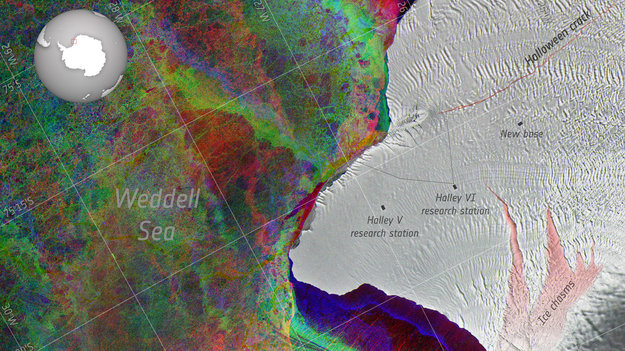
Arguably scarier than ghosts or goblins: a massive crack in the ice shelf close to the Halley VI research station in Antarctica
EGNOS’s annual workshop captures state-of-play and state-of-the-art
31.10.2017 10:04 European GNSS Agency
The EGNOS Annual Workshop is an opportunity to catch up on the latest state-of-play and state-of-the-art in Europe’s satellite-based augmentation system (SBAS). Another year and again goals have been met, there are more and more users and EGNOS continues to forge forward in accuracy and reliability.
The EGNOS User Satisfaction Survey 2016 shows that users were happy with EGNOS’s outstanding performance. The signal (Signal in Space) was available 100% of the time, with excellent monthly performance. Airport authorities spoke highly of the support offered to users, thanking for the speed of their response to any enquiries. GSA Executive Director Carlo des Dorides noted: “EGNOS has a good story to tell, we have 250 airports with more than 450 approach procedures.”
EDAS, which delivers data to users who cannot always view the EGNOS’s satellites (such as in urban canyons) or to support a variety of other value added services, applications and research programmes also worked well, with almost 99% availability.
Watch this: ESSP - EGNOS Satellite Navigation Systems
The workshop offered a chance to hear from users. Dominic Hysam from Easyjet said EGNOS brings great benefits: “It provides precise guidance at airports where we don’t get that currently. It can provide precision approaches at secondary airports; this benefits us from a safety perspective and allows us to operate in different weather conditions, improving accessibility at those airports.” There is ever increasing pressure on airlines to deliver reliable services to their customers. Hysam added: “EGNOS means we are better at getting customers to where they want to go.”
Alexander Desyllas of the Hellenic Civil Aviation Authority, which manages many airports, said: “We are encouraging all to adopt EGNOS now. It brings huge benefits, direct approaches and means not having to depend on conventional ground installations, this is a very important advantage.”
Reaching out
Other sectors are also reaping the benefits. Des Dorides said: “Even if civil aviation is the main natural-market segment, it is proving to be more and more valuable for other sectors, such as maritime and rail. Next year there will be a new regulation coming into place requiring EGNOS and Galileo capability on all new cars produced in Europe.”
Seventy-five percent of maritime receiver models are now SBAS enabled – in the agricultural sector, 80% of European GNSS enabled tractors are using EGNOS.
Reaching further
EGNOS is also reaching further afield. EGNOS technology has been made available to South Korea, to develop its own KASS system and related services. Julien Lapie, who works for the Agency for Air Navigation Safety in Africa and Madagascar (ASECNA), which manages a major part of the African and Indian Ocean airspace, said that EGNOS will bring huge benefits to flight efficiency and safety. Lapie said that this lent itself particularly well to airports in remote areas with difficult access, due to the unrequired local ground infrastructure and staff.
What next?
The GSA and EGNOS never stand still, Des Dorides said: “In the year ahead, we will start with a major technology development that will bring dual-frequency use; and the overlay on Galileo which will bring even more robust and accurate use. This will be ready in 2023-2025.”
Media note: This feature can be republished without charge provided the European GNSS Agency (GSA) is acknowledged as the source at the top or the bottom of the story. You must request permission before you use any of the photographs on the site. If you republish, we would be grateful if you could link back to the GSA website (http://www.gsa.europa.eu).
EGNOS’ annual workshop captures state-of-play and state-of-the-art
31.10.2017 10:04 European GNSS Agency
The EGNOS Annual Workshop is an opportunity to catch up on the latest state-of-play and state-of-the-art in Europe’s satellite-based augmentation system (SBAS). Another year and again goals have been met, there are more and more users and EGNOS continues to forge forward in accuracy and reliability.
The EGNOS User Satisfaction Survey 2016 shows that users were happy with EGNOS’ outstanding performance. The signal (Signal in Space) was available 100% of the time, with excellent monthly performance. Airport authorities spoke highly of the support offered to users, thanking for the speed of their response to any enquiries. GSA Executive Director Carlo des Dorides noted: “EGNOS has a good story to tell, we have 250 airports with more than 450 approach procedures.”
EDAS, which delivers data to users who cannot always view the EGNOS’ satellites (such as in urban canyons) or to support a variety of other value added services, applications and research programmes also worked well, with almost 99% availability.
Watch this: ESSP - EGNOS Satellite Navigation Systems
The workshop offered a chance to hear from users. Dominic Hysam from Easyjet said EGNOS brings great benefits: “It provides precise guidance at airports where we don’t get that currently. It can provide precision approaches at secondary airports; this benefits us from a safety perspective and allows us to operate in different weather conditions, improving accessibility at those airports.” There is ever increasing pressure on airlines to deliver reliable services to their customers. Hysam added: “EGNOS means we are better at getting customers to where they want to go.”
Alexander Desyllas of the Hellenic Civil Aviation Authority, which manages many airports, said: “We are encouraging all to adopt EGNOS now. It brings huge benefits, direct approaches and means not having to depend on conventional ground installations, this is a very important advantage.”
Reaching out
Other sectors are also reaping the benefits. Des Dorides said: “Even if civil aviation is the main natural-market segment, it is proving to be more and more valuable for other sectors, such as maritime and rail. Next year there will be a new regulation coming into place requiring EGNOS and Galileo capability on all new cars produced in Europe.”
Seventy-five percent of maritime receiver models are now SBAS enabled – in the agricultural sector, 80% of European GNSS enabled tractors are using EGNOS.
Reaching further
EGNOS is also reaching further afield. EGNOS technology has been made available to South Korea, to develop its own KASS system and related services. Julien Lapie, who works for the Agency for Air Navigation Safety in Africa and Madagascar (ASECNA), which manages a major part of the African and Indian Ocean airspace, said that EGNOS will bring huge benefits to flight efficiency and safety. Lapie said that this lent itself particularly well to airports in remote areas with difficult access, due to the unrequired local ground infrastructure and staff.
What next?
The GSA and EGNOS never stand still, Des Dorides said: “In the year ahead, we will start with a major technology development that will bring dual-frequency use; and the overlay on Galileo which will bring even more robust and accurate use. This will be ready in 2023-2025.”
Media note: This feature can be republished without charge provided the European GNSS Agency (GSA) is acknowledged as the source at the top or the bottom of the story. You must request permission before you use any of the photographs on the site. If you republish, we would be grateful if you could link back to the GSA website (http://www.gsa.europa.eu).
EGNOS’ annual workshop captures state-of-play and state-of-the-art
31.10.2017 10:04 European GNSS AgencyThe EGNOS Annual Workshop is an opportunity to catch up on the latest state-of-play and state-of-the-art in Europe’s satellite-based augmentation system (SBAS). Another year and again goals have been met, there are more and more users and EGNOS continues to forge forward in accuracy and reliability.
The EGNOS User Satisfaction Survey 2016 shows that users were happy with EGNOS’ outstanding performance. The signal (Signal in Space) was available 100% of the time, with excellent monthly performance. Airport authorities spoke highly of the support offered to users, thanking for the speed of their response to any enquiries. GSA Executive Director Carlo des Dorides noted: “EGNOS has a good story to tell, we have 250 airports with more than 450 approach procedures.”
EDAS, which delivers data to users who cannot always view the EGNOS’ satellites (such as in urban canyons) or to support a variety of other value added services, applications and research programmes also worked well, with almost 99% availability.
Watch this: ESSP - EGNOS Satellite Navigation Systems
The workshop offered a chance to hear from users. Dominic Hysam from Easyjet said EGNOS brings great benefits: “It provides precise guidance at airports where we don’t get that currently. It can provide precision approaches at secondary airports; this benefits us from a safety perspective and allows us to operate in different weather conditions, improving accessibility at those airports.” There is ever increasing pressure on airlines to deliver reliable services to their customers. Hysam added: “EGNOS means we are better at getting customers to where they want to go.”
Alexander Desyllas of the Hellenic Civil Aviation Authority, which manages many airports, said: “We are encouraging all to adopt EGNOS now. It brings huge benefits, direct approaches and means not having to depend on conventional ground installations, this is a very important advantage.”
Reaching out
Other sectors are also reaping the benefits. Des Dorides said: “Even if civil aviation is the main natural-market segment, it is proving to be more and more valuable for other sectors, such as maritime and rail. Next year there will be a new regulation coming into place requiring EGNOS and Galileo capability on all new cars produced in Europe.”
Seventy-five percent of maritime receiver models are now SBAS enabled – in the agricultural sector, 80% of European GNSS enabled tractors are using EGNOS.
Reaching further
EGNOS is also reaching further afield. EGNOS technology has been made available to South Korea, to develop its own KASS system and related services. Julien Lapie, who works for the Agency for Air Navigation Safety in Africa and Madagascar (ASECNA), which manages a major part of the African and Indian Ocean airspace, said that EGNOS will bring huge benefits to flight efficiency and safety. Lapie said that this lent itself particularly well to airports in remote areas with difficult access, due to the unrequired local ground infrastructure and staff.
What next?
The GSA and EGNOS never stand still, Des Dorides said: “In the year ahead, we will start with a major technology development that will bring dual-frequency use; and the overlay on Galileo which will bring even more robust and accurate use. This will be ready in 2023-2025.”
Media note: This feature can be republished without charge provided the European GNSS Agency (GSA) is acknowledged as the source at the top or the bottom of the story. You must request permission before you use any of the photographs on the site. If you republish, we would be grateful if you could link back to the GSA website (http://www.gsa.europa.eu).
Umění schované ve fyzickogeografických mapách
31.10.2017 8:53 GISportal.cz Někteří říkají, že obrázek vydá za tisíc slov. Pro geografy a geoinformatiky však mnohdy obrázek znamená více než to. Tím obrázkem je totiž mapa, která umožní výzkum v časových řadách a zobrazení změn v krajině. ...Prezentovali jsme na konferenci "Fakturace tepla 2017"
31.10.2017 8:46 GIS Fórum Jakub Bican byl jedním z prezentujících na konferenci "Fakturace tepla 2017" pořádané společností EG - Expert.Divize GIS CAD Studia a společnost EG - Expert spolupracují v oblastí vytváření integrací mezi řešeními GIS Teplo a eSADA (zákaznický, výrobní a fakturační informační systém) a právě tomuto tématu byl věnován jeden z bloků konference.

Na přednášku navázal se svým příspěvkem Jakub Bican na téma "Jak efektivně využít datové zdroje ve společnosti prostřednictvím GIS". Hodnota informačních technologiích ve společnosti se zdaleka nerovná hodnotě pořízeného software. Až devadesát procent hodnoty je v datech! A právě efektivní využití dat prostřednictvím GIS, který dokáže data udržovat, integrovat a především publikovat rovná se zhodnocení investic do samotných dat.

Prezentovali jsme na konferenci "Fakturace tepla 2017"
31.10.2017 8:46 GIS Fórum Jakub Bican byl jedním z prezentujících na konferenci "Fakturace tepla 2017" pořádané společností EG - Expert.Divize GIS CAD Studia a společnost EG - Expert spolupracují v oblastí vytváření integrací mezi řešeními GIS Teplo a eSADA (zákaznický, výrobní a fakturační informační systém) a právě tomuto tématu byl věnován jeden z bloků konference.
Na přednášku navázal se svým příspěvkem Jakub Bican na téma "Jak efektivně využít datové zdroje ve společnosti prostřednictvím GIS". Hodnota informačních technologiích ve společnosti se zdaleka nerovná hodnotě pořízeného software. Až devadesát procent hodnoty je v datech! A právě efektivní využití dat prostřednictvím GIS, který dokáže data udržovat, integrovat a především publikovat rovná se zhodnocení investic do samotných dat.
20171031 Vrchní referent/rada oddělení obnovy katastrálního operátu
31.10.2017 8:11 ČÚZK - předpisy a opatření Katastrální úřad pro Středočeský kraj zveřejnil novou aktualitu: bylo vystaveno "Oznámení o vyhlášení výběrového řízení na obsazení služebního místo „vrchní referent/rada oddělení obnovy katastrálního operátu č. 03130 Technické sekce" V části "Úřední deska", v sekci "Oznámení a jiná úřední sdělení" bylo vystaveno "Oznámení o vyhlášení výběrového řízení na obsazení služebního místa Vrchní referent/rada oddělení obnovy katastrálního operátu č. 03130 Technické sekce"20171031 Vrchní referent/rada oddělení obnovy katastrálního operátu
31.10.2017 8:11 ČÚZK /Urady/Katastralni-urady/Katastralni-urady/Katastralni-urad-pro-Stredocesky-kraj/O-uradu/Aktuality/20161013Rada-odborny-rada-–-informatik-(3)Vrchní referent/rada oddělení obnovy katastrálního operátu
31.10.2017 8:08 ČÚZK - volná místa Katastrální úřad pro Středočeský kraj - technická sekce vypisuje výběrové řízení na místo Vrchní referent/rada oddělení obnovy katastrálního operátuVrchní referent/rada oddělení obnovy katastrálního operátu
31.10.2017 8:08 ČÚZK - předpisy a opatření Katastrální úřad pro Středočeský kraj - technická sekcevypisuje výběrové řízení na místo Vrchní referent/rada oddělení obnovy katastrálního operátu
Vrchní referent/rada oddělení obnovy katastrálního operátu