











zprávy
zdroje zpráv:Podmínky pro fotovoltaiku na střechách domů změříme
14.4.2021 17:03 TopGis Stále častěji řeší města, obce či velké podniky možnosti získávání takzvané čisté energie z obnovitelných zdrojů. V případě pořizování fotovoltaické elektrárny je jeden z parametrů pro maximalizaci výkonu výběr vhodně osluněné plochy. V TopGisu jsme schopni přesně analyzovat střechy po celé ČR, aniž bychom museli fyzicky na střechu vstoupit. Na základě našeho pravidelného leteckého snímkování vytváříme trojrozměrný model terénu,VertiGIS Acquires Facility Management Software Partner KMS
14.4.2021 16:36 GISCafe.com Webcasts-Webinars MUNICH — (BUSINESS WIRE) — April 14, 2021 — VertiGIS, a leading geographic information systems (GIS) solution provider and software …VertiGIS Acquires Facility Management Software Partner KMS
14.4.2021 16:36 GISCafe.com Webcasts-Webinars MUNICH — (BUSINESS WIRE) — April 14, 2021 —VertiGIS, a leading geographic information systems (GIS) solution provider and …
Consumers Energy Chooses Utilimarc's BI Platform for Fleet Optimization and Electric Vehicle Initiative
14.4.2021 16:36 GISCafe.com Webcasts-Webinars MINNEAPOLIS, April 14, 2021 — (PRNewswire) — This week, Utilimarc announced a new strategic partnership with utilities giant …NV5 Awarded $10 Million in Infrastructure Contracts in Florida and New York
14.4.2021 16:36 GISCafe.com Webcasts-Webinars HOLLYWOOD, Fla., April 14, 2021 (GLOBE NEWSWIRE) -- NV5 Global, Inc. (the “Company” or “NV5”) (Nasdaq: NVEE), a provider of compliance, …Woolpert Contracted to Provide CAD, GIS, BIM Services for Greater Orlando Aviation Authority
14.4.2021 16:36 GISCafe.com Webcasts-Webinars This data will support safe and efficient airport operations, providing guidance for growth and improvement.ORLANDO, Fla., April 14, 2021 — …
Empowering Xpeng P5: Livox Officially Releases HAP Lidar
14.4.2021 16:36 GISCafe.com Webcasts-Webinars SHENZHEN, China, April 14, 2021 — (PRNewswire) — Ever since its establishment, Livox has determined to be a pioneer to inaugurate the …Sledujte nás na Facebooku a Instagramu [Katedra aplikované geoinformatiky a kartografie, byTopic]
14.4.2021 15:25 Katedra aplikované geoinformatiky a kartografie Přf UK Katedra aplikované geoinformatiky a kartografie má vlastní Facebook a Instagram, kde jsou pravidelně sdíleny novinky nejen z katedry, ale také ze světa GIS, DPZ a kartografie.Mapování skal v Českém Švýcarsku [Katedra aplikované geoinformatiky a kartografie, byTopic]
14.4.2021 14:35 Katedra aplikované geoinformatiky a kartografie Přf UK V Národním parku České Švýcarsko mapují vědci z katedry aplikované geoinformatiky a kartografie skalní hrádky a věže pomocí dronu. Poslechněte si rozhlasovou reportáž, kterou připravil Český rozhlas Sever.odborný referent/vrchní referent – mzdová účetní (ID SM 30000021/30003645) v kanceláři ředitele Kata
14.4.2021 14:31 ČÚZK /Urady/Katastralni-urady/Katastralni-urady/Katastralni-urad-pro-Jihocesky-kraj/Uredni-deska/Oznameni-a-jina-uredni-sdeleni/Volna-mista/DMS/odborny-referent-vrchni-referent-–-mzdova-ucetni-(odborný referent/vrchní referent – mzdová účetní (ID SM 30000021/30003645) v kanceláři ředitele Kata
14.4.2021 14:31 ČÚZK - volná místa Katastrální úřad pro Jihočeský kraj kancelář ředitele vypisuje výběrové řízení na místo odborný referent/vrchní referent – mzdová účetní (ID SM 30000021/30003645) v kanceláři ředitele Kataodborný referent/vrchní referent – mzdová účetní (ID SM 30000021/30003645) v kanceláři ředitele Kata
14.4.2021 14:31 ČÚZK - předpisy a opatření Katastrální úřad pro Jihočeský kraj kancelář ředitelevypisuje výběrové řízení na místo
odborný referent/vrchní referent – mzdová účetní (ID SM 30000021/30003645) v kanceláři ředitele Katastrálního úřadu
Objevovaná krajina Etiopie [Katedra aplikované geoinformatiky a kartografie, byTopic]
14.4.2021 14:15 Katedra aplikované geoinformatiky a kartografie Přf UK Studenti katedry aplikované geoinformatiky a kartografie pomáhají ve výzkum stavu a změn krajiny v Etiopii.Objevovaná krajina Etiopie [Katedra aplikované geoinformatiky a kartografie, byTopic]
14.4.2021 14:15 Katedra aplikované geoinformatiky a kartografie Přf UK Studenti katedry aplikované geoinformatiky a kartografie pomáhají ve výzkumu stavu a změn krajiny v Etiopii.Pozvánka na rigorózní zkoušku dr. Nétka
14.4.2021 13:49 Katedra geoinformatiky UP OlomoucV pondělí 19. dubna 2021 od 13.30 se koná veřejně přístupná rigorózní zkouška Mgr. Rostislava Nétka, Ph.D., v oboru Geoinformatika s obhajobou rigorózní práce „Webová kartografie – specifika tvorby interaktivních map na webu“. Zkouška se koná online prostřednictvím https://cesnet.zoom.us/j/97914381896
The post Pozvánka na rigorózní zkoušku dr. Nétka appeared first on Katedra geoinformatiky.
Informace pro zájemce o studium [Katedra aplikované geoinformatiky a kartografie, byTopic]
14.4.2021 13:35 Katedra aplikované geoinformatiky a kartografie Přf UK Studijní programy na Přírodovědecké fakultě Univerzity Karlovy, na jejichž výuce se podílí Katedra aplikované geoinformatiky a kartografieKatedra hledá pomocníky v oblasti propagace z řad studentů [Katedra aplikované geoinformatiky a kartografie, byTopic]
14.4.2021 10:50 Katedra aplikované geoinformatiky a kartografie Přf UK Hledáme studenty (ideálně dva), kteří by měli zájem prezentovat na stránkách katedry a některých akcích (dny otevřených dveří, konference apod.) aktivity a výstupy studentů KAGIK.Katedra hledá pomocníky v oblasti propagace z řad studentů [Katedra aplikované geoinformatiky a kartografie, byTopic]
14.4.2021 10:50 Katedra aplikované geoinformatiky a kartografie Přf UK Hledáme studenty (ideálně dva), kteří by měli zájem prezentovat na stránkách katedry a některých akcích (dny otevřených dveří, konference apod.) aktivity a výstupy studentů KAGIK. Například popularizační formou informovat o zajímavých bakalářských a diplomových pracích, některých výstupech ze cvičení, dalších studentských aktivitách (výjezdy do terénu, účast na odborných akcích apod.) třeba formou videa apod. … dobrým nápadům se meze nekladou.Pracovní nabídka na zeměměřickém úřadě
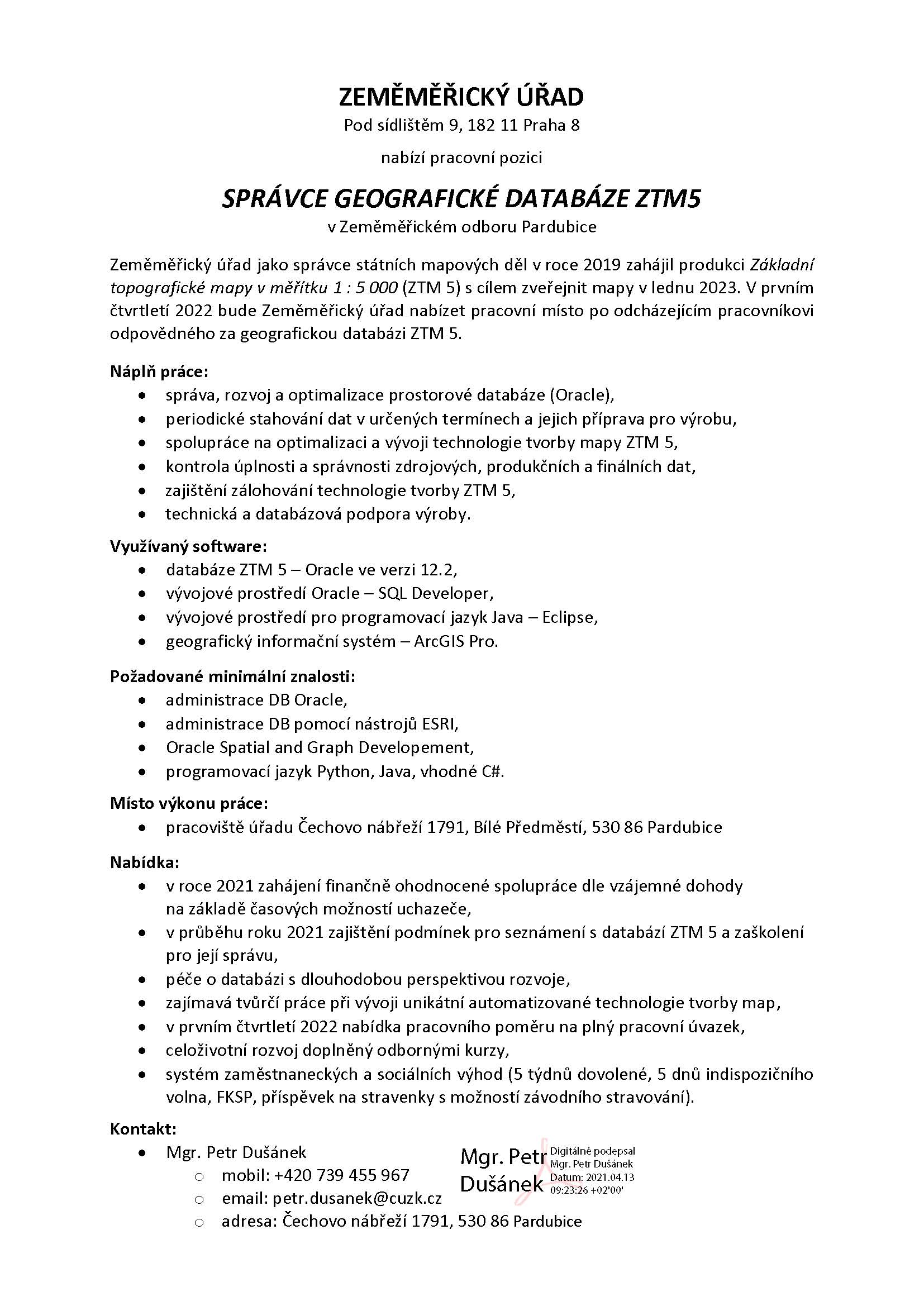
14.4.2021 9:16 Katedra geoinformatiky UP OlomoucZeměměřický úřad Praha bude na svém odboru v Pardubicích nabízet na začátku roku 2022 pracovní pozici Správce geografické databáze Základní topografické mapy 1 : 5 000 (dále ZTM 5). Naší snahou je zajistit za odcházejícího pracovníka odpovědného za geografickou databázi ZTM 5 kvalifikovaného nástupce. V tomto roce plánujeme zahájit určitou formu spolupráce s případným uchazečem […]
The post Pracovní nabídka na zeměměřickém úřadě appeared first on Katedra geoinformatiky.
20210417-UAZK
14.4.2021 7:56 Zeměměřický úřad Zeměměřický úřadzveřejnil novou aktualitu: Badatelna Ústředního archivu zeměměřictví a katastru je pro veřejnost znovu otevřena, pondělí a středa od 8 do 17 hodin, úterý a čtvrtek od 8 do 14 hodin. Prodejna map je znovu otevřena.
20210417-UAZK
14.4.2021 7:56 ČÚZK - předpisy a opatření Zeměměřický úřadzveřejnil novou aktualitu: Badatelna Ústředního archivu zeměměřictví a katastru je pro veřejnost znovu otevřena, pondělí a středa od 8 do 17 hodin, úterý a čtvrtek od 8 do 14 hodin. Prodejna map zůstává z důvodu karantény nadále zavřená, její otevření bude oznámeno.
20210417-UAZK
14.4.2021 7:56 Zeměměřický úřad Zeměměřický úřadzveřejnil novou aktualitu: Badatelna Ústředního archivu zeměměřictví a katastru je pro veřejnost znovu otevřena, pondělí a středa od 8 do 17 hodin, úterý a čtvrtek od 8 do 14 hodin. Prodejna map zůstává z důvodu karantény nadále zavřená, její otevření bude oznámeno.
20210417-UAZK
14.4.2021 7:56 ČÚZK - předpisy a opatření Zeměměřický úřadzveřejnil novou aktualitu: Badatelna Ústředního archivu zeměměřictví a katastru je pro veřejnost znovu otevřena, pondělí a středa od 8 do 17 hodin, úterý a čtvrtek od 8 do 14 hodin. Prodejna map je znovu otevřena.
20210414 - Zrušení datového bloku OBESMF
14.4.2021 6:56 ČÚZK - Výměnný formát ISKN V souvislosti s plánovanou instalací nové verze ISKN dojde k odstranění datového bloku OBESMF v datové skupině Řízení (RIZE) z exportů VFK. Předpokládaný termín realizace je říjen 2021.20210414 - Zrušení datového bloku OBESMF
14.4.2021 6:56 ČÚZK - Výměnný formát ISKN V souvislosti s plánovanou instalací nové verze ISKN dojde k odstranění datového bloku OBESMF v datové skupině Řízení (RIZE) z exportů VFK. Předpokládaný termín realizace je říjen 2021.SSP Innovations Brings on Industry Visionary Peter Batty as Chief Research Officer
14.4.2021 1:23 GISCafe.com Webcasts-Webinars Peter Batty Brings 35 Years’ Experience in Serving the Geospatial Industry for Utility and Telecommunication OrganizationsDENVER — (BUSINESS …
NEP’s Solution for Aurora, North One and Extreme E Tests Its Metal In Some of the World’s Harshest Conditions
14.4.2021 1:23 GISCafe.com Webcasts-Webinars LONDON, April 13, 2021 (GLOBE NEWSWIRE) -- Last weekend marked the first event for Extreme E, a new all-electric off-road racing series designed to …Maptelligent, Inc., Executes an Agreement With GeoComm, Inc.
14.4.2021 1:23 GISCafe.com Webcasts-Webinars Las Vegas, NV, April 13, 2021 (GLOBE NEWSWIRE) -- via NewMediaWire -- Maptelligent, Inc. (OTCPK: MAPT) is pleased to announce, our recent …AccuWeather Partners with Microsoft to Bring New Capabilities to Microsoft Azure Maps
14.4.2021 1:23 GISCafe.com Webcasts-Webinars Most accurate source of weather forecasts and warnings brings data and mapping capabilities to leading-edge geospatial platform to benefit enterprise …Pozvánka na přednášku "Očekávaná změna klimatu v ČR a městský tepelný ostrov"
14.4.2021 0:00 Geografický ústav MU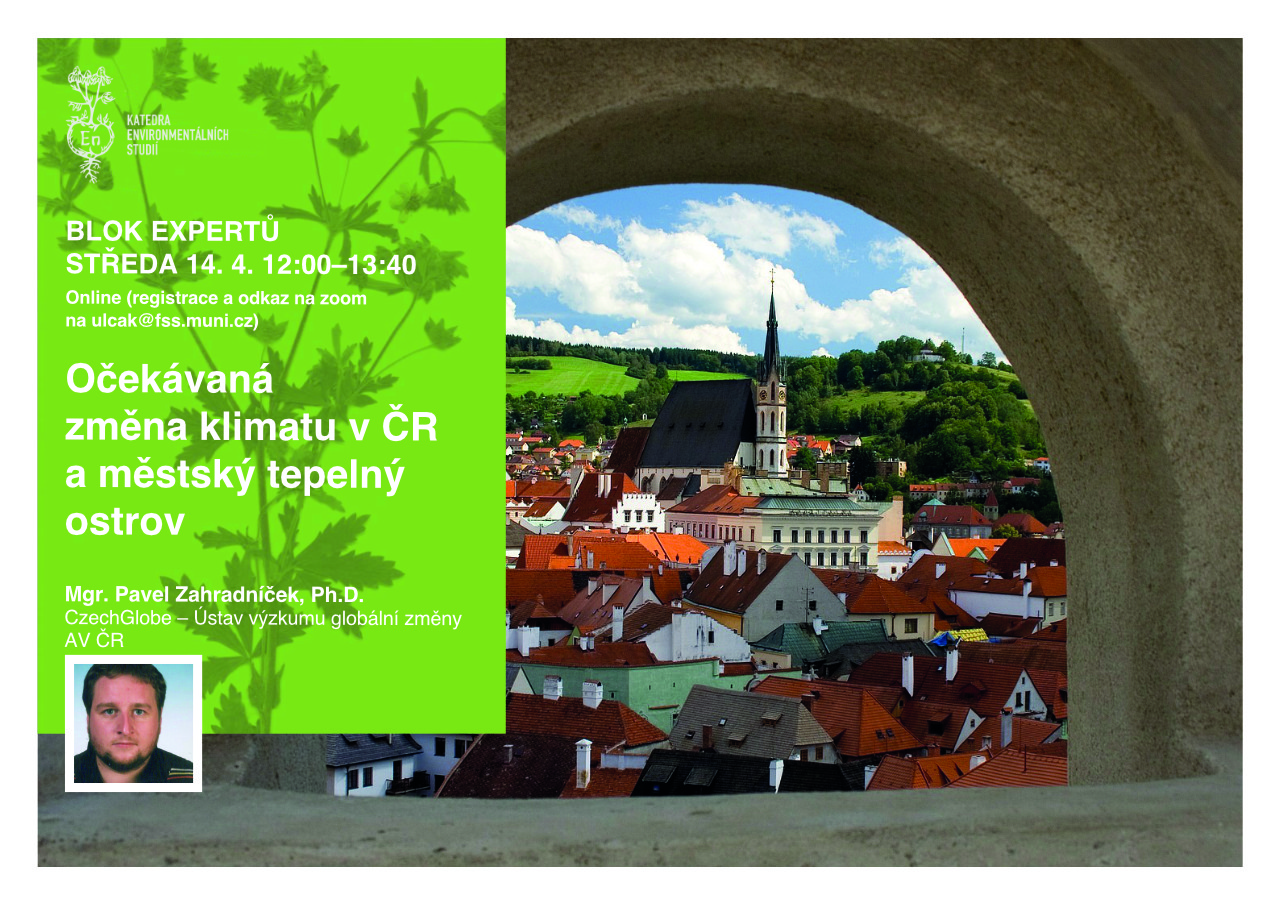
Pobočka Znojmo výsadbou větrolamů snižuje vliv větrné eroze na krajinu jižní Moravy a současně zlepšuje protierozní ochranu obcí na Znojemsku
14.4.2021 0:00 Státní pozemkový úřad Znojemsko patří mezi nejsušší oblasti České republiky. Pobočka Znojmo realizací větrolamů omezuje vliv větrné eroze na stále se snižující kvalitu zemědělské půdy a prašnost v obcích na Znojemsku. Dřívější svérázné hospodaření během socializace zemědělství spojené se scelováním bloků orné půdy v rámci přizpůsobení krajiny mechanizaci způsobilo zemědělské půdě a v globále životnímu prostředí, značné a často jen velmi těžko návratné škody. Obecně došlo ke zvětšení pozemků na erozně náchylných půdách. Navíc byly odstraněny typické meze s rozptýlenou zelení, remízky, které kromě své protierozní funkce plnily i funkci ekologickou jako interakční prvky a poskytovaly útočiště hmyzu, ptactvu, drobné polní zvěři, které často slouží jako faktor biologického boje proti škůdcům.VM do 11.5 vrchní referent/odborný referent – informační a kontrolní pracovník
13.4.2021 20:55 ČÚZK /Urady/Katastralni-urady/Katastralni-urady/Katastralni-urad-pro-hlavni-mesto-Prahu/O-uradu/Aktuality/Pracovnik-podatelnyPracovník podatelny
13.4.2021 20:55 ČÚZK - předpisy a opatření Katastrální úřad pro hlavní město Prahu zveřejnil novou aktualitu: Ředitel úřadu vyhlašuje výběrové řízení na služební místo:pracovník podatelny
VM do 1.7 rada/odborný rada právník
13.4.2021 20:55 ČÚZK - předpisy a opatření Katastrální úřad pro hlavní město Prahu - Katastrální pracoviště Praha zveřejnil novou aktualitu: Ředitelka úřadu vyhlašuje výběrové řízení na služební místo:rada/odborný rada – právník
rada/odborný rada – vedoucí podatelny
VM do 1.7 rada/odborný rada právník
13.4.2021 20:55 ČÚZK /Urady/Katastralni-urady/Katastralni-urady/Katastralni-urad-pro-hlavni-mesto-Prahu/O-uradu/Aktuality/Pracovnik-podatelnyVM do 31.7 odborný referent/vrchní referent – návrh zápisu v katastru
13.4.2021 20:55 ČÚZK - předpisy a opatření Katastrální úřad pro hlavní město Prahu - Katastrální pracoviště Praha zveřejnil novou aktualitu: Ředitelka úřadu vyhlašuje výběrové řízení na služební místo:odborný referent/vrchní referent – návrh zápisu v katastru
VM do 31.7 odborný referent/vrchní referent – návrh zápisu v katastru
13.4.2021 20:55 ČÚZK /Urady/Katastralni-urady/Katastralni-urady/Katastralni-urad-pro-hlavni-mesto-Prahu/O-uradu/Aktuality/Pracovnik-podatelnyVM do 11.5 vrchní referent/odborný referent – informační a kontrolní pracovník
13.4.2021 20:55 ČÚZK - předpisy a opatření Katastrální úřad pro hlavní město Prahu zveřejnil novou aktualitu: Ředitelka úřadu vyhlašuje výběrové řízení na služební místo:vrchní referent/odborný referent – informační a kontrolní pracovník
VM do 19.5 referent KN – právník do právního oddělení VIII
13.4.2021 20:55 ČÚZK - předpisy a opatření Katastrální úřad pro hlavní město Prahu zveřejnil novou aktualitu: Ředitelka úřadu vyhlašuje výběrové řízení na služební místo:referent KN – právník do právního oddělení VIII
vrchní referent/odborný referent – informační a kontrolní pracovník
13.4.2021 20:55 ČÚZK - předpisy a opatření Katastrální úřad pro hlavní město Prahu zveřejnil novou aktualitu: Ředitel úřadu vyhlašuje výběrové řízení na služební místo:vrchní referent/odborný referent – informační a kontrolní pracovník
Pracovník podatelny
13.4.2021 20:55 ČÚZK /Urady/Katastralni-urady/Katastralni-urady/Katastralni-urad-pro-hlavni-mesto-Prahu/O-uradu/Aktuality/Pracovnik-podatelnyVM do 31.7 odborný referent/vrchní referent – návrh zápisu v katastru
13.4.2021 20:55 ČÚZK - předpisy a opatření Katastrální úřad pro hlavní město Prahu - Katastrální pracoviště Praha zveřejnil novou aktualitu: Ředitelka úřadu vyhlašuje výběrové řízení na služební místo:referent KN – vedení DKM, vedení katastrální mapy
vrchní referent/odborný referent – informační a kontrolní pracovník
13.4.2021 20:55 ČÚZK /Urady/Katastralni-urady/Katastralni-urady/Katastralni-urad-pro-hlavni-mesto-Prahu/O-uradu/Aktuality/Pracovnik-podatelnyvrchní referent/odborný referent – informační a kontrolní pracovník
13.4.2021 20:55 ČÚZK - předpisy a opatření Katastrální úřad pro hlavní město Prahu zveřejnil novou aktualitu: Ředitelka úřadu vyhlašuje výběrové řízení na služební místo:vrchní referent/odborný referent – informační a kontrolní pracovník
VM do 1.7 rada/odborný rada právník
13.4.2021 20:55 ČÚZK - předpisy a opatření Katastrální úřad pro hlavní město Prahu - Katastrální pracoviště Praha zveřejnil novou aktualitu: Ředitelka úřadu vyhlašuje výběrové řízení na služební místo:rada/odborný rada – právník
VM do 19.5 referent KN – právník do právního oddělení VIII
13.4.2021 20:55 ČÚZK /Urady/Katastralni-urady/Katastralni-urady/Katastralni-urad-pro-hlavni-mesto-Prahu/O-uradu/Aktuality/Pracovnik-podatelnypracovník podatelny
13.4.2021 20:53 ČÚZK /Urady/Katastralni-urady/Katastralni-urady/Katastralni-urad-pro-hlavni-mesto-Prahu/Uredni-deska/Oznameni-a-jina-uredni-sdeleni/Volna-mista/DMS/pracovnik-podatelnypracovník podatelny
13.4.2021 20:53 ČÚZK - předpisy a opatření Katastrální úřad pro hlavní město Prahuvypisuje výběrové řízení na místo
pracovník podatelny
pracovník podatelny
13.4.2021 20:53 ČÚZK - volná místa Katastrální úřad pro hlavní město Prahu vypisuje výběrové řízení na místo pracovník podatelnyDevelopers Invited to Participate in the May 2021 OGC API Virtual Code Sprint
13.4.2021 20:52 GISCafe.com Webcasts-Webinars
The next OGC Sprint will focus on further refining the draft specifications for OGC API - Maps, - Tiles, and - Styles.
13 …
WGIC launches its next report, "Geospatial AI/ML Applications and Policies – A Global Perspective."
13.4.2021 20:48 GISCafe.com Webcasts-Webinars WGIC launches its next report, "Geospatial AI/ML Applications and Policies – A Global Perspective."The global report aims to inform both …
2021 ASPRS ANNUAL WORKSHOP PROGRAM
13.4.2021 20:40 GISCafe.com Webcasts-Webinars The American Society for Photogrammetry and Remote Sensing: The Imaging and Geospatial Information Society announces its 2021 Annual Workshop Program …Smartphone users put their trust in Galileo with 2 billion Galileo-enabled devices sold.
13.4.2021 18:32 European GNSS Agency
The Galileo programme has reached an important milestone, with an estimated 2 billion Galileo-enabled smartphones sold until today. This is an incredible achievement, when we think that the first Galileo-enabled smartphone only hit the market in 2016, and shows that the market has been quick to trust and embrace the advantages that Galileo offers.
Galileo has come a long way since its first entry in the world of smartphones with the launch, in July 2016, of the Aquaris X5 Plus by BQ. Since then the market has expanded rapidly and there are currently over 600 smartphone / tablet models available to users.
“2 billion smartphones sold is a remarkable achievement, and bears testimony to the fact that the market understands and appreciates the added value that Galileo brings in terms of availability, robustness and reliability,” said GSA Guerric Pont, Acting Head of Galileo Services Department. “By providing a highly performing and secure European Global Navigation Satellite System such as Galileo in a multi-constellation world, users of smartphones and wearables can rely on a more accurate and reliable positioning information, especially in urban environments”, he continued , “we are very proud that 40 global smartphone brands are putting their trust in Galileo and its team”.
Watch this: Does my phone #UseGalileo?
Major GNSS segment
The smartphone segment is a major GNSS market. According to the most recent GSA GNSS Market Report, the global installed base of GNSS devices in use is forecast to increase from 6.4 billion in 2019 to 9.6 billion in 2029, with shipments of smartphones outnumbering all other devices.
“At the GSA, we have been working consistently with user communities and industry to understand their needs and meet their requirements, while at the same time increasing awareness of Galileo’s benefits. Having these large number of Galileo devices in the users’ hands, open also a great potential for downstream entrepreneurs that can now quickly bring their innovative applications to the market. The GSA is supporting European start-ups and SMEs to fully benefit of these opportunities.” said GSA Head of Market Development Fiammetta Diani.
Are you benefitting from Galileo’s added accuracy? To see if your smartphone, or other device, is on the list of Galileo-enabled devices, visit UseGalileo.eu.
Media note: This feature can be republished without charge provided the European GNSS Agency (GSA) is acknowledged as the source at the top or the bottom of the story. You must request permission before you use any of the photographs on the site. If you republish, we would be grateful if you could link back to the GSA website (http://www.gsa.europa.eu).
Smartphone users put their trust in Galileo with 2 billion Galileo-enabled devices sold.
13.4.2021 18:32 European GNSS AgencyThe Galileo programme has reached an important milestone, with an estimated 2 billion Galileo-enabled smartphones sold until today. This is an incredible achievement, when we think that the first Galileo-enabled smartphone only hit the market in 2016, and shows that the market has been quick to trust and embrace the advantages that Galileo offers.
Galileo has come a long way since its first entry in the world of smartphones with the launch, in July 2016, of the Aquaris X5 Plus by BQ. Since then the market has expanded rapidly and there are currently over 600 smartphone / tablet models available to users.
“2 billion smartphones sold is a remarkable achievement, and bears testimony to the fact that the market understands and appreciates the added value that Galileo brings in terms of availability, robustness and reliability,” said GSA Guerric Pont, Acting Head of Galileo Services Department. “By providing a highly performing and secure European Global Navigation Satellite System such as Galileo in a multi-constellation world, users of smartphones and wearables can rely on a more accurate and reliable positioning information, especially in urban environments”, he continued , “we are very proud that 40 global smartphone brands are putting their trust in Galileo and its team”.
Watch this: Does my phone #UseGalileo?
Major GNSS segment
The smartphone segment is a major GNSS market. According to the most recent GSA GNSS Market Report, the global installed base of GNSS devices in use is forecast to increase from 6.4 billion in 2019 to 9.6 billion in 2029, with shipments of smartphones outnumbering all other devices.
“At the GSA, we have been working consistently with user communities and industry to understand their needs and meet their requirements, while at the same time increasing awareness of Galileo’s benefits. Having these large number of Galileo devices in the users’ hands, open also a great potential for downstream entrepreneurs that can now quickly bring their innovative applications to the market. The GSA is supporting European start-ups and SMEs to fully benefit of these opportunities.” said GSA Head of Market Development Fiammetta Diani.
Are you benefitting from Galileo’s added accuracy? To see if your smartphone, or other device, is on the list of Galileo-enabled devices, visit UseGalileo.eu.
Media note: This feature can be republished without charge provided the European GNSS Agency (GSA) is acknowledged as the source at the top or the bottom of the story. You must request permission before you use any of the photographs on the site. If you republish, we would be grateful if you could link back to the GSA website (http://www.gsa.europa.eu).
Smartphone users put their trust in Galileo with 2 billion Galileo-enabled devices sold.
13.4.2021 18:32 European GNSS Agency
The Galileo programme has reached an important milestone, with an estimated 2 billion Galileo-enabled smartphones sold until today. This is an incredible achievement, when we think that the first Galileo-enabled smartphone only hit the market in 2016, and shows that the market has been quick to trust and embrace the advantages that Galileo offers.
Galileo has come a long way since its first entry in the world of smartphones with the launch, in July 2016, of the Aquaris X5 Plus by BQ. Since then the market has expanded rapidly and there are currently over 600 smartphone / tablet models available to users.
“2 billion smartphones sold is a remarkable achievement, and bears testimony to the fact that the market understands and appreciates the added value that Galileo brings in terms of availability, robustness and reliability,” said GSA Guerric Pont, Acting Head of Galileo Services Department. “By providing a highly performing and secure European Global Navigation Satellite System such as Galileo in a multi-constellation world, users of smartphones and wearables can rely on a more accurate and reliable positioning information, especially in urban environments”, he continued , “we are very proud that 40 global smartphone brands are putting their trust in Galileo and its team”.
Watch this: Does my phone #UseGalileo?
Major GNSS segment
The smartphone segment is a major GNSS market. According to the most recent GSA GNSS Market Report, the global installed base of GNSS devices in use is forecast to increase from 6.4 billion in 2019 to 9.6 billion in 2029, with shipments of smartphones outnumbering all other devices.
“At the GSA, we have been working consistently with user communities and industry to understand their needs and meet their requirements, while at the same time increasing awareness of Galileo’s benefits. Having this large number of Galileo devices in the users’ hands, open also a great potential for downstream entrepreneurs that can now quickly bring their innovative applications to the market. The GSA is supporting European start-ups and SMEs to fully benefit of these opportunities.” said GSA Head of Market Development Fiammetta Diani.
Are you benefitting from Galileo’s added accuracy? To see if your smartphone, or other device, is on the list of Galileo-enabled devices, visit UseGalileo.eu.
Media note: This feature can be republished without charge provided the European GNSS Agency (GSA) is acknowledged as the source at the top or the bottom of the story. You must request permission before you use any of the photographs on the site. If you republish, we would be grateful if you could link back to the GSA website (http://www.gsa.europa.eu).
Smartphone users put their trust in Galileo with 2 billion Galileo-enabled devices sold.
13.4.2021 18:32 European GNSS AgencyThe Galileo programme has reached an important milestone, with an estimated 2 billion Galileo-enabled smartphones sold until today. This is an incredible achievement, when we think that the first Galileo-enabled smartphone only hit the market in 2016, and shows that the market has been quick to trust and embrace the advantages that Galileo offers.
Galileo has come a long way since its first entry in the world of smartphones with the launch, in July 2016, of the Aquaris X5 Plus by BQ. Since then the market has expanded rapidly and there are currently over 600 smartphone / tablet models available to users.
“2 billion smartphones sold is a remarkable achievement, and bears testimony to the fact that the market understands and appreciates the added value that Galileo brings in terms of availability, robustness and reliability,” said GSA Guerric Pont, Acting Head of Galileo Services Department. “By providing a highly performing and secure European Global Navigation Satellite System such as Galileo in a multi-constellation world, users of smartphones and wearables can rely on a more accurate and reliable positioning information, especially in urban environments”, he continued , “we are very proud that 40 global smartphone brands are putting their trust in Galileo and its team”.
Watch this: Does my phone #UseGalileo?
Major GNSS segment
The smartphone segment is a major GNSS market. According to the most recent GSA GNSS Market Report, the global installed base of GNSS devices in use is forecast to increase from 6.4 billion in 2019 to 9.6 billion in 2029, with shipments of smartphones outnumbering all other devices.
“At the GSA, we have been working consistently with user communities and industry to understand their needs and meet their requirements, while at the same time increasing awareness of Galileo’s benefits. Having these large number of Galileo devices in the users’ hands, open also a great potential for downstream entrepreneurs that can now quickly bring their innovative applications to the market. The GSA is supporting European start-ups and SMEs to fully benefit of these opportunities.” said GSA Head of Market Development Fiammetta Diani.
Are you benefitting from Galileo’s added accuracy? To see if your smartphone, or other device, is on the list of Galileo-enabled devices, visit UseGalileo.eu.
Media note: This feature can be republished without charge provided the European GNSS Agency (GSA) is acknowledged as the source at the top or the bottom of the story. You must request permission before you use any of the photographs on the site. If you republish, we would be grateful if you could link back to the GSA website (http://www.gsa.europa.eu).
Smartphone users put their trust in Galileo with 2 billion Galileo-enabled devices sold.
13.4.2021 18:32 European GNSS Agency
The Galileo programme has reached an important milestone, with an estimated 2 billion Galileo-enabled smartphones sold until today. This is an incredible achievement, when we think that the first Galileo-enabled smartphone only hit the market in 2016, and shows that the market has been quick to trust and embrace the advantages that Galileo offers.
Galileo has come a long way since its first entry in the world of smartphones with the launch, in July 2016, of the Aquaris X5 Plus by BQ. Since then the market has expanded rapidly and there are currently over 600 smartphone / tablet models available to users.
“2 billion smartphones sold is a remarkable achievement, and bears testimony to the fact that the market understands and appreciates the added value that Galileo brings in terms of availability, robustness and reliability,” said GSA Guerric Pont, Acting Head of Galileo Services Department. “By providing a highly performing and secure European Global Navigation Satellite System such as Galileo in a multi-constellation world, users of smartphones and wearables can rely on a more accurate and reliable positioning information, especially in urban environments”, he continued , “we are very proud that 40 global smartphone brands are putting their trust in Galileo and its team”.
Watch this: Does my phone #UseGalileo?
Major GNSS segment
The smartphone segment is a major GNSS market. According to the most recent GSA GNSS Market Report, the global installed base of GNSS devices in use is forecast to increase from 6.4 billion in 2019 to 9.6 billion in 2029, with shipments of smartphones outnumbering all other devices.
“At the GSA, we have been working consistently with user communities and industry to understand their needs and meet their requirements, while at the same time increasing awareness of Galileo’s benefits. Having this large number of Galileo devices in the users’ hands, open also a great potential for downstream entrepreneurs that can now quickly bring their innovative applications to the market. The GSA is supporting European start-ups and SMEs to fully benefit of these opportunities.” said GSA Head of Market Development Fiammetta Diani.
Are you benefitting from Galileo’s added accuracy? To see if your smartphone, or other device, is on the list of Galileo-enabled devices, visit UseGalileo.eu.
Media note: This feature can be republished without charge provided the European GNSS Agency (GSA) is acknowledged as the source at the top or the bottom of the story. You must request permission before you use any of the photographs on the site. If you republish, we would be grateful if you could link back to the GSA website (http://www.gsa.europa.eu).
Quanergy’s QORTEX 2.1 LiDAR Perception Software Brings Real-Time PTZ Camera Control Automation to Security, Smart Space, and Smart City Applications
13.4.2021 17:24 GISCafe.com Webcasts-Webinars Real-time automation of PTZ camera control, point cloud recordings, and network actions reduces operating costs and improves security workforce …CoreLogic Reports US Mortgage Delinquency Rates Fall for Fifth Consecutive Month; The Lowest Levels Seen Since the Start of the Pandemic
13.4.2021 17:24 GISCafe.com Webcasts-Webinars As overall levels continue to recede, early and adverse-stage delinquencies remain below pre-pandemic rates.IRVINE, Calif. — (BUSINESS WIRE) …
Innoviz Announces Another Breakthrough in LiDAR Technology - 30X Performance Improvement and Embedded Perception Software
13.4.2021 17:24 GISCafe.com Webcasts-Webinars Revealing the new InnovizTwo specifications, the Company sets a new transparency standard; InnovizTwo scales in performance and cost and is designed …D-Fend Solutions Offers Significantly Expanded Counter-Drone Coverage with a Multi-Sensor Command & Control Central Management Solution
13.4.2021 17:24 GISCafe.com Webcasts-Webinars MSC2 controls multiple EnforceAir sensors remotely from a single server, empowering organizations to intuitively safeguard vast expanses of land from …Deuce Drone to Launch Lunch Delivery Service by Drone in Mobile, Alabama
13.4.2021 17:24 GISCafe.com Webcasts-Webinars MOBILE, AL, April 13, 2021 (GLOBE NEWSWIRE) -- via NewMediaWire -- Deuce Drone LLC, a developer of last mile package delivery services by …Bylo publikováno nové sestaven
13.4.2021 14:37 GEUSware Bylo publikováno nové sestavení GEUS 25.0.3.309. Toto sestavení mimo jiné řeší nefunkčnost WMS služby "Bodové pole".Geodetické práce ve Švédsku
13.4.2021 10:57 Blogující geomatici - FAV ZČUChcete získat nové zkušenosti v oboru inženýrské geodézie a pracovat s moderním geodetickým vybavením? Zajímá Vás laserové skenování nebo UAV a rozličné způsoby zpracování dat z těchto metod sběru dat? Zajímá Vás ražba tunelů, případně budování technologického zázemí v moderním a největším dole na železnou rudu v Evropě? Chcete se podílet na budování kompletně nového městského centra v Kiruně? Připojte se k nám. Naši kolegové Vám vše ukáží, se vším Vás seznámí a zaučí Vás.
Nabízíme:
- trvalý pracovní poměr na dobu neurčitou
- švédskou mzdu s možností platového růstu
- placené ubytování, pracovní vybavení (auta, oblečení, geodetické přístroje, PC, telefon,
SW)
- příspěvky na cestování
- práci ve zkušeném týmu
- školení v geodetických softwarech SBG Geo, Geomagic, Cyclone aj.
- nástup ihned
Od Vás bychom potřebovali:
- vysokoškolské vzdělání v oboru a základní praxi v oblasti inženýrské geodézie nebo středoškolské vzdělání v oboru s několikaletou praxí v této oblasti
- angličtinu na komunikativní úrovni podmínkou
- zkušenosti s ovládáním geodetických přístrojů a programů CAD
- samostatnost, pracovitost
- ŘP skupiny B
Práci povětšinou koncipujeme jako směnný provoz s turnusy 14 dní práce / 14 dní volno.
Při současných omezených možnostech cestování však doporučujeme turnusy delší, např.
3 týdny práce / 3 týdny volno. Máte obavy z povinných covid testů? I s tím Vám pomůžeme a testy proplatíme.
Chtěli byste zkusit jaké to je žít za polárním kruhem trvale a ve svém volnu prozkoumávat krásy Laplandu na sněžném skůtru či skialpech, zkusit rybařit v norských fjordech či divokých řekách severu, podívat se na Lofoty či Nordkapp? Toto je příležitost pro Vás.
Máte partnerku/partnera? Vemte ji/ho sebou, zajistíme ubytování pro oba. Můžeme pomoci i se sháněním pracovním kontaktů pro ni/něj.
Kontaktní osoba: David Žďánský, tel.:+420 603 715 076, email: david.zdansky@trigorn.com
Informace o firmě Trigorn: https://www.trigorn.com/cs
Odborný referent/vrchní referent – mzdová/ý účetní v ekonomicko-personálním oddělení kanceláře ředit
13.4.2021 9:34 ČÚZK - volná místa Katastrální úřad pro Moravskoslezský kraj kancelář ředitele vypisuje výběrové řízení na místo Odborný referent/vrchní referent – mzdová/ý účetní v ekonomicko-personálním oddělení kanceláře ředitOdborný referent/vrchní referent – mzdová/ý účetní v ekonomicko-personálním oddělení kanceláře ředit
13.4.2021 9:34 ČÚZK /Urady/Katastralni-urady/Katastralni-urady/Katastralni-urad-pro-Moravskoslezsky-kraj/Uredni-deska/Oznameni-a-jina-uredni-sdeleni/Volna-mista/DMS/Odborny-referent-vrchni-referent-–-mzdova-y-ucetniOdborný referent/vrchní referent – mzdová/ý účetní v ekonomicko-personálním oddělení kanceláře ředit
13.4.2021 9:34 ČÚZK - předpisy a opatření Katastrální úřad pro Moravskoslezský kraj kancelář ředitelevypisuje výběrové řízení na místo
Odborný referent/vrchní referent – mzdová/ý účetní v ekonomicko-personálním oddělení kanceláře ředitele Katastrálního úřadu
Zm�na cen software a slu�eb spole�nosti Bentley Systems (13.4.2021)
13.4.2021 9:04 GISoftSpole�nost Bentley Systems nav��ila ceny sv�ch softwarov�ch produkt� a poplatk� za jejich podporu (slu�bu Bentley SELECT) o cca. 6 %. Zm�na cen softwarov�ch produkt� je platn� od tohoto m�s�ce, zm�na poplatk� za slu�bu Bentley SELECT se u�ivatel�m projev� k datu prodlou�en� jejich smlouvy v poplatc�ch na n�sleduj�c� obdob�. Nov� ceny naleznete v na�em cen�ku.
Změna cen software a služeb společnosti Bentley Systems (13.4.2021)
13.4.2021 9:04 GISoftSpolečnost Bentley Systems navýšila ceny svých softwarových produktů a poplatků za jejich podporu (službu Bentley SELECT) o cca. 6 %. Změna cen softwarových produktů je platná od tohoto měsíce, změna poplatků za službu Bentley SELECT se uživatelům projeví k datu prodloužení jejich smlouvy v poplatcích na následující období. Nové ceny naleznete v našem ceníku.
Zm�na cen software a slu�eb spole�nosti Bentley Systems (13.4.2021)
13.4.2021 9:04 GISoftSpole�nost Bentley Systems nav��ila ceny sv�ch softwarov�ch produkt� a poplatk� za jejich podporu (slu�bu Bentley SELECT) o cca. 6 %. Zm�na cen softwarov�ch produkt� je platn� od tohoto m�s�ce, zm�na poplatk� za slu�bu Bentley SELECT se u�ivatel�m projev� k datu prodlou�en� jejich smlouvy v poplatc�ch na n�sleduj�c� obdob�. Nov� ceny naleznete v na�em cen�ku.
Adaptation Idea Sprint v Olomouci (pozvánka)
13.4.2021 8:31 GISportal.cz
Katedra geoinformatiky PřF UP Olomouc ve spolupráci s partnery (CzechInvest, Czechitas, Město Olomouc, aj.) pořádá 12hodinový hackathon // Adaptation Idea Sprint zaměřený především na data a jejich vizualizaci v kontextu současných globálních výzev – klimatickou změnu a pandemii (ať už covid-19, nebo nemocí obecně, kterým je potřeba předcházet). Účastníci se seznámí s pravidly, tematickými oblastmi […]
The post Adaptation Idea Sprint v Olomouci (pozvánka) appeared first on GISportal.cz.
APGEO - Novým členem se stala společnost GEOS SILESIA s.r.o.
13.4.2021 2:00 Asociace podnikatelů v geomatice Novým členem APG se 13. dubna 2021 stala společnost GEOS SILESIA s.r.o. zastoupena Ing. Michalem Jaškem.APGEO - GEOS SILESIA s.r.o. je novým kmenovým členem APG
13.4.2021 2:00 Asociace podnikatelů v geomatice Novým členem APG se 13. dubna 2021 stala společnost GEOS SILESIA s.r.o. zastoupena Ing. Michalem Jaškem.Informace k zahájení předběžné tržní konzultace ke stanovení zadávacích podmínek veřejných zakázek na stavební práce s ohledem na aspekty společensky odpovědného zadávání
13.4.2021 0:00 Státní pozemkový úřad Praha, 13. dubna 2020 – Státní pozemkový úřad využil institutu předběžné tržní konzultace dle ust. § 33 zákona č. 134/2016 Sb., o zadávání veřejných zakázek, ve znění pozdějších předpisů, a vypsal předběžnou tržní konzultaci za účelem stanovení zadávacích podmínek stavebních prací s prvky společensky odpovědného zadávání a inovací.Informace k zahájení předběžné tržní konzultace ke stanovení zadávacích podmínek veřejných zakázek na stavební práce s ohledem na aspekty společensky odpovědného zadávání
13.4.2021 0:00 Státní pozemkový úřad Praha, 13. dubna 2020 – Státní pozemkový úřad využil institutu předběžné tržní konzultace dle ust. § 33 zákona č. 134/2016 Sb., o zadávání veřejných zakázek, ve znění pozdějších předpisů, a vypsal předběžnou tržní konzultaci za účelem stanovení zadávacích podmínek stavebních prací s prvky společensky odpovědného zadávání a inovací.Bentley Systems Brings Infrastructure Digital Twins to NVIDIA Omniverse
12.4.2021 19:54 GISCafe.com Webcasts-Webinars Bentley iTwin First to Harness Real-time Rendering, AI, and Simulation Capabilities of NVIDIA OmniverseEXTON, Pa. — (BUSINESS WIRE) — …
Bentley Systems Brings Infrastructure Digital Twins to NVIDIA Omniverse
12.4.2021 19:54 GISCafe.com Webcasts-Webinars Bentley iTwin First to Harness Real-time Rendering, AI, and Simulation Capabilities of NVIDIA OmniverseEXTON, Pa. — (BUSINESS WIRE) — …
Ouster Empowers Waytous's Autonomous Mining Trucks in Extreme Environments
12.4.2021 16:35 GISCafe.com Webcasts-Webinars SUZHOU, China, April 12, 2021 — (PRNewswire) — Traditional mining has long faced problems such as high operating costs, driver …Velodyne and Ansys Team Up to Transform Autonomous Vehicle Safety
12.4.2021 16:35 GISCafe.com Webcasts-Webinars Ansys speeds lidar development to enhance autonomous driving hazard recognitionPITTSBURGH, April 12, 2021 — (PRNewswire) —
…
GeoComm and Rave Mobile Safety Announce First-in-the-Nation Seamless Integration of Authoritative 9-1-1 Location Data into Emergency Mass Notification System
12.4.2021 16:35 GISCafe.com Webcasts-Webinars Partnership ensures accurate address collection and targeting of notification recipientsST. CLOUD, Minn. & FRAMINGHAM, Mass. — (BUSINESS …
HERE Marketplace adds CustomWeather data for industries to build location-aware, weather-intelligent applications
12.4.2021 16:35 GISCafe.com Webcasts-Webinars Seamless developer access to global climate, forecast, real-time and historical weather datasets April 12, 2021 Chicago, Illinois - HERE, the …Intermap to Webcast Live at VirtualInvestorConferences.com on April 15
12.4.2021 16:35 GISCafe.com Webcasts-Webinars Invites individual and institutional investors, as well as advisors and analysts, to attend real-time, interactive presentations on …HANNOVER MESSE 2021: Hypersen Unveils Its 3D Solid-state LiDAR, 6-Axis Force Torque Sensor and Other Sensors on the Exhibition
12.4.2021 16:35 GISCafe.com Webcasts-Webinars SHENZHEN, China, April 12, 2021 — (PRNewswire) — From April 12th to 16th, Hypersen Technologies is attending Hannover Messe 2021 …Esri and Trapeze Group Join Forces to Transform the Customer Experience with Powerful Technology Integrations
12.4.2021 16:35 GISCafe.com Webcasts-Webinars Two transit industry leaders announce a new partnership, combining technology and know-how to provide unparalleled transit solutionsCEDAR RAPIDS, …
HawkEye 360 Secures $55 Million Series C Funding Round
12.4.2021 16:35 GISCafe.com Webcasts-Webinars NightDragon leads funding round to support expansion of satellite startup's infrastructure to meet the demands of today's digital worldHERNDON, Va., …
Ohlédnutí za Esri Developer Summit 2021
12.4.2021 15:56 ARCDATANa začátku dubna 2021 proběhl virtuální Esri Developer Summit, který byl zaměřený na technickou stránku systému ArcGIS.
Pokud byste chtěli vědět, jaká témata na přednáškách této konference zazněla, můžete se podívat na záznamy hlavního bloku přednášek. Jednotliví řečnící a jejich vstupy jsou k dispozici na YouTube kanálu Esri.
Pokud vás tato akce zaujala a rádi byste se jí zúčastnili příští rok, pak si můžete nechat zaslat notifikaci o vyhlášení příštího ročníku.

Adaptation Idea Sprint
12.4.2021 14:37 Katedra geoinformatiky UP OlomoucKatedra geoinformatiky spolu s Academia Film Olomouc, Czechinvest, Czechitas a Statutárním městem Olomouc organizuje 12hodinový online hackathon zaměřený především na data a jejich vizualizaci v kontextu současných globálních výzev – klimatickou změnu a pandemii (ať už covid-19, nebo nemocí obecně, kterým je potřeba předcházet). Zapojit se můžete v rámci dvou oblastí – data a aplikace. […]
The post Adaptation Idea Sprint appeared first on Katedra geoinformatiky.
Oznámení
12.4.2021 13:35 ČÚZK - předpisy a opatření Katastrální úřad pro Plzeňský kraj zveřejnil novou aktualitu: Katastrální úřad pro Plzeňský kraj od 12. 04. 2021 upravuje úřední hodiny katastrálních pracovišť.Oznámení
12.4.2021 13:35 ČÚZK /Urady/Katastralni-urady/Katastralni-urady/Katastralni-urad-pro-Plzensky-kraj/O-uradu/Aktuality/Oznameni-(1)20210412_Odborný referent / vrchní referent oddělení obnovy katastrálního operátu 03120 / Příbram
12.4.2021 13:02 ČÚZK - předpisy a opatření Katastrální úřad pro Středočeský kraj Vyhlášení výběrového řízení: Odborný referent / vrchní referent oddělení obnovy katastrálního operátu 03120 Technické sekce Katastrálního úřadu pro Středočeský kraj, detašované pracoviště Příbram V části "Úřední deska", v sekci "Oznámení a jiná úřední sdělení" bylo vystaveno "Oznámení o vyhlášení výběrového řízení na obsazení služebního místa Odborný referent / vrchní referent oddělení obnovy katastrálního operátu 03120 Technické sekce Katastrálního úřadu pro Středočeský kraj, detašované pracoviště Příbram"20210412_Odborný referent / vrchní referent oddělení obnovy katastrálního operátu 03120 / Příbram
12.4.2021 13:02 ČÚZK /Urady/Katastralni-urady/Katastralni-urady/Katastralni-urad-pro-Stredocesky-kraj/O-uradu/Aktuality/20210113_odborny-rada,-reditel-Katastralniho-p-(3)Odborný referent / vrchní referent oddělení obnovy katastrálního operátu 03120 Technické sekce Katas
12.4.2021 13:01 ČÚZK - volná místa Katastrální úřad pro Středočeský kraj - technická sekce vypisuje výběrové řízení na místo Odborný referent / vrchní referent oddělení obnovy katastrálního operátu 03120 Technické sekce KatasOdborný referent / vrchní referent oddělení obnovy katastrálního operátu 03120 Technické sekce Katas
12.4.2021 13:01 ČÚZK /Urady/Katastralni-urady/Katastralni-urady/Katastralni-urad-pro-Stredocesky-kraj/Uredni-deska/Oznameni-a-jina-uredni-sdeleni/Volna-mista/Odborny-referent-vrchni-referent-oddeleni-obno-(1)Odborný referent / vrchní referent oddělení obnovy katastrálního operátu 03120 Technické sekce Katas
12.4.2021 13:01 ČÚZK - předpisy a opatření Katastrální úřad pro Středočeský kraj - technická sekcevypisuje výběrové řízení na místo Odborný referent / vrchní referent oddělení obnovy katastrálního operátu 03120 Technické sekce Katastrálního úřadu pro Středočeský kraj, detašované pracoviště Příbram
Odborný referent / vrchní referent oddělení obnovy katastrálního operátu 03120 Technické sekce Katastrálního úřadu pro Středočeský kraj, detašované pracoviště Příbram
20210412_Vrchní referent / rada oddělení aktualizace PI KN II.
12.4.2021 12:31 ČÚZK - předpisy a opatření Katastrální úřad pro Středočeský kraj - Katastrální pracoviště Praha-západ Vyhlášení výběrového řízení: Vrchní referent / rada oddělení aktualizace PI KN II. V části "Úřední deska", v sekci "Oznámení a jiná úřední sdělení" bylo vystaveno "Oznámení o vyhlášení výběrového řízení na obsazení služebního místa Vrchní referent / rada oddělení aktualizace PI KN II."20210412_Vrchní referent / rada oddělení aktualizace PI KN II.
12.4.2021 12:31 ČÚZK /Urady/Katastralni-urady/Katastralni-urady/Katastralni-urad-pro-Stredocesky-kraj/Katastralni-pracoviste/KP-Praha-zapad/O-uradu/Aktuality/20210113_odborny-rada,-reditel-Katastralniho-p-(1)Vrchní referent / rada oddělení aktualizace PI KN II.
12.4.2021 12:31 ČÚZK - volná místa Katastrální úřad pro Středočeský kraj - Katastrální pracoviště Praha-západ vypisuje výběrové řízení na místo Vrchní referent / rada oddělení aktualizace PI KN II.Vrchní referent / rada oddělení aktualizace PI KN II.
12.4.2021 12:31 ČÚZK /Urady/Katastralni-urady/Katastralni-urady/Katastralni-urad-pro-Stredocesky-kraj/Uredni-deska/Oznameni-a-jina-uredni-sdeleni/Volna-mista/Vrchni-referent-rada-oddeleni-aktualizace-PI-K-(1)Vrchní referent / rada oddělení aktualizace PI KN II.
12.4.2021 12:31 ČÚZK - předpisy a opatření Katastrální úřad pro Středočeský kraj - Katastrální pracoviště Praha-západvypisuje výběrové řízení na místo Vrchní referent / rada oddělení aktualizace PI KN II.
Vrchní referent / rada oddělení aktualizace PI KN II.
Vrchní referent/rada v oddělení obnovy a revize KN na Katastrálním pracovišti Brno - venkov
12.4.2021 11:45 ČÚZK - volná místa Katastrální úřad pro Jihomoravský kraj Katastrální pracoviště Brno-venkov vypisuje výběrové řízení na místo Vrchní referent/rada v oddělení obnovy a revize KN na Katastrálním pracovišti Brno - venkovVrchní referent/rada v oddělení obnovy a revize KN na Katastrálním pracovišti Brno - venkov
12.4.2021 11:45 ČÚZK /Urady/Katastralni-urady/Katastralni-urady/Katastralni-urad-pro-Jihomoravsky-kraj/Uredni-deska/Oznameni-a-jina-uredni-sdeleni/Volna-mista/DMS/Vrchni-referent-rada-v-oddeleni-obnovy-a-revize-KNVrchní referent/rada v oddělení obnovy a revize KN na Katastrálním pracovišti Brno - venkov
12.4.2021 11:45 ČÚZK - předpisy a opatření Katastrální úřad pro Jihomoravský kraj Katastrální pracoviště Brno-venkovvypisuje výběrové řízení na místo
Vrchní referent/rada v oddělení obnovy a revize KN na Katastrálním pracovišti Brno - venkov
20210412_Úprava úředních hodin
12.4.2021 11:21 ČÚZK /Urady/Katastralni-urady/Katastralni-urady/Katastralni-urad-pro-Stredocesky-kraj/O-uradu/Aktuality/20210412_Uprava-urednich-hodin20210412_Úprava úředních hodin
12.4.2021 11:21 ČÚZK - předpisy a opatření Katastrální úřad pro Středočeský kraj zveřejnil novou aktualitu: Úprava úředních hodin ÚPRAVA ÚŘEDNÍCH HODIN:S účinností od 12. 4. 2021 jsou rozšířeny úřední hodiny na všech pracovištích Katastrálního úřadu pro Středočeský kraj. Před návštěvou si prosím ověřte přesný rozsah úředních hodin na www stránkách katastrálních pracovišť. Děkujeme za pochopení.
ÚPRAVA ÚŘEDNÍCH HODIN:
12.4.2021 11:07 ČÚZK /Urady/Katastralni-urady/Katastralni-urady/Katastralni-urad-pro-Stredocesky-kraj/Katastralni-pracoviste/KP-Praha-zapad/O-uradu/Aktuality/UPRAVA-UREDNICH-HODINÚPRAVA ÚŘEDNÍCH HODIN:
12.4.2021 11:07 ČÚZK - předpisy a opatření Český úřad zeměměřický a katastrální zveřejnil novou aktualitu:ÚPRAVA ÚŘEDNÍCH HODIN:
12.4.2021 11:07 ČÚZK - předpisy a opatření Český úřad zeměměřický a katastrální zveřejnil novou aktualitu:ÚPRAVA ÚŘEDNÍCH HODIN:
12.4.2021 11:07 ČÚZK - předpisy a opatření Katastrální úřad pro Středočeský kraj - Katastrální pracoviště Praha-západ zveřejnil novou aktualitu:Now open: new call for proposal to accelerate EGNOS adoption in transport
12.4.2021 10:18 European GNSS Agency
The European GNSS Agency (GSA) has launched a new Call for Proposals for the “Acceleration of EGNOS Adoption in Transport”. The objective of the Call is to foster EGNOS uptake in the European aviation, maritime, inland waterways and railway sectors. The deadline for submissions is 19 July 2021. An informative webinar on the call will be held on 23 April; to register, click here. For more information on the call, click here.
A core mission of the GSA is to support European Union objectives and achieve the highest possible return on EU investment in space in terms of benefits to users and economic growth and competitiveness. This is the motivation behind the new Call, which aims to foster EGNOS adoption in transport by enabling users to get equipped with GPS/SBAS-enabled terminals, and supporting Air Navigation Service Providers, airports/heliports, maritime authorities and rail stakeholders in implementing and testing EGNOS-based operations. The budget for the Call is EUR 3,000,000 with the possibility to extend to EUR 10,000,000 depending on budget availability.
EGNOS in aviation
In the aviation sector, implementation actions will include approaches benefitting from Localizer Performance with Vertical Guidance 200 (LPV200) service level, PinS LPV procedures and low-level Instrument Flight Rule (IFR) routes in Europe, as well as other advanced operations such as Required Navigation Performance (RNP) routes using SBAS or other operations that help aviation to become more sustainable .
Watch this: EGNOS for Aviation - Making Europe's airports more accessible
It will also consider pilot cases on advanced navigation operations benefitting from EGNOS, assessment of new operational scenarios, such as implementation in aerodromes with limited infrastructure and activities promoting the use of EGNOS for other communication and surveillance applications in all phases of flight. The result of this activity will be a wide scale operational implementation of EGNOS-based operations across European airports and airspace users.
By rail and water
In the maritime and inland waterways sector, applications will target the deployment of shore station equipment that enables the transmission of EGNOS corrections over IALA and AIS stations. On the end user side, the activity aims at increasing the use of terminals on board vessels. It also targets the operational introduction of EGNOS in port operations, such as the development and use of EGNOS-capable Portable Pilot units to assist local pilots in the safe navigation of the piloted vessel.
And this: EGNOS and Galileo for Rail
Finally, in the rail sector, the action aims at facilitating the introduction of EGNSS in safety-critical applications. On one hand, it will enable demonstration of EGNSS-based train localisation safety for future inclusion in the ERTMS, by installing the necessary equipment in pilot lines. On the other, the action will enable early EGNSS operational introduction in rail signalling by focusing on non-interoperable railway lines.
An informative webinar on the Call will be held on 23 April; to register, click here. The webinar will cover possible application areas, current trends in the targeted segments as well as the participation rules and detailed instructions to applicants.
Media note: This feature can be republished without charge provided the European GNSS Agency (GSA) is acknowledged as the source at the top or the bottom of the story. You must request permission before you use any of the photographs on the site. If you republish, we would be grateful if you could link back to the GSA website (http://www.gsa.europa.eu).
Now open: new call for proposal to accelerate EGNOS adoption in transport
12.4.2021 10:18 European GNSS Agency
The European GNSS Agency (GSA) has launched a new Call for Proposals for the “Acceleration of EGNOS Adoption in Transport”. The objective of the Call is to foster EGNOS uptake in the European aviation, maritime, inland waterways and railway sectors. The deadline for submissions is 19 July 2021. An informative webinar on the call will be held on 23 April; to register, click here. For more information on the call, click here.
A core mission of the GSA is to support European Union objectives and achieve the highest possible return on EU investment in space in terms of benefits to users and economic growth and competitiveness. This is the motivation behind the new Call, which aims to foster EGNOS adoption in transport by enabling users to get equipped with GPS/SBAS-enabled terminals, and supporting Air Navigation Service Providers, airports/heliports, maritime authorities and rail stakeholders in implementing and testing EGNOS-based operations. The budget for the Call is EUR 3,000,000 with the possibility to extend to EUR 10,000,000 depending on budget availability.
EGNOS in aviation
In the aviation sector, implementation actions will include approaches benefitting from Localizer Performance with Vertical Guidance 200 (LPV200) service level, PinS LPV procedures and low-level Instrument Flight Rule (IFR) routes in Europe, as well as other advanced operations such as Required Navigation Performance (RNP) routes using SBAS or other operations that help aviation to become more sustainable .
Watch this: EGNOS for Aviation - Making Europe's airports more accessible
It will also consider pilot cases on advanced navigation operations benefitting from EGNOS, assessment of new operational scenarios, such as implementation in aerodromes with limited infrastructure and activities promoting the use of EGNOS for other communication and surveillance applications in all phases of flight. The result of this activity will be a wide scale operational implementation of EGNOS-based operations across European airports and airspace users.
By rail and water
In the maritime and inland waterways sector, applications will target the deployment of shore station equipment that enables the transmission of EGNOS corrections over IALA and AIS stations. On the end user side, the activity aims at increasing the use of terminals on board vessels. It also targets the operational introduction of EGNOS in port operations, such as the development and use of EGNOS-capable Portable Pilot units to assist local pilots in the safe navigation of the piloted vessel.
And this: EGNOS and Galileo for Rail
Finally, in the rail sector, the action aims at facilitating the introduction of EGNSS in safety-critical applications. On one hand, it will enable demonstration of EGNSS-based train localisation safety for future inclusion in the ERTMS, by installing the necessary equipment in pilot lines. On the other, the action will enable early EGNSS operational introduction in rail signalling by focusing on non-interoperable railway lines.
An informative webinar on the Call will be held on 23 April; to register, click here. The webinar will cover possible application areas, current trends in the targeted segments as well as the participation rules and detailed instructions to applicants.
Media note: This feature can be republished without charge provided the European GNSS Agency (GSA) is acknowledged as the source at the top or the bottom of the story. You must request permission before you use any of the photographs on the site. If you republish, we would be grateful if you could link back to the GSA website (http://www.gsa.europa.eu).
Unicorn úspěšně dokončil inovaci Geografického informačního systému pro společnost Severočeské doly
12.4.2021 9:53 Unicorn Unicorn úspěšně nasadil do produkčního provozu nový Geografický informační systém (GIS) pro společnost Severočeské doly. Nyní klient pomocí GIS spravuje svá data v dolech Bílina a Tušimice prostřednictvím softwaru ArcGIS a nadstavby Dulmap.Oznámení
12.4.2021 9:45 ČÚZK - předpisy a opatření Zeměměřický a katastrální inspektorát v Plzni zveřejnil novou aktualitu: S účinností od 12. 4. 2021 se ruší omezení úředních hodin. S ohledem na epidemickou situaci žádáme klienty, aby i nadále přednostně využívali písemný, elektronický (e-mail, datová schránka) či telefonický kontakt.Děkujeme za pochopení.
Oznámení
12.4.2021 9:45 ČÚZK /Urady/Zememericke-a-katastralni-inspektoraty/Zememericke-a-katastralni-inspektoraty/Zememericky-a-katastralni-inspektorat-v-Plzni/O-uradu/Aktuality/OznameniSpustili jsme nové webové stránky ortofotomapa.cz
12.4.2021 9:23 Hrdlička Renovovali jsme stránky, které jsou zaměřeny na tvorbu ortofotomap pomocí leteckého snímkování.Rozšíření úředních hodin
12.4.2021 9:08 ČÚZK /Urady/Katastralni-urady/Katastralni-urady/Katastralni-urad-pro-Stredocesky-kraj/Katastralni-pracoviste/KP-Slany/O-uradu/Aktuality/Rozsireni-urednich-hodinRozšíření úředních hodin
12.4.2021 9:08 ČÚZK - předpisy a opatření Katastrální úřad pro Středočeský kraj - Katastrální pracoviště Slaný zveřejnil novou aktualitu: Od 12.4.2021 dochází k rozšíření úředních hodin, jak je uvedeno v sekci: Úřední hodiny.Co se mění a nemění v režimu UP s koncem nouzového stavu?
12.4.2021 8:20 Katedra geoinformatiky UP OlomoucDne 11. 4. končí v ČR nouzový stav a od 12. 4. zároveň vstupují v platnost nová opatření v rámci postupného rozvolňování ve školství. Pro režim na UP se v týdnu od 12. do 19. 4. nic výrazného nemění, veškeré informace shrnujeme pro větší přehlednost v následujících bodech: Kontaktní výuka na UP bude od 12. 4. i nadále […]
The post Co se mění a nemění v režimu UP s koncem nouzového stavu? appeared first on Katedra geoinformatiky.